



Russian ’Banderol’ missile flew into Moldova from direction of Odesa region: Chisinau has confirmed explosion. VIDEO
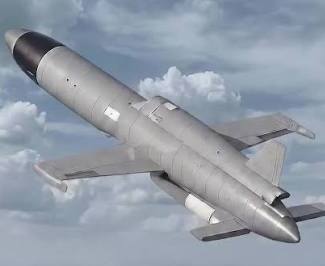
On 17 August, a Russian ‘Banderol’-type drone missile, which had taken off from the Odesa region, crossed Ukraine’s state border in the direction of Moldova. Chisinau recorded an explosion.
This was reported by the Ukrainian Air Force, according to Censor.NET.
Details
At 17:25, the Air Force reported that ‘Banderol’-type loitering munitions were heading towards Chornomorsk and Odesa. The military later clarified that the target had crossed the state border into Moldova.
The Air Force also reported that jet-powered UAVs were moving towards Odesa from the Black Sea.

Moldova has confirmed
The Moldovan National Army has confirmed a violation of the country’s airspace.
It is reported that an aerial object was detected on the Kuchurgan–Tiraspol route at 17:37. Following the incident, the Moldovan authorities closed the airspace over the central part of the country for 15 minutes.
The target disappeared from radar screens in the vicinity of the village of Talmaz, in the Ștefan Voda district. An explosion was detected approximately 3 kilometres from this settlement, after which dry grass caught fire. Emergency services and relevant specialists were dispatched to the scene to establish the full circumstances and document the incident.
Local police released a video. The missile fell in a cornfield.
Information: What is a ‘Banderol’?
- The "Banderol" (officially known as the S8000) is a Russian weapon developed by the sanctioned company "Kronstadt". Put simply, it is a cross between a drone and a cruise missile: it has a jet engine and flies fast (around 500 km/h), can cover a distance of up to 500 kilometres, and, in its armed versions, carries up to 150 kg of explosives.
- Unlike the familiar ‘Shahed’, which flies slowly and in a straight line, the ‘Banderol’ is capable of manoeuvring actively in the air and seeking out its target independently, making it more difficult for air defence systems to intercept — particularly when it is flying in formation with other missiles or drones. Russia began using this weapon on a large scale across Ukraine from 2025, particularly in the Odesa and Kharkiv regions and in Kyiv.


