



Russian Federation plans to mobilise 300,000 people this year and same number next year – DIU and FISU
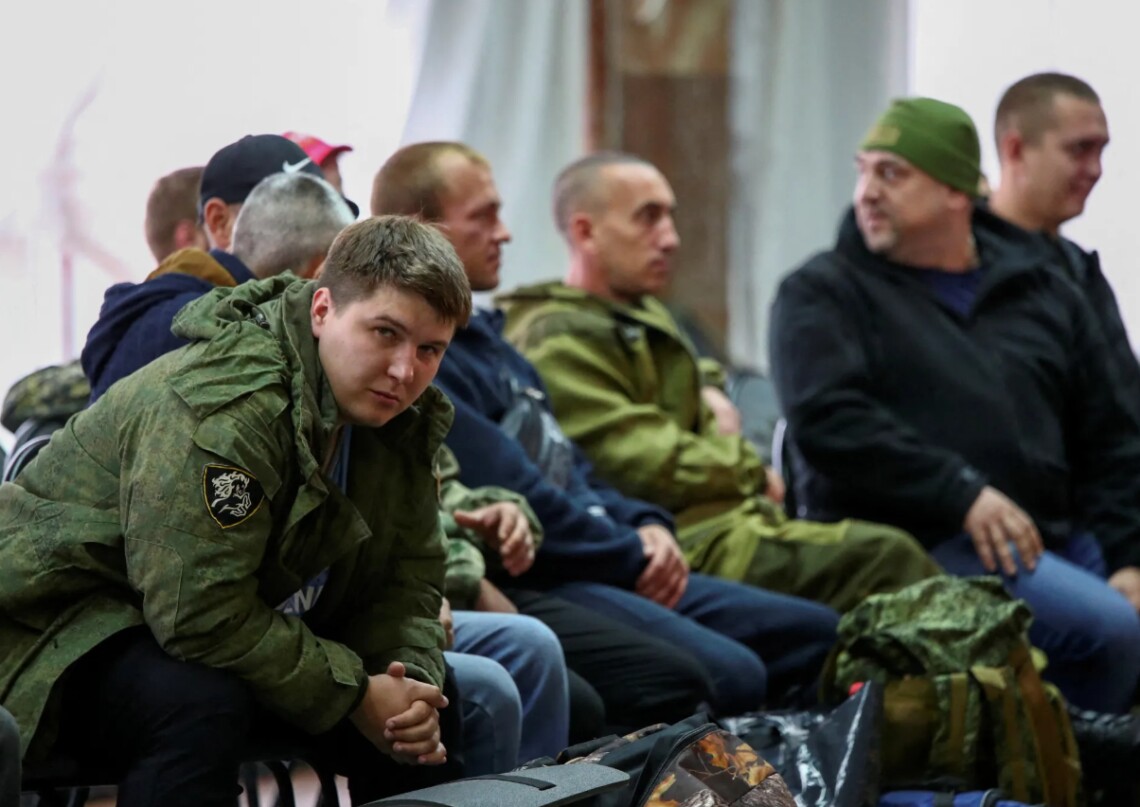
Russia is currently working on plans for an additional wave of mobilisation, seeking to recruit 300,000 people this year and the same number next year.
As reported by Censor.NET, citing the press service of the Presidential Office, this is evidenced by Ukrainian intelligence data.
Russian losses
"Russia’s personnel losses between January and July 2026 amounted to about 240,000 people, including at least 140,000 irrecoverable losses. At the same time, fewer people, namely 232,000, joined the Russian occupation contingent under contract during this period," the statement said.
The Foreign Intelligence Service of Ukraine (FISU) and the Defence Intelligence of Ukraine (DIU) have information that the Russian General Staff has already prepared an option for the additional mobilisation of 600,000 people within designated time frames this year and next year.
"The primary objective is to bring formations and military units fighting against Ukrainians up to strength, as well as units of the Russian forces that are currently being formed.
"As part of preparations for an additional wave of mobilisation and efforts to enlist members of the criminal underworld under contract, a process of amending Russian legislation and secondary regulations has begun; oversight of military registration is being significantly tightened, mechanisms are being created to recruit additional people serving sentences in the Russian prison and penal camp system, and additional coercive measures are being developed," the agencies said.
Internal Russian documents justify the need for an additional wave of mobilisation by a significant rise in dissatisfaction with the war across the regions (with dissatisfaction levels reaching 69%), and a corresponding decline in the number of people willing to sign contracts voluntarily.
"Problems with contract recruitment are most pronounced in the Oryol and Vladimir regions, as well as in Dagestan. Since the beginning of this year, the Kurgan region has fulfilled only 57–69% of its monthly targets. In the Volgograd region, the number of potential contract soldiers has fallen by 40% compared with 2025. A further decline is also being recorded in many other Russian regions.
"Compared with 2025, the number of debtors, convicts and members of the criminal underworld, migrants and other categories that had long formed the main recruitment base for contract service in the Russian army and participation in the war has fallen by 30–40% in some regions. The student recruitment campaign, which involved the overwhelming majority of Russian universities, has failed," the intelligence agencies noted.
Accountability
The Russian leadership also plans to increase the personal accountability of regional authorities and expand the powers of law enforcement agencies.
"A system for issuing electronic mobilisation orders has already been introduced, while broader coercive measures are being developed: bans on leaving Russia, obtaining loans, buying or selling property, the revocation of driving licences, the freezing of funds in bank accounts and other restrictions.
"Businesses are expanding the staffing of departments responsible for mobilisation work and military registration. As of the end of July 2026, more than 2,500 new vacancies for staffing these mobilisation departments at businesses had already been posted on online employment platforms," the Foreign Intelligence Service of Ukraine and the Defence Intelligence of Ukraine said.
The dictator is most likely to make the decision on mobilisation after the Russian State Duma "elections", scheduled for 18–20 September this year.


