



Russia secretly helping Iran develop hypersonic missiles against US fleet, - FT
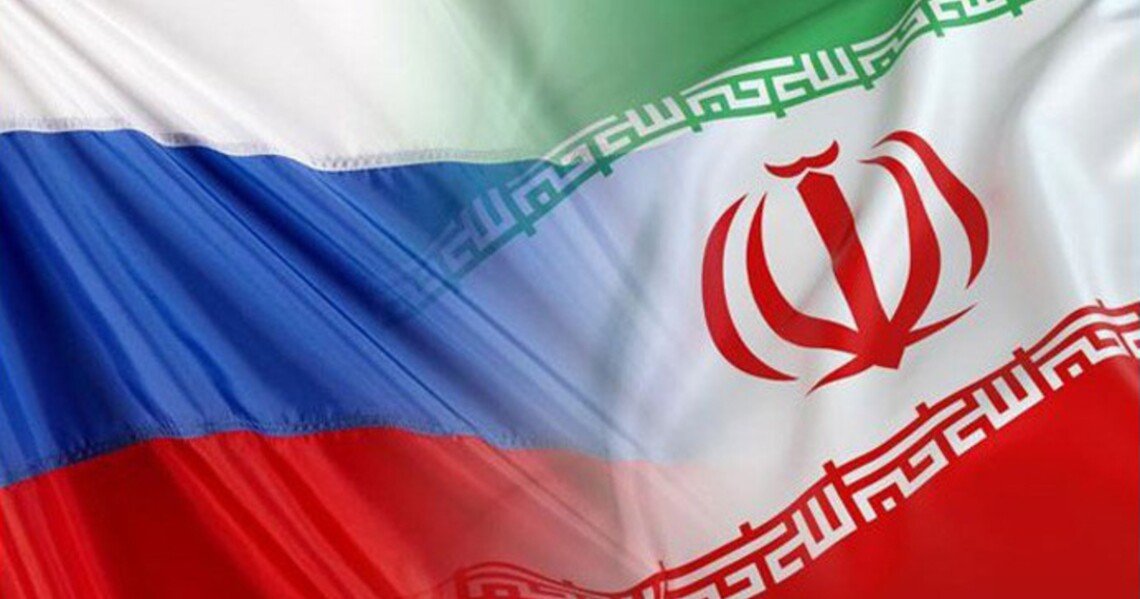
For many years, Moscow has been secretly assisting Tehran in the development of supersonic cruise missiles. This is one of the largest known instances of the transfer of strategic military technology from Russia to Iran.
According to Censor.NET, the Financial Times reports on this.
Project C430L: The Purpose and Threats of Iran's Supersonic Missiles
A leak of Russian correspondence, information about the movement of specialists, and an analysis of defense patents enabled the FT to expose the secret C430L project, which began in 2023 and continued even during the period of armed conflict between the U.S. and Israel against Iran. As part of this initiative, leading Russian missile engineers helped Tehran develop cutting-edge weapons designed to pose a threat to U.S. aircraft carriers and ships in the Middle East.
According to the publication, the main purpose of the C430L is to help Iran develop a ramjet engine that allows a cruise missile to fly at speeds several times faster than the speed of sound.
Due to their high speed and low flight path, supersonic cruise missiles make it significantly more difficult for modern air defense and missile defense systems to detect and intercept them, leaving very little time to respond.
Such weapons are particularly critical for Tehran in the waters of the Persian Gulf, where the latest U.S. and allied land- and sea-based defense systems are deployed. Iran has already successfully manufactured and tested a ramjet engine, but there is currently no confirmation that the country has fully adopted the supersonic missile developed with Russian assistance.
The Role of "Rosoboronexport" and Visits by Russian Engineers to Tehran
Overall coordination of the project was carried out by the Russian state-owned arms exporter "Rosoboronexport" in cooperation with "NVO Mashinostroenie." This company, which is one of Russia’s key rocket and space enterprises and is responsible for developing sea- and land-based cruise missiles as well as components of strategic nuclear forces, has been subject to U.S. sanctions since 2014.
According to leaked flight data, representatives of the Russian exporter and leading experts from "NVO Mashinostroenie" made regular visits to Iran even before the official agreement with the Iranian defense ministry was signed in November 2023.
Among the delegates were Alexander Dergachov, who at the time served as deputy head of the enterprise and chief designer of ship-based missile systems, as well as Alexander Chebakov—head of the jet engine development division, who flew to Tehran three times in 2023. According to Russian patent records, Chebakov specializes specifically in supersonic direct-flow propulsion systems for cruise missiles.
By 2025, "NVO Mashinostroenie" had accumulated a substantial body of Iranian technical documentation on direct-flow power plants. After analyzing the results of one of the Iranian side’s test runs, specialists from the Russian Federation prepared a comprehensive list of clarifications regarding the operation of the system’s components—in particular, the fuel supply mechanism, combustion stability, and the parameters of the air intake and nozzle.
In April 2025, Rosoboronexport organized a business trip to Iran for a group of nearly 20 Russian experts to provide technical consultations as part of the C430L project.
This project has become part of the deepening military-strategic partnership between the two countries. Previously, Tehran had supplied Moscow with "Shahed"-type loitering munitions and had also facilitated the establishment of local production facilities for them within the Russian Federation.
Representatives from Ukraine and the West also accused Russia of providing operational and tactical assistance to Iran during its armed conflict with the United States and Israel, specifically the transfer of satellite data, support in the use of drones, and the supply of weapon components.
The Kremlin, Rosoboronexport, and NVO Mashinostroyenie declined to comment on inquiries from the FT. Meanwhile, Russian dictator Vladimir Putin, in a conversation with Iranian President Masoud Pezeshkian, stated that Moscow seeks to provide "the necessary assistance during this difficult time" of the war with the U.S. by "supplying relevant products," without disclosing any details.
Strategic Cooperation Between Russia and Iran During the War with the United States
According to the correspondence, the C430L program continued into 2026, even after the start of the U.S.-Israeli war against Iran—Russia was preparing technical reports for Tehran, and the parties were discussing the next phase of the program.


