



Trump sees Zelenskyy as main obstacle to peace in Ukraine and Nobel Prize, The Atlantic reports
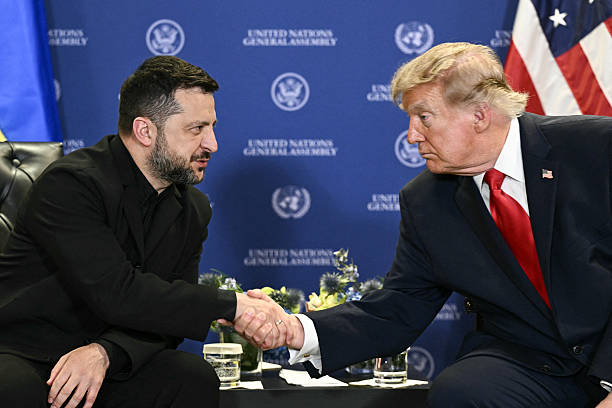
US President Donald Trump sees Ukrainian leader Volodymyr Zelenskyy as the main obstacle to ending the war, securing lucrative deals with Russia that peace could bring, and winning his coveted Nobel Peace Prize.
This is according to an article in The Atlantic, Censor.NET reports.
Iran, diesel and the midterm elections
According to the publication, the failure to end the war with Iran has left Trump furious but also "strangely paralyzed." A presidential adviser said he was accustomed to the entire world responding to his commands and was now "losing his mind" because Iran would not listen.
Meanwhile, Iran is once again threatening tankers in the Strait of Hormuz, and the average price of diesel in the United States has exceeded $6 a gallon, driving up freight costs. Republicans, the authors say, are panicking: the midterm elections that will determine control of Congress are just three weeks away, and high fuel prices could help Democrats.
The publication argues that Trump is looking for a scapegoat and has settled on Ukraine, consistent with his longstanding deference to Putin.
Diesel deal and pressure on Kyiv
On Friday, Trump announced an agreement with Putin to import Russian diesel. According to The Atlantic, this undermines a new law imposing sanctions on Russia’s energy sector that Trump signed last month.
Even if the roughly 2.25 million barrels bring prices down only slightly, the deal allows Trump to demonstrate that he is helping Americans while generating additional revenue for Russia. Several million more barrels are due to be shipped next month.
According to the publication, Trump then stepped up pressure on Ukraine: he called for Zelenskyy to be replaced, while his aides threatened to suspend arms sales unless Kyiv stopped striking Russian oil refineries. Some in his circle even proposed halting intelligence sharing. It was against this backdrop that Trump announced a "fictitious" energy truce without coordinating it with Kyiv. In the hours that followed, Russia bombed Ukraine, including a thermal power plant in Kharkiv.
What the White House says
Ukrainian strikes on Russian oil refineries have triggered an energy crisis in Russia, and Moscow responded by banning diesel exports, further increasing pressure on global markets already strained by the war in Iran.
According to a White House official, Zelenskyy offered Trump and envoys Steve Witkoff and Jared Kushner a halt to refinery strikes if Russia stopped attacking Ukrainian power plants. But Trump does not consider the strikes equivalent and demanded that Ukraine stop first. Zelenskyy refused.
"Zelenskyy is overstepping his authority and pissing off the president [Trump]. The president is asking for one thing: stop hitting the refineries. Give him that," a White House official said.
Business deals, elections and the Nobel Prize
According to The Atlantic, recent conversations between Kushner, Witkoff and Putin included promises of major business deals that Russia could strike with American companies after the war.
Ukrainian officials have long believed that Trump’s foreign policy is aimed at opening up business opportunities and potentially enriching his family and friends, rather than defending democracy or territorial sovereignty.
The Atlantic writes: "Yet Trump continues to see Zelenskyy as the main obstacle to peace and the business deals it could bring, and has called on Ukraine to hold elections. Zelenskyy has said he will hold them if Putin agrees to a 60-day ceasefire."
According to the publication, Trump also sees Zelenskyy as an obstacle to his coveted Nobel Peace Prize, for which he was once again "passed over" last week.
A senior European official said the United States had threatened to stop selling weapons to Ukraine through Europe if the strikes continued. Some in Trump’s circle are proposing an end to intelligence sharing, as briefly happened after the 2025 Oval Office argument.
The publication also recalls Trump’s longstanding affinity for Putin and steps helping him emerge from international isolation: an invitation to Anchorage, an attempt to lift sanctions on diesel, and an invitation to the December G20 summit, which the United States is hosting at Trump’s golf course in Doral, near Miami.
If Putin attends, it will be his first appearance at a multilateral summit in a Western country since the invasion began. Zelenskyy has said he will be there and hopes to meet Putin. According to one adviser, Trump wants both sides to arrive ready to reach a deal. He would then preside over a peace summit and perhaps finally receive the Nobel Peace Prize.
US-Russia diesel deal and threats against Ukraine
- On October 9, US President Donald Trump said he had spoken with Russian dictator Putin and reached an agreement on Russian diesel supplies to US and global markets.
- According to him, Russia would "immediately" supply more than 300,000 tonnes of diesel to US and global markets, another 500,000 tonnes during November, and a further one million tonnes "immediately after that."
- The US Treasury Department announced that, at Trump’s direction, the Office of Foreign Assets Control was immediately issuing a temporary general license authorizing Russian diesel supplies to the global market.
- In response, Ukrainian President Volodymyr Zelenskyy called permission for Russia to sell petroleum products an "investment in war" and urged the US to hold firm talks with Moscow and impose sanctions under Lindsey Graham’s legislation.
- Axios reported that, during talks in Miami, US presidential special envoy Steve Witkoff and Jared Kushner had allegedly warned the Ukrainian side that access to US intelligence could be cut off if Ukraine continued striking Russian oil refineries.
- On October 11, President Zelenskyy said Ukraine would be ready to halt strikes on Russian refineries if Russia stopped attacking Ukraine’s energy infrastructure.
- That same day, US President Donald Trump announced the start of an energy truce between Ukraine and Russia.
- In comments to Axios, Zelenskyy said US President Donald Trump’s announcement of the start of an "energy truce" had come as a surprise to the Ukrainian side.
- The president later said Ukraine was ready to refrain from striking Russia’s energy sector provided Russia took similar steps.


