



Unknown person threw Molotov cocktails at "Russian House" in Prague. VIDEO+PHOTOS
In Prague, an unknown person threw several bottles containing a flammable mixture at the "Russian House" building.
This was reported by the publication Novinky, according to Censor.NET.
What is known?
On the night of 27 March, reports came in that an unknown perpetrator had thrown several Molotov cocktails at the building.
Igor Girenko, director of the "Russian House", later reported that there were six Molotov cocktails in total, but only three exploded.
The unknown perpetrator fled the scene.
"We are searching for the perpetrator, whom we suspect of criminal damage to property," the police said.
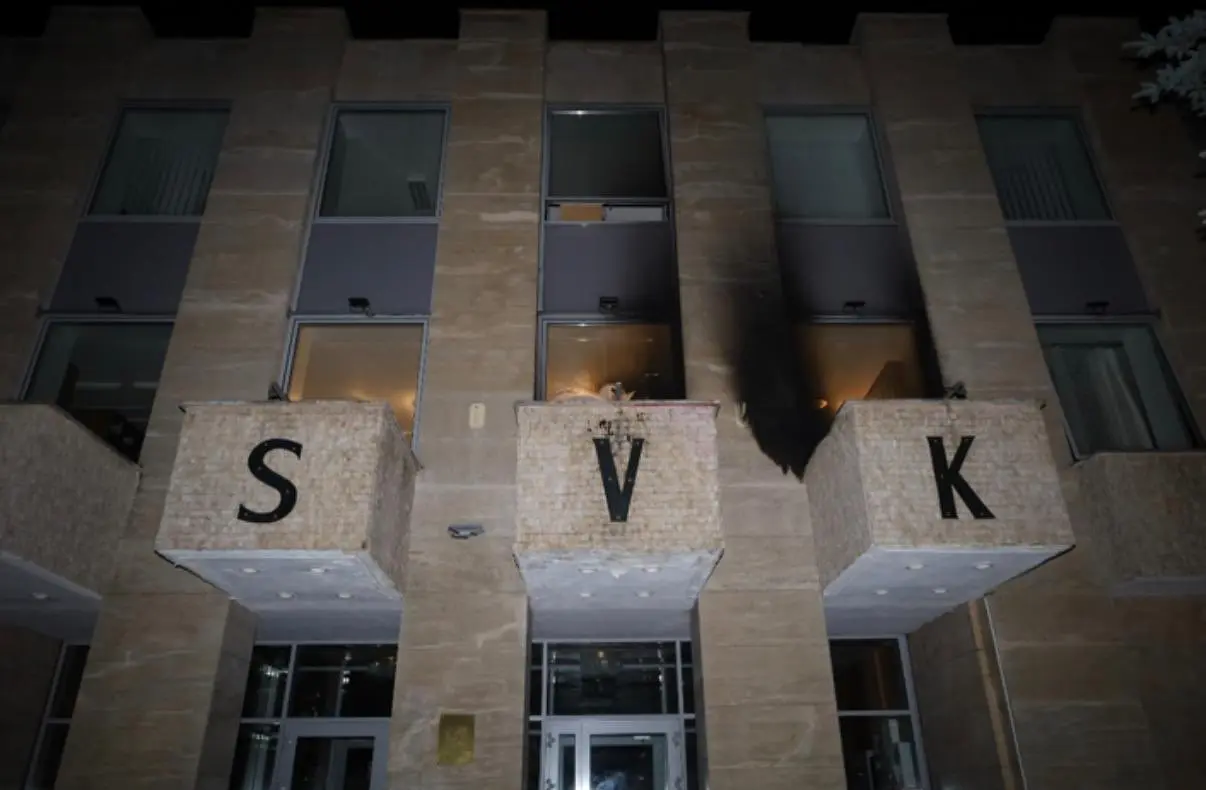

The publication notes that the "Russian House" is run by the Russian state agency "Rossotrudnichestvo", which was added to the European sanctions list following the start of Russia’s full-scale invasion of Ukraine in 2022 for spreading pro-Kremlin propaganda.
"Over the past few years, the Prague centre’s activities, under the guise of culture, have expanded and now include the systematic promotion of pro-Kremlin narratives and political views.
According to findings by the website investigatecase.cz, the centre also commissioned the translation of a series of leaflets spreading false information about the war in Ukraine," the publication writes.
These leaflets spoke of alleged "Nazi units" in Ukraine and spread other narratives of Russian propaganda.
Russia’s reaction
Russian Foreign Ministry spokeswoman Maria Zakharova called the attack a "barbaric act".
What led up to this?
It should be recalled that in 2024, Ladislav Šticha, a spokesperson for the Czech counter-intelligence service BIS, warned against the activities of the "Russian House" in Prague, which is on the EU sanctions list.
At the time, the Russian House was officially closed, but continued to organise individual events for the public and run campaigns to encourage students to study at Russian universities.


