



Clone resolution 5655. Will Ministry of Infrastructure and construction cartel win against local self-government
The Cabinet of Ministers may soon return to considering a clone of the scandalous draft law 5655, which increases the influence of the central government on the issuance of construction permits and actually works for the construction cartel.
As you know, draft law 5655 was voted on at the end of 2022, but it has not yet been signed by the president.
The next day after the vote, Ukrainians supported a petition to President Volodymyr Zelenskyy with more than 25,000 votes, asking him not to sign the law. The European Commission made a similar request in November 2023. In addition, the European Parliament made the same recommendation.
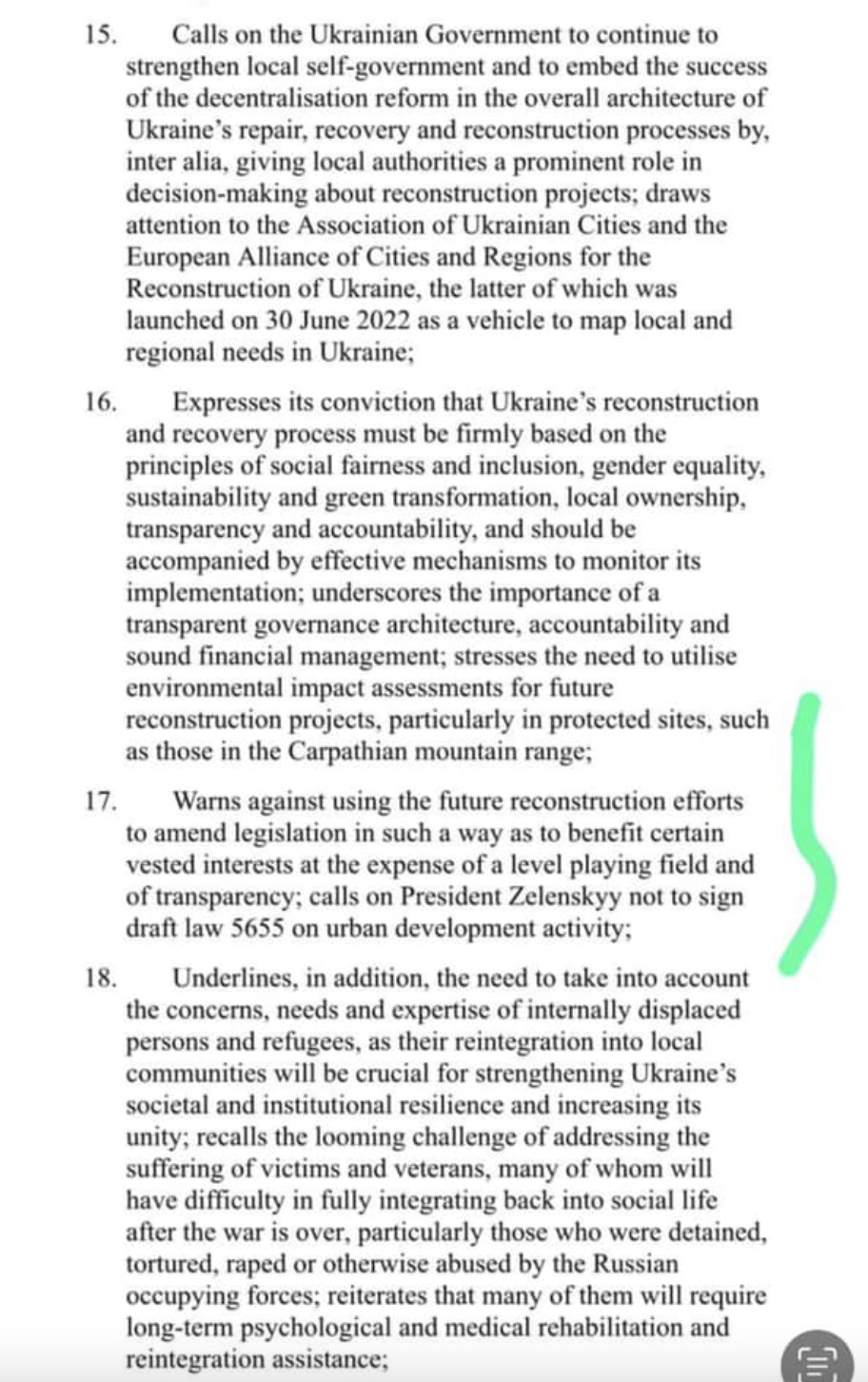
Ukraine should refrain from adopting the law on urban planning in its current form, as it creates integrity risks arising from the delegation of excessive control powers in the field of urban planning from state-owned enterprises to private organizations and leads to a weakening of local authorities' powers in this area," the European Commission report said.
As a reminder, the draft law, which has been forced through parliament since 2021, contained some of the most scandalous moments:
- The provisions of the new law actually created a closed platform for large construction companies that could invest in the so-called private State Architectural and Construction Inspectorate (SACI) (expert organizations) that would issue construction permits. Ironically, these companies were supposed to have certified specialists who would receive licenses only from structures associated with People's Deputy Dmytro Isaienko.
- Instead, the draft law significantly restricted the rights of local governments, although it increased their liability for construction violations.
- The role of architects in decision-making was also severely limited, and they could be replaced by another contractor.
- In addition, the draft law proposed to create an "Urban Development Chamber" under the Ministry of Infrastructure (thus significantly increasing the ministry's influence on the processes), which opponents called an analogue of the tender chamber.
Representatives of small developers believed that the draft law was designed to throw them off the game and enable large companies to control the price of a meter of construction.
Despite the calls of the European Parliament and the European Commission, in December 2023, the media reported that the provisions of the draft law could be implemented by a government decree. However, due to the publicity, the Cabinet of Ministers did not approve the resolution.
It was also promised to add public opinion to it. However, as Anna Kyrii told Censor.NET, although the proposals were submitted, they were not taken into account. This is confirmed by the table in the post on the ministry's website.
On 10 April, ZN.UA reported that the resolution was being prepared for consideration again.
The most interesting thing is that in early April, the resolution received a negative opinion from the National Agency for the Prevention of Corruption.
The document, signed by NAPC Deputy Head Artem Sytnyk, stated that the resolution contained the following corruption risks:
- non-compliance with the provisions of the Land Code of Ukraine (hereinafter referred to as the LCU) and the Law of Ukraine "On the State Land Cadastre" regarding the mandatory entry into the State Land Cadastre of data (changes to them) established by urban planning documentation at the local level, which, in turn, will lead to abuses in the field of land relations and construction;
- by narrowing the list of approvals, it creates conditions for illegal construction and the acquisition of the right under the declarative principle to build facilities located within the territories of cultural heritage monuments, historical and cultural reserves, etc:
- establishes non-transparent principles for the activities of expert organizations (the same private SACI, which, having concluded an agreement with a company, are unlikely to act against it - author's note);
- gives the State Inspection of Architecture and Urban Development of Ukraine (SIAUD) the power to block an expert organization from the register in case of court decisions, while the State Inspectorate cannot establish intent in its activities under its existing powers. According to the NACP, this may lead to forejudgement regarding certain organizations.
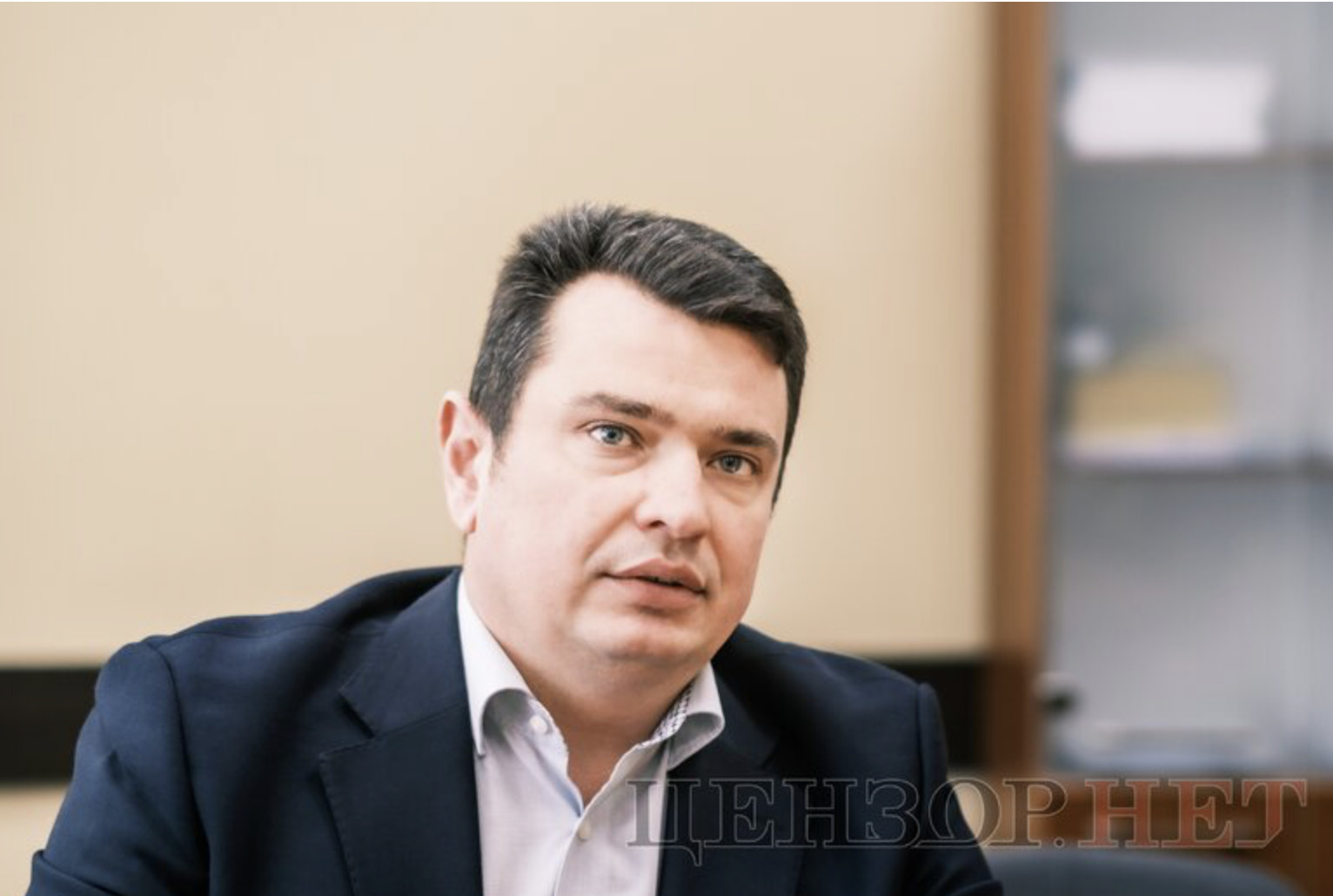
Therefore, the NACP asked for a review:
- establishing the possibility for a state registrar to provide public services in the field of construction in conditions when there are missing documents (information about such documents) in the Register of Construction Activities, or to make forejudgements to refuse to register the right to perform preparatory/construction works, or to issue a permit for construction works;
- regulation of unlawful actions of the state registrar regarding non-enforcement of a court decision;
- the implementation of state architectural and construction control, among other things, by authorized persons for state architectural and construction control as a business entity to create corrupt practices in the construction sector;
- regulating the risk of circumvention of competitive conditions for the transfer of state or municipal land for use, violation of the rights and legitimate interests of land owners and users to use and dispose of their land plots.
In addition, the NACP noted that the resolution does not comply with existing legislation and international obligations in a number of provisions, and therefore they should be corrected.
Censor.NET asked the Ministry of Infrastructure for a comment on why this resolution was introduced and what the ministry wants to achieve.
"Why are we proposing such changes through a government decision rather than through the adoption of a draft law?...It is important not to make a mistake when establishing a framework for decades to come. Therefore, in the field of urban planning, we propose experimental projects in which we go not by prohibitions, but by alternatives," said Deputy Prime Minister Oleksandr Kubrakov in his response.
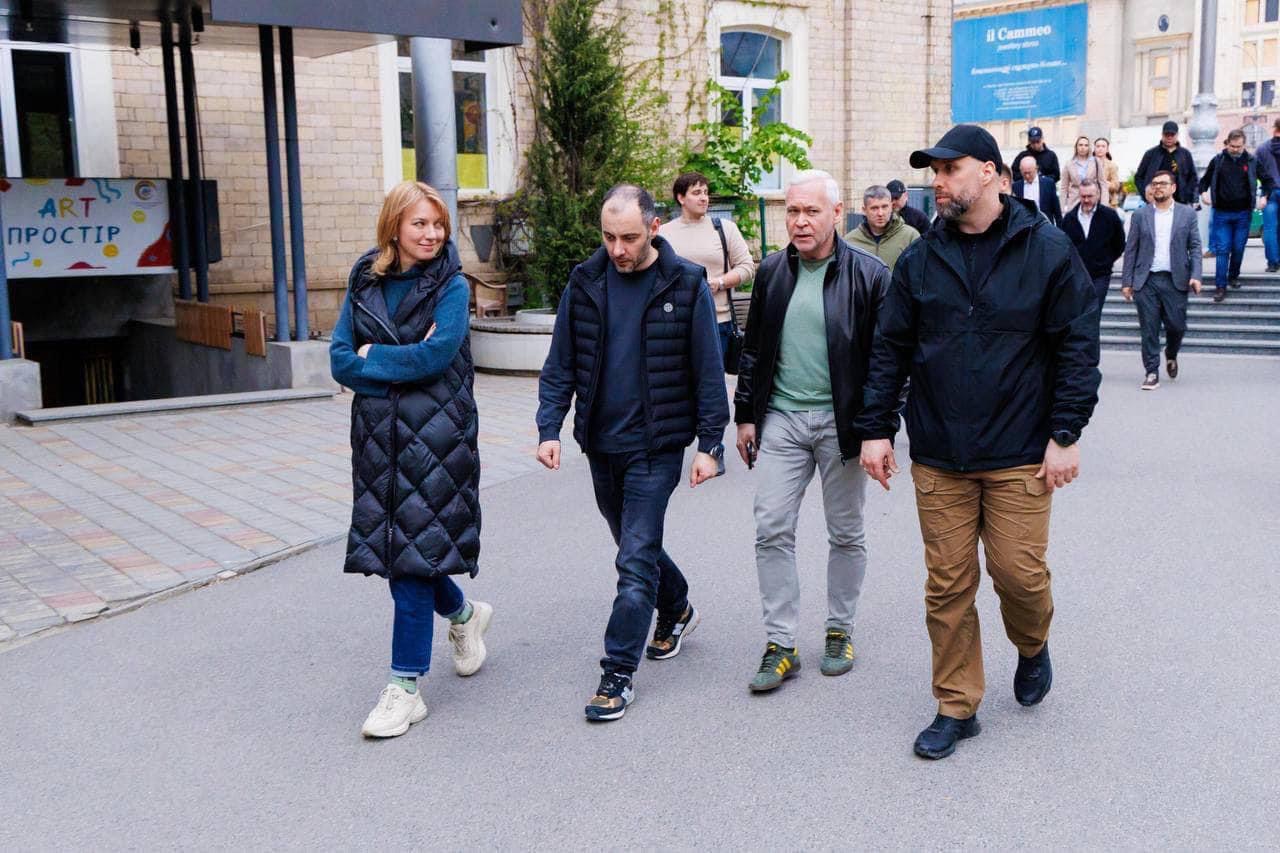
The Vice Prime Minister traditionally emphasized such priorities as automation, digitalization and control.
"Most often, corruption occurs where there is human-to-human contact and weak regulation. In the case of construction, this means obtaining a permit to start work and facility commissioning. Here, an official can delay the process or, on the contrary, "turn a blind eye" to violations. What do we propose? Essentially, we suggest using a computer to make decisions. The system automatically analyzes project documentation data and generates an inspection report. If violations are identified, the document's signature is blocked until the violations are eliminated," the response says.
"It is the same with the expert examinations of planning documentation. It will be possible to obtain a permit only if there is a positive expert report," Kubrakov said.
At the same time, he added that if construction takes place within areas recognized as cultural heritage, the system must notify the relevant controlling authority.
In fact, all the scandals of recent years are mostly due to the fact that monuments are recognized as monuments post factum. When the public raised a fuss. And the Ministry of Culture is not in a hurry to defend them, even when the Prosecutor General's Office takes up the case. As was the case with Saksahanskii's house in Kyiv, where a company close to Vadym Stolar and Viktor Medvedchuk wanted to build a hotel.
Investors often start building on land that was allotted 10-20 years ago. And they are not very happy about the fact that there is a monument nearby.
For example, a few weeks ago, real estate developer Ihor Nikonov, gave an interview to Ramina Eskhakzai, where he complained that he was actually prevented from building in Kyiv because the remains of fortifications and ceramics from the times of the state of Kievan Rus' were found there. The land allocation took place during the time of Mayor Chernovetskyi in favor of Kyiv Vegetable Factory LLC. It later signed a construction contract with KAN Development.
The Prosecutor General's Office is now challenging the land allocation because it is an archaeological site. However, the Commercial Court sided with the developer.
"Look what's happening - because the Ministry of Culture hasn't done anything for 30 years, there is no final list of cultural monuments, no list of the regime for using the territories around these monuments. And what did they come up with? Retroactively, when a person bought a building, allotted land, made a project, some started work... they began to make the status of a monument," Nikonov complained.
"Activists may want something good, but they need to understand that business has invested in it. We have a similar situation in Kyiv. 17 years ago, land was allocated. The tenant paid 5 million dollars, and now activists and the prosecutor's office came and said: "Let's take some part of it away from you. Because 17 years ago you were wrongly allotted... Just imagine, I invested money, made an investment project, and they say to me: "Let's take it away." What kind of investment climate is that? If it was allotted incorrectly, then put the person who did it in jail, but don't touch the business," the businessman added.
Nikonov can be partially understood - he is only an executor - but it will be difficult for him to deny that due to the desire to build skyscrapers and business centers, the landscape of the historic center of Kyiv has been destroyed.
Nikonov touched on the changes proposed by the Ministry of Infrastructure quite hastily in that interview.
Now the government is centralizing to prevent the creation of local princes who are raking off everything for themselves, and it allows real estate developers to get all the documents they need to start construction from a centralized body. And local authorities seem to be on the sidelines. Although I think that local authorities should be involved in this process, and such a figure as the chief architect should approve the composition of buildings," the businessman said.
However, representatives of local authorities in their public statements express a lack of understanding of how to coordinate and supervise in the event of a reduction in the rights of local self-government (although their supervision was so-so before).
As you know, the draft law 5655 has been repeatedly criticized for taking away some of the powers of local authorities to the central level. The resolution extends this line.
"There have been many discussions around this position. At present, the issuance of permits and commissioning of CC1 and CC2 facilities are monopolized by local authorities, in particular in Kyiv, Dnipro, Lviv and Odesa. We propose that the customer can choose an alternative - the State Inspectorate of Architecture and Urban Development (SIAU). An organization that has both expertise and reputation. It is important that we do not take away the right of local governments to issue permits, but at the same time break the monopoly," Kubrakov explained to Censor.NET.
According to him, the resolution also stipulates that local authorities must monitor all construction on their territory and make the report publicly available to the Unified State Electronic System in the Construction Sector (USESCS). If signs of illegal construction are detected, the report is automatically sent by the system to the controlling authorities. Each illegal construction project is subject to monitoring, data entry into the electronic system and response by the relevant authorities.
The Ministry of Infrastructure presents its resolution as a protection against abuse by local governments.
"Let's imagine the situation. An international corporation with millions of dollars in investments plans to build a furniture store in Ukraine and has purchased a land plot for this purpose. After that, the corporation comes to the local authorities for a document - urban planning conditions and restrictions (UPCR), which specify the parameters for the construction of such a store - building density, height, safety factors, etc. In practice, it can take months, if not years, to issue such a document. Or they may be forced to return the documents to the investor endlessly on various grounds. What can an international corporation do in this case? Either sue for at least 3 years or take their money out of Ukraine, or not even come here until clear rules of operation are established," Kubrakov said.
"What does the resolution propose? The grounds for granting UPCRs and the algorithm for appealing decisions are clearly defined. Again, we offer an alternative to years of litigation. This is the SIAUD, which has built a reputation as a professional and corruption-free institution. If a local government body violates the law, the customer can appeal the decision to the SIAUD. The SIAUD will be able to make a decision on granting UPCRs if there are no grounds for refusing to grant them," the Deputy Prime Minister said in his response.
But it was the European Commission and the European Parliament that were actually against reducing the powers of local self-government.
In addition, speaking about the issuance of permits, Kubrakov does not mention private expert institutions, which are the ones that are most criticized.
Anyway, now the story with the resolution runs into the fact that it needed to correct a number of points that the NACP identified as corrupt. The ministry told Censor.NET that the comments were taken into account on 6 points, and not on 5. But 5 were allegedly removed as a result of consultations.
However, on Friday, the NACP press service told Censor.NET that "the version of the draft resolution that was re-submitted to the NACP differs from the one that the NACP analyzed during the anti-corruption expertise."
"In this version, which is currently being analyzed by the NACP, the NACP's recommendations are partially taken into account, and there are also new provisions that were not the subject of the study," the NACP said.
It is not yet clear whether this means that the text of the resolution will be subject to another expert review.
At the same time, the resolution's opponents hope that Kubrakov will lose his post in the coming days, and after that, no one will be able to force the resolution.
However, it is not clear where the optimism comes from that lobbyists will not find their way to the new minister (if the replacement takes place at all).
Tetiana Nikolaienko, Censor.NET


