



Throughput capacity is about 7-8 laws: how MPs are trying to protect themselves from NABU and SAPO with blackmail
On January 13, Yulia Tymoshenko was charged with attempting to "destroy" the majority. A few weeks later, Danylo Hetmantsev stated that the composition of the coalition would not be revised, even if there were fewer than 226 deputies. However, despite the fact that the "Servants" still remain within the majority, they face a problem with votes on a daily basis.
During the previous parliamentary week, parliament was effectively shut down. On 12 February, the chamber was struck by an unexpected illness – 38 MPs fell ill with either food poisoning or rotavirus.
"Even though they were healthy the day before (they were treated with IV drips)," noted Halyna Tretiakova, a representative of the "servants".
At the same time, the opposition faction "European Solidarity" suggested that the majority simply did not have enough votes, even for ratification, let alone for laws. At that moment, there were no more than 204 MPs in the chamber.
The next day, a UNIAN journalist from the Verkhovna Rada reported that just over 50 MPs could be seen.
MP Yaroslav Zhelezniak commented on the situation on his Telegram channel: "Judging by the presence of MPs during question time to the government, my colleagues' well-being has not improved... Or maybe no one is interested in what this government has to say anymore," he said ironically.

At the same time, words from an interview with MP Olha Smahliuk became popular on social media. In a conversation with journalist Yulia Zabelina, she essentially admitted that MPs from the pro-presidential faction often do not want to vote, demanding that the National Anti-Corruption Bureau of Ukraine (NABU) pay less attention to them.
As is well known, 41 MPs are currently involved in proceedings by anti-corruption agencies.
"This situation really exists, and we have seen several striking examples of this in recent sessions when (draft laws) were rejected. I will be frank with you, this worries those members of parliament who are responsible for implementing certain bills from the Ukraine Facility plan or our international commitments, which we have signed, in particular with the International Monetary Fund," the MP said.
According to Smahliuk, she understands that law enforcement agencies have to do their job, but MPs are annoyed by "the excessive publicity of these processes, which is not always accompanied by even suspicions, but simply by hard talk about the fact that you are a figure in such and such an investigation, and you are such and such."
"Therefore, the situation looks like this: such conditions have been set. And some MPs went around the Verkhovna Rada and our faction and said: 'Well, come on, since we have been put in such harsh conditions, we have to defend ourselves somehow, show our position,'" said the representative of the "Servants".
Smahliuk relayed her colleagues' position that "we need to appeal to the government so that the government communicates with international partners that the Verkhovna Rada is unable to vote on anything."
The MP did not explain what the government should ask for. That everyone turn a blind eye to additional payments to individual MPs? And that Yulia Tymoshenko be declared an eternal victim of repression?
Now MPs are emphasising that the case against the same group of MPs led by Kisel, who were charged before the New Year, mentions completely neutral bills.
"And there was talk that they are being charged, for example, with voting, resolutions, appeals to the UN condemning the actions of the aggressor state. For some international agreements with the Baltic countries on demining. That is, things that naturally need to be voted on, but they are being charged with attempting to illegally enrich themselves in exchange for voting for these bills," the MP noted.
In other words, the MPs are deliberately shifting the focus to the fact that they are allegedly being accused of voting for neutral bills.
It should be noted that the hearings on the election of preventive measures for these MPs were closed. The author even heard that the anti-corruption authorities were allegedly asked to do so by Kyrylo Budanov, who was not yet the head of the Presidential Administration at the time.
Most likely, the MPs received these payments either monthly (as it sounds in Tymoshenko's recordings) or for specific bills. But in any case, it is now difficult for the media to appeal in these matters, because it is still unclear what exactly the MPs of Kisel's group received money for.
However, if you listen further to Smahliuk's interview, there is another quote that interestingly complements the picture of the relationship between the government, MPs and NABU.

"On the other hand, I even hear from our government officials responsible for European integration that anti-corruption agencies need even more powers, an increase in staff, which is natural for them to carry out their powers, and a salary increase, that they have appealed to the government: "When will you submit the bills we need to the Verkhovna Rada for a vote?" And they are told: "Well, you are now responsible for gathering votes in the Verkhovna Rada at NABU, so you know better," the MP noted.
The author quotes these words not because she agrees with them, but because they reflect the mood of many MPs. And the author has heard them more than once, but on condition of anonymity.
As a result, the "Servants" do not vote because they are bargaining for their safety or, in their version, "are already afraid to vote for anything."
"And there are no votes 🤷♂️ And here the problem is purely political: in the Servant of the People party itself, there are no votes for the government's/OP's bills; similarly, such votes are sabotaged by the Coalition's "satellites". And this began long before the NABU handed over suspicions to MPs, or even before Yermak's dismissal... It started with Mindichgate," wrote Yaroslav Zhelezniak, a deputy from the "Voice" party, last week.
Although serious problems with votes have been going on since the summer, with the vote on the laws on NABU and SAPO.
Even then, some MPs decided to leave the chamber on time under the pretext of business trips or illness.
"And (here is my subjective opinion), until the government changes, this will continue. Because, in fact, this coalition does not consider the government to be "theirs" and does not really understand why they should cover up their problems," Zhelezniak writes.
And no one is going to change the government.
"Even if the majority disappears, it does not mean the automatic resignation of the government. And no one is going to reboot it. What do they want? A government of technocrats? What kind of government is that? Can they explain how Poroshenko and Tymoshenko will sit together in that government of unity?" one of the "Servant" representatives asked irritably a couple of months ago.
He also believes that there will be votes on key issues. As for the rest, it depends on how the cards fall.
Last week , MPs passed the law "On the ratification of the agreement between the Government of Ukraine and the Government of the Republic of Poland on the activities of Bank Gospodarstwa Krajowego (BGK) in Ukraine" only on the second attempt.
According to the Verkhovna Rada website, the agreement creates the legal basis for Bank Gospodarstwa Krajowego to operate in Ukraine. It provides for the possibility of providing financial and technical assistance to the Ukrainian government, state and private institutions and organisations, in particular in the form of loans and other financial instruments, including export support, grants and guarantees for the implementation of projects for the restoration and development of Ukraine.
MPs also passed a law important for the new Minister of Defence, Mykhailo Fedorov, on payments to the families of those killed and missing in action.
It is worth noting that the minister's team was not certain until the last moment that this law would be passed.
Similarly, there is a consistent lack of support in the chamber for the IMF's demands: the introduction of VAT for individual entrepreneurs with an annual income of over 1 million hryvnias, the abolition of tax exemptions for parcels worth up to 150 euros, the adoption of a law on the taxation of digital platforms, and the continuation of a 5% military tax even after the end of martial law.
As a result, the IMF took the unprecedented step of softening its demands. And on 3 March, Ukraine received the first tranche of $1.5 billion.
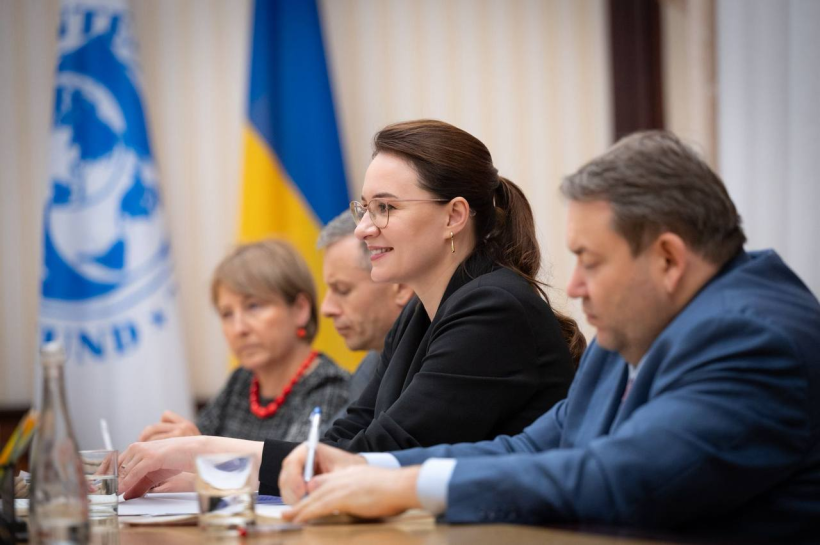
"In our work with the IMF, we agreed to raise the VAT threshold for sole proprietors to 4 million hryvnias (equivalent to about 85,000 euros) — this is the maximum VAT rate for goods in Europe. Thus, these changes will not affect two-thirds of all sole proprietors," Yulia Svyrydenko said earlier.
However, it is not certain that MPs will vote in favour of these demands.
"We voted a little better than last week. But it is difficult to expect any major reforms from us yet. Davyd (Arakhamia) is up to his ears in these peace talks. Everyone is fed up with the IMF programme. Maybe spring will come and the mood will improve," one of the MPs shared his thoughts on the mood in parliament.
"The throughput capacity is about 7-8 per day," added the interlocutor.
When asked who was gathering votes in Arakhamia's absence, the MP replied that there was nothing to gather in principle.
"There was nothing extraordinary to gather votes for. There was enough. And what was not enough, such as the registration of wedding drones, was rejected," added the interlocutor.
Tetiana Nikolaienko, Censor.NET


