



Life after Orbán: how Ukraine can establish cooperation with Peter Magyar’s Hungary
Just a few months ago, while Hungary’s election campaign was underway, we could only imagine which direction the country would take after the vote and whether Ukraine would remain the scarecrow Orban’s propaganda has traditionally used to frighten ordinary Hungarians.
Now, in early June, we are interested in questions of a different kind. Have Ukrainians’ hopes been fulfilled that Peter Magyar and his team would change the rules of the game in Budapest’s foreign policy? How will the new Hungarian authorities approach their interpretation of relations with Kyiv? And can the Ukrainian authorities establish a constructive dialogue with Hungary in a short time?
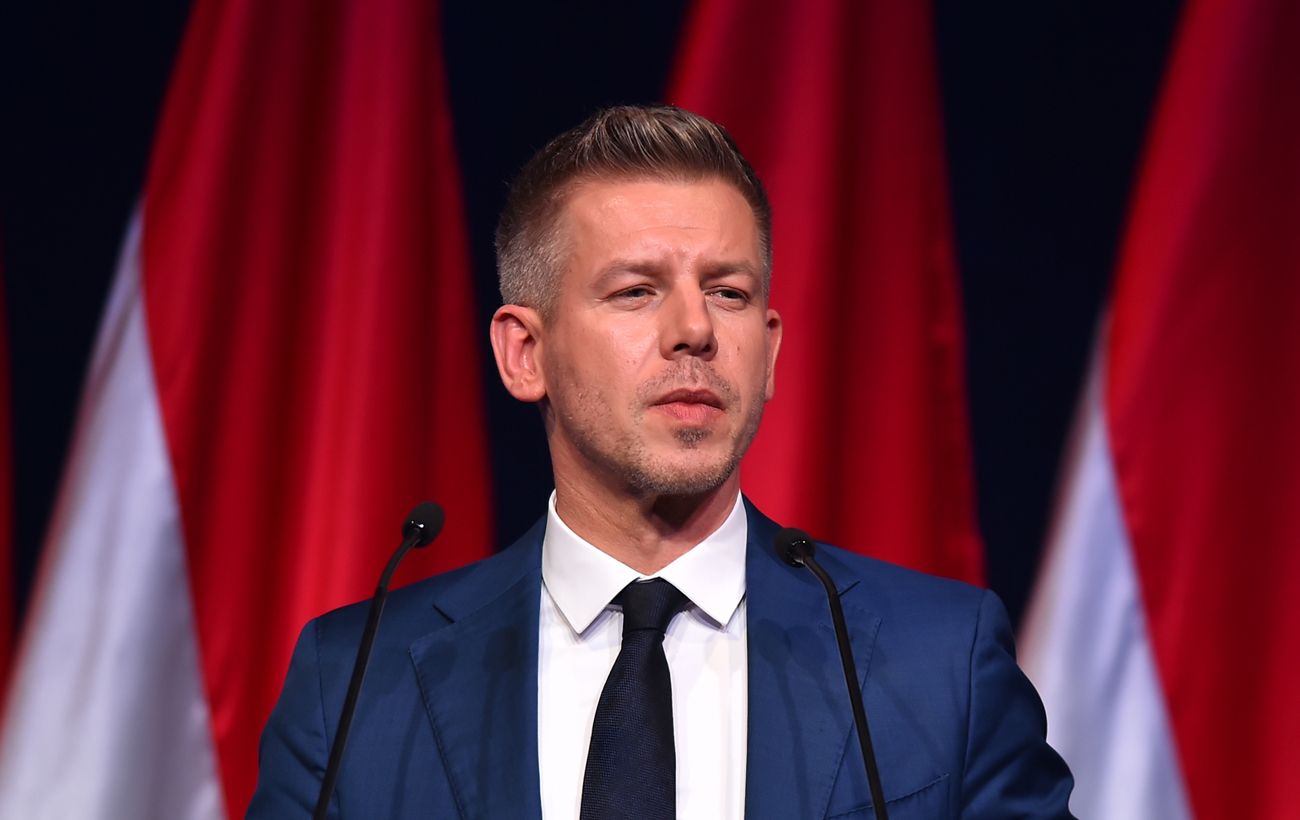
We have already begun to receive answers to some of these questions. First, Hungary lifted its veto and approved the European Union’s €90 billion loan for Ukraine, unblocking the decision after a compromise on restoring oil transit through the Druzhba oil pipeline.
Second, the new Hungarian authorities returned to Oschadbank the funds and valuables unlawfully detained in early March while being transported by Ukrainian cash-in-transit officers.
Third, Prime Minister Peter Magyar said Ukraine should receive effective security guarantees, not ones like the Budapest Memorandum. His foreign minister, Anita Orban, has twice condemned Russia’s missile attacks on Ukraine (which would have been impossible under Orban).
On the other hand, the Hungarian authorities are united in demanding real steps from Ukraine on the issue of the Hungarian national minority in exchange for lifting their veto on opening clusters in Ukraine’s accession to the European Union; the Hungarian government has reinstated its ban on Ukrainian agricultural products, and the Hungarian prime minister has promised that Hungary will not send weapons to Ukraine.
"WHAT DO WE SEE WITH THE NAKED EYE? THAT HUNGARY HAS REALLY TURNED BACK TOWARD EUROPE."
How should we assess such a variety of decisions, gestures, and statements? We will discuss this further, but for now, let us ask what has changed for Ukrainians in Hungary itself from one of the leaders of the Ukrainian diaspora, Viktoriia Petrovska, head of the NGO Ukrainian Association "Unity".

"This is true: we are no longer affected by that storm of the election campaign of another party, which was actually frightening," Viktoriia says. "Immediately after 12 April, I personally saw bots disappear from various platforms; those Hungarians who supported the previous government disappeared as well. The aggressive posters were gone, there was silence everywhere, and no one was biting or pinching anyone.
"At the moment, the atmosphere in our country is this: the government seems to have been convened, but it has not yet been put together line by line, plank by plank. There is still no clear certainty. What have we heard from Magyar recently? Yes, he officially recognised Russia as the aggressor, which is excellent, as is the fact that he has said it more than once. The foreign minister has also expressed her view several times, twice in connection with Russian missiles targeting Zakarpattia and Kyiv. In addition, they have already spoken twice with Ukraine’s foreign minister, Mr Sybiha. These are all major positives, because in recent years, before 12 April, nothing like this had happened.
"What else? He will still not support supplying weapons to Ukraine.
"In general, living here in Hungary, I still do not see any significant different impact on us. We continue living here as we did before. According to official data, 90,000 Ukrainians currently live in Hungary. These are the people who have received a temporary protection certificate from the immigration service. But whether they are still here or have received this document and left, no one knows.
"What do we see with the naked eye? That Hungary has really turned back toward Europe. We are seeing various positive decisions: Peter Magyar went to Brussels on Thursday, and these EU-frozen funds are supposed to reach Hungary. And second, I believe that Europe supports Ukraine, and since Hungary will now be part of Wider Europe, it will also try to support Ukraine. So as not to be the odd one out in the European Parliament, as his predecessor was.
"Will Orban’s people be able to hold on to power somewhere at the local level? So far, there is no sign of that. And I am sure they will not be able to do it. Because a major clean-out is underway. They are simply replacing people.
"Do I see any noticeable movement from the Ukrainian authorities, with a desire to establish contacts at various levels with the new Hungarian authorities? So far, I do not see anything that is lively or fast. But I am sure Ukraine will take the first steps to make ties with Hungary easier. Because there is now a great opportunity," Viktoriia sums up.
"HUNGARY OUSTED A PRO-RUSSIAN LEADER AND ELECTED A PRO-HUNGARIAN ONE. THIS IS A VICTORY. THE FACT THAT THIS LEADER IS NOT PRO-UKRAINIAN IS NOT A BETRAYAL FOR US, BUT A CHALLENGE."
Everyone is now talking about a window of opportunity. At the same time, it seems that only naive idealists expect the new Hungarian authorities to rush into the arms of the Ukrainian authorities and satisfy all our wishes. No, this is not how things work in today’s mega-pragmatic world. And if any newly elected politician tries to take that path, he or she will soon lose the approval ratings they worked so hard to earn.
"I personally did not have inflated expectations," says Vadym Halaichuk, an MP from Servant of the People. "Perhaps because I have good acquaintances who were in the Hungarian parliament under Orban’s rule and were also actively involved in Magyar’s election campaign during the last election. Speaking with them from time to time, I concluded for myself that there was no point in raising expectations too high. Because Hungary has its own foreign policy specifics. For example, it was clear to me that the issue of national minorities would not go away, because this is the position of Hungary’s political elites. Instead, pleasant news could be expected in the context of Hungary shaping its public positions in European institutions. And here we see both the issue of the €90 billion loan, which is very important for us, and, in principle, the lifting of the blockade on everything related to Ukraine’s progress toward the European Union."
Halaichuk’s fellow faction member, Ihor Kryvosheiev, who is originally from Zakarpattia, also takes an optimistic view of how things are progressing in Hungarian-Ukrainian relations. For him, Peter Magyar’s desire to change public discourse without overly abrupt moves, step by step, is understandable. Otherwise, one can get into trouble.
"It is important to understand that Hungarian society was under the influence of total propaganda for almost two decades," Kryvosheiev explains. "And if the new authorities now start turning the boat around sharply, there is a risk of polarising society. As, for example, is happening in the United States: discord, political killings, ineffective economic policy... The new prime minister, Peter Magyar, is a strong moderate politician. He has made it clear that he is working not only for his voters but for every citizen of Hungary. In other words, he first turns the boat of public opinion around, and only then the boat of state policy. And even if, on certain issues, it may seem that some statements sound similar to Orban’s, in any case we are seeing a sufficient number of friendly steps. Hungary immediately unblocked the EU loan for Ukraine. It returned the seized cash-in-transit vehicles. Yes, it set conditions for supporting Ukraine’s accession to the EU, but let me remind you that Orban was categorically against this accession, without any conditions at all."
"These are all very positive steps," the MP continues. "Meanwhile, Russia is pouring huge amounts of money into disinformation. For example, after the election, I recorded a huge number of fake quotes attributed to Peter Magyar on Telegram, including on the largest channels. They are planting outright lies in order to distort Magyar’s reputation in the eyes of Ukrainians. They publish fake quotes, then you check the interview or speech, and there is nothing of the kind there. But we easily believe it because the image of an anti-Ukrainian Hungary has already taken shape in our minds. And this is being done systematically so that, God forbid, we do not suddenly create a constructive neighbourly alliance. Therefore, it is worth applying a certain disinformation filter."
Kryvosheiev views the current state of affairs, not without irony, through the coordinate system familiar to Ukrainians: "betrayal versus victory":
"Hungary ousted a pro-Russian leader and elected a pro-Hungarian one. This is a victory. The fact that this leader is not pro-Ukrainian is not a betrayal, but simply a challenge for us in building new relations... Accordingly, in this system, we are still closer to victory than to betrayal. We need to build neighbourly relations constructively and with a cool head... In fact, Peter Magyar is very similar to our president, Volodymyr Zelenskyy. He is very young; he won by an absolute landslide and, accordingly, will build his policy and brand in a very similar way. What matters for us here is that we do not end up in competition in this situation. We really need to work to ensure that these two leaders find certain things they can fight for together and strengthen together. And on the issues that divide us, we need both leaders to find consensus there."
It is hard not to agree with Kryvosheiev on the need for a cool head and a search for unifying themes. All the more so because we all remember Volodymyr Zelenskyy’s controversial remarks about Viktor Orban. Let us hope this story will not continue in the Ukrainian leader’s relations with Peter Magyar. Because that would be understood neither in Budapest nor in Brussels. Nor, for that matter, in Ukraine, where people have waited too long for this very "window of opportunity."
Fortunately, so far, there have been no scandals in relations between the two governing teams. Not even on the traditionally difficult issue of the Hungarian national minority in Ukraine.
"WE MUST HANDLE OUR INFORMATION AND COMMUNICATIONS POLICY VERY SKILFULLY, PROVING ONCE AGAIN THAT UKRAINE IS DOING EVERYTHING TO PROTECT THE RIGHTS OF NATIONAL MINORITIES."
On this issue, we really need to move with great caution. All the more so because here Magyar’s government is clearly following the long-standing line of the Orban regime. We are once again being shown the famous 11-point list of demands. Among them, let us recall, are the possibility of taking exams in Hungarian; the abolition of the mandatory percentage of instruction in the state language for national minority classes; and the removal of supposedly existing restrictions on the use of Hungarian in the media, advertising, official paperwork, and the service sector in areas where the community lives. There are also purely political innovations: guaranteeing quotas for representatives of the Hungarian community in the Verkhovna Rada and local self-government bodies. And also reversing decisions on the consolidation of districts, above all, the Berehove district.
MAP: Berehove district on the map of Zakarpattia
On the other hand, colleagues from Suspilne, citing their own sources, report that there were positive shifts at the second Hungarian-Ukrainian consultations, which may later be announced through official channels:
"Nine of the 11 points in the plan on national minorities, which Ukraine had agreed with Viktor Orban’s previous Hungarian government, have been implemented. What remains is minority representation in elected government bodies and cultural autonomy.
The first point concerns, in particular, the need to elect minority representatives to parliament, which would require amendments to the Constitution and would lead to demands from other EU countries that have national minorities in Ukraine. At present, discussions concern changes to the Action Plan on cultural autonomy. The opening of clusters in Ukraine’s accession to the EU will depend on steps taken by the Ukrainian authorities, our sources said."
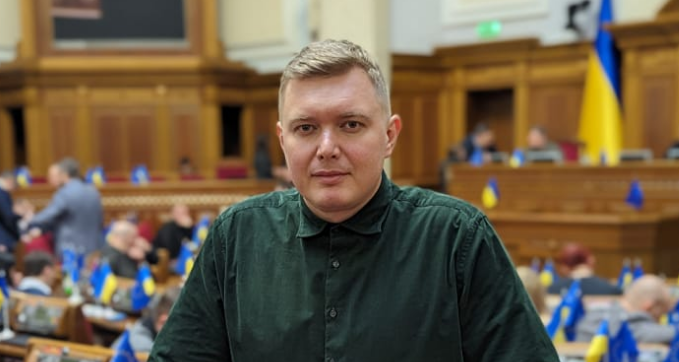
Censor.NET’s sources also have something to say about the issue of the Hungarian national minority and Budapest’s use of it. Ihor Kryvosheiev explains:
"Before 2022, the Hungarian national minority numbered about 120,000 people, and electorally, even up to 200,000 (taking mixed families into account). Now, according to the Zakarpattia Military Administration, the figure is about 80,000. In other words, the national minority has shrunk by half.
"This is still a huge number of people. They live very compactly and, in effect, occupy one electoral district. Accordingly, they need their rights to be ensured, and they need attention from the government. In my opinion, they should be represented in parliament: this is a very large number of citizens, and it is absolutely normal for them to have, for example, a single-mandate constituency MP. In fact, until 2019, they were almost always represented in the Verkhovna Rada, until Viktor Orban, in effect, stole this mandate from the national minority. This information was not made public in the media, but, for example, there could have been an MP from the Hungarian national minority in this convocation. I know this because during the parliamentary election, I headed the regional campaign headquarters of Servant of the People. And in the Hungarian district, we understood that if Servant of the People and the local Hungarian parties joined forces, victory was guaranteed. Accordingly, I suggested that they put forward their own young, untainted Hungarian candidate, and we would nominate him from Servant of the People. It was a win-win situation for both sides.
"They consulted for a long time, with Budapest, that is 100% certain, and eventually refused and lost. As a result, in 2019, the lobby of the Hungarian national minority disappeared from the Ukrainian parliament."
Vadym Halaichuk reflects on how the sides view the "list of 11":

"According to our ambassador to Hungary, Mr Fedir Shandor, there are sufficient grounds to believe that the sides have reached agreement on the absolute majority of the existing 11 points. But there are also several points on which it will be difficult to reach an agreement in their current form. For example, on the demand to automatically recognise all settlements in Zakarpattia as ‘traditionally Hungarian’. As far as I know from people taking part in those consultations, the Hungarians themselves do not have a clear answer to the question, ‘What exactly do you mean by this definition?’ because they understand that these formulations are far from legally perfect. They say: well, this still needs to be discussed...
"As for educational and cultural rights, if we put it very broadly, they say: let us return to the positions of 2015. That is, before the education and language reforms. To which we reply: but we did not carry out that reform to make things worse for national minorities, quite the opposite! What the problem was: We saw children from schools in areas of compact Hungarian settlement showing terrible test results. They did not know mathematics, physics, or chemistry simply because there was no one to teach them. With all due respect, a teacher who speaks Hungarian and also knows physics, chemistry, mathematics, and so on is, unfortunately, rare. As a result, we ended up with a generation of Hungarian children who left school knowing nothing; they could not enter any university because they simply did not know Ukrainian, and in other subjects, they were scoring zeros across the board. Accordingly, they either worked the simplest jobs or went abroad. As a result, to put it bluntly, we had a lost generation of Hungarian children. They did not have the same chances as other children in Ukraine to study and build a career."
Nevertheless, Halaichuk believes Ukraine should somewhat reformat its state policy toward the Hungarian minority.
"What exactly are the considerations? Well, first, we have certain obligations toward the EU: under the plan to ensure the rights of national minorities, we must actively consult with minorities, take part in shaping policies, discuss the printing of textbooks and other language-related educational rights, and carefully review what can be done to increase the opportunities for Ukrainian Hungarians to participate in government. How can these opportunities be created? Perhaps, if we make such a decision, some changes will have to be made to electoral legislation. Discussions are also being held on this."
Iryna Herashchenko, an MP from European Solidarity, also calls for seeking consensus with the Hungarian side (without forgetting our own dignity):

"Let us recall the latest loan agreement, which parliament ratified last week. So, the European Parliament set out several conditions for Ukraine: respect for democracy, parliamentary pluralism, the fight against corruption and fraud, and, among other things, the rights of national minorities. And in general, Magyar’s statements follow the logic of the European Union’s statements. And here we must handle our information and communications policy very skilfully, proving once again that Ukraine is doing everything to protect the rights of national minorities. And the only thing that threatens this is the Russian Federation, which kills regardless of nationality. This needs to be communicated."
At the same time, Herashchenko recalls that two can play this democratic European "game" and points to the term "parity of sides."
"There is a huge Ukrainian diaspora in Hungary today," she says, "and we would also like to see Ukrainian classes and Ukrainian libraries there. All this is very important if we are talking about mutual respect and the interests of our peoples. And in general, in all the countries we visit, we raise the issue of the right of Ukrainian children, who have now found themselves in the position of refugees from the war, to learn the Ukrainian language."
Ihor Kryvosheiev holds a similar view, only instead of parity, he uses the term "mirror."
- "We must act in line with European standards," the MP believes, "and, accordingly, in a mirrored way: look at how the Ukrainian national minority feels in Hungary. This is also a good strategy; it will encourage the Hungarian side to take reciprocal steps. By the way, the first such ‘mirror’ meetings have already taken place: Peter Magyar met with the mayor of Berehove, and Zelenskyy met with the mayor of Budapest. Yes, these are steps toward each other, but they cannot fundamentally change the situation overnight. Still, it is important that there is a positive trend. In general, all this is very painstaking work, primarily linked to debunking the propaganda that Orban built up over 20 years."
However, Ukrainian-Hungarian relations are not limited to the issue of national minorities. In a conversation with a Censor.NET journalist, Ihor Kryvosheiev also sketched out several important issues on the Ukraine-Hungary track that the Ukrainian authorities should already be dealing with (or are dealing with) now:
"First of all, we need to expand logistics cooperation, as is now the case with Poland and Romania. In effect, this cooperation on Hungary’s side was blocked by the pro-Russian orientation of the previous government. In terms of logistics, therefore, we have room to move forward, and here, for our part, we still need to bring a high-quality motorway up to the Hungarian border, because on the other side, the motorway is practically ready right up to the border with Ukraine. This would actually increase both capacity and the flow of goods, possibly even goods for military use (which would benefit both sides)."
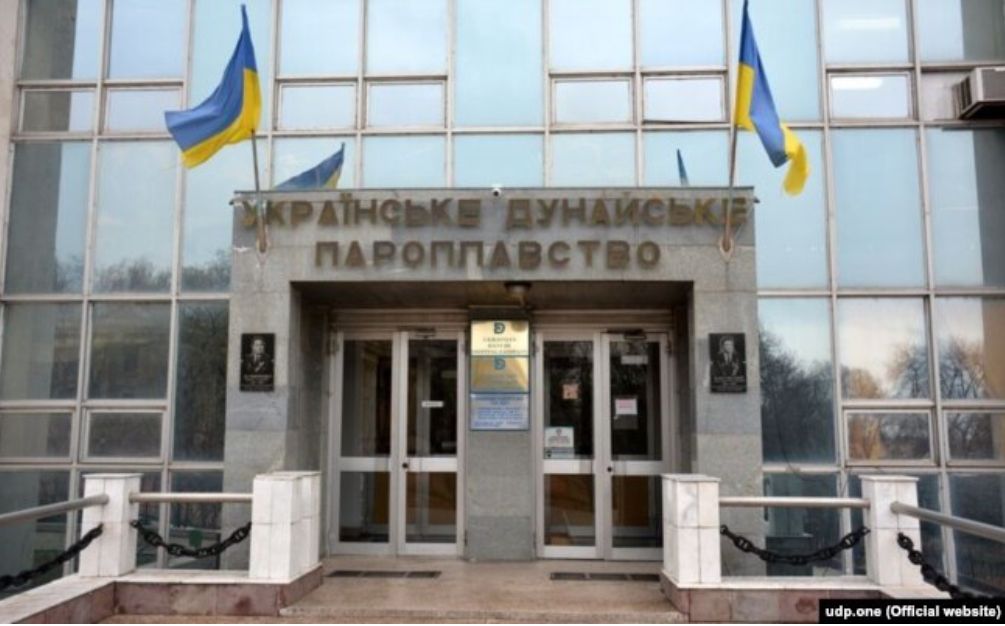
"We can also talk about better-quality cooperation in the Danube Commission," the MP continues, "because there is the Ukrainian Danube Shipping Company, which has an office in Budapest. By the way, regarding this office, there is a very good idea: to move the Ukrainian embassy there. Because, in effect, the Ukrainian embassy is now located on the outskirts of Budapest, while the state of Ukraine owns a huge building right in the centre, on the embankment, on the main tourist street. And it is clear that during Viktor Orban’s rule, we simply would not have been allowed to move the embassy there (and such permission is required). Now we have a window of opportunity to move the embassy to the centre of Budapest. If this happens, in terms of prestige, we will get a location on a par with the US embassy. (And, for example, the Russian embassy was located in a much worse place). This would be a very good location for presenting Ukraine in the capital of a European country."
INSTEAD OF AN EPILOGUE. IT IS THE PEOPLE WHO WILL DECIDE. AND CONTACTS
These and other possibilities look tempting, and their realisation would certainly enhance the post-Orbán thaw in Ukrainian-Hungarian relations. But a fundamental restructuring of these relations requires people and contacts. And things are in a sorry state in that regard at present. For too long, the parties (though primarily the politicians and officials of the Orbán era) have avoided one another. And when political elites do not communicate with one another, it is difficult to expect understanding between the peoples.
"I think there needs to be a two-way process here," says Iryna Herashchenko. "And Ukraine needs to work more with the Hungarian side, including with the new parliament. I hope there can be changes here. Because in previous years we effectively had no dialogue, for example, in the format of a friendship group, as the majority in the Hungarian parliament consisted of Orbán’s party. What’s more, whilst we always meet and work actively with EU parliamentary delegations at various interparliamentary assemblies — the Council of Europe, the OSCE, NATO — there has never been any contact with Hungarian delegations. And if there was, it was only on isolated occasions. At all working meetings, they always raised the issue of Hungarian schools. They were invited a million times to visit schools in Zakarpattia where classes for national minorities are held; we explained that this is our legislation, and it complies with European standards."
"We have already started building a network of contacts," says Vadym Halaychuk. "A group of politicians recently visited Ukraine. These are not current MPs, but former MPs who are now hoping to secure positions in government bodies. And generally, the first few weeks of the new government have inspired a sense of cautious optimism in them."
But overall, Galaychuk confirms, in terms of communication between the two states following Orbán’s rule, it is almost a wasteland.
"Even at the level of inter-parliamentary relations, there are as yet no regular contacts or plans for exchange visits," he says. "That is to say, there is a friendship group only on the Ukrainian side, whilst on the Hungarian side it has not yet been formed (as the new parliament has only just been elected. — E.K.). Contacts at government level are currently maintained mainly by the Foreign Ministry. As for contacts at the level of the Ministry of Defence or law enforcement agencies, these do exist, of course, but they are not systematic.
We tried to establish contacts even during the election campaign in Hungary. But two problems arose then. Firstly, we didn’t know the people on the other side very well. And secondly, we were quite rightly advised to temporarily refrain from such contacts, as Orbán and his team were bent on provocation. And you could, at the very least, create problems for the person you were in contact with. Or even become the target of some provocation yourself."
What can be said about this? The era of provocations in Ukrainian-Hungarian relations seems to be over. The desert needs to be irrigated — with people, business proposals, cultural exchange, and productive ideas.
We have been scaring each other for far too long. It is time to take an interest in one another again.
Yevhen Kuzmenko, "Censor.NET"


