



Koretskyi for Prime Minister: What will happen to Naftogaz and preparations for winter?
On Sunday, 12 July, President Volodymyr Zelenskyy caught everyone off guard by announcing that Prime Minister Yuliia Svyrydenko was stepping down, as nothing the day before had suggested that such a drastic decision was coming.
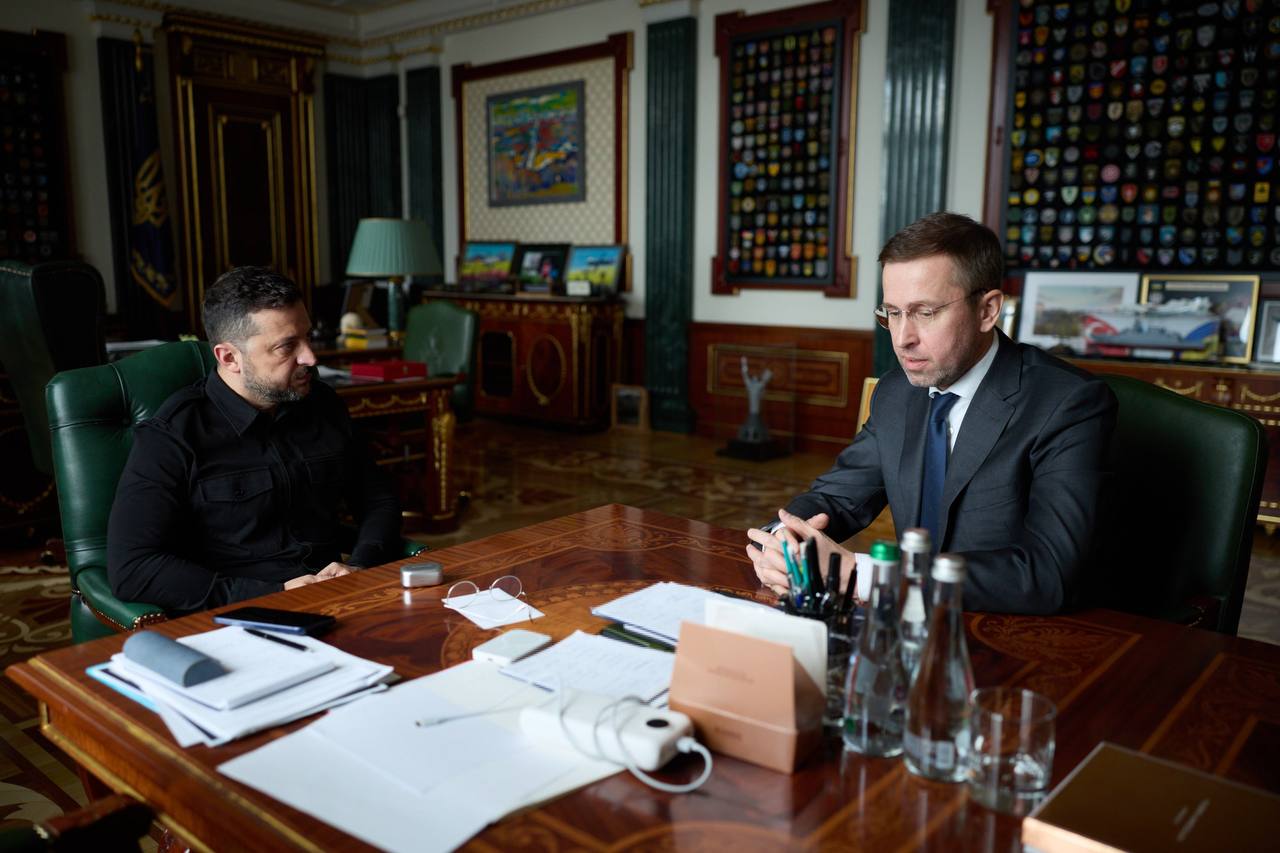
The official reason is a shift in Ukraine’s political strategy. However, sources in the President’s Office say that the idea of a government reshuffle "had been under consideration for a long time." Some ministries still lack permanent heads, while the work of several government officials has also caused dissatisfaction, particularly amid deteriorating relations with Poland and stalled European integration efforts.
According to available information, MPs are expected to vote on Yuliia Svyrydenko’s resignation as early as Tuesday, 14 July. In other words, the prime minister fell three days short of completing a full year in office. She is then expected to become Ukraine’s ambassador to the United States, replacing Olha Stefanishyna, who has already requested her dismissal, citing "personal circumstances."
As of Monday morning, the most likely candidate for prime minister is current Naftogaz CEO Serhii Koretskyi. Last year, he was offered the post of energy minister in an attempt to lure him away, but he remained at the helm of the state-owned company.
Immediately after meeting with Svyrydenko on 12 July, the president also met with Koretskyi and thanked him for his effective work. According to Zelenskyy, they discussed the steps the state needs to take to become more resilient and deliver the designated results under Ukraine’s updated political strategy.
Incidentally, Serhii Koretskyi’s effective leadership of Naftogaz is one of the reasons he is being considered for the prime minister’s post.
Koretskyi took over the company in the spring of 2025 with its gas storage facilities virtually empty, as the company’s previous management had not imported the fuel. Under Serhii Koretskyi, Naftogaz increased its reserves to 13 billion cubic metres, partly by securing loans from the European Bank for Reconstruction and Development (EBRD), the European Investment Bank (EIB) and Ukraine’s state-owned banks.
Ultimately, Koretskyi managed to steer the company through the exceptionally difficult winter of 2025/2026. Gas was the only utility supplied to Ukrainian homes without disruption despite attacks on gas infrastructure.
Business Censor examined what will happen to preparations for this year’s heating season and whether Serhii Koretskyi’s move to the government could affect them.
What is known about Serhii Koretskyi
Serhii Koretskyi was born in Lutsk. From 1997 to 2018, he worked for the Continuum Group, rising from an analyst to CEO. In 2013, Koretskyi became CEO of WOG.
In 2018, Serhii Koretskyi left Continuum and ran his own business from 2019 to 2022. In April 2019, he founded Idealist Coffee Co., a full-cycle coffee company that also operates the Idealist coffee shop chain.
On 9 November 2022, Koretskyi was appointed director of PJSC Ukrnafta and PJSC Ukrtatnafta after the assets were transferred from Ihor Kolomoiskyi to state ownership. Under his leadership, Ukrnafta increased its production of oil and condensate as well as natural gas, becoming a profitable state-owned company with record financial results.
On 29 April 2025, the supervisory board of NJSC Naftogaz of Ukraine elected Koretskyi chairman of the company’s management board.
Koretskyi is the easiest candidate to vote for.
However, Serhii Koretskyi has not yet been appointed. His nomination must be approved by the Verkhovna Rada. The vote is also expected to take place on 14 July, immediately after Yuliia Svyrydenko’s dismissal.
Yaroslav Zhelezniak, first deputy chair of the parliamentary Committee on Finance, Tax and Customs Policy, told Business Censor that there would be no difficulty securing enough votes for Serhii Koretskyi’s nomination.
His fellow committee member, MP Nina Yuzhanina, added that Koretskyi would be the easiest candidate to put to a vote in parliament because he does not carry the negative baggage of the other contenders. According to available information, they include Energy Minister and former Prime Minister Denys Shmyhal, Defence Minister Mykhailo Fedorov and Kharkiv Mayor Ihor Terekhov. Yuzhanina said they were unlikely to secure enough votes.
"You see how it is happening again? They are not seeking to change the system or establish a unified approach to the work of Ukraine’s executive branch. Instead, they are looking for someone they can get through the Verkhovna Rada right now — someone who can secure 226 votes. It is a pity that they will remove from his post at NJSC Naftogaz of Ukraine a person whose work is enormously important, especially now, with autumn and winter approaching. What will happen there next? We have seen what Chernyshov (Oleksii Chernyshov, former chairman of the Naftogaz management board who is implicated in the Midas case — ed.) and all the others did there. Koretskyi had a great deal of mess to clean up," she told Business Censor.
Nina Yuzhanina noted that Koretskyi’s departure from Naftogaz poses a risk comparable to the crisis in the electricity sector. It is currently unclear who will take over the company and whether that person will have sufficient expertise to continue Serhii Koretskyi’s work. Naftogaz did not respond to a Business Censor inquiry about a potential candidate to replace its current head.
No problems expected
"Serhii really is an effective manager, although I understand that the phrase sounds almost like an insult these days. He is one of those leaders who, from day one, prepare their people, processes and standards to operate without them. Therefore, when he moves on to his next assignment, the companies continue to operate and develop. He is capable of handing over responsibilities properly and finding the time to advise the new head. I am confident that Serhii has already prepared the NJSC for the heating season. Therefore, perhaps we should be thinking more about the following season," said Agiya Zagrebelska, director for partnerships and cooperation at the Economic Security Council of Ukraine.
Andrii Herus, chair of the Verkhovna Rada Committee on Energy, Housing and Utilities, also sees no problems arising from Koretskyi’s move.
"Serhii has assembled a professional team at Naftogaz, so I do not think there will be any significant risks," he told Business Censor.
Yaroslav Zhelezniak expressed a similar view, saying that there should be no problems either within the company or with preparations for the heating season.
A return to the "good old days"?
At the same time, Andrii Zakrevskyi, deputy director of the Association of Energy and Natural Resources of Ukraine, does not share this optimism. Like Yuzhanina, he pointed to Chernyshov.
"Those who see no risks have short memories: Chernyshov needed little time to coast on the reserves and momentum left by Vitrenko and, quite literally, ‘drain’ the Naftogaz Group companies. Stagnating production programmes and a lack of development lead to decline in peacetime and to the loss of energy security in wartime. The evidence is clear: minimal gas reserves, a loss of investor confidence and the absence of industry specialists in management — all of this resulted from Chernyshov’s actions or, more precisely, his inaction," he said.
Zakrevskyi stressed that Koretskyi was the best thing to have happened to Ukraine’s energy sector over the past three years.
"Anyone who does not understand this has either never worked in the sector or ‘wants the good old days back.’ He is an exceptionally effective technocratic fighter and a man of deeply sincere faith," he told Business Censor.
The expert recalled that under Serhii Koretskyi, Ukrnafta received an international credit rating for the first time in the 21st century and, also for the first time, ceased to be a black hole for the state budget.
"Moreover, last year, only unprecedented transparency and a major leap forward in corporate governance made it possible to secure hundreds of millions of euros from international donors for gas purchases almost every month, on a continuous basis," Andrii Zakrevskyi added.
According to him, this is underpinned by an enormous amount of painstaking and incredibly exhausting work.
"Delivering the changes that people later read about in the press through your actions, documents and the work of departments and divisions requires extraordinary effort. Do you realise how much work it takes to ‘set up’ a new gas supply corridor? To find diesel during the Strait of Hormuz crisis and bring it into the country? To fend off constant attempts by those eager to restore the ‘good old days’? And that is without even mentioning that, in the past year alone, the enemy twice cut us off from gas production at the fields, while over the past three years it has attacked almost every division of the Group. I do not even know whether there is anywhere that has ultimately not been hit.
"From his first days in the job, his firm commitment to transparency and integrity as drivers of corporate change has been striking. Serhii Koretskyi is strong-willed, persistent and open, and many have broken their teeth trying to take him on. His calm demeanour inspires a sense of security, but that is reassuring only until you grasp the full complexity of the situation," Zakrevskyi said.
Can Koretskyi prove himself as prime minister?
Nina Yuzhanina says Koretskyi’s arrival at Naftogaz was viewed as a positive step, particularly after his work at Ukrnafta and Ukrtatnafta.
"Most people who know him or have worked with him say he is a good CEO. I am split 50-50 on the move to appoint him prime minister because I do not yet see an equivalent replacement at Naftogaz. The country currently faces enormous challenges regarding the decentralised gas supply systems he has been working on. I am not sure whether there is anyone who can continue handling these issues. Appointing him prime minister means that we may lose an effective manager in an area of critical importance to the country," she told Business Censor.
Yuzhanina doubts that Koretskyi will be equally effective as prime minister.
"It is perfectly clear that most prime ministers are used as instruments by the central authorities. For a long time, we have not seen the kind of work that would reflect the separation of powers in Ukraine. In other words, the executive branch follows instructions issued by the President’s Office. Therefore, I will regret it if he is reduced to little more than a name and is not given the opportunity to realise his potential in this position," she said.
Valerii Pekar, a lecturer at Kyiv-Mohyla Business School, also notes that after a change of prime minister, the entire system effectively "freezes" for several months.
"And these are several crucial months. First, there is the budget process. Second, there are preparations for what will be an exceptionally difficult winter. Reshuffles are justified only when they involve a substantive renewal of the government, not only in terms of ministers’ professional competence, but also in terms of their interaction (teamwork) within the government and between the government and parliament," he says.
Heating season preparation scenarios
In June, Ukraine entered the period of injecting gas into underground storage facilities. Its starting position in terms of volumes has proved far better than in the previous season, but this advantage does not eliminate the need to accumulate additional reserves. Preparations for the autumn-winter period will depend on how events unfold.
According to DiXi Group, the government’s baseline target is to accumulate 14.6 billion cubic metres of gas in underground storage facilities by the start of the heating season. The minimum required level is 13.2 billion cubic metres.
Under the baseline scenario, which assumes no critical attacks on gas production infrastructure during the summer, Ukraine could reach the target of 14.6 billion cubic metres of gas in underground storage facilities by the start of the 2026-2027 autumn-winter period.
The financial requirement under the baseline scenario will be determined by the cost of imports. Analysts currently estimate that EUR 3.2-3.8 billion will be needed to pay for the gas itself. The cost of restoring damaged gas infrastructure will remain a separate component of the financial burden.
The first alternative scenario considers a situation in which Russian attacks on gas infrastructure not only continue but intensify into large-scale strikes. For example, a Russian attack on 3 October 2025 temporarily knocked out about 60% of Ukraine’s gas production.
Under this scenario, Ukraine could formally reach the minimum required storage level, but achieving the baseline target of 14.6 billion cubic metres would depend on imports being increased in a timely manner and external financing being available for an additional 2-3 billion cubic metres compared with the baseline scenario. The total volume of imports required could rise to 4 billion cubic metres or more.
If additional financing is not secured in time, Ukraine risks accumulating only 13.2-13.8 billion cubic metres of gas, equivalent to the minimum required reserve or only slightly above it.
The second alternative scenario considers a situation in which not only the physical loss of production but also deteriorating import conditions create an additional constraint during the summer season.
Under this scenario, gas reserves as of 1 November 2026 could amount to 12.3-13.3 billion cubic metres.
DiXi Group stresses that the potential risk lies not in formally failing to reach the minimum reserve level, but in having less operational room for manoeuvre than under the baseline scenario, facing higher import costs and becoming more vulnerable to additional shocks — cold weather, further attacks or delays in gas supplies.


