



EU may ’isolate’ and ’ignore’ Belgium if it blocks ’reparations loan’ - Politico
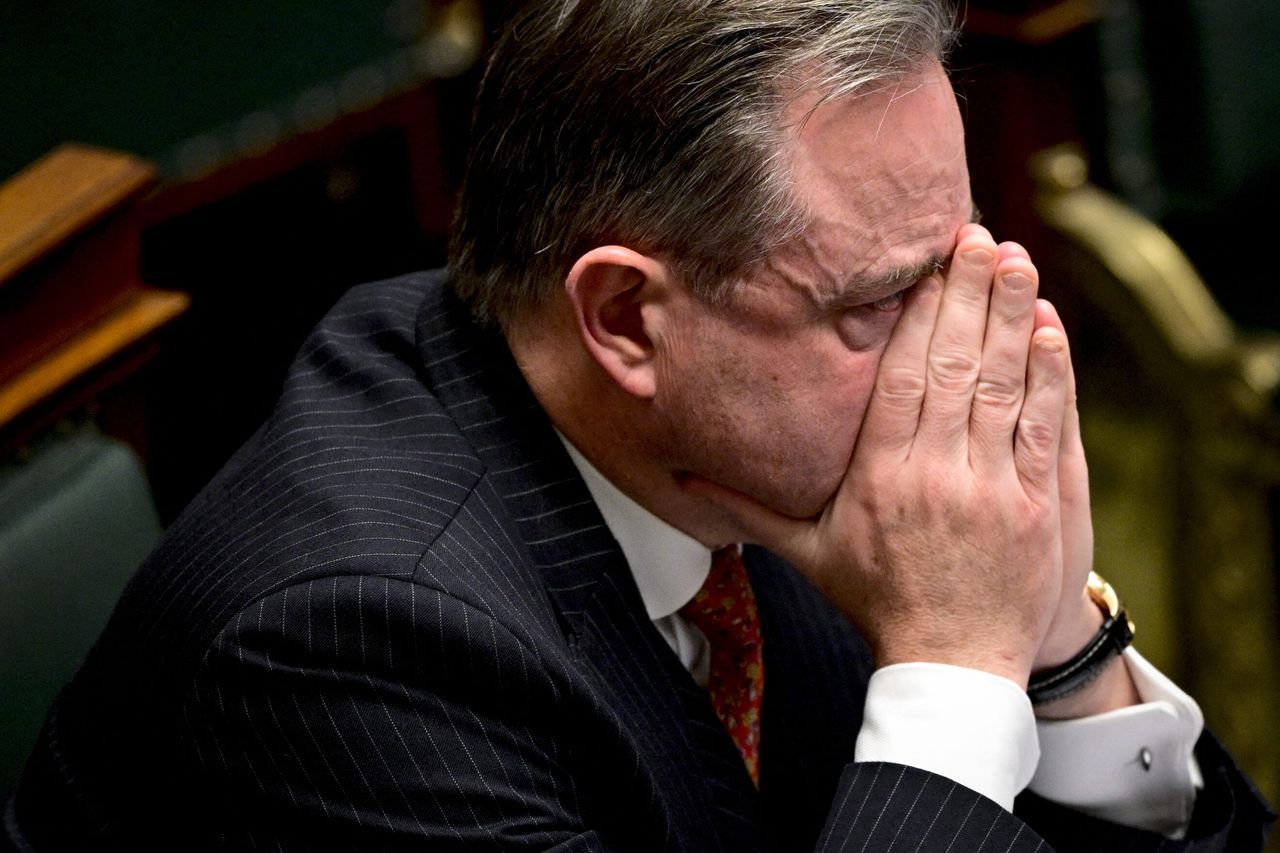
The European Union is considering a tougher approach towards Belgium, which opposes a "reparation loan" for Ukraine at the expense of frozen Russian assets.
This is reported by Politico, as relayed by Censor.NET.
Details
Yes, European officials do not rule out ignoring the Belgian government headed by Bart De Wever.
The publication notes that De Wever has resisted the "reparation loan" plan for so long that diplomats from all EU countries are now developing a strategy to convince him to support the idea.
The Belgian prime minister fears that the country will find itself in a difficult situation and will have to return the money, so he is asking for additional security measures.
Yes, De Wever wants the European Union to provide an additional cash reserve on top of financial guarantees to cover potential legal disputes and settlements.
Belgium sent a list of amendments it wants to make to avoid having to return the money to Moscow on its own if the sanctions are lifted. De Wever said he would not support the reparations loan if his concerns were not taken into account.
Leaders thought they would be able to reach an agreement at the last meeting in October. Now there are fears that no agreement will be reached in December either. However, diplomats interviewed by journalists say that hope is not yet lost.
"The ambassadors will review Belgium's requests line by line, identify the biggest problems, and try to resolve them. There is still room for maneuver. The plan is to get as close as possible to Belgium's position," the article says.
Consequences for Belgium
However, a week before the leaders' meeting, the tone of the EU is becoming more serious. Politico writes that if De Wever continues to block the plan, he will find himself in an awkward and extremely difficult position for the leader of a country that has been pro-European for so long.
The Belgian leader may be isolated and ignored, like his Hungarian counterpart Viktor Orbán.
Belgium is being given a signal that if it does not join the agreement, its diplomats, ministers, and leaders will be deprived of their vote at the EU negotiating table.
Yes, European officials will ignore Belgium's wishes and concerns regarding the EU's long-term budget for 2028-2034, which will be a problem for the country's government.
Belgium's opinion on the EU's proposals will not be taken into account, and telephone calls will not be answered.
But diplomats say desperate times call for desperate measures.
Ukraine will face a budget deficit of €71.7 billion next year and will be forced to start cutting government spending in April if it cannot secure these funds. US President Donald Trump has once again distanced himself from providing American support," writes Politico.
The publication also notes that there is another potential way to pass the decision on the reparations loan: it can be passed by a qualified majority, ignoring Belgium's refusal.
The publication also describes another potential way of adopting a decision on the reparations loan: adopting it by a qualified majority, ignoring Belgium's refusal.
However, diplomats stated that this issue is not being seriously considered.
What is known about the "reparations loan" for Ukraine
- We would like to remind you that at a meeting in October, EU leaders postponed a decision on the use of frozen Russian assets as collateral for a so-called "reparations loan" for Ukraine in the amount of €140 billion ($163 billion). EU leaders plan to return to discussing this issue at a meeting on December 18-19.
- Belgium, where the lion's share of these funds is held, opposed the European Commission's proposed plan to use frozen Russian assets at a meeting of EU leaders. The country fears legal and financial sanctions from Moscow and wants other EU countries to share these risks.
- Earlier, European Commission President Ursula von der Leyen proposed using frozen Russian assets as collateral for providing Ukraine with "reparation loans". Formally, Russian assets subject to sanctions will not be confiscated, but Ukraine will repay such loans only after Russia pays reparations.
- In turn, Russian dictator Putin responded by signing a decree that effectively allows for the accelerated expropriation of assets belonging to Western companies that have not yet left Russia.
- According to various estimates, the European Union's "reparation loan" to Ukraine, secured by Russian assets, could amount to €130-140 billion. Its final size will be determined after the International Monetary Fund assesses Ukraine's financing needs in 2026 and 2027.
- In total, Euroclear has accumulated more than €175 billion in cash from frozen Russian assets, which could be used to secure a new loan. But before the EU agrees to grant a reparations loan, it will want to repay the G7 loan to Ukraine of €45 billion ($50 billion) agreed last year, which was to be repaid from the proceeds of frozen Russian assets.


