



Europe must rely on itself - moment of strategic independence has come - von der Leyen
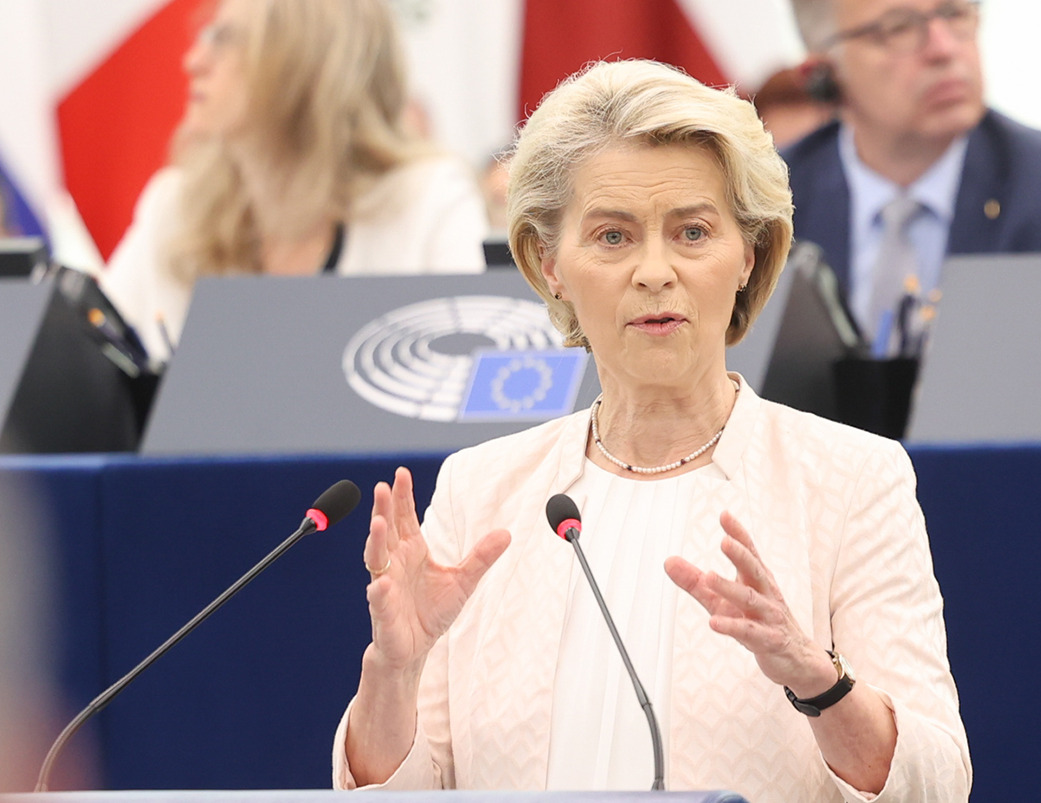
Russian aggression against Ukraine, combined with a shift in US foreign policy priorities due to China's growing influence, is prompting the European Union to more actively develop its own strategy for economic autonomy, security, and defense capabilities.
According to Censor.NET, with reference to Ukrinform, the priority areas for the next European Council decisions were outlined by European Commission President Ursula von der Leyen in her speech to MEPs in Strasbourg.
Protecting Europe
"This week, the European Council is facing up to the reality of today. The reality of a world that has become a dangerous world of wars, a world of predators. This reality means that we Europeans must defend ourselves and rely on ourselves," she stressed.
According to von der Leyen, Russia's illegal invasion of Ukraine in February 2022 was the latest "wake-up call."
None of us should be shocked by what others say about Europe. This is not the first time such assumptions have proven outdated. Yes, Europe has lost its share of global GDP from 25% in 1990 to 14% today. But the figures for the United States are following the same path. The US has also lost its share of global GDP from 22% in 1990 to 14% today. So this is not a story about the economy on one side of the Atlantic or the other. It is a story about changes in the global economy," the president explained.
According to von der Leyen, the United States has announced a shift in its strategic interests and priorities in response to the rise of China, whose share of global GDP has grown from 4% in 1990 to 20% today.
"So our task at this week's summit is to show that we are focused on our own strategy, our own interests, and our own priorities. This is a moment of independence for Europe. From defense to energy, we have made the impossible possible within our new reality," she said.
Europe's energy independence
Von der Leyen noted progress in Europe's energy independence, its rejection of Russian fossil fuels, and a reduction in imports of Russian gas, both liquefied and piped, from 45% at the start of the war to 13% today, and imports of crude oil from 26% at the start of the war to 2% today.
"This year, we have done more for defense than in the last decade. Over the past ten years, we have invested €8 billion in the Defense Fund. This year, we have enabled up to €800 billion in investments by 2030. And we can see how full our SAFE program is, with demand from 19 member states quickly exceeding the €150 billion that is on the table. This demonstrates our commitment to European security," she emphasized.


