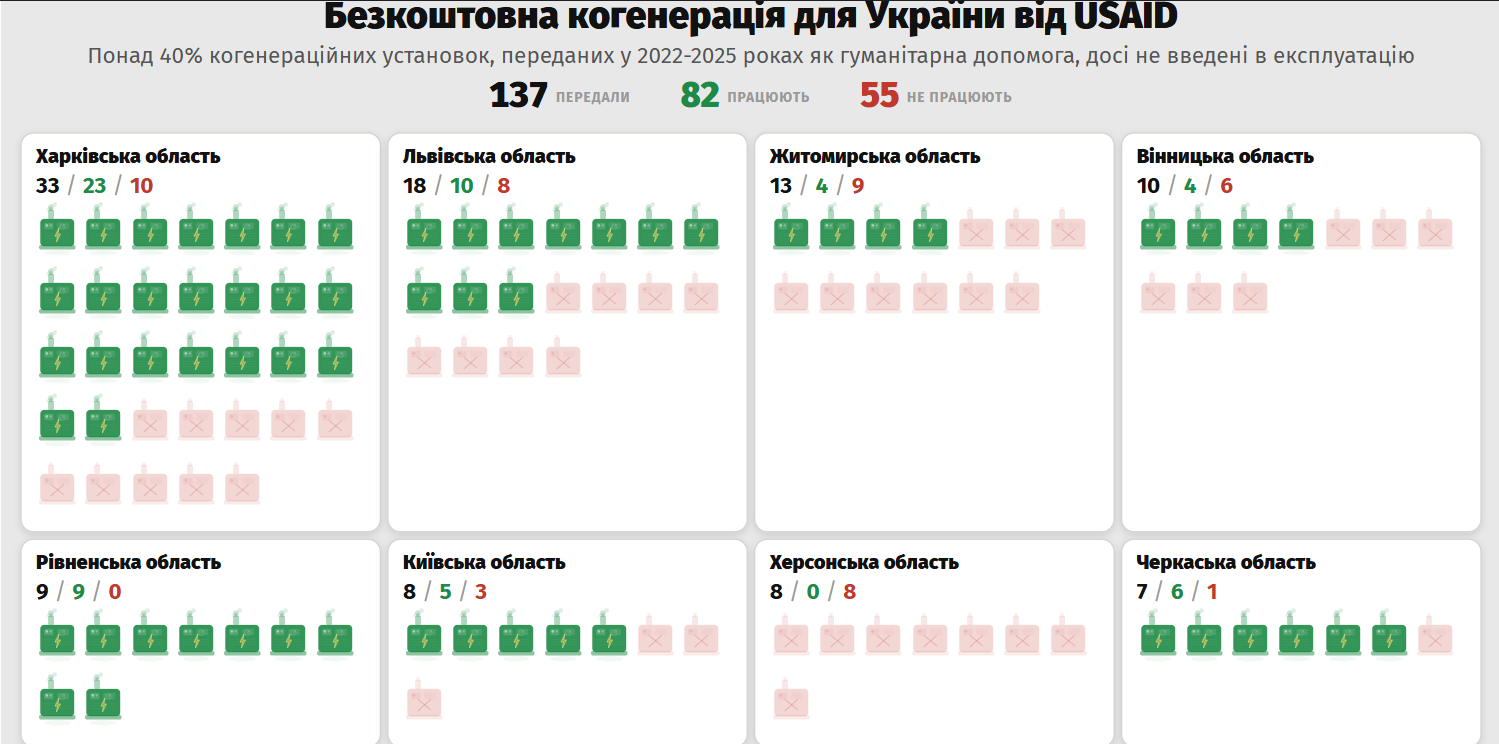
More than 40% of cogeneration units transferred to Ukraine have still not been put into operation – media. INFOGRAPHICS
Over the past four years, Ukraine has received nearly two hundred cogeneration units from international partners, which were intended to mitigate the consequences of Russia’s regular destruction of energy infrastructure. However, more than 40% of the cogeneration units transferred by the United States have still not been put into operation.
This was reported by Censor.NET with reference to analytical material published by ngl.media.
The example of Berdychiv
According to the outlet, over the past two years, Berdychiv has received five cogeneration units with a total capacity of 1.24 MW, which makes it possible to cover 40% of municipal utilities’ needs during peak loads in the heating season. However, not one of these five units has been launched.
"We physically did not have enough money. We completed the connection project and poured the foundations for the cogeneration units. We took out a loan of UAH 13 million to purchase soft starters and cables. However, it turned out that a gas connection requires separate supply nodes to be installed, and that costs millions of hryvnias. We were able to pay for only one node from our own funds. That is where the process stalled," explained Serhii Pryimak, director of Berdychivteplokomunenerho municipal enterprise.
The example of Zviahel
In Zviahel, two cogeneration units with a total capacity of 260 kW are operating successfully. At the end of December 2024, the local municipal enterprise Zviahelteplo received the first unit from USAID, and in June last year, the second.
"We had no difficulties. At the beginning of November 2025, we launched these units. We spent almost UAH 3 million on installation and design estimates documentation, of which UAH 1.6 million came from the local budget, and the rest from our municipal enterprise," said Zviahelteplo director Liudmyla Todorovych.
The capacity of the two cogeneration units covers about a quarter of the enterprise’s electricity needs during the heating season.
What are the difficulties?
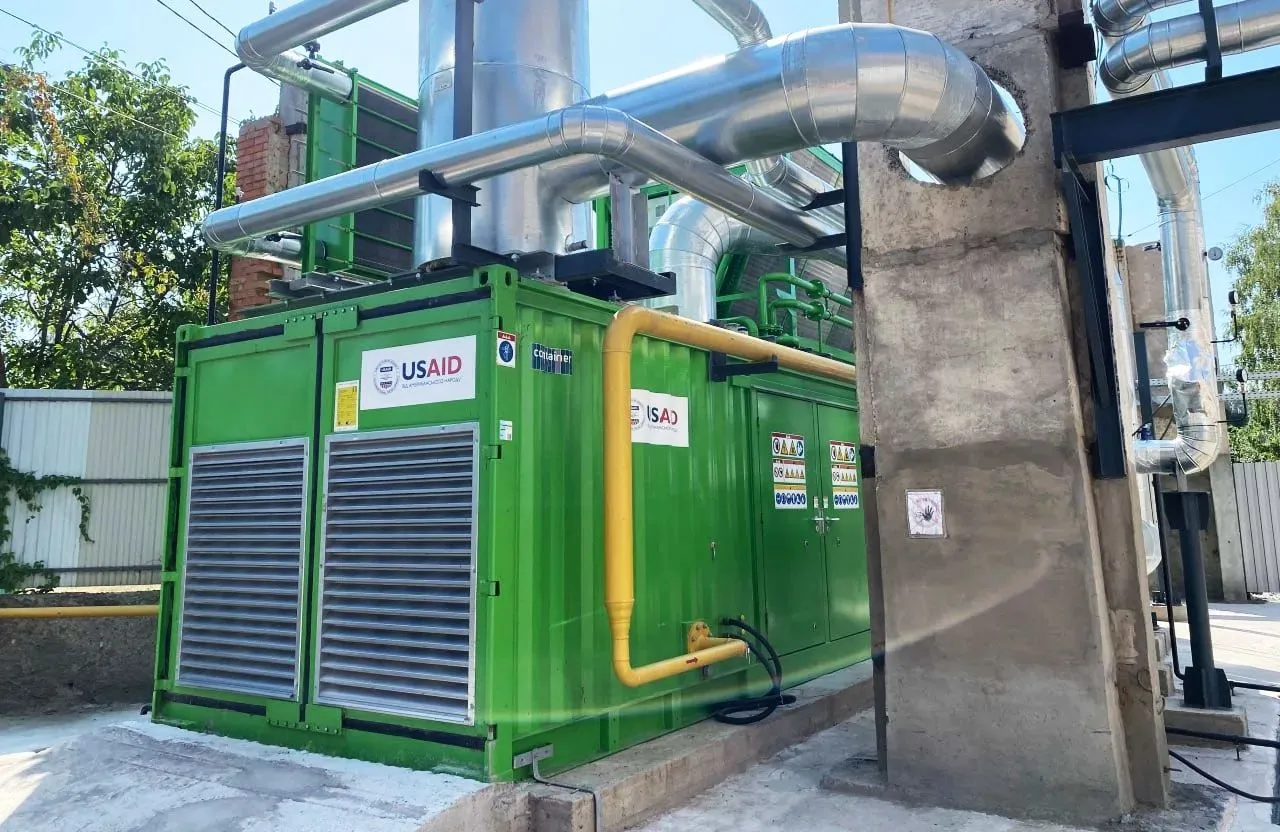
Cogeneration units must be connected to municipal utilities networks (gas, water, and electricity) as well as to the pipeline that supplies heat transfer fluid to consumers. Such units are sometimes referred to as mini-CHPs. It is important to understand that cogeneration units cannot fully replace thermal power plants, as they are not as powerful. The advantage of cogeneration is that it can quickly pick up the load in the event of accidents or attacks and thus ensure the resilience of the energy system.
Another reason why cogeneration units take so long to launch is that utility providers have to collect dozens of documents. The municipal enterprise that received the unit is responsible for developing the project. In most communities, a tender was announced to find a contractor for the design work. Completing the installation of a cogeneration unit can take several months.
"For example, the process of installing open-type units is much longer and more expensive than installing container-type units. There are cases where cities connected units in two to three months, and there are others where the process dragged on for years. Not only technical factors matter, but also financial and staffing ones," the outlet explains.
Cost of maintenance
In addition to installation costs, the units also need to be maintained, and that is not cheap either. For example, Lviv received eight gas engine units with a total value of UAH 122 million. The city budget spent UAH 55.3 million on installing these cogeneration units alone.
According to the Ministry for Development, USAID transferred a total of 188 cogeneration units. However, the ministry refused to provide detailed regional data and the number of non-operational units.
That is why NGL.media sent requests to all regional military administrations and received responses from all regions except Ternopil and Sumy. As a result, the outlet collected information on 137 cogeneration units received in 2022-2025. According to the regional military administrations, only 59% of the cogeneration units have been put into operation, while the rest have not.