



Disputes continue within NATO over format of aid to Ukraine
Complex discussions are ongoing within NATO over future support for Ukraine.
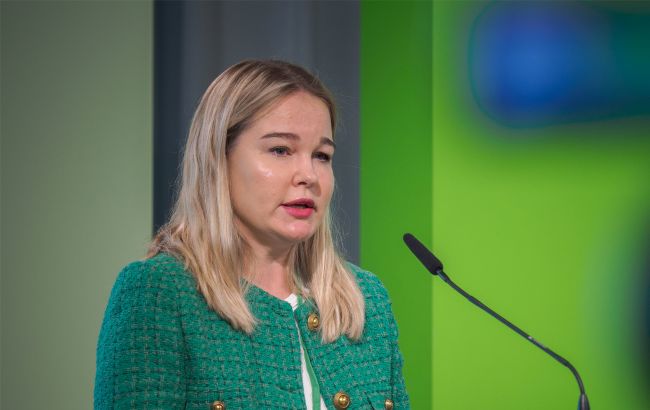
Alyona Getmanchuk, head of Ukraine’s Mission to NATO, said this during the national telethon, Censor.NET reports.
Financial formula for Ukraine: disputes within the Alliance
According to the ambassador, the Alliance is preparing for the summit in Ankara, where support for Ukraine will be one of the key issues.
One of the main topics of discussion remains NATO Secretary General Mark Rutte’s proposal for member states to allocate 0.25% of GDP to aid for Ukraine.
Getmanchuk noted that some countries have already supported the initiative, while others are calling for greater flexibility and do not want fixed commitments.
"It is clear that these seven countries supported this idea, along with some others. But there are countries that would like to have more flexibility and not have fixed commitments regarding support for Ukraine," she explained.
According to her, the 0.25% of GDP idea has launched a broader discussion on stable and predictable funding for Ukraine.
NATO summit and search for compromise
Support for Ukraine has already been identified as one of the three main priorities of the upcoming NATO summit.
At the same time, discussions continue over how exactly financial assistance should be structured and in what form it should be formalized.
Getmanchuk stressed that there is little time left to align positions, as the summit is about six weeks away.
She also pointed out that a significant share of the financial burden currently falls on only a few countries.
"There is a complex and delicate discussion underway on the distribution of the financial burden among NATO countries," the ambassador noted.
According to her, it is important not to create a situation in which countries that are already providing significant assistance are constrained by set limits.
- Earlier, it was reported that the United Kingdom, France, Spain, Italy, and Canada had not supported the proposal on mandatory funding of military aid for Ukraine. Rutte himself acknowledged that the plan would not be put to a vote due to a lack of support among allies.


