



Drones attacked Volgograd: "Lukoil" oil refinery on fire. PHOTO
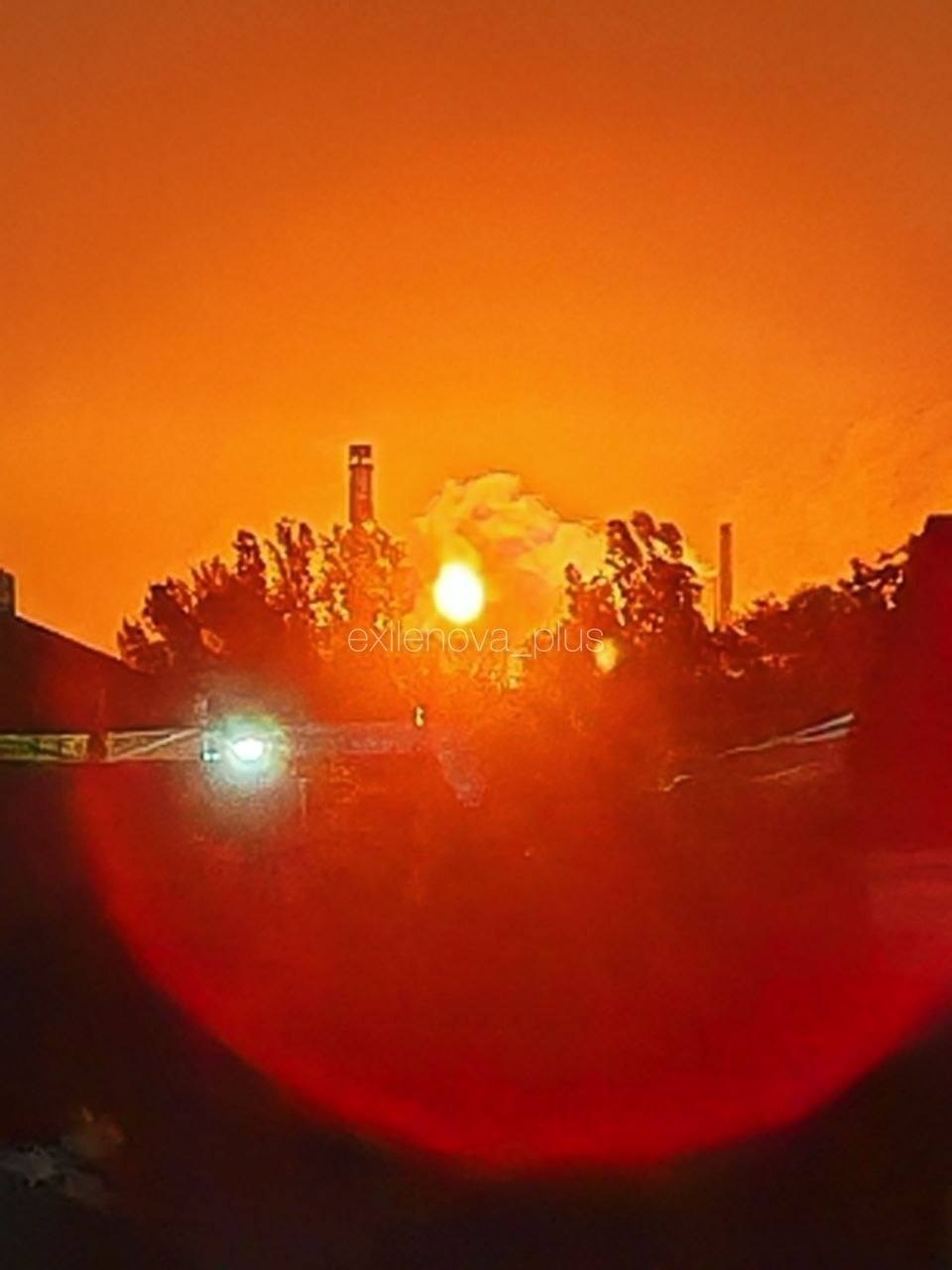
On the night of 29 May, a major fire broke out at the Lukoil oil refinery in Volgograd following a drone attack.
This was reported by Censor.NET, citing Russian Telegram channels.
Local residents reported numerous explosions and air defence activity. Andriy Bocharov, Governor of the Volgograd Region, confirmed the drone attack and reported that a drone had struck a block of flats in the Krasnooktyabrsky district. According to him, there were no casualties.
Photos of a large-scale fire were also published on social media. According to Astra’s estimates, the fire broke out on the premises of Lukoil’s Volgograd oil refinery. It is noted that this is at least the tenth attack on the facility since the start of Russia’s full-scale war against Ukraine.
Consequences of the attack


Lukoil-Volgograd Oil Refinery: one of Russia’s key refineries
"Lukoil-Volgograd Refinery" is one of Russia’s largest oil refineries, located in Volgograd. The facility ranks among the top ten largest refineries in the Russian Federation and is a key producer of fuel for the Southern Federal District.
The plant was commissioned in 1957. It processes a blend of West Siberian and Lower Volga crude oil, which is supplied via the Samara-Tikhoretsk pipeline. Its main products are petrol, diesel fuel, aviation fuel, lubricants, bitumen and other petroleum products.
The plant’s capacity makes it a strategic asset within Russia’s fuel infrastructure:
- Refining capacity: approximately 14–15 million tonnes of crude oil per year;
- Ranked among Russia’s top 10 refineries;
- Supplies fuel to the south of the Russian Federation.
Since the start of Russia’s full-scale war against Ukraine, the refinery has repeatedly been the target of drone attacks. In particular, strikes were recorded in 2024, 2025 and 2026. According to Ukrainian and Russian media reports, the attacks caused fires and damage to the AVT-1 and AVT-6 primary oil refining units.
In February 2026, it was reported that the AVT-1 unit — one of the key elements of primary oil refining — may have been hit during another attack. Experts noted that without it, the plant cannot operate at full capacity.
The Ukrainian General Staff had previously stated that this refinery is involved in supplying fuel to the Russian army, and is therefore considered a key element of Russian military logistics.


