



German authorities denied residence permits to Ukrainians who arrived from Georgia; EU court to clarify issue
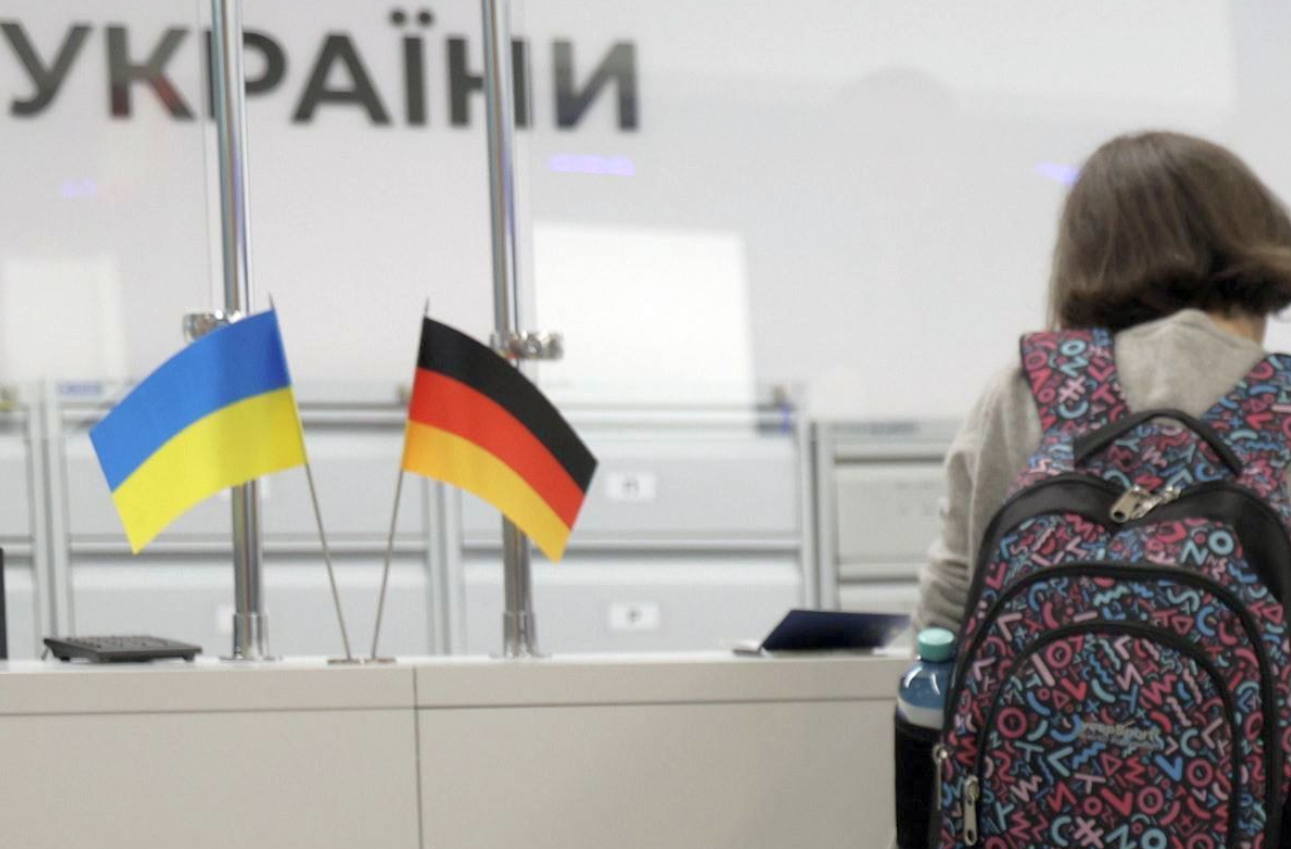
A couple from Mariupol left for Georgia after the start of Russia’s full-scale invasion. Two years later, they decided to move to Germany, but were denied residence permits under temporary protection.
Lawyer Vladimir Abovski told Censor.NET about this in a comment.
The couple successfully challenged that decision before the Administrative Court of Kassel, after which the Fulda district authority appealed the ruling to the Higher Administrative Court of Hesse.
Therefore, the German court asked the EU to provide clarification on issues related to the stay in Germany of Ukrainians who, after the start of Russia’s full-scale war against Ukraine, went to third countries and, several years later, applied for temporary protection in the Federal Republic of Germany.
Substance of the case
"This concerns a family from Mariupol. After the start of the war, they were forced to leave for Georgia through Russia, as departure to the territory of Ukraine was no longer possible. They stayed in Georgia for more than two years. They were there legally, under the visa-free regime, but did not have a Georgian residence permit, any protection status, or any other form of protection," he noted.
Later, the couple decided to leave for Germany for personal reasons and applied for temporary protection.
"The migration service refused this, arguing that they had already lost the status of persons fleeing the war because they had lived in a third country for more than two years, even without a residence permit. We went to court, and we won in the court of first instance. It ordered that residence permits be issued," Abovski explained.
However, the migration service appealed the decision.
European law
Therefore, according to the lawyer, two questions arose:
- can a Ukrainian citizen lose the right to protection in the EU solely because, after the start of the invasion, he or she stayed in a non-EU country?;
- can decisions on deporting citizens to Ukraine be issued at all while the temporary protection regime is in force?
After the start of the war, people saved themselves not through "legally ideal routes," but even through Russian territory.
"If the position of the migration service is accepted, it could create a dangerous precedent. People would be told that if they first lived in a third country, including Georgia, they are supposedly no longer displaced persons from Ukraine. We consider this approach wrong and will argue our position before the European Court," Abovski explained.
Deportation
As for the issue of deportation, the lawyer considers it even more important.
"The European Court must say whether European law allows decisions on the deportation of Ukrainians to Ukraine to be issued while temporary protection is in force. As long as the European Union recognizes the existence of a mass influx of displaced persons from Ukraine by extending temporary protection every year, the question arises: can an individual state tell a specific Ukrainian that he or she must return to Ukraine?
This is no longer a question of one family. It is a question of the entire logic of temporary protection. The issue is not whether people wanted a better life in Germany. The issue is whether a Ukrainian citizen retains the right to temporary protection if he or she ended up in a third country without any special status," the lawyer noted.
Therefore, the decision of the European Court will matter for a large number of Ukrainian citizens.
"And for the first time, there will be an answer to fundamental questions: whether staying in a third country prevents the right to protection in the EU, and whether Ukrainians can be deported to Ukraine while the temporary protection regime is in force," the lawyer stressed.
Where are they deported to?
Many court decisions state that Ukrainians can be deported either to Ukraine or to the third country from which they arrived.
"The practice so far, as of today, is that no one is being removed to Ukraine. But there is no ban. Therefore, all people who have been ordered to leave the EU and go to Ukraine are, so to speak, walking under the Sword of Damocles. Today, they are not being expelled, but tomorrow they may be.
The European Court must resolve this. On the one hand, the European Union says it provides protection to Ukrainians, and on the other hand, it sends them back. For me, this is a contradiction. I hope the court will clarify this in our favor," Abovski said.
Changes to EU rules
The rules changed in autumn 2025.
"Previously, people who had protection in other EU countries and moved within the EU received residence permits in Germany. Since autumn, protection has almost not been granted at all. The only question I have is what happens to people who initially left for a non-EU country. In our case, this is Georgia.
That is why the German court appealed to the European Court, because practice varies. Most often now, protection is denied to those who lived in one of the European countries or outside the EU. Some courts grant it, while others refuse. I hope for a positive decision, and then this will be resolved at the European level," he concluded.
After the European Court delivers its ruling, the court proceedings in Kassel will resume. German judges will be obliged to follow the clarification of the European Court when making their decision.


