



"From legal point of view, there are no drug-dependent people in Skelia": regiment on information about 2,000 ill fighters
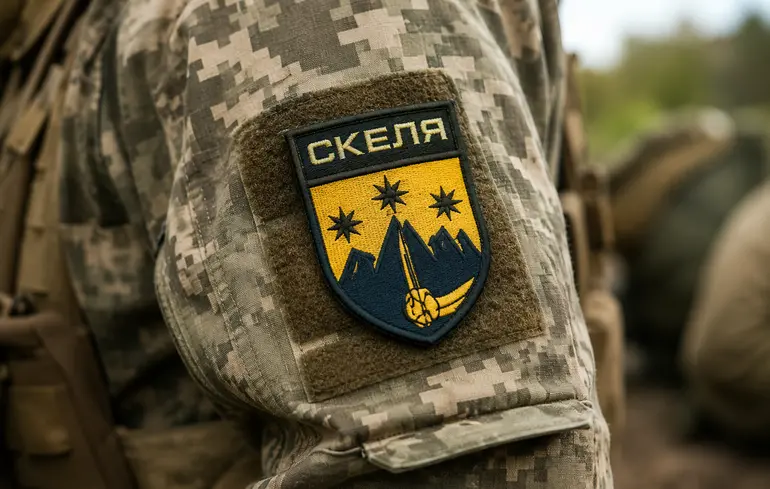
The information about two thousand drug-dependent servicemen in the 425th Separate Assault Regiment "Skelia" is untrue. Military rights commissioner Olha Reshetylova had earlier reported this.
This was reported by the Skelia regiment during an online conference, Censor.NET informs.
"Rehabilitation center" instead of assault training
"After all, we do not have two thousand drug-dependent people. This information, which Olha Reshetylova voiced today, was relevant several months ago. A significant part of those included in this number are no longer drug-dependent, because they underwent a rehabilitation course with us. Fortunately, many of them are no longer drug-dependent and are carrying out tasks together with other mobilized men. I believe we helped such people return to life," said regiment spokesman Oleksii Bratushchak.
For his part, head of the headquarters training group Rostyslav Peretiatko explained that, from a legal point of view, there are no drug-dependent people in the regiment.
He said that recruits with drug dependence arrive from territorial recruitment centers without documents confirming the illness and with a Military Medical Commission conclusion stating that they are "fit."
"When a person is actually experiencing withdrawal symptoms, that is, the so-called withdrawal after methadone and so on, we see it. These people are sent to medics, who put them on IV drips, try to help them and resolve the issue. Basic General Military Training for these people is postponed for two, three, or four weeks in order to bring the person back to a normal state so that they begin to feel well. Because when we take them, for example, to psychiatry or to some medical institution, very often they are simply not admitted there because they are servicemen, and they also find a lot of excuses, so they remain with us. We provide them with assistance and psychological rehabilitation when they recover. We have psychologists and people who previously worked in rehabilitation centers for drug-dependent people. When a person recovers, basic military training begins. Most often, they join the ranks and are grateful to us for helping them," the serviceman emphasized.
Legal side: responsibility lies with Military Medical Commissions
Specialist of the personnel psychological support department and lawyer Denys Simianyk noted that the regiment acts in accordance with the law.
"Here, excuse me, we start from the territorial recruitment center — that is where the whole story begins. In other words, a person comes to us who, according to the conclusion of the Military Medical Commission, is completely healthy. We cannot immediately give this diagnosis. From a purely legal point of view, if a person has such a desire, they have the right to challenge this Military Medical Commission conclusion in court. This does not happen. The question arises: why? People are afraid, they do not want to, they have no money for a lawyer, there are some other social issues... From a purely legal point of view, all avenues are open to them. There is case law from the Supreme Court, the Third Administrative Court of Appeal in the city of Dnipro, and local courts that allows this Military Medical Commission conclusion to be challenged, and so on. From a purely legal point of view, we are not violating anything. On the contrary, we are even turning these people into healthy, combat-capable people who can help the country now," he added.
- It should be noted that the military ombudswoman said the day before that several months ago about two thousand servicemen with drug dependence had been identified in Skelia, after which an interagency meeting was convened. According to her, work on this issue is currently ongoing.
Background
- On June 23, Babel reported that from the end of 2025 to spring 2026, at least 26 recruits of the 425th Separate Assault Regiment Skelia had died. The journalists said most of the men who died had not spent even a month in the regiment. The official cause of death in most cases was pneumonia.
- For the article, journalists interviewed more than 30 witnesses. One of them, Oleksandr Zhykin, spoke about the "Kuriatnyk," the informal name of Skelia's distribution point, which is the first location for newly arrived mobilized men. The man ended up there after he was registered as absent without leave when he went to get pills for substitution therapy for drug addiction.
- Another anonymous source spoke about punishment cells where servicemen were sent for refusing to carry out various orders.
-
For its part, the Skelia Regiment commented on the non-combat deaths of recruits and assured that it was cooperating with the investigation. Skelia believes that the authors of the article make "generalizations that reduce the history of the unit to individual tragic cases." The regiment claims that 18 of the 26 deaths mentioned in the article occurred in the hospital or on the way there, and that their causes were related to "illnesses or the generally poor health of the mobilized men."
-
Earlier, the SBI had already announced that it had launched a check into alleged violations in Skelia, which are being investigated as abuse of authority or official powers committed under martial law and causing grave consequences.
-
A monitoring group from the Ombudsman’s Office said it would go to the site to verify information about possible torture of servicemen in the 425th Separate Assault Regiment "Skelia."


