



Servant of People and Batkivshchyna want to push through amendments that would save corrupt officials – Anti-Corruption Action Center
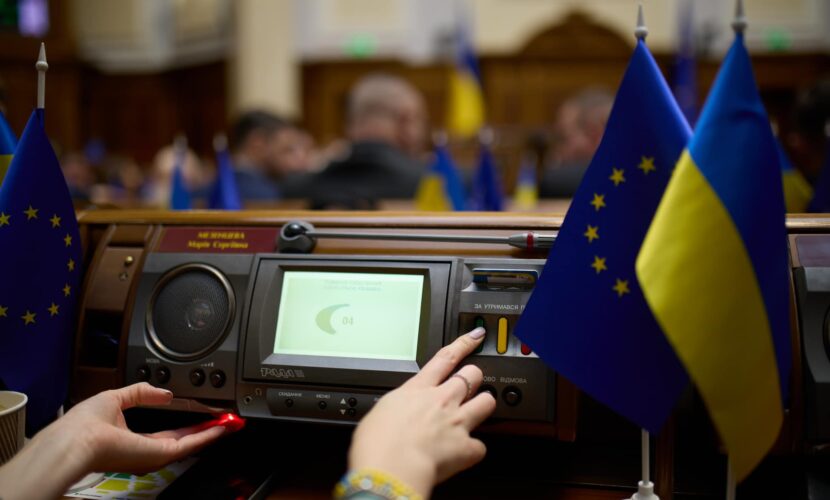
During the second-reading vote, lawmakers want to add amendments to bill No. 15056 that would weaken anti-corruption legislation.
This was reported by the Anti-Corruption Action Center, Censor.NET informs.
What is the issue?
President Volodymyr Zelenskyy submitted a bill aimed at unifying Ukrainian legislation as part of accession to the Organisation for Economic Co-operation and Development (OECD).
"During the second-reading vote, they will try to add corrupt provisions to the draft law that had previously been rejected by the relevant law enforcement committee.
These are amendments by MPs Buzhanskyi, Tymoshenko, Skorokhod, Mamka and other MPs.
They have nothing to do with the subject of the bill. Instead, they significantly change criminal and criminal procedural legislation: they add the possibility of wiretapping and surveillance of journalists, exempt companies from punishment for voter bribery, pressure on law enforcement officers, interference in the work of judges, and so on," the Anti-Corruption Action Center explained.
Buzhansky’s amendments
- A number of amendments significantly increase liability for the unauthorized disclosure of information from state registers. As a result, covert (investigative) actions, including wiretapping and surveillance, could be used against investigative journalists and their sources.
- Another block of amendments allegedly proposes to repeal the "Lozovyi amendments," although in fact it changes nothing. Moreover, the transitional provisions state that the new procedure does not apply to old cases, meaning it would allow attempts to artificially close all ongoing criminal proceedings.
Tymoshenko’s amendments
- She proposes not to confiscate property that was only intended to finance a crime but had not yet been used. Other amendments also complicate the confiscation of assets that were re-registered, concealed or converted into other property. As a result, returning illegal assets to the state becomes much more difficult.
There are also amendments aimed at reducing punishment for companies.
- To exempt legal entities from liability for bribing voters, offences relating to exerting pressure on law enforcement officers, interfering with the work of the courts, and obstructing witnesses. In other words, if a company has been used as a tool to commit such offences, it is difficult or impossible to punish it.
- A number of amendments propose not to take into account a bribe that was merely promised to a company or that the company itself promised. In other words, if law enforcement officers managed to stop the crime at an early stage — the offer of an undue benefit — the punishment for the company could be significantly lighter.
- Fines for companies would be reduced tenfold in cases where the bribe was not actually received or where its amount cannot be determined. This would substantially weaken companies’ financial liability for the most serious offences.
- The amendments remove the possibility of liquidating a company by court decision for voter bribery or laundering criminal proceeds. They also reduce the restrictions that a court may impose on companies for corruption crimes: buying domestic government bonds, producing and distributing advertising about their own activities, and being excluded from Diia.City residents.
Amendments to the Code of Criminal Procedure
-
They would prohibit an investigator or prosecutor from limiting the time for a lawyer to arrive. That is, a suspect would be able to involve a defence lawyer from another region or wait for one to return from a business trip abroad, while a search, interrogation or any other investigative action would have to be postponed for several days.
-
They would make a witness’s testimony inadmissible if, in another case investigated by the same authority, that witness becomes a suspect. That is, important testimony could be excluded merely because the witness’s procedural status changed in another case. For example, an MP’s testimony about bribery by another colleague could be excluded if he became a suspect in a failure-to-declare case.
Skorokhod’s amendments
- She proposes to decriminalize the promise or acceptance of an offer of a bribe. Only extortion and receipt of a bribe would remain crimes. Skorokhod also proposes to criminalize virtually any provocation by law enforcement officers, whistleblowers or informants without clearly defining its limits.
Amendments by Hryhorii Mamka
- He proposes narrowing the circle of persons who can be corruption whistleblowers by excluding suspects, defendants and foreigners from it.
Mariana Bezuhla’s amendments
- The amendments change the rules for concluding plea agreements in corruption cases by introducing additional conditions and narrowing the possibilities for their use. This would significantly affect the effectiveness of this tool in corruption investigations.
Mykhailo Sokolov’s amendments
- The amendments significantly expand the possibilities for challenging a notice of suspicion. The proposed changes would significantly delay the consideration of criminal proceedings in court.


