ENG




13673 visitors online
The Anti-Corruption Action Centre (AntAC) is at the forefront of uncovering corruption in Ukraine's political arena and governmental processes. Recent cases highlight the ongoing struggle to uphold anti-corruption measures. High-profile cases, such as the embezzlement involving Foreign Ministry State Secretary Bankov and the contested influence of former Vice Prime Minister Stefanishyna, underscore the systemic challenges. Court rulings, like those involving the High Anti-Corruption Court, demonstrate both progress and setbacks against corrupt practices. AntAC’s role is critical, as it exposes issues like real estate ownership that ties to public officials, and the improper use of aid funds. Despite judicial obstacles and political interference, AntAC’s efforts remain pivotal in fostering transparency and accountability.
What is the Anti-Corruption Action Centre known for?
The Anti-Corruption Action Centre (AntAC) is a prominent Ukrainian organization that focuses on policy advocacy, investigative journalism, and public pressure to combat corruption. AntAC draws attention to unethical practices within government institutions and works closely with legal systems to promote transparency and accountability, making it a crucial entity in the fight against corruption in Ukraine.
Why is the Anti-Corruption Action Centre significant in Ukraine?
The Anti-Corruption Action Centre plays a pivotal role in addressing corruption at various levels of government, which is a major issue affecting Ukraine's political and economic stability. By investigating and highlighting cases of corruption, AntAC not only fosters transparency but also encourages reform and accountability, serving as a watchdog that advocates for integrity and public trust in governmental operations.
What challenges does the Anti-Corruption Action Centre face?
The Anti-Corruption Action Centre faces numerous challenges, including political pressure, legal confrontations, and threats to its operations. High-profile cases often attract resistance from powerful entities, while the center's push for transparency occasionally leads to conflicts with judicial authorities and law enforcement, making its efforts risky yet invaluable in promoting ethical governance.
How does the Anti-Corruption Action Centre influence legal proceedings in Ukraine?
Through its investigative work and advocacy, the Anti-Corruption Action Centre significantly influences legal proceedings by providing evidence, pushing for investigations, and following up on cases involving public officials and potential corruption. Its findings can lead to court cases, legislative changes, and increased scrutiny on governmental practices, thereby influencing Ukraine's legal landscape concerning corruption.
What recent high-profile cases has the Anti-Corruption Action Centre been involved in?
The Anti-Corruption Action Centre has recently been involved in several high-profile cases, including the embezzlement case against Foreign Ministry State Secretary Bankov, and allegations against former Deputy Prime Minister Olha Stefanishyna for influencing a governmental selection process. These cases underscore the ongoing role of AntAC in challenging corruption within Ukraine's political and governmental systems.
News anti-corruption center
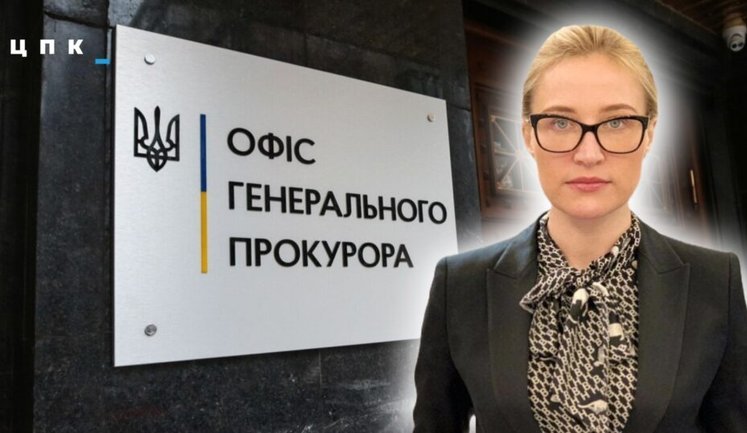
 Kropyva, suspect in "Carthage" case, still not suspended from PGO; Kravchenko claimed otherwise – AntAC Two weeks after the start of the National Anti-Corruption Bureau of Ukraine (NABU) and Specialized Anti-Corruption Prosecutor’s Office (SAPO) operation "Carthage," one of the key suspects in the case — Prosecutor General’s Office (PGO) official Serhii Kropyva — remains in his post. He is in... 2 701 10 Previously in trend: Operation Carthage
 Kravchenko left country last night, - Anti-Corruption Action Centre Prosecutor General Ruslan Kravchenko left Ukraine last night. 12 981 87 Previously in trend: Suspicion of Kryvonos
 After almost three years, there is still no suspect in case concerning deaths of more than 20 soldiers from 128th Brigade during formation drill, - AntAC In almost three years, the investigation has failed to identify a single suspect in the case concerning the military formation of troops from the 128th Separate Transcarpathian Mountain Assault Brigade, which came under attack by Russian forces on 3 November 2023. More than 20 Ukrainian... 8 116 25 Previously in trend: Negligent attitude toward military service
 "They dragged three into final": SAPO prosecutor stated in court that Stefanishyna influenced competition to elect NACP chairman During the hearing to determine a pretrial measure for former Deputy Prime Minister and former Ukrainian Ambassador to the United States Olha Stefanishyna, a prosecutor from the Specialized Anti-Corruption Prosecutor’s Office (SAPO) stated that she likely influenced the selection process for the... 45 131 42 Previously in trend: Stefanishyna suspicion
 Foreign Ministry State Secretary Bankov embezzled UAH 37 million in international aid – AntAC The Anti-Corruption Action Centre has revealed who was served notices of suspicion by the NABU and the SAPO in a case involving the misappropriation of more than UAH 37 million donated by foreign citizens and donors to support Ukraine at the beginning of Russia’s full-scale invasion. 16 432 62 Previously in trend: Embezzlement of funds
 Shabunin on Fedorov’s resignation: "President has opted for old corruption schemes and Soviet generals". VIDEO Vitalii Shabunin, Chairman of the Board of the Anti-Corruption Action Centre (ACAC), has stated that the resignation of Ukraine’s Defence Minister is indicative of a rollback of reforms in the defence sector. 6 587 62 Previously in trend: Syrskyi–Fedorov conflict Fedorov’s resignation
 AntAC may have accounts blocked if it publishes investigation into real estate of brother of SBI Director Sukhachov The State Enforcement Service has opened proceedings against the Anti-Corruption Action Center (AntAC) based on a Pecherskyi Court ruling banning the publication of an investigation into 143 real estate properties owned by the brother of SBI Director Oleksii Sukhachov, Oleksandr Sukhachov. Their... 5 419 30 Previously in trend: Pressure on the media
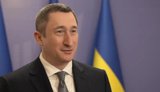 HACC removes electronic bracelet from former Deputy PM Chernyshov The High Anti-Corruption Court of Ukraine ruled to ease the preventive measure for former Deputy Prime Minister Oleksii Chernyshov, partially rejecting a request by prosecutors of the Specialized Anti-Corruption Prosecutor's Office to extend some of the previously imposed restrictions. 2 442 42 Previously in trend: Chernyshov’s case
 Servant of People and Batkivshchyna want to push through amendments that would save corrupt officials – Anti-Corruption Action Center During the second-reading vote, lawmakers want to add amendments to bill No. 15056 that would weaken anti-corruption legislation. 2 816 29 Previously in trend: Fighting corruption in Ukraine
 High Anti-Corruption Court has seized Deputy Prime Minister Kuleba’s flat and parking space The Anti-Corruption Court has seized assets held by Oleksii Kuleba, Deputy Prime Minister for Reconstruction. 3 525 16 Previously in trend: seizure of property
 Supporting Umerov is biggest mistake AntAC has ever made, - Shabunin After his dismissal, Rustem Umerov left behind a devastated Ministry of Defense and chaos. 5 658 32 Previously in trend: Defense Ministry appointments
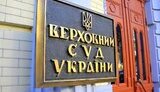 HACC sets UAH 3 million bail for Supreme Court judge Yelenina in corruption case The High Anti-Corruption Court imposed a preventive measure on Supreme Court judge Zhanna Yelenina in the form of bail set at UAH 3 million as part of an investigation into a corruption case linked to the Supreme Court. 989 2 Previously in trend: Corruption in the Supreme Court
 Dmytrenko, who is engaged in discrediting NABU, attended Yermak’s court hearing – AntAC. PHOTO Dmytro Dmytrenko, a figure directly involved in smear campaigns against anti-corruption bodies (NABU and SAPO), was present at the hearing to determine Andrii Yermak’s pre-trial detention. 7 380 26 Previously in trend: Pressure on NABU Notice of suspicion for Yermak
 Force pressure, manipulation, media attack: how authorities shape discredit of Shabunin and AntAC – media The Anti-Corruption Action Center (AntAC) works at the intersection of advocacy, investigative journalism, and public pressure. The case of the State Bureau of Investigation (SBI) pressuring Vitalii Shabunin, head of AntAC, based on trumped-up charges, is a perfect illustration of how the system... 2 394 12 Previously in trend: Searches on Shabunin Suspicion against Shabunin
 From Maidan cases to ’schematism’ at ’Energoatom’: how former prosecutor Basov (’Tenor’) sabotaged investigations for years and became figure in Mindich’s tapes Dmytro Basov, a former prosecutor with 20 years’ experience who, during Yuriy Lutsenko’s tenure, led key investigations into Yanukovych and the crimes committed on Maidan, has emerged as a central figure in a corruption ring operating within Energoatom. According to Censor.NET, citing an... 3 437 14 Previously in trend: Mindichgate
 Estates for Zelenskyy, Yermak and Chernyshov: AntAC has revealed details of construction in Kozyn. VIDEO Another scandal has erupted over the construction of four massive estates in the village of Kozyn. According to investigations, the properties, worth millions of dollars, may have been intended for members of the highest echelons of power. 18 293 82 Previously in trend: Bihus.info investigation on Chernyshov
 Ukraine may be on brink of financial disaster: reserve fund has only 700 million hryvnias left out of 50 billion allocated for entire year, - AntAC The state budget’s reserve fund has 700 million hryvnias remaining. In total, nearly 50 billion hryvnias were allocated for unforeseen circumstances in 2026. 14 151 77 Previously in trend: Budget-2026
 AntAC wins Supreme Court case against Portnov: claim about pro-Russian activities does not require refutation The Anti-Corruption Action Center (AntAC) has won its case against Russian agent Portnov in the Supreme Court. The court confirmed that the claim that he was linked to pro-Russian activities does not require refutation. 2 091 16 Previously in trend: Andriy Portnov
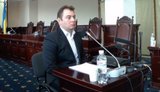 Head of Solomianskyi District Court, Ukrainets, spent four years building cottage worth $100,000 and failed to declare it, - AntAC Vitalii Ukrainets, the president of the Solomianskyi District Court of Kyiv, failed to declare an unfinished construction project in an upmarket suburb of Kyiv for four years. 4 070 26 Previously in trend: Declaration of false information
 Central Election Commission described Zelenskyy’s idea of mobilising MPs as wild populism: Who will mobilise Zelenskyy himself to the front?. VIDEO The Centre for Political Studies (CPS) believes that President Volodymyr Zelenskyy’s statement regarding the possible mobilisation of MPs is a populist move. 6 514 62
 Judge Hryhorieva, in whose possession NABU found $50,000 during search in Kniazev case, may cancel search of Tymoshenko’s premises, - AntAC Supreme Court judges Iryna Hryhorieva, Oleksandr Marchuk and Viacheslav Nastavnyi have opened proceedings in response to Yulia Tymoshenko’s appeal against the High Anti-Corruption Court’s ruling authorising urgent searches of the MP’s premises. 5 512 18 Previously in trend: Tymoshenko’s Case
 Financial Monitoring Service drags out NABU requests and blocking of corrupt funds – AntAC The Financial Monitoring Service (Finmon) ignores or takes an excessively long time to review NABU’s requests, fails to carry out its direct duties, and is reluctant to verify the origin of funds posted for suspects in corruption cases. 1 352 19 Previously in trend: Mindichgate
"SBI and PGO leaked my intimate photos from my phone, which was seized during search, to Telegram channels," - Shabunin Military officer and head of the Anti-Corruption Action Centre Vitalii Shabunin stated that the State Bureau of Investigation and the Office of the Prosecutor General leaked his intimate photos from a phone seized during a search on social media. 18 329 95 Previously in trend: Searches on Shabunin Suspicion against Shabunin
 Who tried to destroy NABU and SAPO: AntAC published list of prosecutors, judges and law enforcement officers. LIST On 22 July 2025, the Office of the President, with the help of members of parliament, attempted to destroy the independence of the National Anti-Corruption Bureau of Ukraine (NABU) and the Specialised Anti-Corruption Prosecutor's Office (SAPO). In particular, law enforcement officers, acting on... 14 469 77 Previously in trend: Abolition of NABU and SAPO independence
 NABU initially planned Operation Midas to expose corruption in Ministry of Defence, - Mahamedrasulov NABU detective Ruslan Mahamedrasulov announced the goal of Operation Midas to expose corruption in the energy sector. Initially, this and other cases were planned in relation to the Ministry of Defence. 18 334 26 Previously in trend: Corruption in MoD Mindichgate
 NABU detective Husarov, suspected of high treason, kept in custody At a hearing on 5 December, the Shevchenkivskyi District Court of Kyiv rejected a motion to release from pre-trial detention Viktor Husarov, a detective of NABU’s closed D-2 unit, who is suspected of high treason. 6 499 10 Previously in trend: Viktor Husakov’s case
 Change of preventive measure for NABU detective Husarov, who is being unlawfully held in pre-trial detention facility, to be reviewed on 5 December – AntAC On 5 December, the Shevchenkivskyi District Court of Kyiv will consider a motion to change the preventive measure for NABU officer Viktor Husarov, who is accused of high treason and cooperation with Russia’s FSB. 3 806 1 Previously in trend: Viktor Husakov’s case
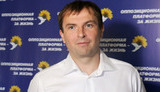 Case of MP Khrystenko has been referred to court. There may be preparations for new attack on NABU and SAPO, - AntAC The case of OPFL MP Fedir Khrystenko has been sent to court. 4 259 5 Previously in trend: Khrystenko detention
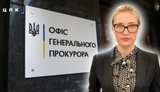 Family of Deputy Prosecutor General Vdovychenko holds Russian passports and runs business in Crimea – AntAC. VIDEO Ukraine’s Deputy Prosecutor General Mariia Vdovychenko, appointed by Ruslan Kravchenko in June 2025, has direct family ties to Russia. Her brother betrayed Ukraine, while her father runs a business in the temporarily occupied Crimea. 9 501 68
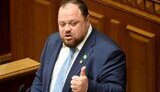 Verkhovna Rada voted in first reading on bill No. 14057 on right of corrupt officials to silence journalists On 5 November, the Verkhovna Rada passed the first reading of draft law No. 14057, which could create new mechanisms for censorship and complicate the work of independent media against top corrupt officials. 18 099 166 Previously in trend: Pressure on the media Bill No. 14057
 Kaleniuk, director of Anti-Corruption Action Center, said authorities were putting pressure on her family: "We expect provocations in near future" Daria Kaleniuk, co-founder and executive director of the Anti-Corruption Action Center, reported pressure from the authorities on her family. 3 257 21
 SSU lying about search of former NABU detective in Ukrzaliznytsia abuse case – Shabunin The Security Service of Ukraine (SSU) carried out a search at the home of a former NABU detective, not as part of the case concerning abuses at Ukrzaliznytsia. 2 390 12 Previously in trend: Search in NABU
 SSU conducted searches at home of former NABU detective who was investigating case of former OP adviser Shylo, - AntAC The Security Service of Ukraine searched the house of Taras Likunov, the brother of AntAC board member Shcherban, who was in charge of the case of former OP advisor Artem Shylo. 19 233 23 Previously in trend: Search in NABU
 Umerov’s family lives in luxury real estate in US: 7 of 8 properties undeclared – AntAC. PHOTOS The family of Rustem Umerov, Secretary of the National Security and Defence Council of Ukraine and former Minister of Defence, owns eight luxury properties in the United States. These are three apartments in Florida, one in New York and four villas near Miami, 21 961 156 Previously in trend: Umerov income declaration Umerov family luxury real estate in the USA
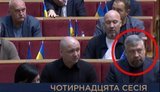 MP Kuznietsov, suspected of corruption, remains in Servant of People faction and keeps attending Rada – Anti-Corruption Action Center MP Oleksii Kuznietsov, suspected of corruption in drone procurement, remains in the Servant of the People faction. 1 490 14 Previously in trend: Drone procurement corruption
 HCJ overturns decision to dismiss Judge Litvinova, who was found to hold Russian citizenship – Anti-Corruption Action Center The High Council of Justice has overturned its decision to dismiss Arina Litvinova, a judge of the dissolved Kyiv District Administrative Court (KDAC), who had earlier been reported by journalists to hold Russian citizenship. 4 109 44 Previously in trend: Russian citizenship of Judge Litvinova
 Presidential Office and SSU preparing new attacks against NABU to protect corrupt officials - AntAC A new wave of attacks is being prepared against the National Anti-Corruption Bureau. 6 189 36 Previously in trend: Pressure on NABU
 Companies linked to Umerov joined joint investment project with Russians in Uzbekistan in 2018 – AntAC Structures linked to former Ukrainian Defense Minister Rustem Umerov and his associate Lenur Mambetov entered a joint investment project in Uzbekistan with a Russian investor in 2018, after Russia’s occupation of Crimea. 11 338 75 Previously in trend: Business of Umerov’s companies linked to Russia
 Bezuhla, Arakhamiia and others: Anti-Corruption Action Center publishes list of MPs who voted to restrict access to property registers The Anti-Corruption Action Center has published a list of MPs who voted to restrict access to property registers in order to conceal their corrupt assets. 13 336 61 Previously in trend: Voting on law on closure of information on real estate objects
 SSU’s gang-style attack on NABU detective: new details During a search, Security Service of Ukraine (SSU) officers struck an NABU detective and demanded his mobile phone. 33 397 147 Previously in trend: Search in NABU
 AntAC calls on Ukrainians to peaceful protest: Only together can we stop dismantling of anti-corruption infrastructure On the evening of July 30, peaceful protests will take place in the main squares of cities across Ukraine against draft law No. 12414. 5 195 66 Previously in trend: Abolition of NABU and SAPO independence
 Zelenskyy blocked Ukraine’s receipt of €1.5 billion in aid by failing to sign ARMA law - Anti-Corruption Action Center Ukraine did not receive €1.5 billion on time because President Zelenskyy failed to sign the law on ARMA. 14 147 131 Previously in trend: reform of ARMA
 "12414 f*ck off": Ukrainian defenders on front line on scandalous law against NABU and SAPO. PHOTO Ukrainian defenders on the front line reacted to the signed scandalous draft law No. 12414 on the elimination of the powers of the NABU and the SAPO. 7 082 27 Previously in trend: Abolition of NABU and SAPO independence
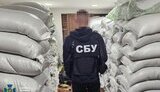 SSU distorted transcript of NABU detective’s audio recording - conversation was about Uzbekistan, but published "Dagestan" in Russia The day before, the Security Service of Ukraine published a transcript of an audio recording of one of the NABU's chief detectives, Ruslan Magamedrasulov, in which it exposed him as doing business with the Republic of Dagestan (RF). In fact, it was Uzbekistan. 44 278 45 Previously in trend: Search in NABU Pressure on NABU
 Friends of provocateur Filimonenko, who discredits Ukraine from abroad, show up at Shabunin’s court hearing – AntAC. PHOTO Friends of provocateur and blogger Vsevolod Filimonenko attended the preventive measure hearing for Anti-Corruption Action Centre (AntAC). head Vitalii Shabunin at the Pecherskyi District Court in Kyiv on July 15. 6 800 37 Previously in trend: The case concerning Shabunin’s official trip Suspicion against Shabunin
 Court chose preventive measure for Shabunin in form of personal recognizance until 20 August On 15 July, the Pechersk District Court of Kyiv imposed a preventive measure on the head of the Anti-Corruption Action Centre, Vitalii Shabunin, in the form of a personal recognizance until 20 August. 5 030 41 Previously in trend: Suspicion against Shabunin
 Investigation has not yet submitted motion for Shabunin’s preventive measures – AntAC Vitalii Shabunin, head of the Anti-Corruption Action Center (AntAC), has been served with multiple summonses for interrogations at the State Bureau of Investigation (SBI), which he is obliged to attend. However, the investigation has not yet filed a motion to impose preventive measures. 1 007 8 Previously in trend: The case concerning Shabunin’s official trip Searches on Shabunin Suspicion against Shabunin
 Searches at Shabunin’s place were conducted without court order. This is flagrant violation, - Shcherban The searches of the head of the Anti-Corruption Action Centre Vitalii Shabunin took place without a court order. 5 922 80 Previously in trend: Searches on Shabunin Suspicion against Shabunin
Page 1 of 2
more news