



Ukraine has nearly run out of missiles for its Patriot and F-16 systems as Russia ramps up production, - The Economist
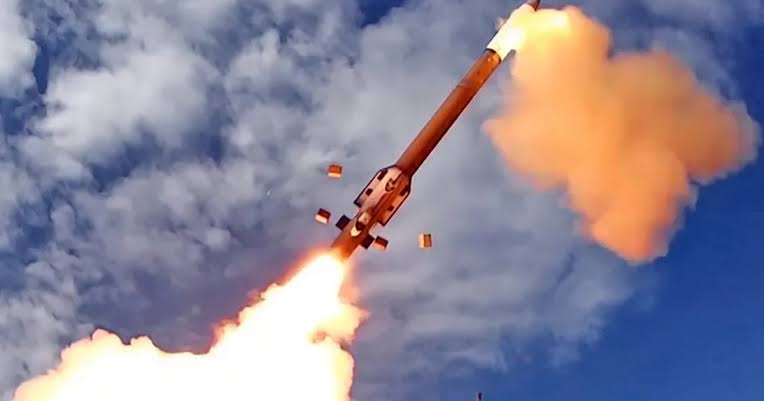
Ukraine has nearly exhausted its stockpiles of American AIM-120 and AIM-9 missiles for F-16 fighter jets, as well as PAC-3 interceptors for Patriot air defense systems. At the same time, Russia continues to ramp up production of ballistic missiles and new strike drones.
According to Censor.NET, The Economist reports on this.
According to the publication, it is becoming increasingly difficult for Ukrainian air defense forces to counter the new Russian "Geran-4" and "Geran-5" drones. They can reach speeds of up to 600 km/h, and Russia, according to The Economist’s estimates, produces about 3,000 such drones per month.
Their turbojet engines are mainly sourced from China. Russia manufactures some of the components itself, in particular using smuggled Western 3D printers.
Together with the larger "Banderol" drones, these aircraft are increasingly resembling low-cost cruise missiles. To intercept them, Ukraine is using, among other things, F16 fighter jets; however, its stockpiles of AIM-120 and AIM-9 missiles for these aircraft are nearly depleted.
At the same time, Ukraine is developing its own interceptor drones, which are intended to help reduce the burden on expensive air defense systems and fighter aircraft.
PAC-3 stocks for the Patriot system are also nearly depleted
The situation regarding defense against Russian ballistic missiles remains even more challenging.
According to The Economist, Ukraine’s stockpile of PAC-3 interceptors for the Patriot systems is nearly depleted. During the Russian attack on August 28, the Ukrainian military managed to shoot down seven ballistic missiles, but this required using its limited stockpile of American interceptors.
The publication does not expect a significant increase in PAC-3 deliveries from the U.S. in the near future. The reason cited is the depletion of U.S. stockpiles amid the U.S. war with Iran. According to The Economist’s assessment, allies are reluctant to hand over their own interceptors because they are difficult to replace quickly.
At the same time, Russia has ramped up production of ballistic missiles to approximately 100 units per month. Of these, about 60 are "Iskander-M" missiles, and another 40 are RM-48U target missiles, which are also being used in strikes against Ukraine.
Ukraine awaits new SAMP/T systems
One option for strengthening Ukraine’s air defense is the transfer of Franco-Italian SAMP/T systems.
By the end of 2026, Ukraine expects to receive several older SAMP/T batteries along with Aster interceptor missiles. In 2027, the delivery of eight new SAMP/T NG systems is planned.
The new version features an upgraded radar and is expected to be capable of countering multiple maneuvering ballistic targets, including Russian "Iskander-M" missiles.
According to sources within the French army interviewed by The Economist, the SAMP/T NG may outperform the Patriot in certain respects. At the same time, analyst Fabian Hoffman notes that the system has not yet demonstrated its capabilities directly on the battlefield.
Price is also cited as a key advantage of the Aster. The missile costs less than half of the approximately $7 million price tag of the latest export version of the PAC-3.
Europe is scaling up interceptor production
European manufacturer MBDA is gradually increasing production of Aster missiles. However, the company is only expected to reach a production capacity of about 300 missiles per year by 2028.
Ukraine may also obtain a license to manufacture the Aster on its own territory, though it will take time to launch such production.
In addition, Germany plans to produce up to 200 PAC-2 missiles per year under license. Some of these interceptors may be transferred to Ukraine with the approval of NATO member states.
Ukraine and Europe are developing a new interceptor
The joint European-Ukrainian Freyja project is expected to fundamentally change the situation regarding the missile shortage. Its scale is being compared to the "moon landing" program.
The goal of the project is to create a cheaper and more mass-produced interceptor capable of operating with NATO radars and data-sharing systems.
According to the plan, the new missile will be based on the Ukrainian FP-7 short-range ballistic missile. Sensors, guidance, and control systems are to be supplied by 12 European defense companies. Among them are France’s Thales, Italy’s Leonardo, Germany’s Diehl, and Sweden’s Saab.
At the same time, Ukraine’s need for systems to intercept Russian ballistic missiles remains significantly greater than its current production capacity.
Against the backdrop of a shortage of interceptors, Ukraine continues to urge its partners to transfer missiles from their existing stockpiles. On September 8, Ukraine’s defense minister announced that the country is contracting for approximately 1,000 missiles for the Patriot system, though most of them are only expected to arrive in the coming years.


