



EU is preparing special accession terms for Ukraine: access to agricultural market and subsidies could be significantly restricted, - FT
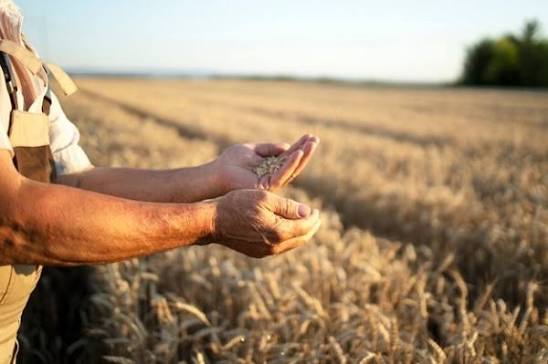
The European Commission is preparing a reform of the EU enlargement process that provides for special conditions for future members, including Ukraine. For Kyiv, one of the key exceptions could be a significant restriction on access to the EU’s agricultural market and agricultural subsidies, even after membership is granted.
According to Censor.NET, citing the Financial Times, this is outlined in an internal European Commission document reviewed by the publication.
The document is currently a draft. It is being discussed by high-ranking officials of the European Commission, and the proposals are scheduled to be approved on Tuesday.
Why are separate rules being proposed for Ukraine in the agricultural sector?
Agriculture is considered one of the most sensitive issues regarding Ukraine’s future EU membership in Brussels.
According to the FT, the European Commission plans to grant Ukraine only limited access to EU agricultural markets and the agricultural subsidy system, on which the Union spends approximately 55 billion euros annually.
The reasons cited include the scale of Ukrainian agricultural production and concerns among several current EU members—primarily Poland, France, and Italy—about the potential impact of large volumes of Ukrainian grain and oilseeds on the European market.
An internal European Commission document notes that the scale and structure of Ukraine’s agricultural sector, as well as its high level of productivity, provide grounds for considering special mechanisms that would significantly limit financial support and market access for certain Ukrainian agricultural products, particularly wheat and other grains.
At the same time, Brussels proposes instead to support Ukraine in restoring access to its traditional global export markets, supplies to which have been severely affected by the Russian war.
Thus, this is not about Ukraine being denied membership in the single market, but rather about the possibility of establishing special conditions for the agricultural sector within the framework of a reformed accession model. The final rules have not yet been approved.
The EU wants to tie its funding more closely to reforms
Agricultural restrictions are only part of a much broader reform being prepared by the European Commission against the backdrop of a possible new EU enlargement.
According to the document, the financial benefits of membership for new member states are to be directly linked to their implementation of legal and financial reforms.
To this end, the European Commission is considering the introduction of financial instruments based on the achievement of specific goals. Access to EU funds will depend on a country’s progress in implementing reforms.
At the same time, monitoring should not end after accession. The European Commission proposes using the full range of EU instruments in the area of the rule of law after a new country joins, to ensure continued fulfillment of the commitments made during negotiations.
The draft also provides for financial and legislative sanctions in cases where serious violations by a new member state could threaten the normal functioning of the European Union.
Separately, Brussels wants to reform the procedure under Article 7 of the Treaty on European Union, which allows for the suspension of certain rights of a member state, including the right to vote. The proposal is to make the mechanism easier to apply and more efficient.
According to media reports, the draft also considers a safeguard mechanism whereby, for a certain period after accession, a new member’s rights—including voting rights—could be suspended by a qualified majority of EU member states.
In addition, future accession treaties may include temporary safeguards in areas such as agriculture and the free movement of employees.
Ukraine is among the four candidates that have come closest to joining the EU
In a European Commission document, Ukraine, Moldova, Montenegro, and Albania are named as the four countries that have made the most progress toward membership in the European Union.
For each of them, Brussels proposes to prepare an individual roadmap for accession. At the same time, these plans will not include a predetermined date for membership.
The European Commission also proposes to more broadly apply the gradual integration of candidate countries into EU programs and policies even before formal accession. Among the areas where this could take place are defense, energy, and transportation.
The impetus for revising the enlargement policy was Russia’s full-scale invasion of Ukraine, which significantly accelerated the debate over the admission of new members. At the same time, several EU capitals fear that the geopolitical need for rapid enlargement could lead to a relaxation of requirements regarding the rule of law and the fight against corruption.
That is precisely why the new model must combine the acceleration of candidate integration with additional safeguards for the European Union itself.
A European Commission spokesperson declined to comment to the Financial Times on the contents of the internal document. The Office of the Prime Minister of Ukraine and the Ministry of Foreign Affairs of Ukraine also did not respond to the FT’s request for comment.


