


Occupiers removed 37 artefacts from "Kamiana Mohyla" and began excavations at nature reserve in Zaporizhzhia region. PHOTO
In the temporarily occupied territory of the Zaporizhzhia region, Russia has taken control of the ‘Kamiana Mohyla’ National Historical and Archaeological Reserve, removed part of its collection to Crimea, and commenced work that may threaten the preservation of this unique heritage site. Ukrainian intelligence has already identified 37 stolen archaeological artefacts.
This was reported by Censor.NET, citing data from the Main Intelligence Directorate of the Ukrainian Ministry of Defence.
How the occupiers removed artefacts from ‘Kamiana Mohyla’
Following the capture of the Melitopol region in 2022, the Russian occupiers gained control over the nature reserve’s territory and its museum collection.
In February 2023, the occupying administration announced the incorporation of ‘Kamiana Mohyla’ into the ‘Chersonesos Tauric’ museum-reserve in the temporarily occupied city of Sevastopol.
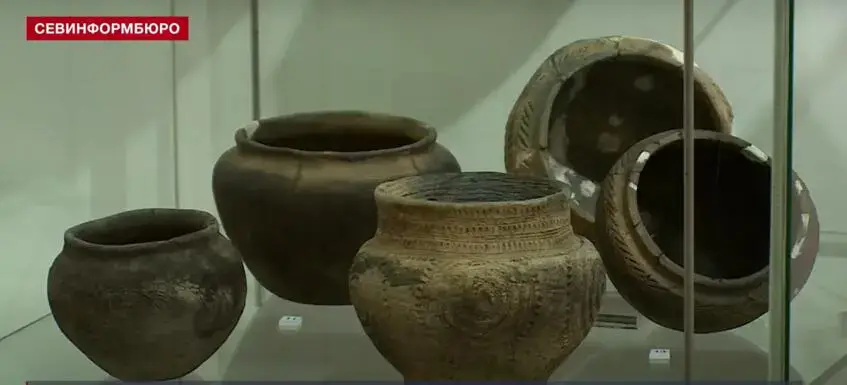
As early as May of that year, an exhibition of archaeological artefacts from the Zaporizhzhia reserve opened in Crimea. According to Ukrainian media reports, over 1,200 exhibits were on display. However, the exact number of cultural artefacts illegally removed remains unknown.

In October 2025, the Main Intelligence Directorate (DIU) released information about 37 items that the Russians had removed under the pretext of organising a temporary exhibition entitled ‘The Spiritual World of the Ancestors in the Petroglyphs of Kamiana Mohyla’.
Among the stolen items were a copper figure of a warrior, vessels from the Zrubna culture, pottery, arrowheads, a mammoth tooth and ritual objects in the shape of fish.
Ukrainian intelligence has added details of these artefacts, including photographs and descriptions, to the "Stolen Heritage" database on the War&Sanctions portal.

Illegal excavations and identifying those involved
The threat concerns not only museum exhibits but also the archaeological site itself.
In October 2024, reports emerged of excavations taking place on the "Kamiana Mohyla" site. The information was disseminated by "Interfax-Ukraine", citing the Melitopol-based publication "RIA-Pivden", which drew on data from occupation-controlled sources and its own sources.
It is currently impossible to fully verify the nature and scale of this work. However, interference with archaeological sites without the permission of the Ukrainian state poses a risk of damage to the site and the loss of scientific information about the finds.
In February 2026, the Main Intelligence Directorate (DIU) published details of 14 individuals involved in the misappropriation and removal of Ukrainian cultural artefacts from ‘Kamiana Mohyla’, the Novokakhovka City Gallery and museums in Kherson.
Among those identified are representatives of the occupying administrations and museum organisations. In particular, the intelligence service named the so-called ‘Minister of Culture of the Kherson Region’, Artem Lahoiskyi, as one of the organisers of the looting of the Kherson museums.
Separately, the Main Intelligence Directorate has documented the involvement of individuals in the seizure of "Kamiana Mohyla", its unlawful subordination to a Crimean museum, and the removal of exhibits under the guise of exhibition activities.
Why ‘Kamiana Mohyla’ is of particular value
The reserve is situated near Melitopol, on the banks of the Molochna River. It is a sandstone hill approximately 12 metres high, whose grottoes and caves contain thousands of rock carvings – petroglyphs – dating from various historical periods.
In 2008, ‘Kamiana Mohyla’ was granted the status of a national historical and archaeological reserve. The site is on UNESCO’s Tentative List of World Heritage Sites and is included in the list of the ‘7 Wonders of Ukraine’.
Archaeological finds from the reserve provide insights into the lives, beliefs and culture of ancient communities. Their illegal removal, as well as uncontrolled excavations, could lead to the loss of a significant part of Ukraine’s historical heritage.
The full extent of the damage caused to "Kamiana Mohyla" during the Russian occupation has not yet been established.


