



Ukrainian police discussed with the US Russia’s responsibility for crimes and hybrid threats. PHOTOS
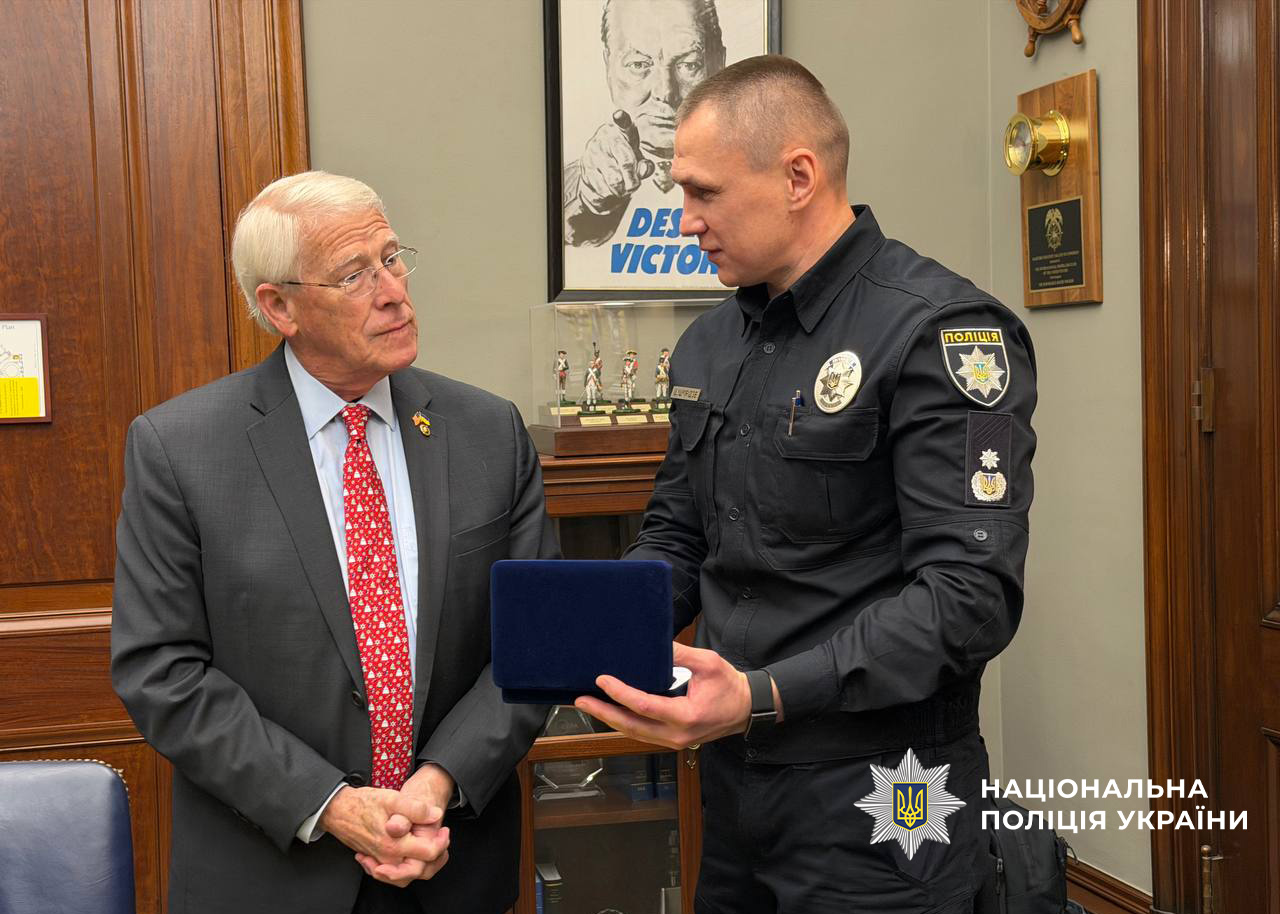
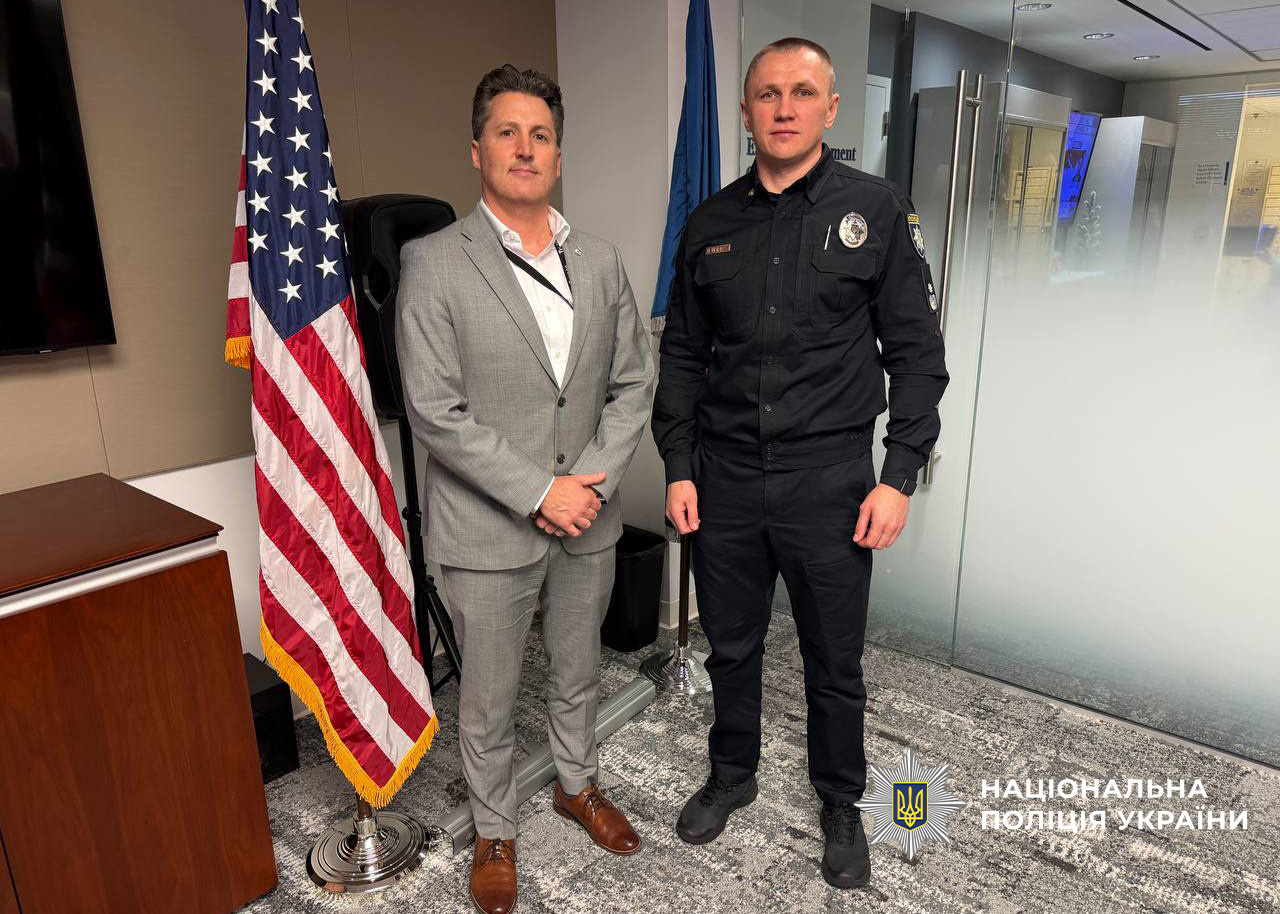
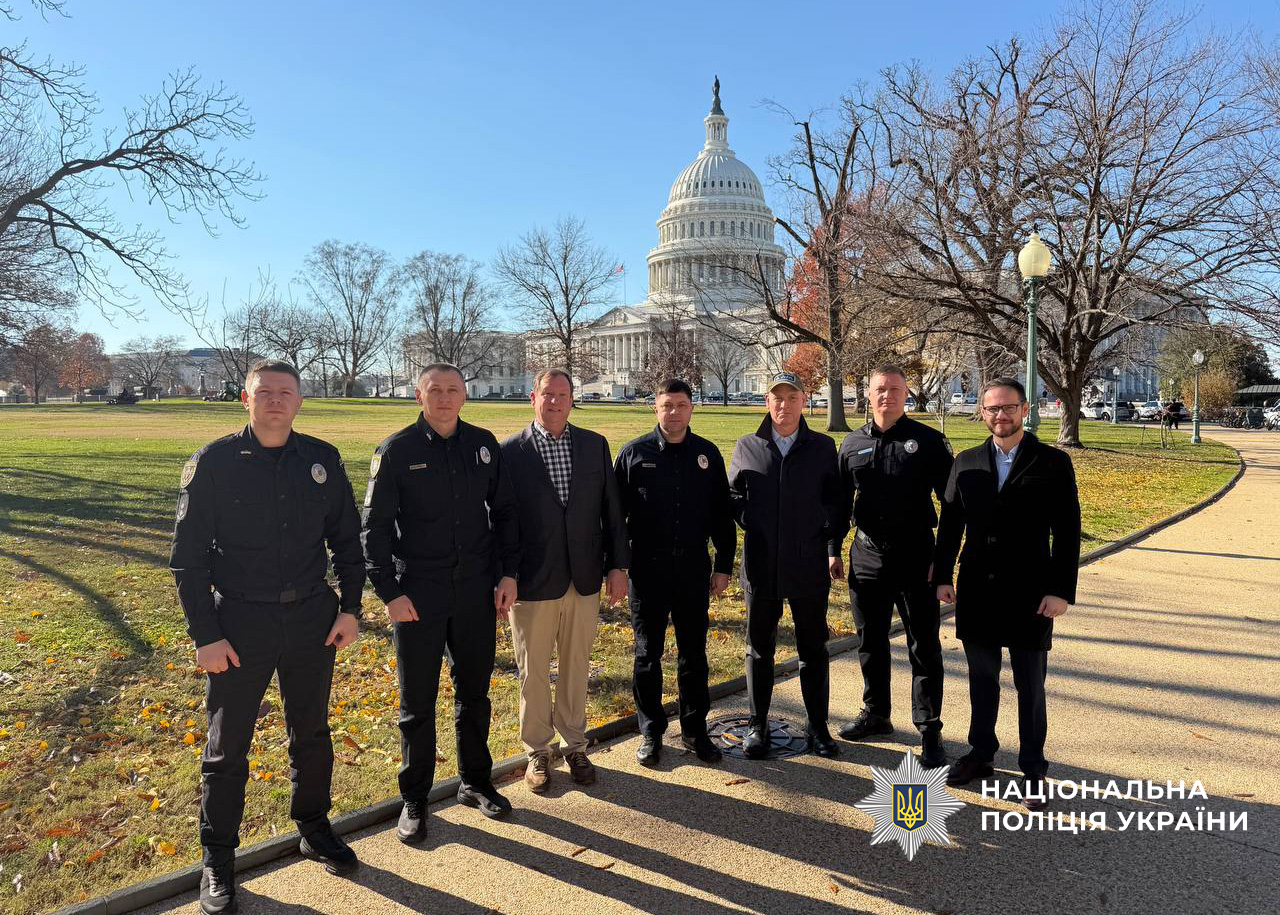
A delegation from the National Police of Ukraine, led by First Deputy Head of the Main Investigation Department Maksym Tsutsikiridze, met with senators and representatives of the Ukrainian Embassy in the United States, the US Department of Justice, divisions of the Federal Bureau of Investigation, the Congressional Helsinki Commission, and the Bureau of International Narcotics and Law Enforcement Affairs (INL).
This was reported by Censor.NET with reference to the communications department of the National Police.
Composition of the Ukrainian team
As noted, the Ukrainian team also included the head of the Department for Documenting Crimes Committed in Armed Conflict of the Main Investigation Department of the National Police, Oleksandr Shapovalov, Dmytro Shevchuk, deputy head of the Department for the Investigation of Crimes Committed in Armed Conflict of the Main Investigation Department of the National Police, and Yevhen Panchenko, first deputy head of the Department of International Police Cooperation. The purpose of the visit was to present the scope of the National Police's work in investigating Russian war crimes, to develop joint mechanisms to counter hybrid threats, and to strengthen cooperation in the field of international security.



Investigation of war crimes
Ukrainian investigators informed their American partners about more than 185,000 war crimes documented by the National Police and about the work in the de-occupied territories, where torture chambers, mass graves, destruction of civilian infrastructure, and the consequences of Russian shelling are being recorded. Separately, the Centre for the Investigation of Human Rights Violations and War Crimes presented the Ukrainian interagency system "War Criminal," which contains data on nearly 900,000 individuals involved in crimes against Ukraine, including military personnel, special services employees, members of filtration structures, propagandists, and mercenaries from private military companies. American law enforcement officials assessed the prospects for the rapid exchange of information between the competent authorities of the two countries to improve the effectiveness of joint efforts to identify and prevent the movement of war criminals through Western countries.
The Ukrainian delegation also provided the American side with profiles of 11 US citizens who are considered missing or are being held captive in Russia, and provided updated information on crimes committed against 109 American citizens. Ukrainian police emphasised that crimes against US citizens are just as brutal as crimes against Ukrainians: these include the shooting of civilians, attacks on journalists, deliberate shelling of humanitarian convoys, and the destruction of vehicles during evacuation.
Activities of the Wagner and Redut private military companies
During meetings at the FBI, the Ukrainian side presented detailed analytical materials on the activities of the Wagner and Redut private military companies and other Russian proxy structures, their presence in Africa, the Middle East, Latin America, and Europe, their sources of funding, and recruitment routes. American partners confirmed their interest in deepening cooperation to identify and neutralise the activities of these formations in Western countries.
Threats to Europe
A separate aspect of the talks was Russia's hybrid activities, in particular the use of drones in the airspace of European states. The Ukrainian police provided an analysis of more than a hundred incidents involving so-called "unknown drones" that were recorded in European countries during the year, including cases that led to the temporary closure of airports. It was emphasised that such incidents are planned operations and indicate the expansion of Russian hybrid methods far beyond Ukraine, and therefore require a coordinated response from partners.
Other details
- During a closed briefing with the US Congress Helsinki Commission, Ukrainian investigators presented an analysis of the threats that Russian war crimes and hybrid warfare methods pose to Western countries, as well as examples of attempts by the Russian Federation to influence the security situation through arson, information operations, PMC activities, and cyberattacks. Commission representatives confirmed their readiness to facilitate further communication with members of Congress on maintaining focus on Russian crimes and supporting international accountability mechanisms.
- At a meeting with Ukrainian Ambassador to the United States Olha Stefanishyna, the parties agreed on a joint approach to further contacts with American law enforcement agencies. In particular, they discussed coordinating efforts to inform partners about the scale of Russian crimes and the need to expand international cooperation in response to Russian hybrid threats.
- During the visit to INL, the Ukrainian delegation presented comprehensive results of the support that the organisation provides to all units of the National Police in the context of full-scale war. This includes equipment and solutions that save lives every day: from protective gear, special transport, medical supplies, equipment for bomb disposal experts and "white angels" in frontline areas to Rapid DNA mobile complexes, 3D scanners and drones for forensic scientists and investigators. American partners have confirmed their readiness to continue their support, training programmes, and investments in the technological development of the Ukrainian police.
- Following all the meetings, the parties agreed to expand the exchange of evidence and analytics, coordinate joint investigations into war crimes and the activities of Russian private military companies, develop technological cooperation, and deepen cooperation in countering hybrid threats from the Russian Federation.
The National Police of Ukraine operates in conditions that are unparalleled in the modern world: under fire, we simultaneously document war crimes, rescue people, clear mines from liberated territories, deter cyberattacks, and counter Russian drones and hybrid operations. This experience should help our partners identify mercenaries, prevent sabotage, and protect their own borders from Russian aggression. We are open to the broadest possible cooperation, because the Russian Federation's hybrid war knows no borders, and only joint action by civilised countries can stop it," Tsutsikiridze stressed.


