



Mounts for "sleeper drones" tested in Ukraine: students developed them. PHOTOS
Drone Industry
Ukraine has tested mounts for reconnaissance and FPV drones developed by teams of students from Ukrainian universities.
This was reported by Oboronka, Censor.NET reports.
Details
The test was conducted by Brave1 as part of the first Brave Students engineering challenge, "Drone with paws."
The devices allow a drone to attach itself to tree branches or poles and remain in standby mode until the moment the enemy is detected and engaged.
Out of 33 teams from 19 educational institutions across the country, five products took part in the final.

Student teams had two months to create working prototypes of mechanical attachments for FPV drones.
The iKOZAKY team from Donetsk National Technical University presented a hook-shaped attachment that allows a drone to latch onto horizontal tree branches. It was made in five hours on a 3D printer and is designed for a drone weighing up to 20 kilograms.
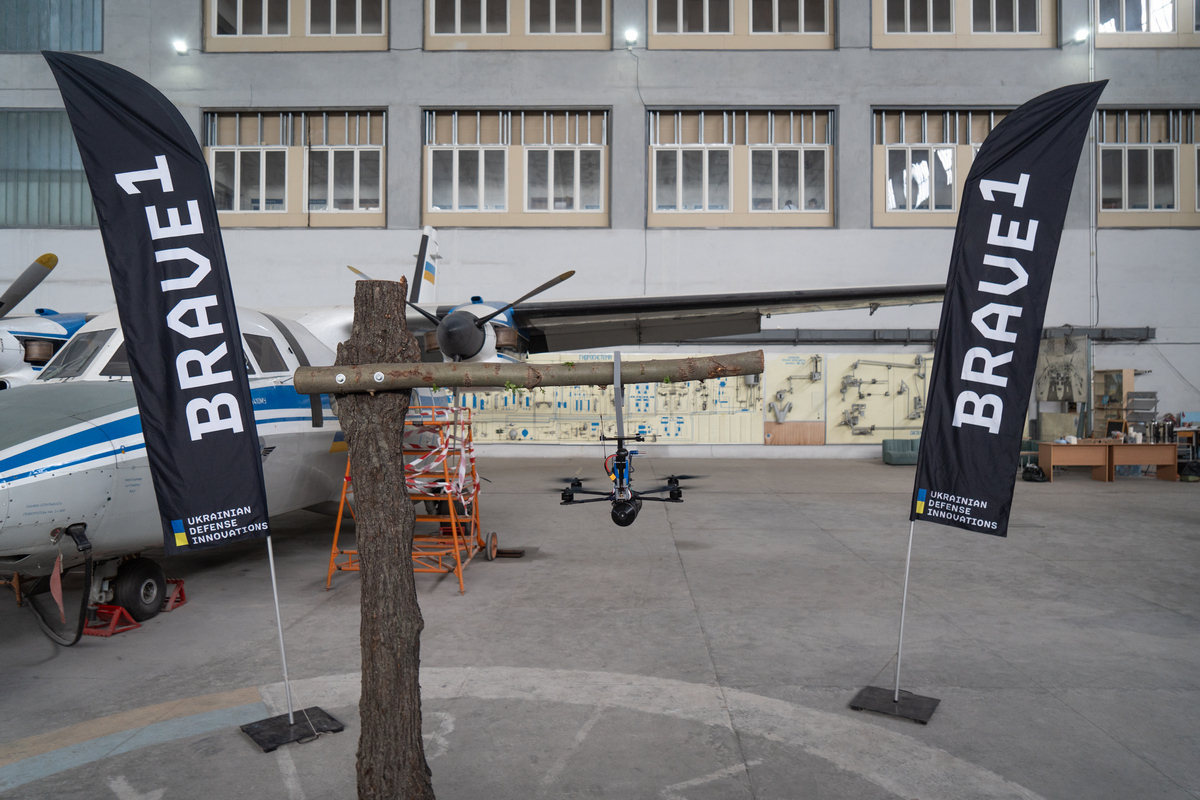
"At first, we made an umbrella-shaped attachment, then settled on a hook with a clip. Now we have added modularity. In the first versions, our product was ‘welded’ to the drone, but now it can be jettisoned on the operator’s command," said Kyrylo, a DonNTU student and developer of the mount.

The Easy Grip team from Zhytomyr Polytechnic took a different approach and developed mounting legs that perform a dual function.
At launch, the module can be used as supports for an FPV drone, and later, at the waiting point, the operator selects a suitable branch and grips it with the legs from both sides.
The body of the mounts is made from several types of plastic using 3D printing. Fixation on a tree is ensured by deformation and compression of TPU strips attached to the legs. This material combines the strength of plastic with the elasticity of rubber.
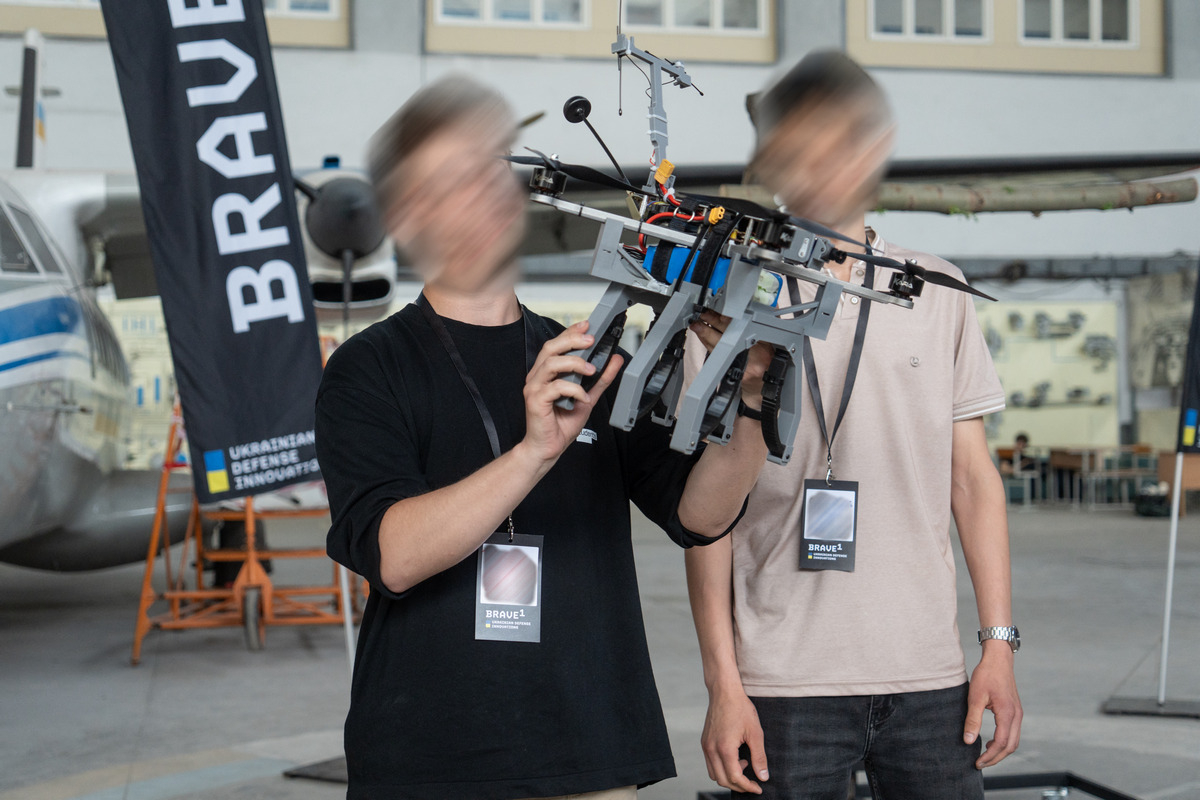
"We developed the mount for a 10-inch drone. With our module weighing 600 grams, the drone will be able to lift a warhead of about 1.5 kg, which needs to be attached on top. Landing on a branch requires skill, but takeoff is fairly simple: you only need to set the right power," said Danyil, co-author of the development and a student at Zhytomyr Polytechnic.

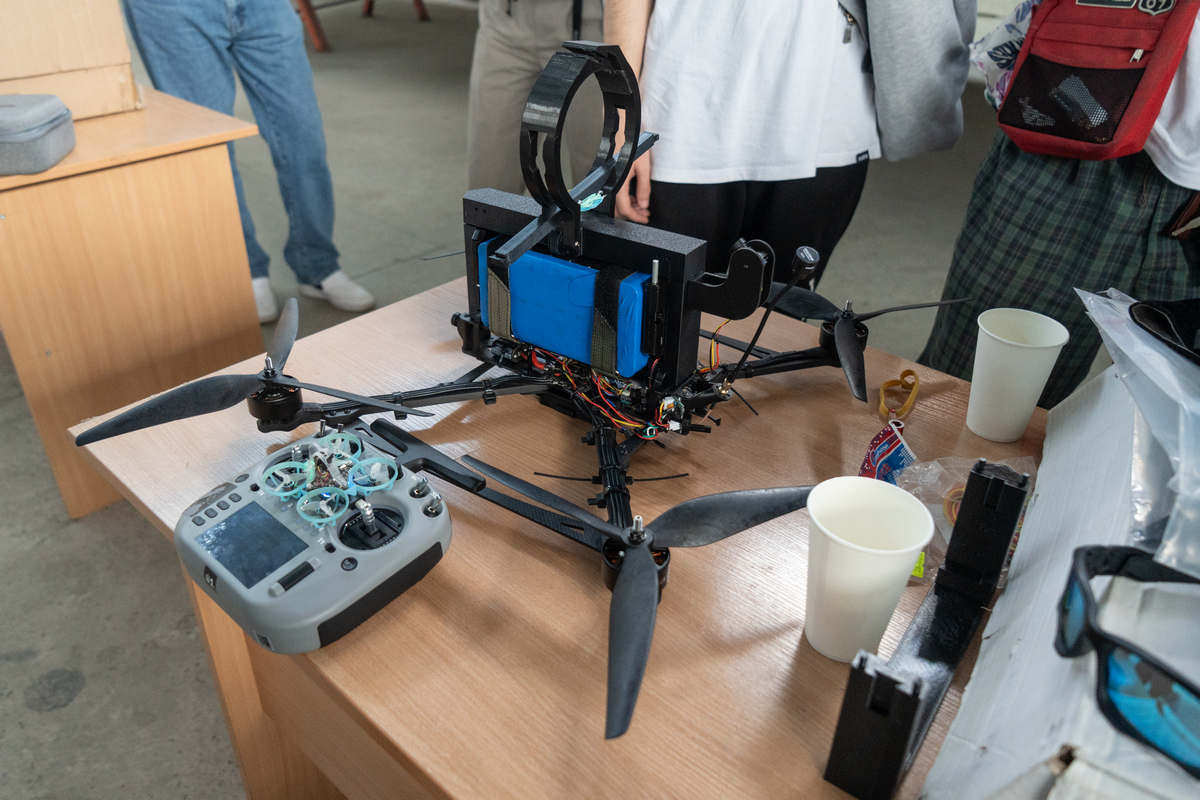
A third student team, with a product called "Antlers," presented a claw-shaped attachment placed on top of the drone that grips a branch through compression.
"We had some experience and understood that to attach a drone to a branch, we would have to lower it toward the ground, which means a guaranteed deterioration of the radio horizon. So we immediately concluded that such an attachment should be used on a fiber-optic drone. That is definitely a 13-inch frame. And the drone itself is heavy, because there will be a spool underneath. Therefore, the mounts must be placed on the upper part of the FPV body," said Tymur, a student at the Faculty of Electronics of Igor Sikorsky Kyiv Polytechnic Institute and co-author of the development.
The device consists of two parts. The upper attachment is fully mechanical and has no electronic components. It consists of two claws pulled together by rubber bands, which are blocked by a mechanical latch. It is unlocked on the operator’s command.
The electronic part of "Antlers" is responsible for releasing the drone for flight. Two electronic locks are unlocked, while the antlers themselves remain on the branch. Because of this, the student team keeps joking that their "deer drone" sheds its antlers.
The team behind the Squidrone product developed an attachment for securing drones not to horizontal branches, but to vertical tree trunks and power poles.
The developers say they chose this concept because, on the battlefield, burned trees often lose their crowns and sufficiently strong branches that a drone could latch onto.
However, the trunks remain suitable for installing a "sleeper drone."
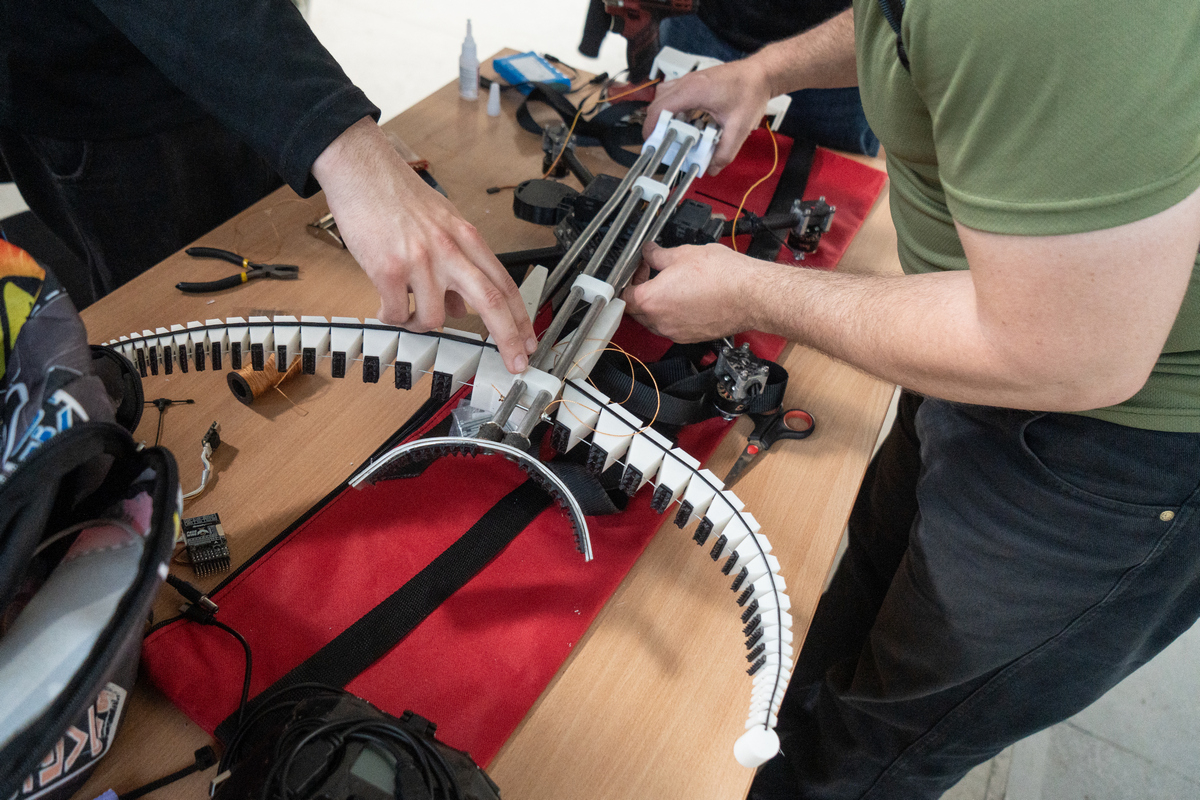
The Squidrone robotic module is based on a modelled logarithmic spiral resembling octopus tentacles. A cable runs through the "tentacles." When it is pulled tight, the tentacles begin to curl and wrap around a tree or pole.
"In our solution, tightening is implemented through a ratchet mechanism. This means we cannot unfold the attachment back, so the drone detaches from it, while the attachment remains on the tree. The optimal diameter for gripping is 15 centimeters," the team explained.
Another team from Igor Sikorsky Kyiv Polytechnic Institute was unable to take part in the final tests.


