



Russia has fitted cluster warhead to "Kalibr", - Ministry of Defence. PHOTO
Military engineers and scientists from the Ministry of Defence have examined the Russian "Kalibr" cruise missiles shot down by air defence forces and identified significant changes in the design of the air-launched missiles.
This was reported by the Ministry of Defence’s press service, according to Censor.NET.
Details
The missile has been fitted with a cluster warhead, and the occupiers have reverted to imported electronics following an unsuccessful attempt to switch to Russian-made components.
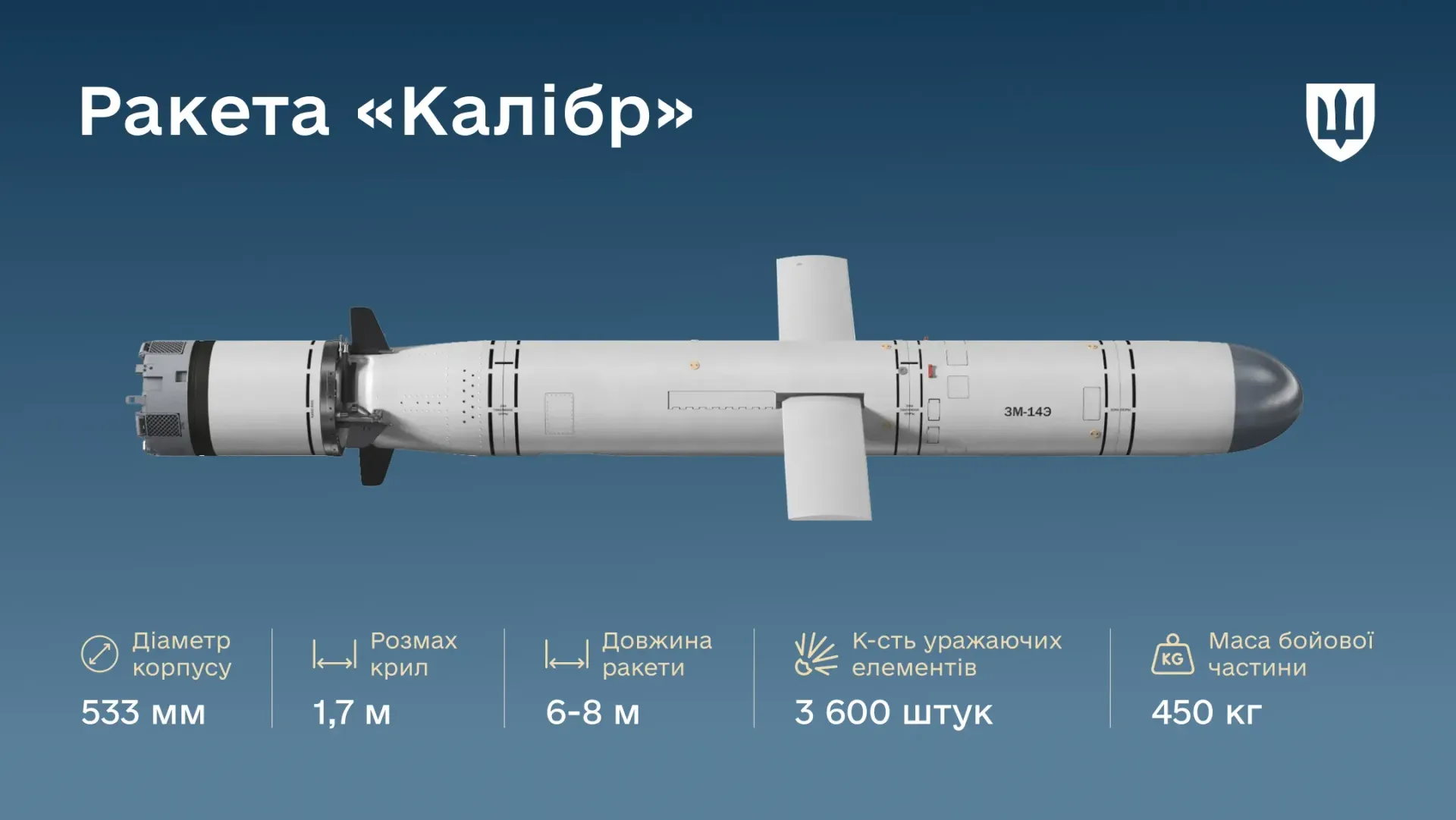
"Production of the missile began in 2001, and it was adopted for service in 2004. However, upon examining the markings on individual components, specialists from the Ukrainian Ministry of Defence discovered parts with markings indicating designs dating back to 1986 – in particular, steering mechanisms marked ‘ZP-51’.
Some components of the Kalibr missiles are fully standardised with other missile systems. The control surfaces, satellite navigation system and on-board digital computer (OBDC) are also used on the Iskander cruise missile. Certain modules are identical to components of the "Bereg" and "Bastion" missiles, the ministry explained.
The Kalibr missiles used between 2022 and 2026 are equipped with a high-explosive fragmentation warhead. The inner liner contains around 3,600 striking fragments made of ordinary steel. Each such fragment is capable of penetrating up to 10 centimetres of concrete.

What has changed?
Meanwhile, in 2026, Ministry of Defence experts discovered a cluster warhead in missiles shot down this spring – similar to that used on the Kh-101.
"The cluster design increases the area of destruction. Russian designers also calculated that this would make the missile more effective against dispersed targets – aircraft at airfields, hangars and open positions.
The Ukrainian Ministry of Defence is currently continuing its research into the new warhead of the Kalibr missiles," the report noted.
Guidance system
It is known that the "Kalibr" uses a combined control system:
- GPS satellite navigation;
- inertial navigation system;
- radio altimeter;
- radar homing seeker.
The flight mission is programmed into the on-board digital computer in advance, including the terrain profile.
Experts from the Ministry of Defence paid particular attention to the SN-99 navigation system – one of the key components. According to available documentation, it was developed in the 2000s in Ukraine, in the city of Smila. Serial production is currently carried out in Russia, but the design basis is of Ukrainian origin," the Ministry of Defence explained.
Foreign components in "Kalibrs"
"The homing head circuit boards consist of more than 80–90% foreign-made components. This is a confirmed fact, not an estimate: every part is marked and has been inspected by the military representative.
The following trend has been observed: in 2023–2024, russia gradually switched to a domestic component base. However, the on-board digital computer from a downed missile, which was assembled in 2025, again contains imported components. Experts at the Ukrainian Ministry of Defence suggest that the switch to domestic electronics impaired guidance accuracy, prompting the manufacturer to revert to a tried-and-tested design. ‘Existing stocks of components procured prior to the sanctions have evidently not yet been exhausted,’ the ministry noted.
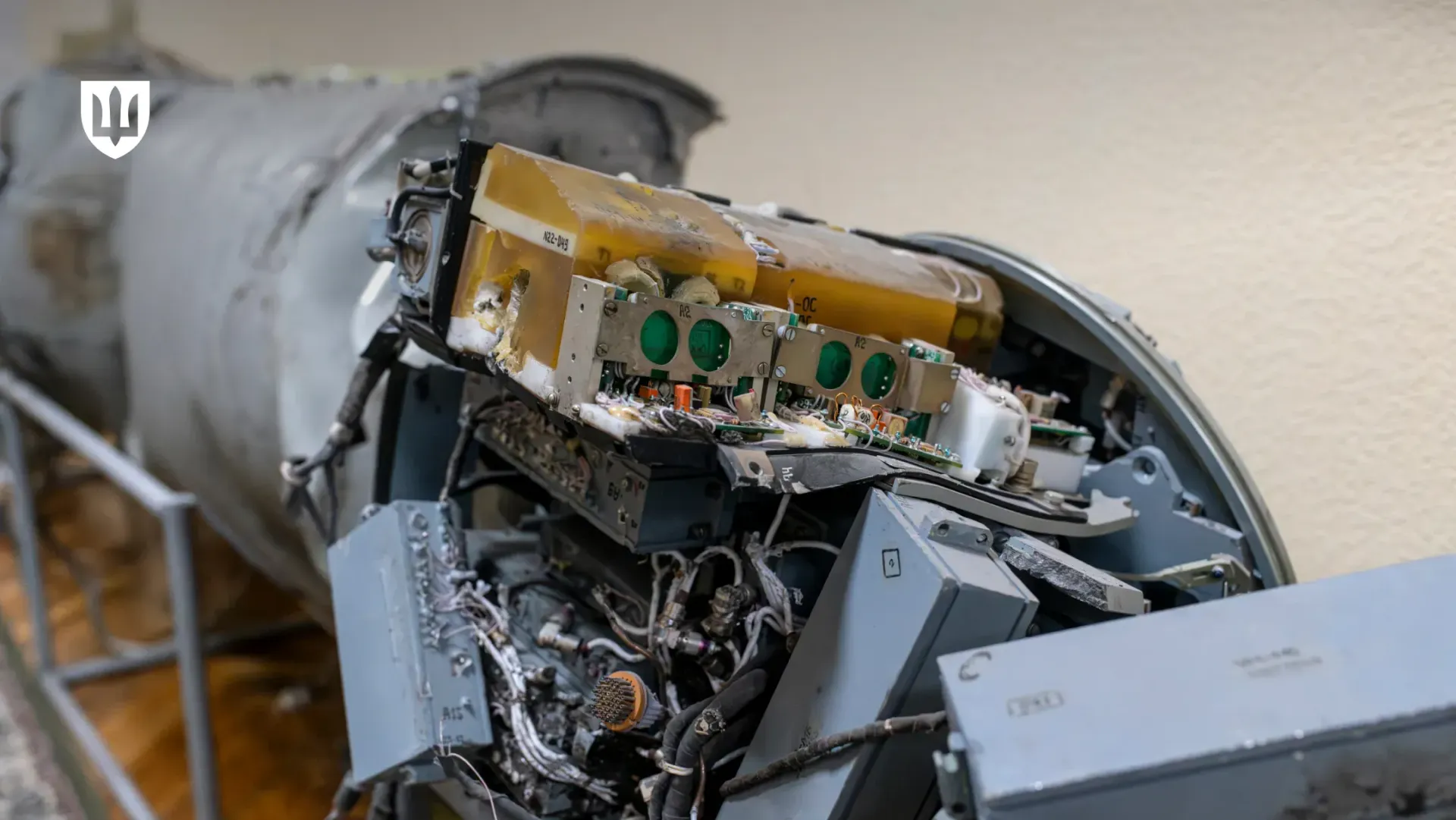
All manufacturers of electronics for the missiles, as well as the chief designers and managers involved in missile production, have been identified.
The data is being forwarded for further processing as part of the sanctions policy.


