10923 visitors online
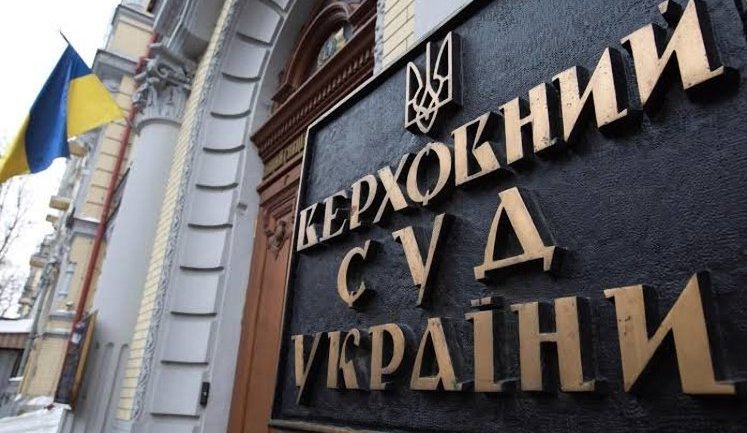
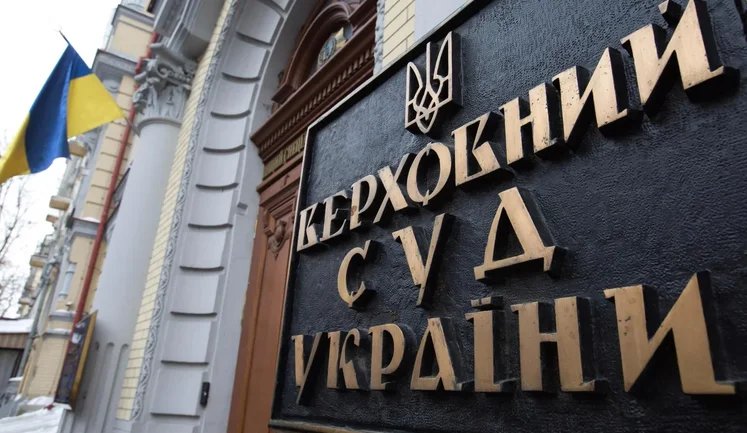
The Supreme Court of Ukraine plays a pivotal role in shaping the country's legal landscape. Recently, it has been involved in several high-profile cases, such as reversing dismissals of judges accused of corruption, denying appeals related to political sanctions, and upholding substantial financial confiscations in corruption-related proceedings. These decisions underscore the Court's influence on judicial reform efforts and its capacity to uphold the rule of law. Moreover, the Court's actions in military service-related cases reflect its broader impact on societal norms under martial law. The Supreme Court's role often comes under scrutiny, as seen with demands for transparency and the handling of judicial misconduct, yet it remains a cornerstone of Ukraine’s judicial system, bearing significant weight in the country's ongoing legal reforms and anti-corruption efforts.

What are the recent high-profile decisions of the Supreme Court of Ukraine?

The Supreme Court of Ukraine has recently made headlines with decisions including overturning the dismissal of judges involved in bribery cases, rejecting appeals to remove sanctions against political figures, and validating confiscations related to corruption. These cases highlight its critical role in enforcing anti-corruption measures and judicial integrity.

How does the Supreme Court of Ukraine influence judicial reform?

The Supreme Court significantly influences judicial reform by setting legal precedents and making decisions that directly affect judicial processes. Its rulings on high-profile corruption cases and its stance on judicial integrity contribute to broader reform efforts aimed at enhancing transparency and accountability within the judicial system.

What is the role of the Supreme Court in military service-related issues?

The Supreme Court of Ukraine plays a key role in military service-related issues by clarifying legal obligations under martial law. It has ruled that all citizens, regardless of religious beliefs, are required to fulfill military duties during martial law, reflecting its influence on the intersection of law and societal norms.

How does the Supreme Court handle cases related to corruption?

The Supreme Court handles corruption cases by upholding decisions made by lower anti-corruption courts, such as the High Anti-Corruption Court, and confirming the legality of confiscations and penalties. Its role is crucial in ensuring that anti-corruption measures are enforced and that judicial processes are conducted fairly and transparently.

What impact do Supreme Court decisions have on Ukrainian society?

Decisions by the Supreme Court have profound impacts on Ukrainian society by establishing legal standards and influencing public trust in the judicial system. Through its rulings, the Court upholds the rule of law and exercises its power to address corruption, enforce judicial integrity, and protect citizens' rights, thereby contributing to societal justice and reform.

show details

Articles SCU

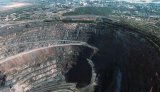
"Paper" debt of 4.7 billion: How delayed justice is destroying Ukraine’s economy "Paper" debt of 4.7 billion: How delayed justice is destroying Ukraine’s economy On 27 July, the Eastern Commercial Court of Appeal in Kharkiv will once again hear an appeal filed by Poltava Mining and Processing Plant PJSC against the ruling to open bankruptcy proceedings against it. Formally, the hearing concerns merely a single ruling by the court of first instance. In reality, it will test whether, during wartime, what remains of Ukraine’s investment climate and a strategic enterprise can be destroyed over a debt whose very existence is denied by the Supreme Court itself. 211 0

Case worth 4.7 billion: How Medvedchuk ally attempts to sue Poltava Mining and Processing Plant over non-existent debt Case worth 4.7 billion: How Medvedchuk ally attempts to sue Poltava Mining and Processing Plant over non-existent debt Inconsistent rulings by unreformed Ukrainian courts and their selective enforcement, including by employees of state institutions, create additional risks for business. A telling example is Poltava Mining and Processing Plant (MPP), which someone is trying to make pay 4.7 billion hryvnias in debt for a second time, a debt that was already repaid in 2015. 233 0 Previously in trend: Justice

Whether Supreme Court will allow Kolomoiskyi’s company not to return billions to state Whether Supreme Court will allow Kolomoiskyi’s company not to return billions to state Last week, the Supreme Court upheld the claim of NPC Ukrenergo, allowing it to recover ₴1.1 billion in financial guarantees from JSC Bank Alliance for electricity supplied to United Energy LLC, a company linked to Ihor Kolomoiskyi’s interests. 6 207 32

Supreme Court Chief Justice Stanislav Kravchenko: "Before full-scale war began, I saw no need for separate military courts. However, I have drastically changed my position." Supreme Court Chief Justice Stanislav Kravchenko: "Before full-scale war began, I saw no need for separate military courts. However, I have drastically changed my position." The Parliamentary Committee on Legal Policy has recommended that the Rada adopt a bill on the specialization of judges for handling military and war crimes. In the explanatory note, the author of the document emphasizes that this approach—specialization of judges, as opposed to the specialization of courts—avoids contradictions with the Constitution of Ukraine and is less costly and organizationally burdensome. 8 466 45

Why should military be judged by military? Why should military be judged by military? In addition to the military police, Ukraine may also have specialized judges who would hear cases involving the military. MPs are currently discussing a bill and, as an alternative, the idea of creating separate military courts. Moreover, such courts existed in Ukraine until 2010, when Yanukovych decided to liquidate them. 7 427 18

Chief Justice of Supreme Court Stanislav Kravchenko: When regular checks are introduced, certain number of judges resign Chief Justice of Supreme Court Stanislav Kravchenko: When regular checks are introduced, certain number of judges resign Over the past two years, during the full-scale phase of the war, the Supreme Court has repeatedly been at the epicenter of high-profile scandals. First, it was the dismissal of Judge Bohdan Lviv, after which, at the request of the then-Chairman of the Court, Vsevolod Kniazev, the remaining judges had to be checked for Russian citizenship. Later, it was a corruption scandal and the detention of Kniazev himself. 9 840 41