15303 visitors online
The 2026 Winter Olympics in Milan have sparked significant controversies, mainly centered around Ukrainian athletes. A substantial issue has emerged with Russia launching a disinformation campaign against Ukraine, utilizing AI technology to portray Ukrainian athletes negatively. The International Olympic Committee (IOC) has reinstated Ukrainian skeleton racer Vladyslav Heraskevych's accreditation, yet he remains unable to compete due to wearing a "helmet of memory" which honors deceased Ukrainian athletes. This decision, along with the choice of Anastasia Kucherova, a Russian athlete, to carry Ukraine's flag at the opening ceremony, has fueled debates. The political dynamics of the Olympics continue to unravel as discussions about Russian influence and athlete representation persist, highlighting the complex intersection of sports and politics.

What disinformation campaigns are Russia using at the Olympics?

Russia has been employing a large-scale disinformation campaign during the 2026 Winter Olympics, creating AI-generated videos to portray Ukrainian athletes and fans in a negative light. This effort aims to depict them as aggressive and corrupt, influencing public perception and undermining their reputation at the Games.

Why was Vladyslav Heraskevych banned from competing at the Olympics?

Vladyslav Heraskevych was banned by the IOC from competing due to his decision to wear a "helmet of memory" featuring images of athletes killed by Russian aggression. The IOC restricted this move during performances, though Heraskevych remains accredited and can display the helmet post-competition, leading to heated discussions around freedom of expression and athlete rights.

What is the significance of the "helmet of memory" for Ukrainian athletes?

The "helmet of memory" worn by Vladyslav Heraskevych symbolizes remembrance and honors Ukrainian athletes who lost their lives due to Russian aggression. It has become a powerful statement of protest and solidarity, drawing international attention to the political tensions underlying the Olympic Games and the athletes' personal stories.

How did Anastasia Kucherova's participation impact the opening ceremony?

Anastasia Kucherova, a Russian native, chose to carry Ukraine's flag during the 2026 Winter Olympics opening ceremony, an act that highlighted complex national identities and allegiances. Her decision was a conscious choice that caused discussions of reconciliation, diplomacy, and the power of individual athletes to transcend political boundaries at such a globally significant event.

What stance has the Ukrainian government taken on IOC's decision about Heraskevych?

The Ukrainian government, particularly Foreign Minister Andrii Sybiha, has strongly criticized the IOC's decision to disqualify Vladyslav Heraskevych over his "helmet of memory". The response underscores a broader contention against what is seen as the sidelining of vital expressions of Ukraine's struggle and the athletes' rights to honor their fellow compatriots within international sporting venues.

show details

Latest news Olympics 2026

Russia is conducting large-scale fake news campaign against Ukraine at Olympics, including generating AI videos, - BBC Russia is conducting large-scale fake news campaign against Ukraine at Olympics, including generating AI videos, - BBC A large-scale Russian disinformation campaign began during the Winter Olympics in Milan. The Kremlin is attempting to use AI-generated videos to portray Ukrainian athletes and fans as aggressive, corrupt, and unacceptable. 2 768 12 Previously in trend: Russian disinformation against Ukraine Olympics 2026

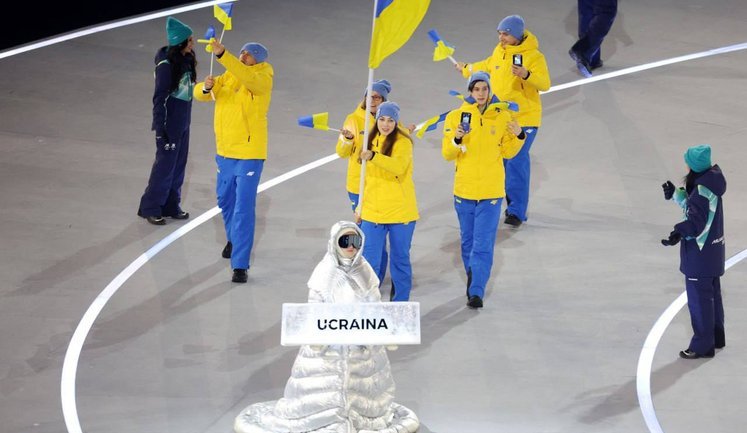
Russian athlete carried Ukraine’s flag at opening ceremony of 2026 Olympics, - AP. PHOTO Russian athlete carried Ukraine’s flag at opening ceremony of 2026 Olympics, - AP. PHOTO In Milan, during the opening ceremony of the 2026 Winter Olympics, the Ukrainian team's plaque was carried by Anastasia Kucherova, a native of Russia. The girl said that it was her conscious choice. 16 562 54 Previously in trend: Olympics 2026

IOC restores Heraskevych’s accreditation for Olympics-2026 but not right to compete IOC restores Heraskevych’s accreditation for Olympics-2026 but not right to compete Ukrainian skeleton racer Vladyslav Heraskevych will be able to remain at the 2026 Winter Olympic Games in Milan-Cortina despite being banned from competing. 4 756 16 Previously in trend: Olympics 2026 Helmet of remembrance at Heraskevych’s performance

IOC did not limit Heraskevych, but its own reputation, - Sybiha IOC did not limit Heraskevych, but its own reputation, - Sybiha Ukrainian Foreign Minister Andrii Sybiha strongly condemned the International Olympic Committee's (IOC) decision to disqualify Ukrainian skeleton racer Vladyslav Heraskevych from the 2026 Winter Olympics. 2 587 21 Previously in trend: Olympics 2026 Helmet of remembrance at Heraskevych’s performance

Heraskevych may display "helmet of remembrance" after his performance, but not during race, - IOC Heraskevych may display "helmet of remembrance" after his performance, but not during race, - IOC The International Olympic Committee called on Ukrainian skeleton racer Vladyslav Heraskevych not to wear the "memorial helmet" during his performance, but offered other options for honouring the deceased Ukrainian athletes, including displaying the helmet after the competition. 3 579 27 Previously in trend: Olympics 2026 Helmet of remembrance at Heraskevych’s performance

Heraskevych: I may be disqualified because of "helmet of memory" at Olympics Heraskevych: I may be disqualified because of "helmet of memory" at Olympics Ukrainian skeleton racer Vladyslav Heraskevych believes he could be disqualified from the Olympics in Italy if he continues to wear a helmet bearing images of athletes killed by Russia. 4 823 29 Previously in trend: Olympics 2026

Heraskevych goes out for Olympic training in "helmet of memory" despite IOC ban Heraskevych goes out for Olympic training in "helmet of memory" despite IOC ban Ukrainian skeleton racer Vladyslav Heraskevych, despite a ban by the International Olympic Committee, returned to training on the Olympic track wearing a "helmet of memory" featuring photos of athletes killed by Russia. 7 765 26 Previously in trend: Olympics 2026

Heraskevych banned from wearing helmet with photos of Ukrainian athletes killed by Russia at Olympics: Zelenskyy responds to IOC decision Heraskevych banned from wearing helmet with photos of Ukrainian athletes killed by Russia at Olympics: Zelenskyy responds to IOC decision Ukrainian skeleton racer Vladyslav Heraskevych said he was banned from wearing a helmet with images of Ukrainian athletes killed as a result of Russian aggression at the 2026 Olympics. 12 591 39 Previously in trend: Olympics 2026