



Germany disagrees with certain elements of US National Security Strategy: Russia remains threat
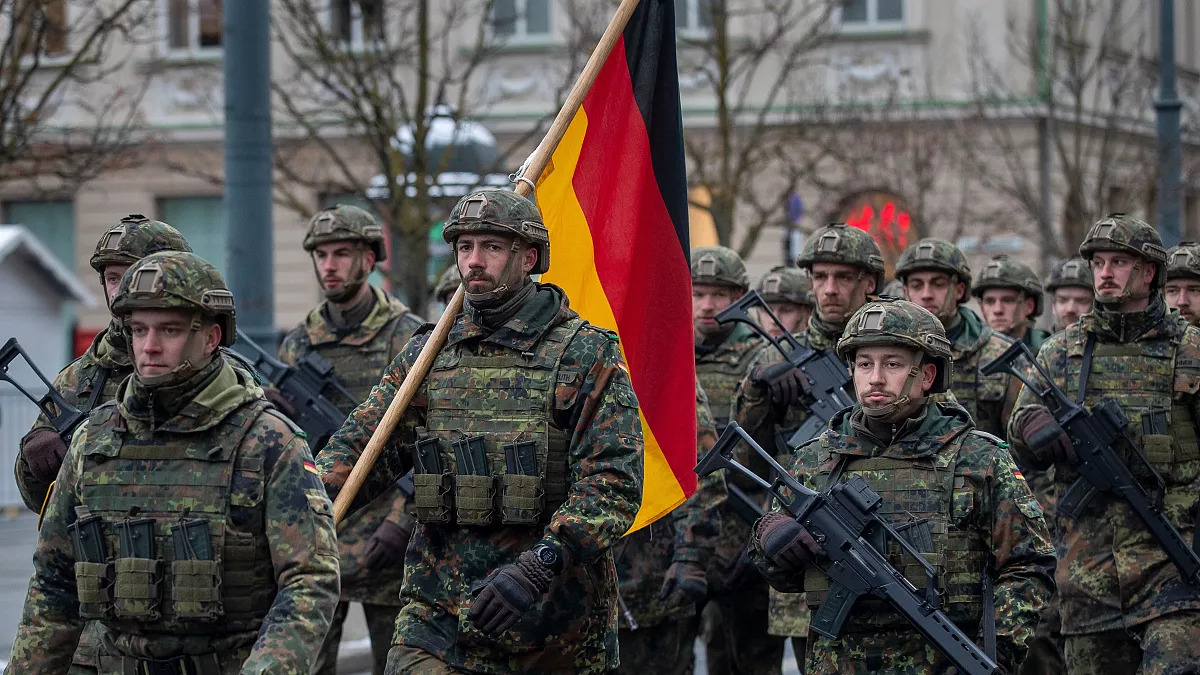
Germany agrees only with certain points of the US National Security Strategy, as it does not identify Russia as a threat.
This was announced by Sebastian Gille, deputy spokesman for the German federal government, and Zinan Zelen, president of the Federal Office for the Protection of the Constitution, according to Censor.NET, citing Ukrinform.
What is known?
According to Gille, Germany "generally" shares the American assessment of the security situation in several respects, particularly with regard to the need for Europe to strengthen its own capabilities to guarantee its security, which means, in particular, economic security and reducing dependencies.
At the same time, we strongly disagree with some points in the geopolitical analysis. For example, the document does not define Russia as a threat, and we do not agree with this assessment. We remain committed to NATO's analysis that Russia is and remains a threat to the security of the transatlantic region. ...
It is clear to us, and remains the unanimous assessment of our alliance partners, that Russia is the greatest threat to peace, freedom, and stability in Europe, and that Russia's aggressive revisionism threatens Euro-Atlantic security as a whole. The security threat posed by Russia is obvious.
Russia has brought war back to Europe through its aggression against Ukraine. This is obvious to everyone," he added.
Berlin also rejects criticism directed at the EU.
According to Gille, Germany is ready to continue close and trusting cooperation with the US at both the bilateral and multilateral levels, especially with regard to NATO and support for Ukraine.
Zelen said he sees no reason to distance himself from American partners and hopes that they, too, do not seek to sever ties with Europeans.
"At the same time, we have questions for our partners about what exactly they meant," he added.
What preceded it?
- The White House recently unveiled a new strategy for US national security. In particular, it states that the European continent is facing "civilizational destruction" due to decades of economic decline, as well as political and cultural failures. The updated strategy highlights the ideological gap that has opened up between Washington and its traditional allies.
- The head of EU diplomacy, Kaja Kallas, commented on the updated US National Security Strategy, which criticizes Europe. She noted that despite the ideological divide, the US remains a key ally of Europe.
- The European Commission, in turn, emphasized that decisions concerning the European Union are made by the European Union.
Key provisions of the new US defense strategy
- Reorientation towards the American continent;
- Fewer global commitments, less "world policing";
- Review of relations with Europe;
- The pursuit of "strategic stability" with the Russian Federation;
- Focus on multidimensional threats, not just military ones.


