



Vatican tried to persuade US to allow Maduro to flee to Russia, - Washington Post
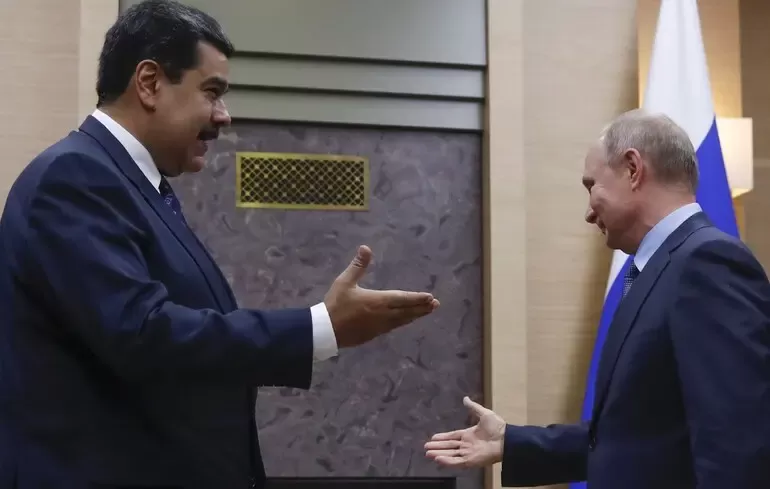
At the end of December, Vatican Cardinal Pietro Parolin met with US Ambassador to the Vatican Brian Burchett to persuade the Trump administration to allow Venezuelan leader Nicolas Maduro to flee to Russia.
This is reported by the Washington Post, citing government documents and its own sources, according to Censor.NET.
Maduro was asked to leave the country
According to the publication, Parolin, who was the Vatican's ambassador to Venezuela, tried to meet or talk with US Secretary of State Marco Rubio.
During his meeting with Berch, Cardinal Parolin stated that Russia was prepared to grant asylum to Maduro, "and asked the Americans for patience in order to push the dictator towards this proposal."
"Maduro was offered to leave and be able to use his money freely. Part of this agreement was that Putin would guarantee his safety," a source familiar with the Russian proposal told the WP.
The publication writes that Maduro was repeatedly offered to leave the country during the US campaign of attacks on ships leaving Venezuelan ports.
According to a person familiar with the proposal, Maduro received the final warning just days before the US operation to capture him.
"He did not agree to the deal. He was just going to sit and watch as a crisis developed around him," the source told the publication.
"He thought the November conversation with Trump went 'well.' Although in reality, he was told that his time was up: 'The president said you can go the easy way or the hard way,'" said a senior White House official.
The Vatican tried to persuade the US not to launch a military campaign against Venezuela.
Cardinal Parolin informed US Ambassador Birch that "Russia will abandon Venezuela if it is satisfied with Ukraine," referring to concessions by the US in peace talks to end Russia's war against Ukraine.
The Trump administration knew that Russia had allegedly offered asylum not only to Maduro, but also to other officials in his government.
At the same time, sources in Washington believed that the Venezuelan dictator would never agree to go to Russia because "conditions there are too restrictive and he would not have access to money from trading Venezuelan gold, which he is believed to have hidden abroad."
The Vatican later commented on the WP publication.
"It is regrettable that parts of a confidential conversation have been disclosed that do not accurately reflect the content of the conversation that took place during the Christmas holidays," the Holy See Press Office said.
A representative of Ambassador Birch forwarded inquiries to the US State Department, which declined to comment. Kremlin spokesman Dmitry Peskov also did not respond to a request from the WP.
What preceded it?
- On the morning of January 3, powerful explosions rocked the Venezuelan capital of Caracas.
- CBS News reporter Jennifer Jacobs wrote on Twitter: "President Trump has ordered strikes on targets inside Venezuela, including military facilities, US officials said, as the administration stepped up its campaign against President Nicolas Maduro's regime early Saturday."
- Later, US Secretary of State Marco Rubio announced that the US military operation in Venezuela had been completed. The country's leader, Nicolas Maduro, has been detained and is currently under the control of the US authorities.
- It later became known that Venezuelan President Nicolas Maduro and his wife Cecilia Flores would face a series of charges and stand trial in New York.
- Venezuela sent a request to the UN Security Council Secretariat for an urgent meeting of the Security Council in connection with the United States' attacks on the country.


