



Media have analyzed market for evading mobilization: how do these schemes work, and how much do they cost?
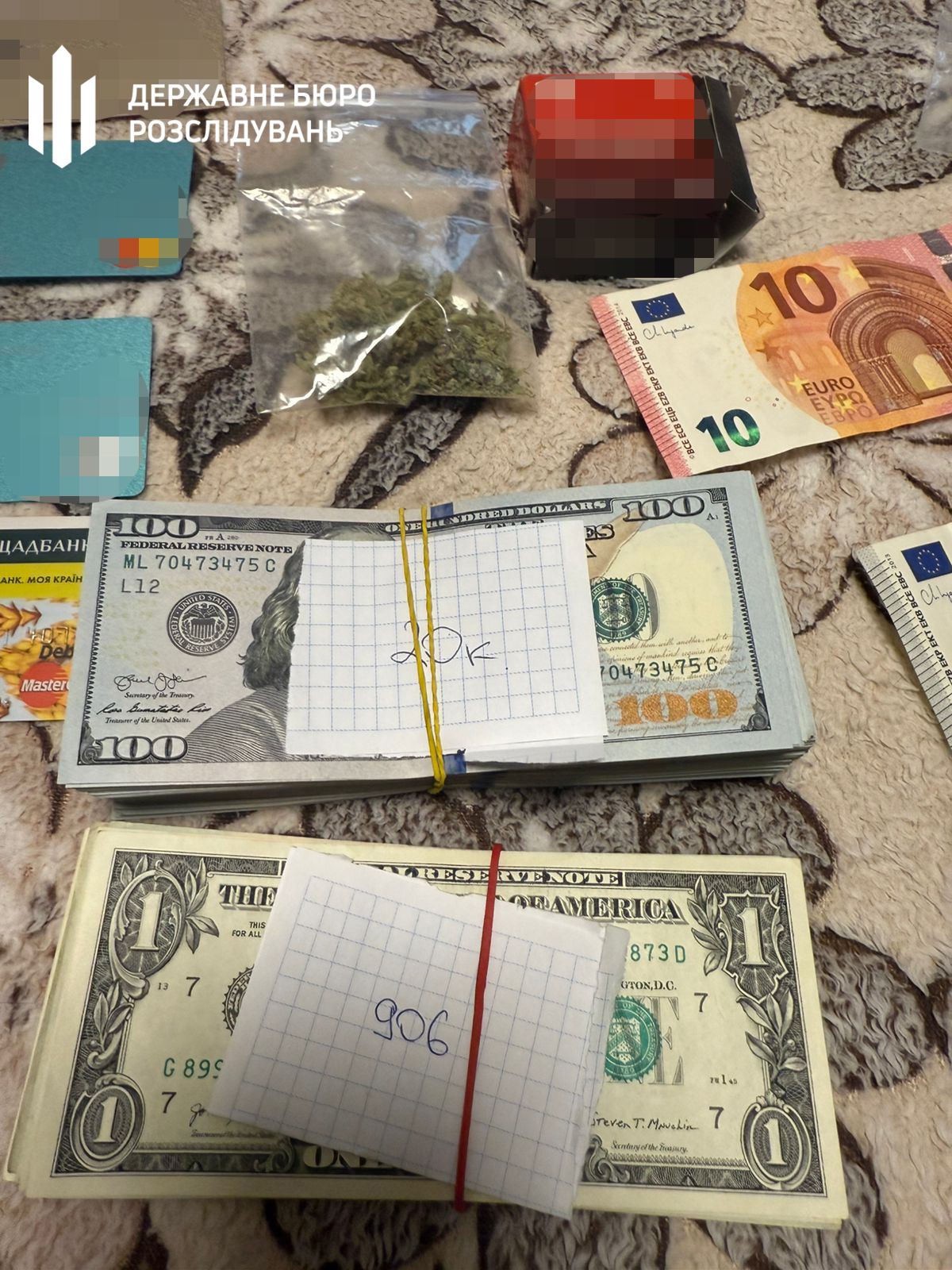
Oleh Kolomiets, a military servicemember at the Bucha District Territorial Recruitment and Social Support Center, declared gold bars worth 7.7 million hryvnias, as well as $43,500 and euros in cash, for the past year. Meanwhile, his official annual income was 366,000 hryvnias.
This was reported by Censor.NET, citing "Economic Pravda."
Corruption in the mobilization sector
As noted, his declaration reveals that, around the system that manages deferments, eligibility, and access to freedom of movement, funds are mysteriously accumulating—funds that are difficult to explain and even harder to overlook.
"Four years after the start of Russia’s full-scale invasion, corruption in the mobilization sector has not dissipated under the pressure of war... At the intersection of the Territorial Recruitment Center (TCR), military medical commissions (MMC), medical reports, registries, and fictitious reservations, a separate, large "market" has emerged where time, status, documents, and the right to avoid being sent where the state can forcibly deploy someone are sold. How exactly does it work?
Bribing an employee of the TCR, a MMC, or another official is punishable under Article 369 of the Criminal Code—from a fine to four years’ imprisonment. If money is given to an intermediary "to influence" a decision—Article 369-2 of the Criminal Code—up to two years’ imprisonment," the publication notes.
Men aged 25 and older constitute the main demand in the "market." In some cases, they even have access to complete packages that include deferrals, reservations, removal from the registry, classification as unfit for service, a "necessary" entry in the ‘Oberig’ registry, and "necessary" medical documents.
Corruption schemes surrounding mobilization are not limited to just some TCR employees. Public cases also involve individual MMC employees, doctors with fake medical documents, people with access to the registry and deferrals, and intermediaries who package these "solutions" into a "package" for the client. These schemes operate as a service infrastructure where a person purchases a complete process from the status of "registered" to the status of "unfit" or "reserved."
The cost
The cheapest option offered by some representatives of the TCR and numerous "intermediaries" is a minor adjustment to the registry, involving removal from the wanted list and updating of data "without consequences." A deferral, reservation, and a medical commission’s conclusion resulting in removal from the registry will cost more. The most expensive option is a package that includes medical documents, the commission’s decision, changes to the registry, and the ability to travel abroad.
It is difficult to determine the average cost of such "services," as no one keeps relevant statistics. The only indications of "prices" come from official releases by the police, the State Bureau of Investigations, the prosecutor’s office, and the registry of court decisions.
According to an analysis of public information on corruption investigations related to mobilization, the cost of "services" increases as a conscript nears the status of a military servicemember: the smallest bribes are typically demanded even before contact with the TCR, while the largest are demanded during the mobilization phase.
The healthcare sector turned out to be the most lucrative "segment." In the Kyiv region in 2026, police uncovered a scheme involving $18,000 for a fictitious diagnosis alone. In Dnipro, court records documented a $16,000 payment for influencing the decision of the MMC and a set of documents for crossing the border, while in Odesa in 2025, a mediator promised to arrange documents certifying unfitness for service for $25,000.
The most high-profile medical case occurred in January 2026. The Office of the Prosecutor General reported on the head of the MMC in Dnipropetrovsk Oblast, who was responsible for 20 instances of selling "unfitness" for a total of $300,000. And in the Khmelnytskyi region, investigators revealed a large-scale scheme involving $170,000, 301,000 UAH, and two cars in exchange for exempting the entire workforce of a company from conscription.
Details of the schemes
The publication analyzed schemes for evading mobilization and found a mediator willing to "sell" two ready-made scenarios.
- There is a "service" offering several options for leaving the country. For $10,000, one option is a "special flight"; for $12,000, there is a "green corridor" route through Moldova, Romania, Poland, or Hungary.
- The second option is "permanent removal from military registration" for $9,000.


