



EU gives positive assessment of today’s Rada vote, says it expects further laws to pass
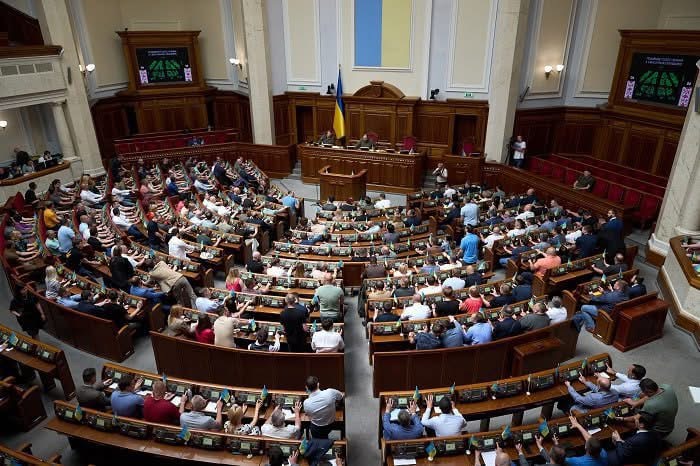
EU Ambassador to Ukraine Katarína Mathernová has welcomed the Verkhovna Rada’s adoption of several laws important for Ukraine’s European integration, as well as for international financial support.
This is evidenced by a statement she published on X, Censor.NET reports.
Key laws for integration and funding
Mathernová noted that the adopted documents include laws on the digitalisation of enforcement procedures for court rulings and on the integration of Ukraine’s and Europe’s electricity markets.
"These laws unlock important funding through the Ukraine Facility. I look forward to further laws being passed by the Rada," she said.
According to the EU ambassador to Ukraine, the adoption of these laws is an important step for the country’s economic development and for boosting the confidence of international partners.
How much money Ukraine will receive
At its 7 April session, the Verkhovna Rada backed two key draft laws needed to secure funding under the Ukraine Facility programme:
- No. 14005, on the digitalisation of enforcement proceedings, (adopted in full);
- No. 12087-d, on Ukraine’s integration into the EU energy market, (adopted in full).
These two decisions will allow Ukraine to receive €875 million from the European Union.
Another law for an additional €440 million
Parliament also passed at first reading draft law No. 14412 on the principles of delineating and distributing powers between levels of public governance. Once finally adopted, it will make it possible to attract another €440 million.
Background
On 26 February, the IMF Executive Board approved a new four-year Extended Fund Facility (EFF) programme for Ukraine. It covers 2026-2029 and provides for $8.1 billion in financing, with Ukraine having already received the first tranche of $1.5 billion.
In order to consider the new four-year $8.1 billion lending programme for Ukraine by the end of February, the IMF took an unprecedented decision by removing prior actions for Ukraine’s new lending programme. These included requirements to introduce VAT for individual entrepreneurs, taxes on parcels, a tax on income from digital platforms, and the extension of the military levy. Their implementation was postponed until the end of March.
Overall, the memorandum provides for 12 structural benchmarks. It also envisages tighter control over undeclared employment, including the submission of amendments to the Labour Code to define "employment", stronger labour inspections, and the exclusion from the second group of the simplified tax system of certain types of activity with a high risk of concealing labour relations.


