



Ukraine and Moldova will continue their path towards EU separately, pace will depend on results of reforms, - von der Leyen
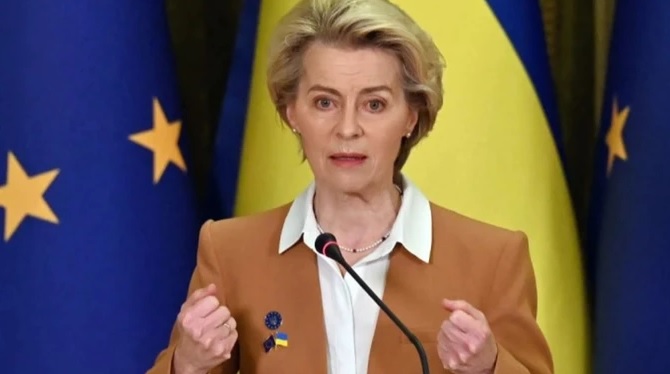
The European Union is adopting a case-by-case approach to the enlargement process with regard to Ukraine and Moldova. The pace at which candidate countries progress towards membership will now depend on the specific results of their reforms and their fulfilment of the requirements.
According to Censor.NET, this statement was made by European Commission President Ursula von der Leyen following the Moldova–EU summit, which took place on 22 June.
Reforms as the key condition for progress towards the EU
The European Commission emphasises that, once the negotiation process has begun, each candidate country is responsible for its own progress. This means that the pace of progress towards EU membership will not be the same for everyone.
According to Ursula von der Leyen, countries must implement various reforms depending on their commitments and the status of their compliance with the requirements.
"Once the first cluster has been opened, each candidate country is responsible for itself. They must implement reforms – and they must implement different reforms, depending on which candidate country we are talking about," said the President of the European Commission.
The principle of results-based assessment
The European Commission emphasises that further progress in the negotiations depends not on political statements or deadlines, but on tangible achievements in reforms.
Von der Leyen stressed that the ‘merit-based’ approach is more effective, as it allows for a clear assessment of each country’s progress.
She added that such a mechanism helps both the candidate countries themselves and the European Union to fulfil their commitments.
"A merit-based process is far better than the ‘as soon as possible’ approach, because it clearly demonstrates real progress," added Ursula von der Leyen.
Ukraine’s EU accession: the current stage
Ukraine has already opened the first negotiation cluster, ‘Fundamentals’, which covers the rule of law, the judicial system, fundamental rights and the functioning of democratic institutions.
In total, the accession process comprises six negotiation clusters. The next stages are due to be opened in the second half of 2026. The pace of further negotiations will depend on the implementation of reforms and the support of all EU countries.
- It was previously reported that Hungary had influenced the final text of the European Council summit regarding Ukraine. Hungarian Prime Minister Péter Magyar stated that the clause on the possible acceleration of Ukraine’s accession to the EU had been removed from the draft final communiqué. According to him, this happened at the last minute and was done on his initiative.


