



Ukraine bids farewell to pilot Bohdan Zahorulko and navigator Bohdan Babenko, who died in Su-24M crash in Khmelnytskyi region. PHOTOS
Ukraine has bid farewell to 55-year-old test pilot Bohdan Zahorulko and 23-year-old navigator Bohdan Babenko, who died on June 16 in the crash of a Su-24M aircraft in the Khmelnytskyi region.
This was reported on Facebook by the Air Force of the Armed Forces of Ukraine, Censor.NET reports.
The crew was laid to rest
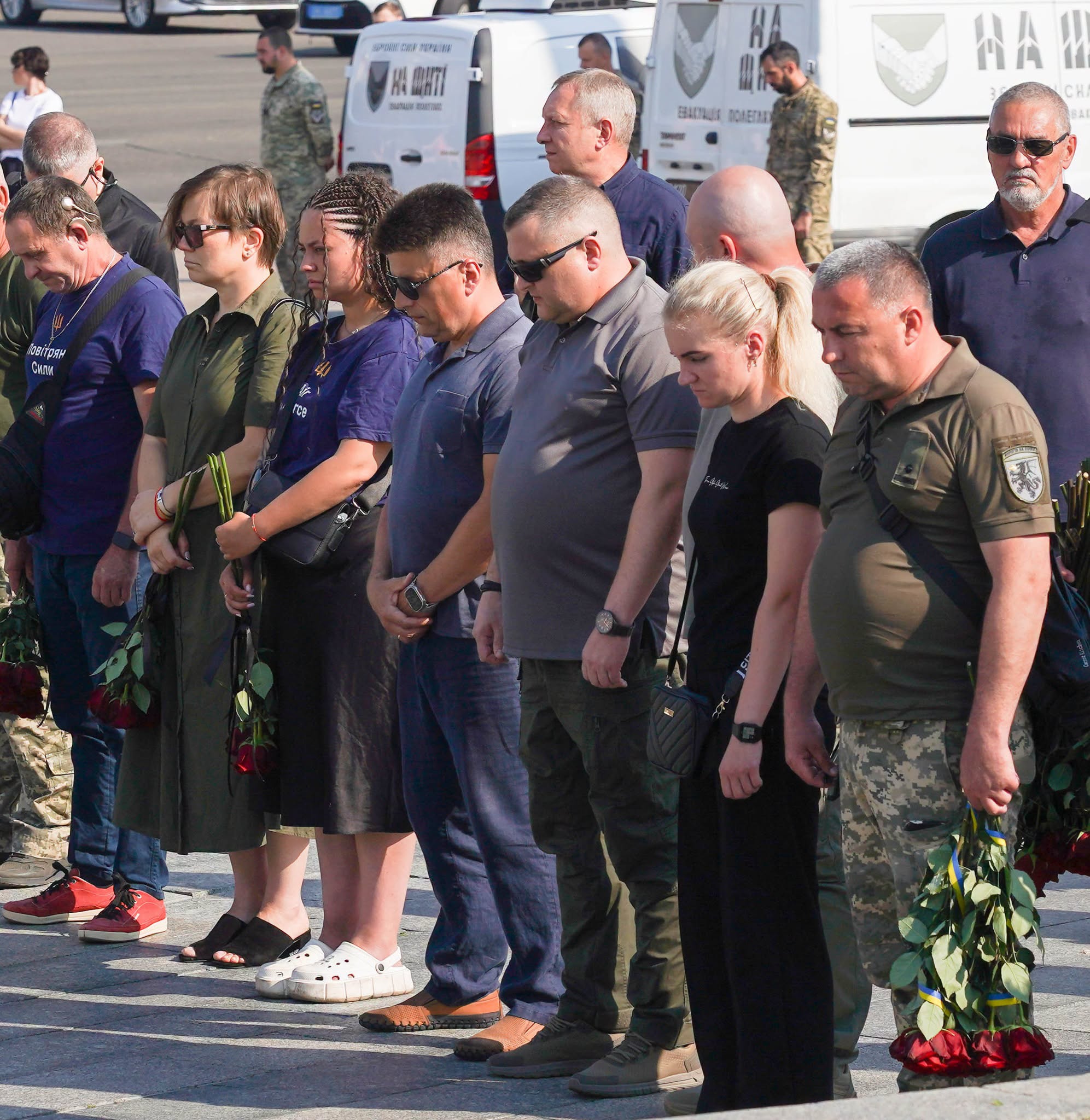
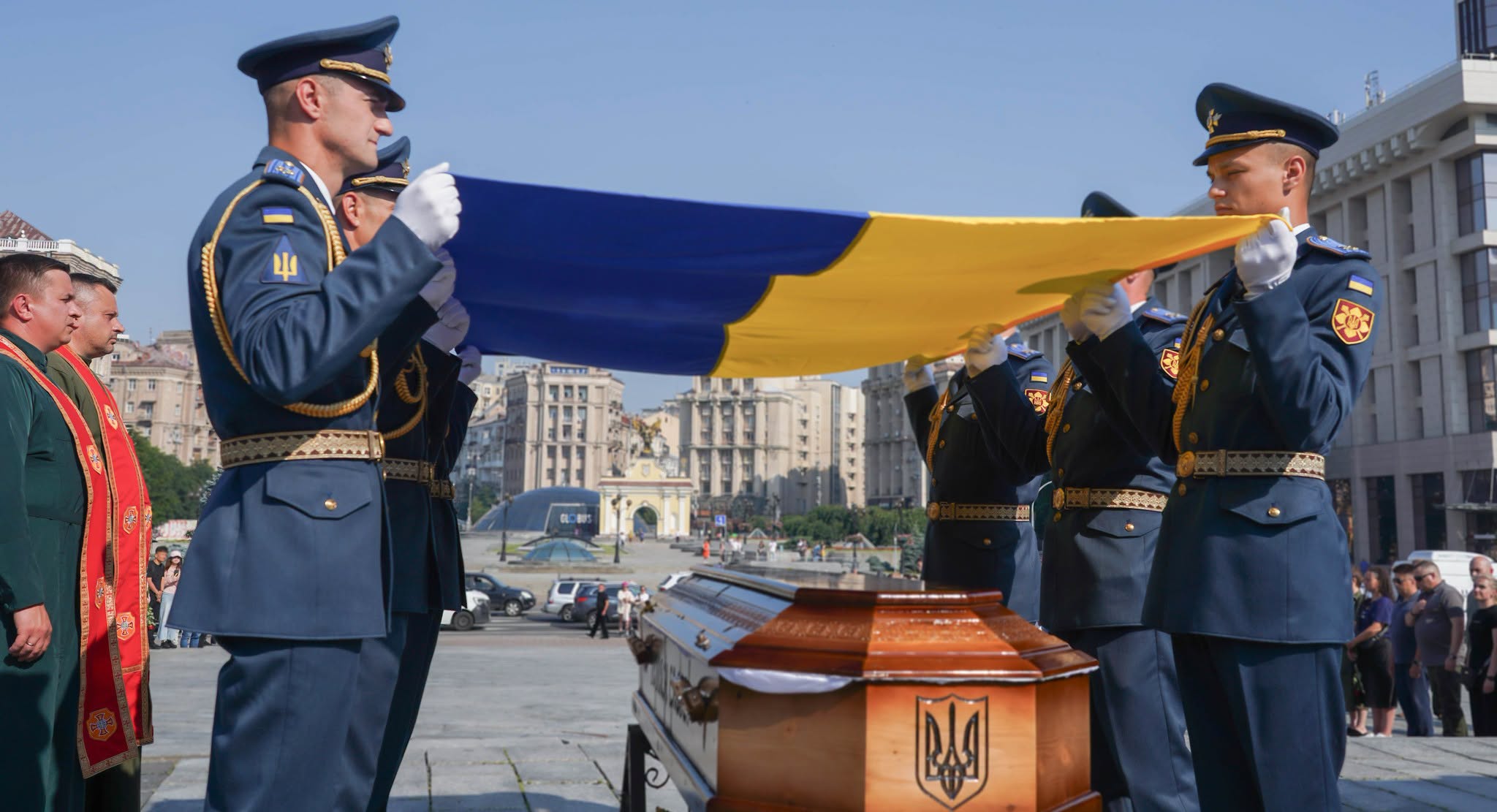
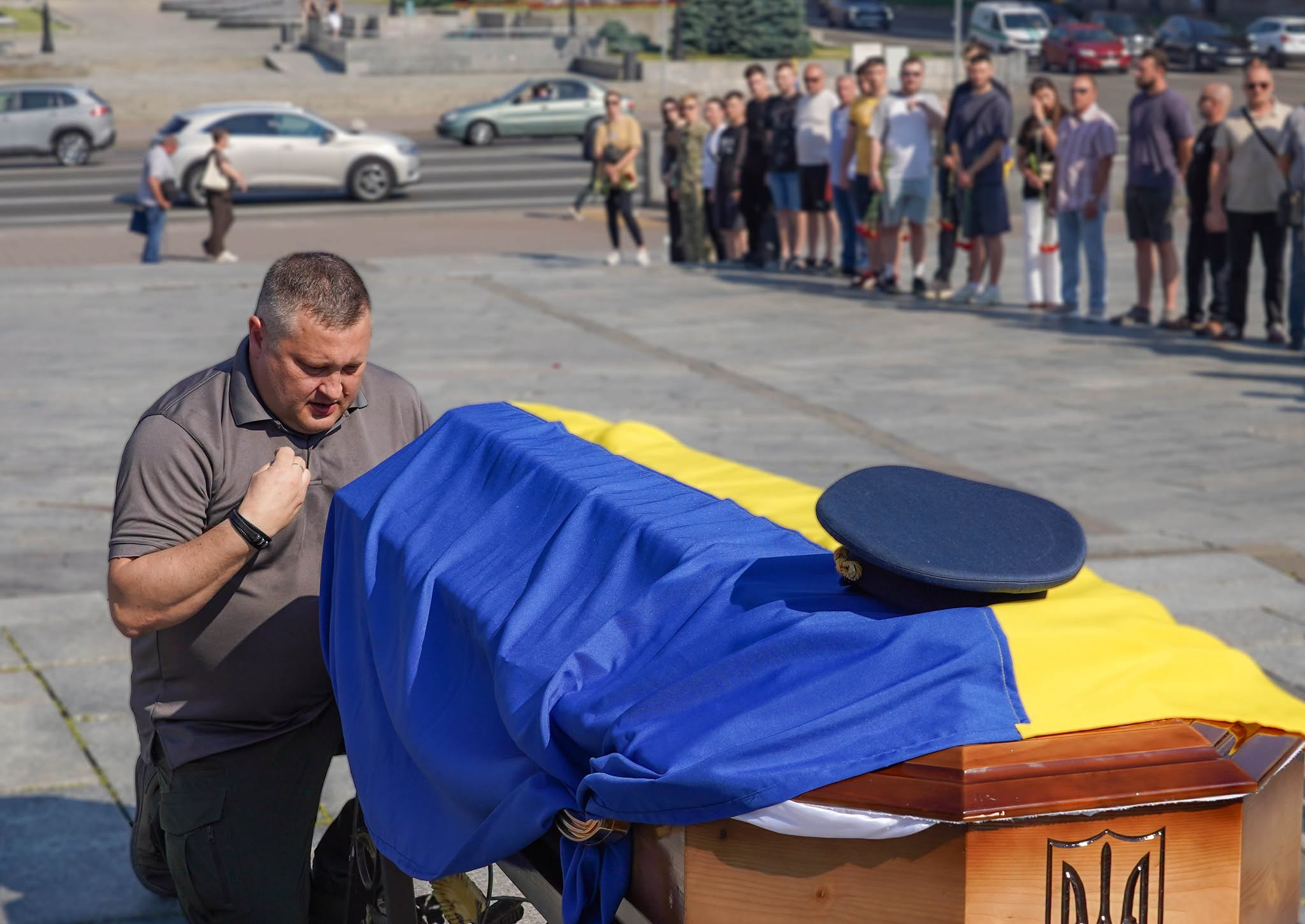
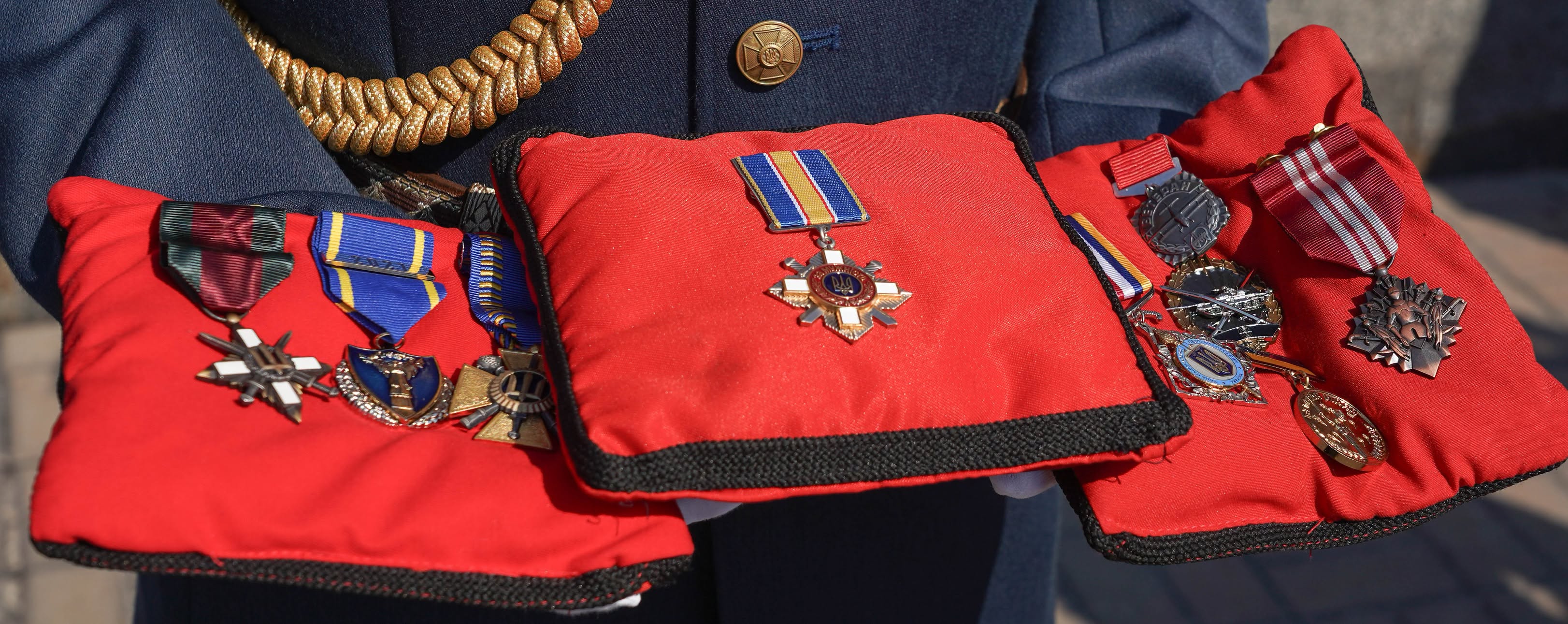
Relatives, colleagues, and comrades-in-arms came to pay their last respects to the aviators. Coffins covered with blue-and-yellow flags and the farewell roar of aircraft engines over the airfield — this is how the Air Force paid its final tribute to those who defended our land until their last breath.





A tandem trusted with difficult missions
"There was a 32-year age gap between them — an entire generation. One had flown since the days of the Soviet aviation school, had piloted the An-225 Mriia, and was considered one of the country's strongest test pilots. The other was born in independent Ukraine and was only beginning his combat path. In the sky, it did not matter. In the cockpit of a Su-24M frontline bomber at a speed of nearly 1,000 kilometres per hour, that difference disappeared," the Air Force said.
The Air Force Command noted that the 55-year-old veteran and the 23-year-old graduate quickly became a tandem trusted with difficult combat missions.

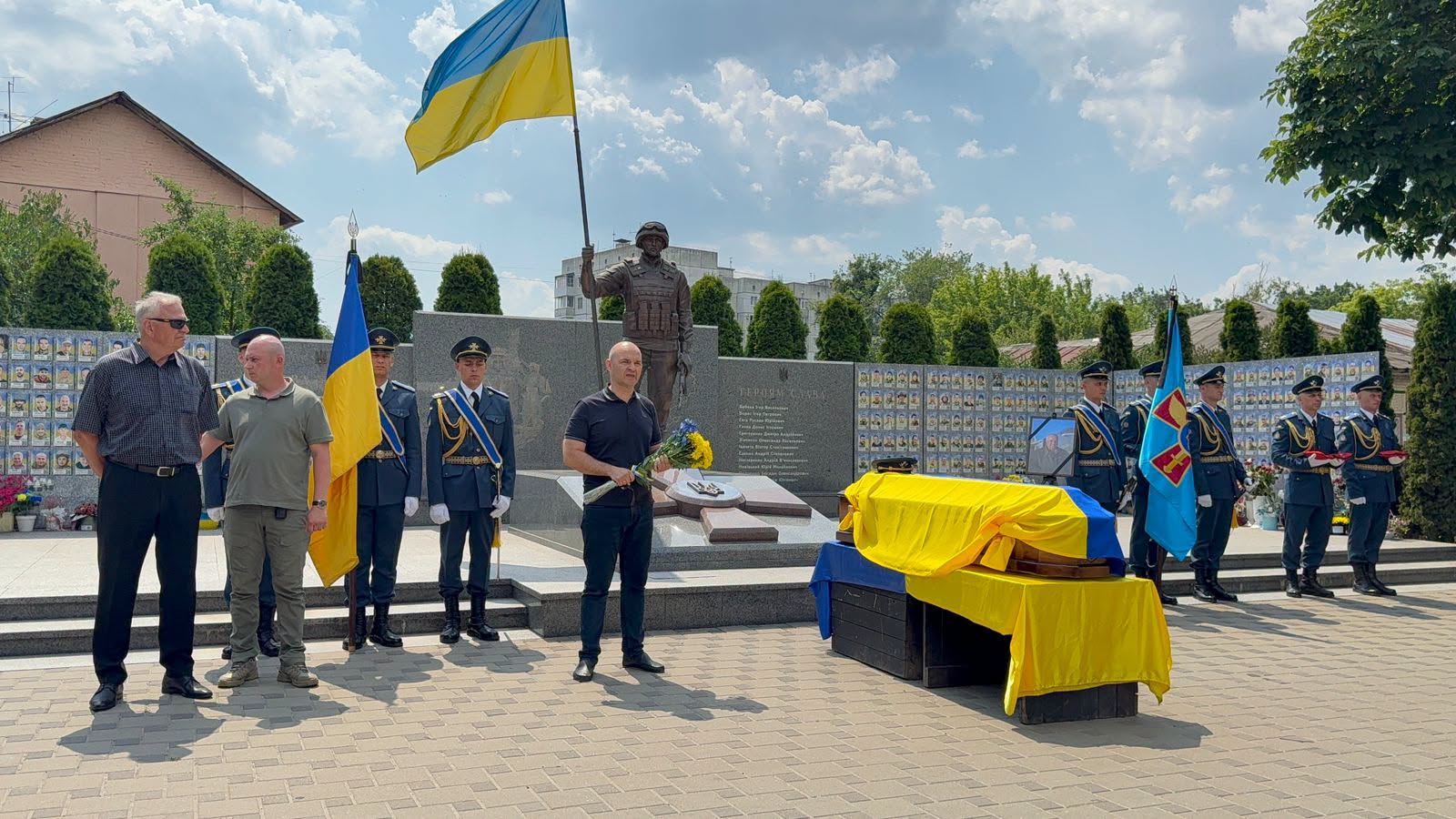
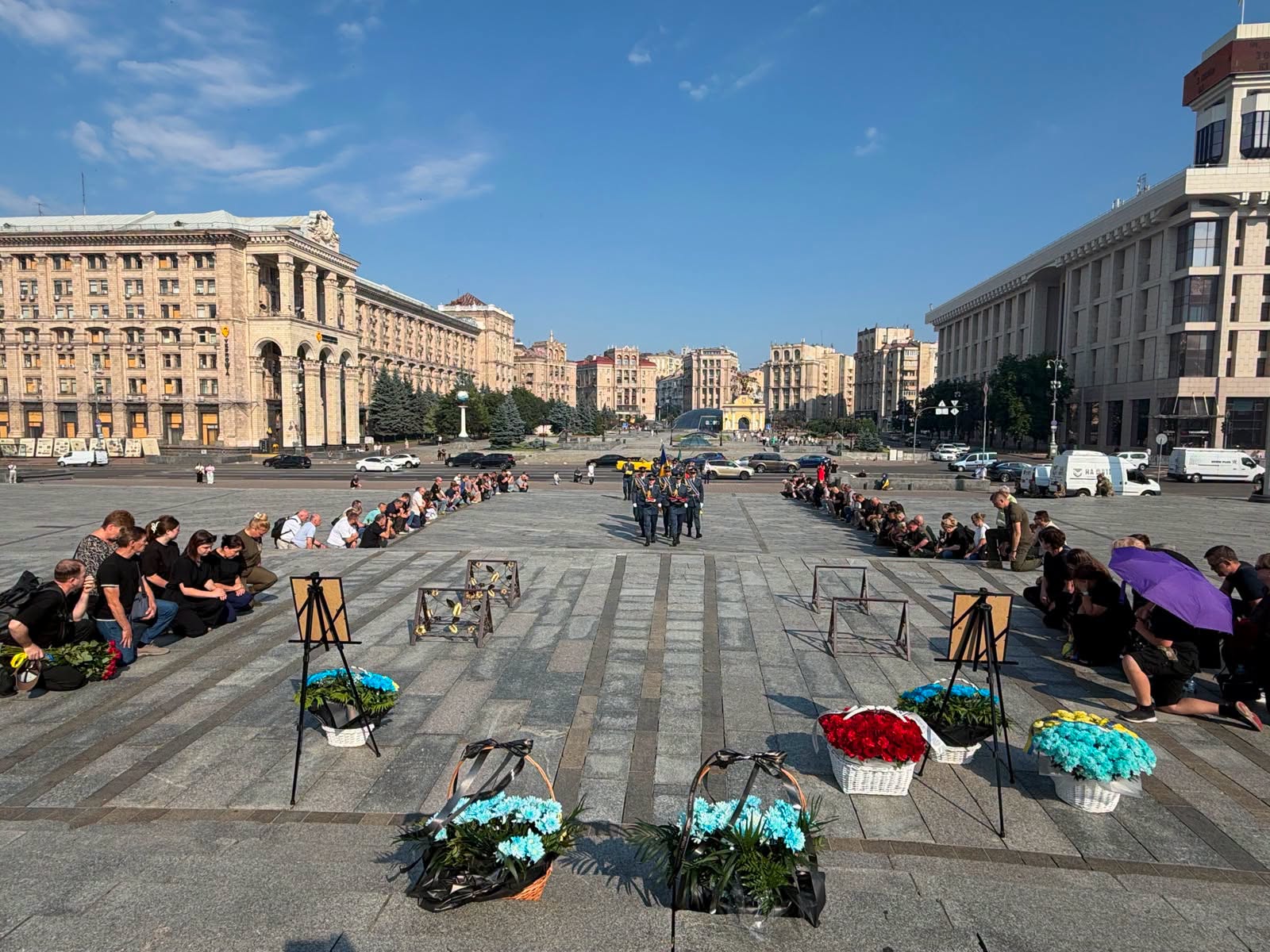
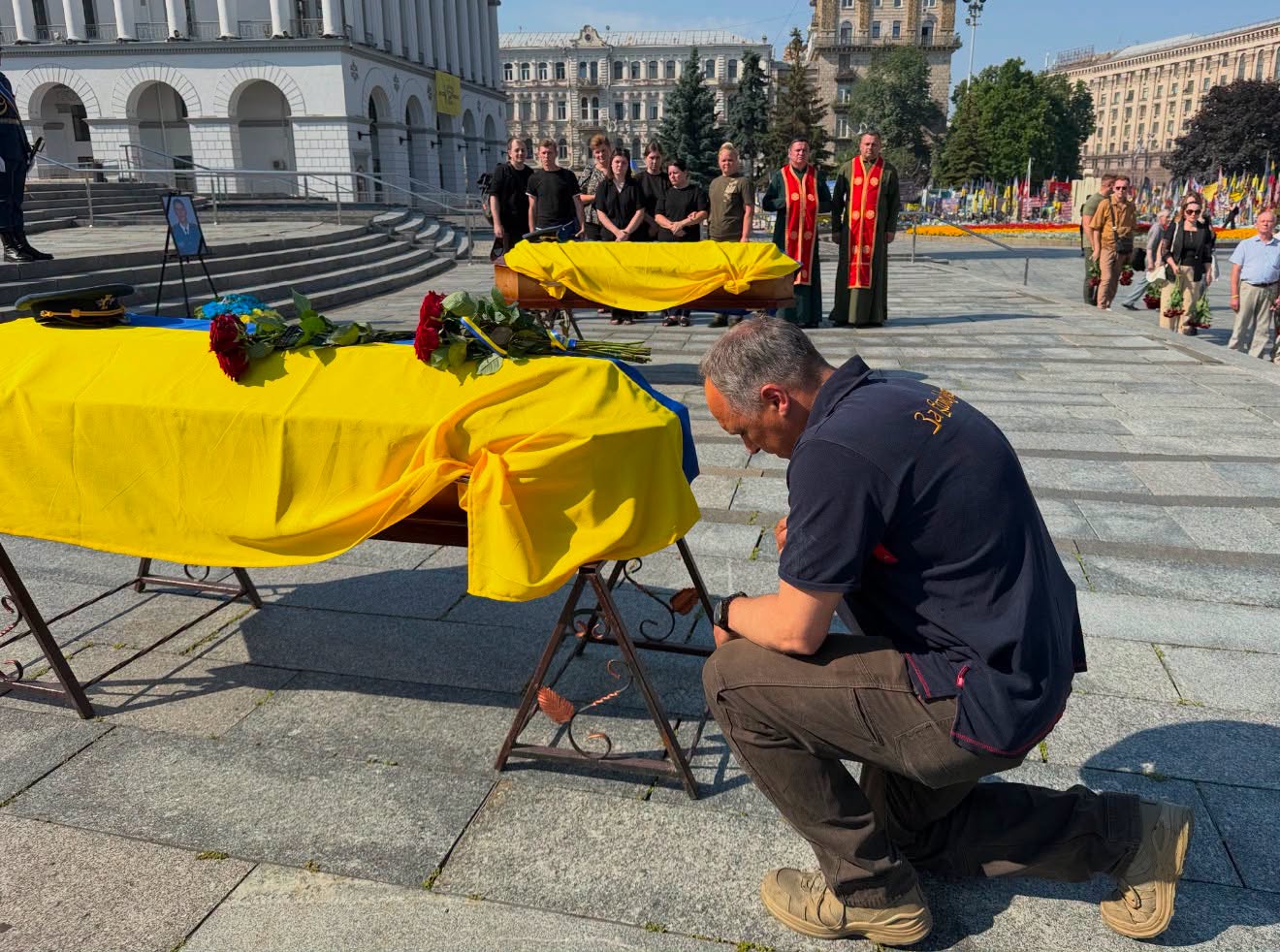
Major Bohdan Zahorulko: from the ‘Mriia’ to a combat bomber
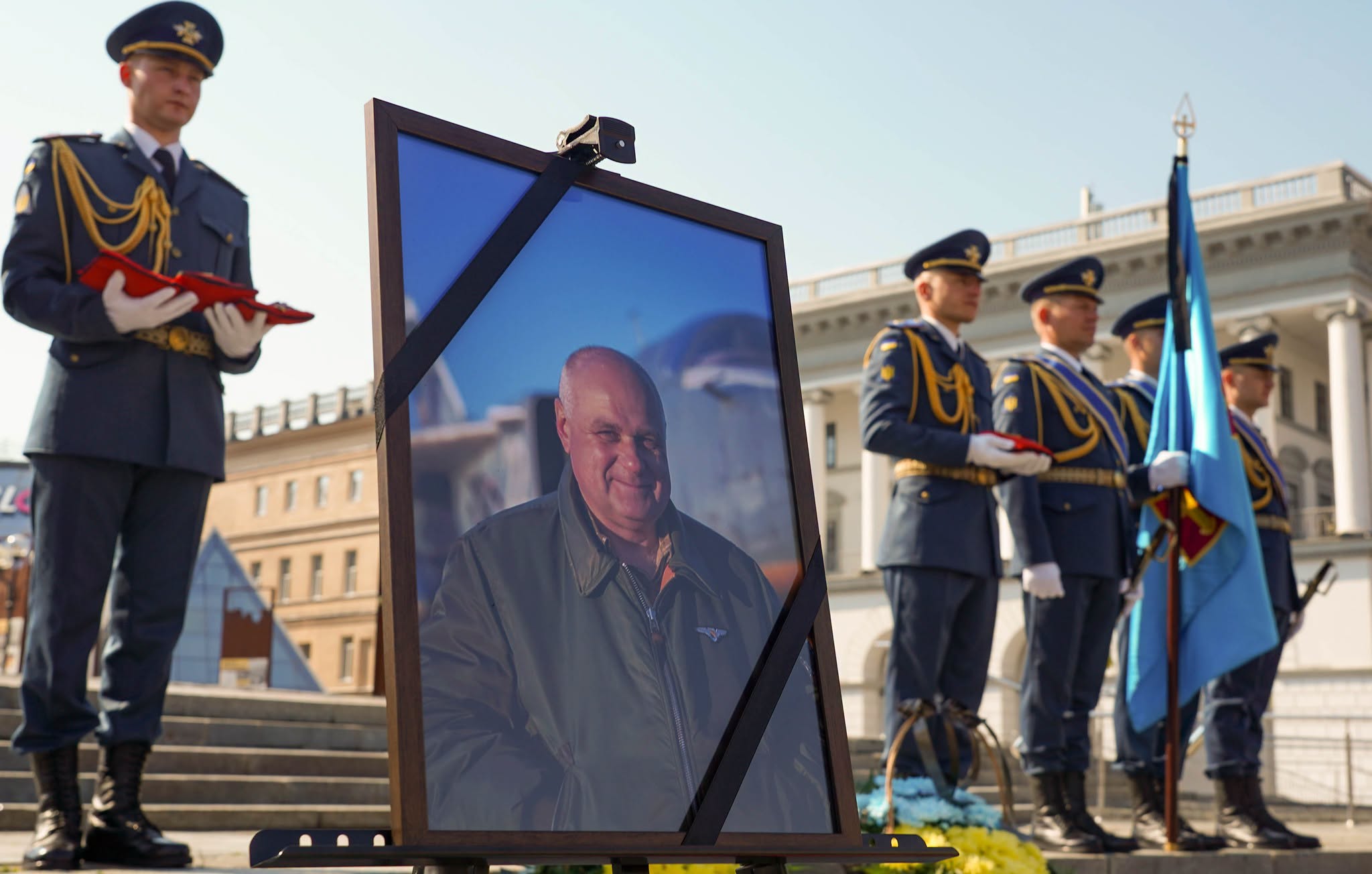
The Air Force said Bohdan Zahorulko was a man with a unique aviation background. In the 1990s, he served in Starokostiantyniv and Uman, and in the early 2000s he left military service, as it seemed at the time, for good and moved into civil aviation.
"Bohdan Hryhorovych was well known in the professional community. He mastered the An-148 and An-158, took the An-178 into the sky, ferried aircraft to Iraq and India, and trained foreign pilots. A special place in his career was held by the An-22, on which he carried out test flights. As part of a crew, Zahorulko was the first to fly the An-132, and later demonstrated it at international air shows. During the parade marking the 30th anniversary of Independence, he was entrusted with the controls of the An-225 Mriia," the Air Force said.
On February 24, 2022, Zahorulko left test work and mobilised as a volunteer. The experienced civilian pilot returned to military aviation, retrained to fly the difficult-to-control Su-24M frontline bomber, and became not only a commander but also a mentor to his younger colleagues.
The young people in the brigade respected Bohdan Hryhorovych without question. He never imposed the authority of a top test pilot. On the contrary, before a flight, he would always calmly pat them on the shoulder and say his trademark phrase: "Everything is standard, boys. The sky does not forgive mistakes, but we are stronger."
But he was best known by those with whom he shared the cockpit and frontline everyday life.
"We had known each other since the 1990s and flew together," recalls Bohdan's long-time comrade-in-arms, who went with him from youth to the full-scale war. "I am several years older. Then we both left the army, and I got a job in civil aviation. Was I surprised by Bohdan's decision when he mobilised in 2022? No. Because I did the same. We met again in 2022 in Starokostiantyniv. We went on rotation together."
The veteran pilots fought at the limit of their capabilities. Constant sorties, tonnes of metal that had to be dropped precisely on the heads of the enemy, chronic lack of sleep, when you fall asleep for a minute right in your gear, and the endless adrenaline in the blood.
"But despite all that hardship, despite the fatigue... Those were the best times. With Bohdan. We rented an apartment together and became very close," his friend says quietly. "Bohdan was an incredibly versatile person, with many passions. He had his own hang glider, he had a motorcycle, we loved boating... Literally these days, we were supposed to go on another swim. And most importantly, never, in all these years, did I ever see him in a bad mood. Never at all. We saw and spoke with him on the day he died, June 16. Everything was as usual. And then they went on the mission."
What happened next at the command post was forever engraved in his comrade's memory, down to the smallest sounds.
"I was there and heard the flight director shouting over the radio: 'Make contact! Make contact!' Silence. They immediately sent an L-39 aircraft there, to the area of the likely crash. A minute later, we heard the pilot's report: 'I see nothing... A column of smoke farther on.' At the command post, the silence was such that the air froze. The main question going through everyone's mind was: 'Parachutes! Are there parachutes? Did anyone see canopies?' The reply from the aircraft was: 'No...' And that was when the tears came. For everyone."
Senior Lieutenant Bohdan Babenko: a dream cut short on takeoff
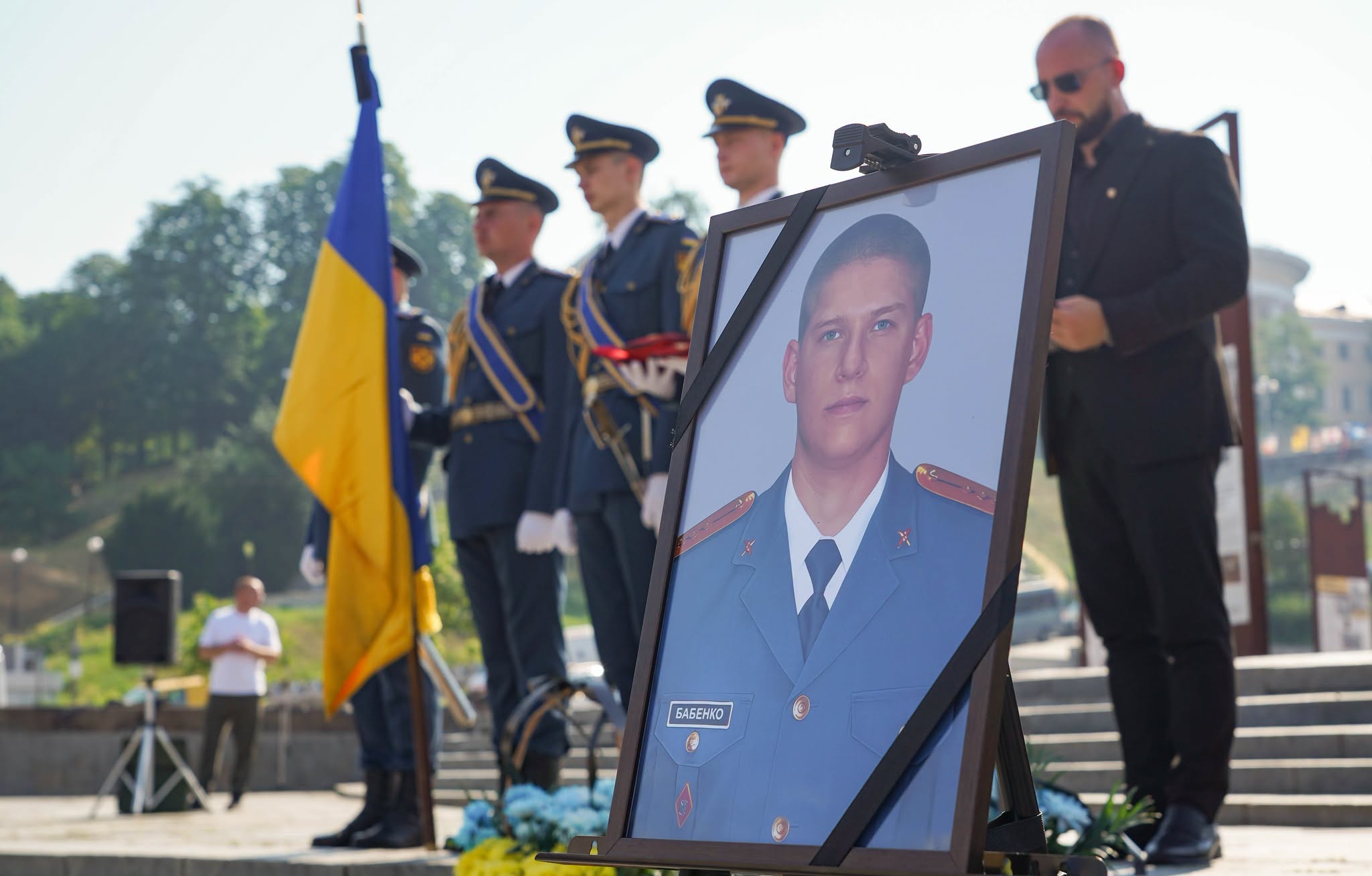
The Air Force said that the crew’s navigator, Senior Lieutenant Bohdan Babenko, was only 23. He was the only son in his family. He became passionate about aviation as a teenager: first the cadet corps, then the Kharkiv National University of the Air Force. His coming of age was accelerated and harsh — it coincided entirely with the war.
Babenko graduated in 2023, at the height of the full-scale war. Straight from the graduation parade ground, he was assigned to the legendary 7th Tactical Aviation Brigade. The front gave no time to settle in or adapt at length. The lieutenant immediately entered the ranks of a combat unit. His comrades recall that he threw himself into the work with a cold composure far beyond his years.
His close comrade-in-arms, crew commander Maksym, who went through more than one fierce sortie with him, recalls what Bohdan was like in the cockpit of the "Su" and when he washed the soot from his face after flights:
"We crossed paths back at the university; I was one year ahead of him. We really grew close later in the unit, when we were put in the same crew. Bohdan joined the brigade at a very intense time and almost immediately began flying combat missions. You know, I never once saw fear in his eyes. At first, there was a slight aviation-related uncertainty, but he overcame it on the fly.
"Working with him in the cockpit was extremely comfortable. The guy was obsessed with accuracy: he would sit over maps for hours, calculating the route down to the second and taking into account every detail of the terrain. Together, we worked along the entire front line, flew against a wide variety of targets, and had many successful combat sorties. I remember how we returned from our first successful strike... Bohdan was practically glowing, overwhelmed with emotion, so sincerely proud that we had done it.
"Bohdan picked everything up on the fly. Our squadron has many older mobilised men with experience. And it was telling: despite being only 23, Bohdan earned such authority among them that senior comrades calmly came to the lieutenant for advice, consulted him, and debriefed flights with him. He was respected as a serious, rock-solid professional."
But when the heavy cockpit doors closed, the communication switches were turned off, and the sweat-soaked flight suit came off, the meticulous military navigator once again became that same smiling, bright young man.
"In life, outside service, Bohdan was incredibly kind," Maksym says quietly. "A flint-hard guy in the sky, on the ground he did not know how to refuse people help. If someone needed backup, rescuing, or support, Bohdan was always there, at any time of day or night."
And he also had a dream. He fought as a first-class navigator, but more than anything in the world he dreamed of becoming a pilot and holding the controls himself... He did not have time.
Background
- It was previously reported that a Su-24M bomber crashed in Khmelnytskyi region: the pilot and navigator were killed.
- The State Bureau of Investigation is investigating the crash of the Su-24M in Khmelnytskyi region.
- Work has now begun on decoding the flight recorder, and an internal investigation has been launched.


