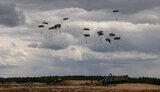
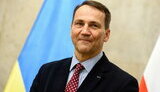
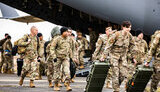
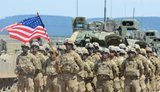
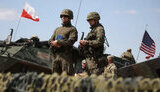
The recent decision regarding the withdrawal of US troops from Europe has sparked a significant response among political and military leaders across the continent. NATO's General Grynkewich emphasized that the reduction would not undermine Europe's defense capabilities. As Romanian President Nicușor Dan noted, the reduction merely returns troop numbers to pre-Ukraine war levels. The US Army Command assures that this redeployment will not alter Europe's security situation. Meanwhile, Lithuania is preparing backup plans, relying on Germany for security support. The Pentagon's announcement of brigade rotations in Eastern Europe highlights ongoing adjustments. Congressional voices in the US insist on maintaining troop presence, seeking clarity in advance warning to prevent destabilizing NATO's defenses, with General Cavoli opposing the withdrawal decision. Such reactions indicate the strategic balancing act at play as alliances adapt to changing political and military landscapes.
What is the reason behind the withdrawal of US troops from Europe?
The decision to withdraw US troops from Europe comes amid a shift in global military strategy and resource allocation. While specifics have not been disclosed, this withdrawal may be influenced by a focus on new strategic priorities that require redeployment of troops. The idea is to recalibrate military presence to effectively respond to emerging global threats while maintaining a robust defense strategy through alliances such as NATO.
How will the reduction in US troops affect Europe’s security?
According to NATO General Grynkewich and other military officials, the reduction in US troops will not weaken Europe's defense capabilities. European countries are adjusting their defense strategies to compensate, with some relying on alliances with other European powers like Germany. The strategic adaptability within NATO ensures that European security remains a priority despite the adjustments in troop presence.
What are the political reactions in Europe regarding US troop withdrawal?
Political reactions across Europe vary. Some leaders, like Romanian President Nicușor Dan, have analyzed it as a normalization to prior troop levels, while others are making contingency plans. Lithuania, for instance, is preparing to rely on German support for security. There's also a call for advance coordination from the US to avoid disrupting NATO stability, indicating the sensitivity and importance of these military decisions in the region.
Are there any plans for redeployment or rotation of US troops in Europe?
The Pentagon has announced plans for rotating about 6000 troops, particularly focusing on brigades in Eastern Europe. This is part of a broader strategy to maintain a flexible and responsive military posture throughout Europe, ensuring that despite the reduction in overall troop numbers, readiness and strategic capabilities are retained to address regional and global security threats effectively.
How does the US Congress view the withdrawal of troops from Europe?
There is a bipartisan concern within the US Congress about the potential reduction of troops in Europe. Members of the House Armed Services Committee have voiced their opposition to substantial troop withdrawals, emphasizing the importance of maintaining a strong US military presence in Europe as a deterrent and stabilization factor within NATO, underscoring the complex geopolitical considerations at play.