ENG




7594 visitors online
Serbia remains a focal point in Eastern Europe due to its strategic and diplomatic roles. Serbian Minister Bratina's controversial statement regarding Ukraine reflects sensitive geopolitical narratives, leading to his public apology. President Vučić's meetings with Putin and statements about military neutrality further highlight Serbia's tightrope walk between Russia and the EU. Serbia's refusal to impose sanctions on Russia juxtaposes its ambitions for EU integration, which Vučić aims to accelerate despite external pressures. Serbia's evolving defense policies and Vučić's EU engagement demonstrate the country's intricate balance of maintaining its alliances while pursuing new diplomatic frontiers.
Why did the Serbian Minister apologize for his remarks on Ukraine?
Serbian Minister of Information and Telecommunications, Boris Bratina, apologized for suggesting that Ukraine must "pay with territory for crimes." His statement sparked backlash due to its insensitive nature and political implications, particularly in light of ongoing tensions and territorial disputes in Eastern Europe. Such remarks risk undermining Serbia's diplomatic relations and its pursuit of balanced foreign policy strategies.
What is Serbia's stance on sanctions against Russia amidst the Ukraine conflict?
Despite pressure from the EU to align its foreign policy with European standards, Serbia has decided not to impose sanctions on Russia. Serbian leadership, under President Vučić, maintains a position of military neutrality to balance its long-standing ties with Russia and aspirations for European Union accession. This careful diplomatic act reflects Serbia's strategic position and geopolitical considerations in navigating its foreign relations.
How is Serbia balancing its relations between the EU and Russia?
Serbia is strategically navigating its foreign relations by maintaining military neutrality, strengthening ties with both the European Union and Russia. While President Vučić is committed to accelerating EU accession efforts, his country's refusal to enforce sanctions on Russia showcases a complex diplomatic stance. This balancing act allows Serbia to preserve historical relationships while aspiring to integrate more closely with European political frameworks.
What are Serbia's recent diplomatic actions regarding Ukraine?
Serbia has engaged in various diplomatic efforts concerning Ukraine, including discussions on European integration and security guarantees. President Vučić's recent interactions with Ukrainian President Zelenskyy focused on improving bilateral relations and supporting Serbia's European path. Additionally, Serbia expressed readiness to aid Ukraine with humanitarian relief demonstrating its commitment to contributing positively amidst regional challenges.
How does Serbia view its EU membership aspirations amid its relations with Russia?
Serbia remains committed to joining the European Union, with President Vučić expressing a desire to speed up this process. Despite maintaining strong ties with Russia, Serbia is focused on aligning with EU standards and advancing its candidacy. This involves balancing strategic partnerships while navigating external pressures and internal politics to achieve long-term goals of EU membership and regional stability.
What role does Serbia play in the current geopolitical landscape of Eastern Europe?
As a country situated at the crossroads of Eastern and Western interests, Serbia plays a pivotal role in the geopolitical dynamics of Eastern Europe. It exercises a strategic equilibrium by upholding historical alliances with Russia while simultaneously working towards European Union integration. This dual approach aids in maintaining regional stability and enables Serbia to influence broader European diplomatic discussions.
News Serbia
 No one will be able to bypass EU sanctions against Russia through Serbia, - Vučić The President of Serbia, Aleksandar Vucic, said that no one can bypass EU sanctions against Russia through his country. 7 428 20 Previously in trend: Sanctions against Russia War
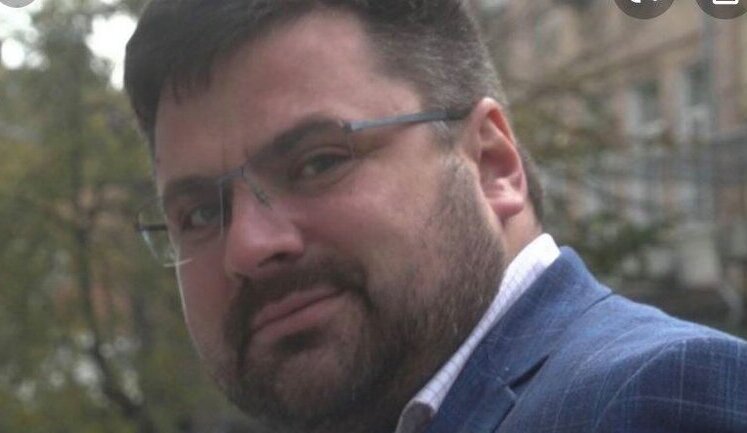
 Ukraine sends request for extradition of ex-SSU General Naumov to Serbia - Mass Media Ukraine has sent Serbia a request for extradition of former Head of SSU Main Department of Internal Security Andriy Naumov. 4 426 28
 Serbia does not recognize pseudo-referendum of Russian Federation, - Reuters The President of Serbia, Aleksandar Vucic, said that Belgrade does not recognize the results of pseudo-referendums organized by Russia in the Ukrainian territories occupied by it. 2 472 18 Previously in trend: Russian aggression against Ukraine
President of Serbia, Vučić, cannot argue with citizens about introduction of sanctions specifically against Russian Federation, and not against France or USA Serbian President Aleksandar Vui stated that Serbia did not join the anti-Russian sanctions because Russia did not violate the territorial integrity of the state. 8 968 40 Previously in trend: Sanctions against Russia War
 There will be no Russian military base in Serbia, - Vučić Serbia does not intend to get rid of its neutral status and place any foreign military bases on its territory. 9 485 26
 Ukraine welcomes Kosovo's decision to postpone re-registration of Serbian documents, - MFA Ukraine welcomes the Kosovo authorities' compromise decision to postpone the procedures for re-registering Serbian license plates and personal documents, and calls on the sides to engage in constructive dialogue. 2 492 13
 Interethnic escalation in Kosovo - Serbs build barricades and prepare for conflict In northern partially recognized Kosovo, local Serbs build barricades to protest Pristina's decision to re-register vehicles and ID cards. 34 781 218
Serbian President Vucic has claims to EU candidate status for Ukraine Serbian President Aleksandar Vucic has criticized the European Union's decision to grant Ukraine candidate status. 30 152 132
Former SSU general Naumov detained in Serbia for attempt to transport currency and jewelry, - mass media Former General of the Security Service of Ukraine Andriy Naumov, who headed the main department of internal security of the Service, was arrested in Serbia, and fled Ukraine on the eve of a full-scale Russian invasion. 50 953 235
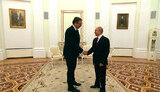 Serbian President Vucic boasted of three-year agreement with Putin on profitable gas After talks with his Russian counterpart Vladimir Putin, Serbian President Aleksandar Vucic said that his country would receive gas at a good price and a three-year contract would be signed. 8 582 61 Previously in trend: Sanctions against Russia
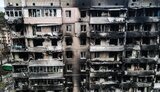 Serbia has promised to help Ukraine rebuild cities destroyed during war Serbia is ready to help Ukraine rebuild the cities that were destroyed during the Russian invasion. In addition, the country wants to strengthen cooperation after the war. 3 388 34 Previously in trend: War
 Zelenskyi signs decree on sending two Ukrainian peacekeepers to Kosovo President of Ukraine Volodymyr Zelenskyi signed a decree on the dispatch of two Ukrainian servicemen to Serbia to participate in the UN mission in the Autonomous Province of Kosovo and Metohija. 3 737 25
 Ukrainian scouts say Serbian mercenary snipers join Donbas militants, lawmakers vow to inform NATO PA Ukraine is set to inform the NATO Parliamentary Assembly on a group of Serbian mercenary snipers who have arrived in the Donbas to join the ranks of the combined Russian and terrorist forces. 24 216 105 Previously in trend: Russian aggression against Ukraine Occupied territories - Crimea and Donbas
Serbian MPs’ visit to occupied Crimea encourages Kremlin's criminal policy, Ukraine Foreign Ministry says The Ministry of Foreign Affairs of Ukraine strongly condemns the visit of a group of Serbian lawmakers to the Autonomous Republic of Crimea temporarily occupied by the Russian Federation. 7 463 53 Previously in trend: Occupied territories - Crimea and Donbas
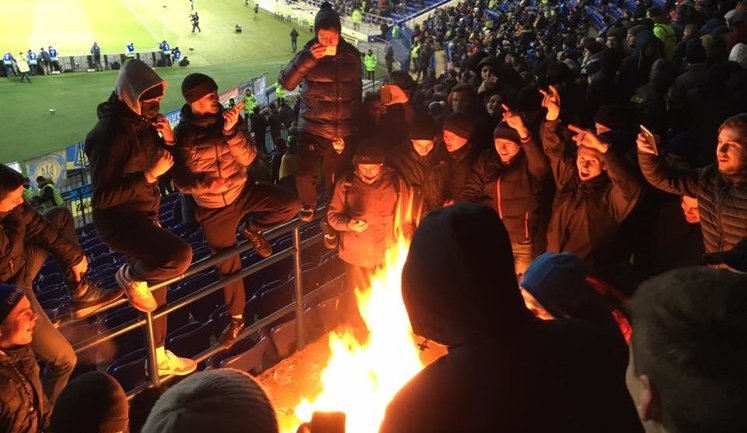
 Ukrainian football fans burn Serbian flags at game in Kharkiv. PHOTOS During a Ukraine-Serbia friendly soccer game in Kharkiv, Ukrainian football fans burned numerous Serbian flags. 47 714 177
Former Yugoslav weapons used in Paris attack Some assault rifles used by the Islamic militants in the Nov. 13 Paris attacks, later seized in police raids were produced in the former Yugoslavia's state arsenal. 9 535 50 Previously in trend: Attacks in Paris
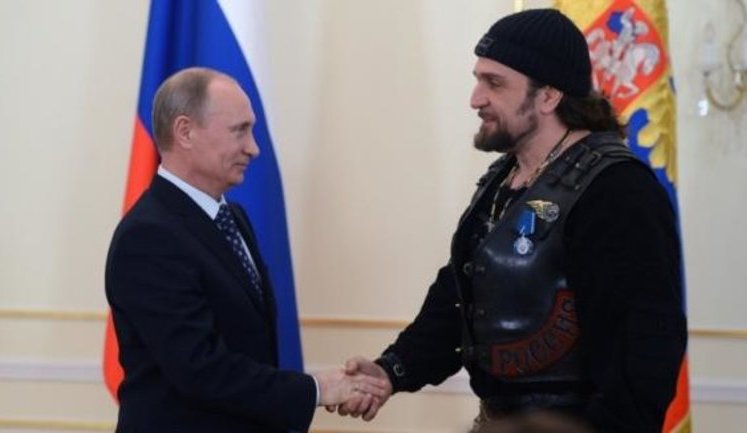 Is Bosnia the next Ukraine? 2 8460