


Starlink outages in Ukraine have highlighted Europe’s critical dependence on US technology, - Bloomberg
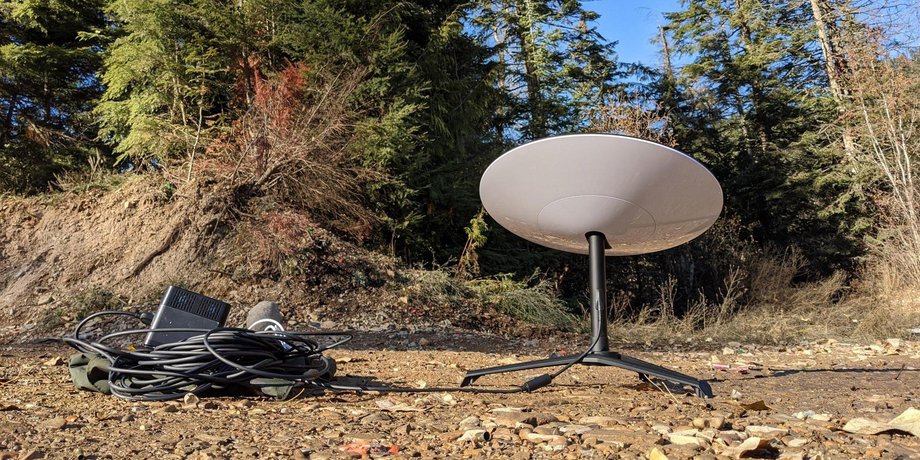
Disruptions in the operation of the Starlink network in Ukraine have once again highlighted the European continent’s heavy reliance on American technology solutions. This incident has sparked renewed discussion about developing Europe’s own satellite capabilities, which would ensure the continent’s autonomy in the areas of critical communications and the defense sector.
This was reported by Censor.NET, citing Bloomberg.
Starshield Malfunctions and the Vulnerability of Ukrainian UAVs on the Front Lines
Disruptions to the military version of Starlink (Starshield) have highlighted Europe’s vulnerability and the Ukrainian Armed Forces’ dependence on U.S. space capabilities. These disruptions have hampered the operations of strike and interceptor drones on the front lines, while European partners still lack alternative satellite solutions for their armed forces.
The publication emphasizes that Europe’s dependence on the U.S. extends beyond Starlink: the EU does not have its own infrared systems for detecting missile launches and relies on U.S. space monitoring. This poses serious risks, as Europe’s defense capabilities are dependent on decisions made by Washington and U.S. private companies, making the issue of the EU’s technological autonomy extremely pressing.
The IRIS² Project and Alternatives
To reduce its dependence on foreign providers, the European Union is developing its own satellite network, IRIS², designed to ensure secure communications for government agencies, the defense sector, and critical infrastructure. The EU launched the first limited services under IRIS² and GOVSATCOM for military and government needs in early 2026, but the full-scale launch of individual services is not expected until at least 2029.
The alternative OneWeb network, operated by the European company Eutelsat, currently lags behind Starlink in terms of bandwidth, price, and equipment specifications for frontline use; moreover, Starlink terminals are not compatible with this system. Against this backdrop, some EU countries, notably Germany, are simultaneously deploying their own national satellite constellations.
Despite launching its own initiatives, Europe is currently unable to fully replace American satellite solutions. Starlink is significantly ahead of its competitors in terms of network scale and infrastructure complexity, and integrating alternative platforms requires substantial financial resources, time, and the replacement of terminals.
Andrius Kubilius, European Commissioner for Defense and Space, confirmed the continent’s high level of dependence on the U.S. space sector, emphasizing the need to strengthen its own technologies and cooperation within the EU.
Thus, the incidents involving Starlink have provided additional momentum for Europe’s push toward technological autonomy. However, over the next few years, European countries will still rely on U.S. communications and missile threat monitoring services while simultaneously developing their own equivalents.
Restrictions on Starlink Service in Ukraine
- On October 14, volunteer and former advisor to the Minister of Defense Serhiy Sternenko stated that overnight, SpaceX restricted the operation of Starlink terminals for the Ukrainian military. As a result, he said, "a number of important missions were disrupted." The restrictions were imposed on data transmission based on the speed of the UAVs using Starlink.
- Sergey Beskrestnov (Flash) later confirmed this information. According to him, the restrictions could also complicate the use of drones designed to intercept jet-powered suicide drones.
- Units of the 7th Corps of the Airborne Forces also reported that they began experiencing issues with Starlink connectivity in the Huliaipole area last night. This refers to the Starshield package—the so-called military package—which previously had no data transfer speed limits.
- Later, former Defense Minister Mykhailo Fedorov stated that the network is being restored to speeds of up to 160 km/h.
- At the same time, Elon Musk stated that he is not the one who sets the limits for Starshield, which Ukraine is using. This system is controlled by the U.S. government, not SpaceX.
- According to Reuters, the White House issued an order imposing restrictions on Starshield for Ukraine.
- On October 16, U.S. President Trump stated that Washington was not involved in the delay of the "military package" of Starlink (Starshield) satellite communications for the Ukrainian military.
- On October 19, Zelenskyy reported that in various sectors of the front, Ukrainian military vehicles equipped with the Starlink system stop functioning at speeds of 130–161 kilometers per hour.
- Hegset stated that the Pentagon had not issued any orders to restrict Starshield.
-
Earlier, The Wall Street Journal reported that Trump had called Musk and asked him to lift restrictions on the military version of Starlink in Ukraine, and on Thursday, Trump said that "the main thing is that he reversed everything" and declined to comment on whether he had called Musk.
- On October 22, Trump refused to say whether he had called SpaceX CEO Elon Musk regarding the speed restrictions on the military version of Starlink in Ukraine.
- According to Politico, as of Friday morning, October 23, the Ukrainian military was still facing speed restrictions on Starlink, even though Trump had announced that the service had resumed full operation.
- On October 24,
the Ukrainian Ministry of Defense announced that SpaceX’s Starlink terminals and their military variants, StarShield, are once again operating at speeds exceeding 161 km/h.
Ukrainian President Volodymyr Zelenskyy also confirmed the resumption of Starlink service for Ukraine.


