



For Trump, or for ourselves? What Ukraine needs to take care of when preparing for first post-war elections
A specter is haunting Ukraine — the specter of presidential (and Verhovna Rada) elections. The possibility of holding such elections as early as next year, in 2026, is being discussed by the president himself, the leadership of the Verkhovna Rada, members of parliament and financiers, television and radio hosts, and a wide range of experts.
They talk about it, of course, with worried looks: everyone understands how hard it will be to hold elections in a country depleted and exhausted by four years of full-scale war.
Pollsters have stepped up their surveys; during a conference call, the head of the National Police urged officials to prepare for possible elections. Even the author of this piece has been getting calls, through personal connections, from advertising people in two regions of Ukraine, asking: so, when is it happening already?!
Censor.NET has tried to examine whether elections can be held under (a) active hostilities, or (b) peace (a medium-term ceasefire). And what needs to be done for the election results to be accepted internationally? More than that: can the state realistically ensure the conditions for a transparent, high-quality campaign and safe voting?
Spoiler: those who will be planning and running these elections deserve state awards of various levels, depending on their contribution to the overall outcome. Of course, that is if the outcome is a success.
1. ELECTIONS IN UKRAINE: TRUMP IS TURNING UP THE PRESSURE, PUTIN IS ACTING THE FOOL
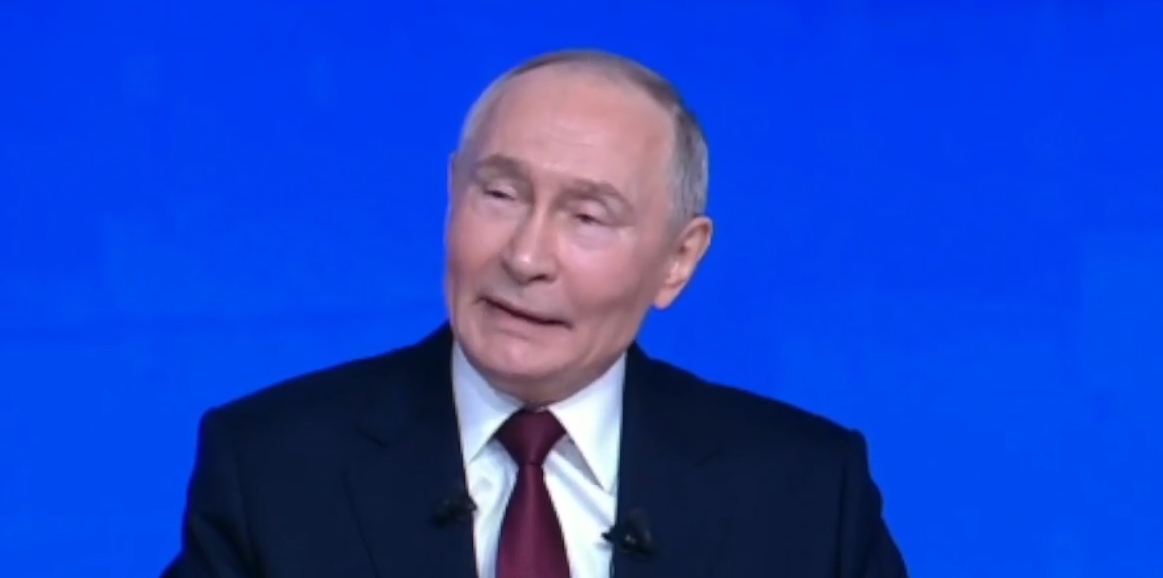
Strictly in chronological terms, the latest wave of election hype aimed in our direction was kicked off by U.S. President Donald Trump. On December 9, he, as usual, put the cart before the horse, leaning on Zelenskyy in his signature style:
"I think Ukraine should hold elections. You know, they’re using the war as an excuse not to hold elections, but in my view, the Ukrainian people should have that choice."
Everyone comments on yet another statement by the U.S. president, but it’s worth remembering this: it is Vladimir Putin who has been stoking the illegitimate Zelenskyy line and the claim that you cannot deal with him for nearly two years now. Listening to him, you’d think he wants elections in Ukraine so badly he can’t even eat. In March this year, Putin even floated an exotic idea: imposing temporary administration in Ukraine under UN auspices to hold elections.
When the UN and the EU calmly stated that Ukraine would decide for itself when to hold elections, the Kremlin’s dictator-and-experimenter did not press the point. But he still keeps returning, often, and with relish, to the claim that Ukraine’s authorities are illegitimate and, on top of that, do not want to hold elections.
So that’s how he and Trump keep flogging this hobbyhorse: Donald goes by the principle that "anything goes in the art of arm-twisting." Putin, because… actually, why are elections in Ukraine so interesting to Putin?
"Putin has been pushing this line for about three years now," says Andrii Osadchuk, an MP from Holos. "Why? Does he care about Ukrainian democracy? No. He understands one thing: in a democratic country and Ukraine remains one elections are not just a political contest; they are usually a very blunt, tough conversation. Because in such elections, what happened over the past few years is always debated. And those who previously held a mandate of trust, as a rule, want to continue their work. Meanwhile, their opponents in the opposition don’t just criticize, they lay it out, with arguments: you’ve done so many terrible things that you have neither the political nor the moral right to claim the right to be re-elected."

Andrii Osadchuk
And Putin is "pushing" this for one purpose, to provoke a blunt, hard-edged debate inside Ukraine. He knows such debates have always been a constant here, and that our elections have in fact, been highly democratic. The exchanges were often extremely heated. But in wartime, this would serve only one thing: further dividing Ukraine and undermining the motivation of people, at the front and in the rear who are working to preserve the state.
"So Putin’s entire provocation is not really about elections — it’s about pursuing the goals of his military adventure by non-military means," Osadchuk sums up.
2. ELECTIONS IN UKRAINE: UNDER PRESSURE, ZELENSKYY MANEUVERS, BLUFFS, AND SOMETIMES TALKS NONSENSE
Zelenskyy and his team are forced to respond to this psychological and information pressure from an aggressor and a (supposed) ally, guided by three fundamental considerations.
First, as a country at war, we have no right to agree to elections under pressure, and on imposed, unfavorable terms, that would lead to tragic consequences.
Second, under a tactic coordinated with European allies, Ukraine should by no means "talk back" to Donald Trump. Instead, it can nod along and project constructive agreement while not forgetting to put forward counter-conditions that may irritate the U.S. president privately, but appear perfectly logical to an outside observer (and that observer is the whole world). Such as security guarantees for the campaign period and voting day, as well as financial and organizational support to conduct elections.
Third, even with this tactic of maneuvering and running down the clock, the president and his team should not forget that he has already remained in office, albeit out of necessity, for an extra year and a half; that public demand for elections, as well as demand from foreign partners, is enormous; and that the temptation to delay elections purely for domestic political gain (assuming other conditions are favorable) would be a grave mistake and a crime against one’s own people.
As a result, Zelenskyy is maneuvering. He says he is not clinging to the chair and has already tasked MPs with developing options for holding elections. He stresses that elections must be 100% legitimate and therefore require thorough preparation which takes time. He has formally asked foreign partners to help with that preparation. He has also dusted off a working group drafting election-related bills, led by First Deputy Speaker Oleksandr Korniienko.
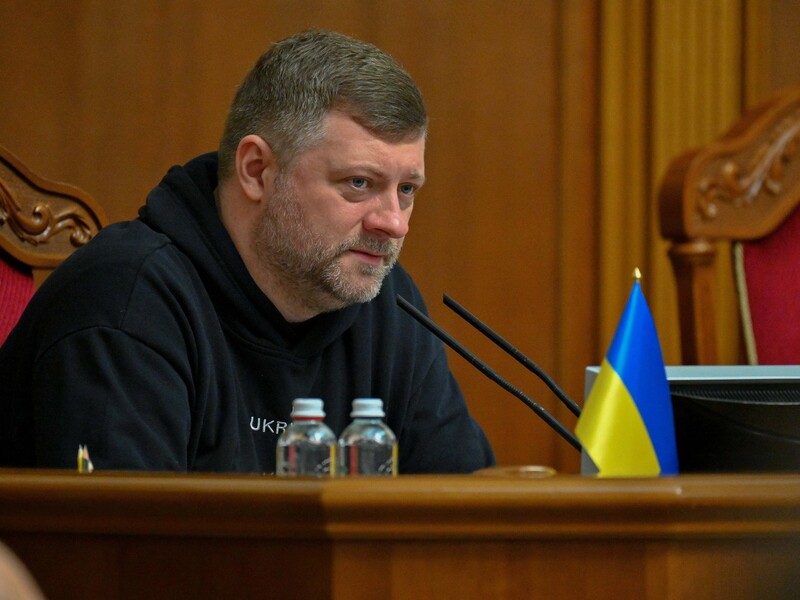
Oleksandr Kornienko
(By the way, according to Censor, after talks within a mixed working group (Speaker Stefanchuk, First Deputy Speaker Korniienko, a representative of the Central Election Commission, etc.), the president at least realized that holding elections, even in peacetime, is a serious challenge not only politically but also technically. And in negotiations with the United States, even under intense pressure, he must bear in mind that there can be no talk of 60 days of preparation for possible elections. The timeline should be six to eight months after martial law is lifted.)
The President understood, yet he has not stopped making controversial, if not downright odd, statements. Instead of leaving comments on the finer points of election law to Korniienko, who actually knows the subject, he alternates between saying he has asked MPs to draft legislative changes to allow elections to be held under martial law (emphasis mine — Ye.K.) and telling journalists that he has long supported the idea of Ukrainians being able to vote via Diia or other electronic means, especially Ukrainians abroad…
If these statements and individual formulations are made by Zelensky in order to imitate frantic activity in front of Trump, this is understandable.

But if the president genuinely thinks so because he simply isn’t up to speed or even heard the warnings, only for them to go in one ear and out the other that is sad and dangerous. Let’s explain why.
3. "EITHER ELECTIONS OR MARTIAL LAW. THERE IS NO THIRD OPTION."
A quick note up front: while preparing this piece, Censor.NET spoke with several professionals in the field. Two agreed to share their assessments on condition of anonymity (we will call them Dmytro and Vasyl). The third is Andrii Mahera, a long-serving deputy head of Ukraine’s Central Election Commission and a recognized authority on elections.
All three met the prospect of holding presidential/parliamentary elections under martial law with an unequivocal "no." Here is how they argued their position.
Dmytro: Why can’t elections be held under the current martial law? The biggest factor is security. But there are plenty of other "buts." What kind of democratic process can there be under martial law if candidates cannot properly hold rallies or campaign? How do you deliver ballots under a curfew?
Take the Zaporizhzhia region, for instance, the part under our control. Which candidates are going to nominate precinct commission members if, excuse me, there are hardly any people left there?
An incredible number of questions would arise, organizational and security-related. How do you form commissions, and from whom? Many people who used to work on election commissions on a regular basis, for one reason or another, will not be able to do so this time. Some are fighting, some have died, many have left. Life goes on, and there haven’t been elections in Ukraine for quite a while… Yet parties have to find these people somewhere, because parties are the primary actors in the electoral process. And if parties don’t nominate them, then the Central Election Commission and district election commissions would have to. Who would they turn to, where would they recruit extra people from?"
Vasyl: Holding elections not in peacetime but under an active martial law regime would be bordering on stupidity and a crime. First and foremost, because no one can guarantee the safety of the candidates, their teams, journalists, and election officials and, most importantly, voters. Every day, I read the news feeds from border regions and beyond. It’s the same thing over and over: the enemy attacked an infrastructure facility; an enemy drone hit a scheduled passenger minibus; a Russian guided bomb destroyed a village school.

Now imagine this: where will ballots be transported from polling stations on the night after voting? To infrastructure facilities. What will enemy drones do? Attack vehicles linked to the electoral process. And where will many polling stations be located? In the very same schools that Russian guided bombs are hitting.
There is no point in discussing any other nuances. Elections must be elections, not a safari targeting voters.
Andrii Mahera: Elections cannot be held under martial law because martial law is imposed precisely when certain threats to the state exist, including situations where it is impossible to guarantee compliance with key principles of electoral law, such as the principle of free elections… Due to Russia’s full-scale invasion and ongoing hostilities, the state cannot guarantee adherence to electoral principles, in particular the principle of free elections.
The principle of free elections consists of two elements. The first is the ability to freely form one’s will, independent of threats, deception, bribery, or unlawful actions. The second is the ability to exercise that political will, previously formed, at the polling station, by filling out a ballot. It is no coincidence that Article 64 of Ukraine’s Constitution, which lists certain provisions of the Basic Law concerning constitutional rights and freedoms, often referred to as so-called protected articles, does not include Article 38, which deals with the right to vote and the right to stand for election. Other rights are included, however, such as the right to life, the right to liberty and personal integrity, the right to petition, and others. This makes the logic of the Constitution clear: either martial law or elections. Either elections or martial law. There can be no third option."
4. ELECTRONIC VOTING: CAN WE SWITCH ON OUR BRAINS INSTEAD OF A COMPUTER?
There is no shortage of arguments against turning Ukraine’s first post-war elections into e-elections. The main one is this: are we really going to push electronic voting while having, next door, a country that is a leading specialist in electronic election interference in the United States and Europe? Or do we fail to grasp the scale of resources the Kremlin would pour into hacking our elections and distorting the results?
Some of these concerns are not just caveats, they amount to a bold cross put through the entire idea. Let’s hear our expert Dmytro:
"Electronic voting in the near future is unrealistic. Everyone talking about it is chasing hype. If only because we have one fundamental issue that makes it impossible to compile voter lists for electronic voting. Take Moldova, for example: you come to a polling station with your ID card, you don’t go to printed paper lists but to a special device that scans your data, finds you on the voter register, and allows you to vote.
For this to work in Ukraine, we would need to get rid of paper passports. Until everyone switches to ID cards, and until all citizens are covered by electronic records, electronic voting will be unrealistic. Our demographic register is being filled organically: someone applies for a foreign passport; someone turns 14 and receives an ID; someone loses a paper passport and is issued an ID instead."
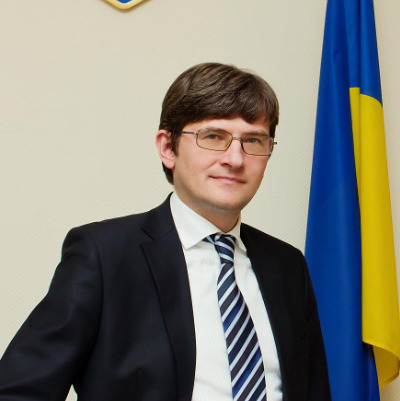
Andrii Mahera
Andrii Mahera also has his own take on the issue:
"Believe me, for Russia, there is little difficulty in interfering with the information systems of almost any country in the world. Very few countries possess comparable hacking capabilities. I don’t know whether they will intervene, but the risks are extremely high. And if Ukraine rushes headlong into using an electronic voting system, and Russia interferes, we could see pro-Kremlin candidates and parties winning on the scoreboard. And it would be impossible to prove that the results were falsified. Because in conventional elections there are paper ballots, protocols, records, here, there would be none. And that is a problem."
A very serious one indeed. We would add that equipping election infrastructure for electronic voting would require substantial additional funding as well as vetted personnel cleared by the security services. And all of this would have to be installed, tested, and secured within a fairly short timeframe. Are we ready for that?
5. THE FIRST POST-WAR ELECTIONS: HOW MUCH TIME WILL THERE BE FOR PREPARATION?
According to Censor, over the course of this year, Ukraine has already been in contact with representatives of European institutions that organize and coordinate election monitoring across the continent, and has received assurances that they would support, within reasonable limits, whatever preparation timeframe for post-war elections suits the Ukrainian side. Most likely, this would mean six to eight months.
In other words, there is no need to fear insane demands for a two-to-four-month timeline. And even if Trump and his team periodically crank up the pressure to get everything done as quickly as possible, we should do what is right for us.
Vasyl: "Everyone understands that these elections will be decisive for Ukraine’s future as a state. As the Russians like to say, ‘speed is good when catching fleas.’ Well, we are not catching fleas, we are holding elections in line with all democratic standards. All election infrastructure facilities must be thoroughly protected, and the same applies to the heads of election commissions. Yes, by then there will be peace but no one can rule out provocations, right? Transparency is also crucial, meaning the presence of the media and monitoring missions from around the world. We must prove that we are capable of holding high-quality elections after the war and we will do so again and again."
6. VOTER REGISTERS, DOMESTIC AND ABROAD: THE WORK HAS NOT EVEN STARTED YET
A critically important issue is the State Voter Register. The state already needs to roll out a tool that would allow people to report where they currently live. As things stand, the registers are being updated, but all linkage is still tied to the place of official registration.
A separate and painful issue is the register of voters who have gone abroad. The state is supposed to track them through consular registration. It is supposed to, but it doesn’t.
MP Mykyta Poturaiev explains: "For a whole range of reasons, people don’t want to register with consulates. Some can’t be bothered; others have children who have reached conscription age, while the husband crossed the Tysa River… But the main reason is a lack of motivation. It seems easy to do, electronically, but still, people never get around to it. They only register for specific, often mercantile reasons; for example, to process an inheritance, or to resolve some other issue back home through official paperwork."
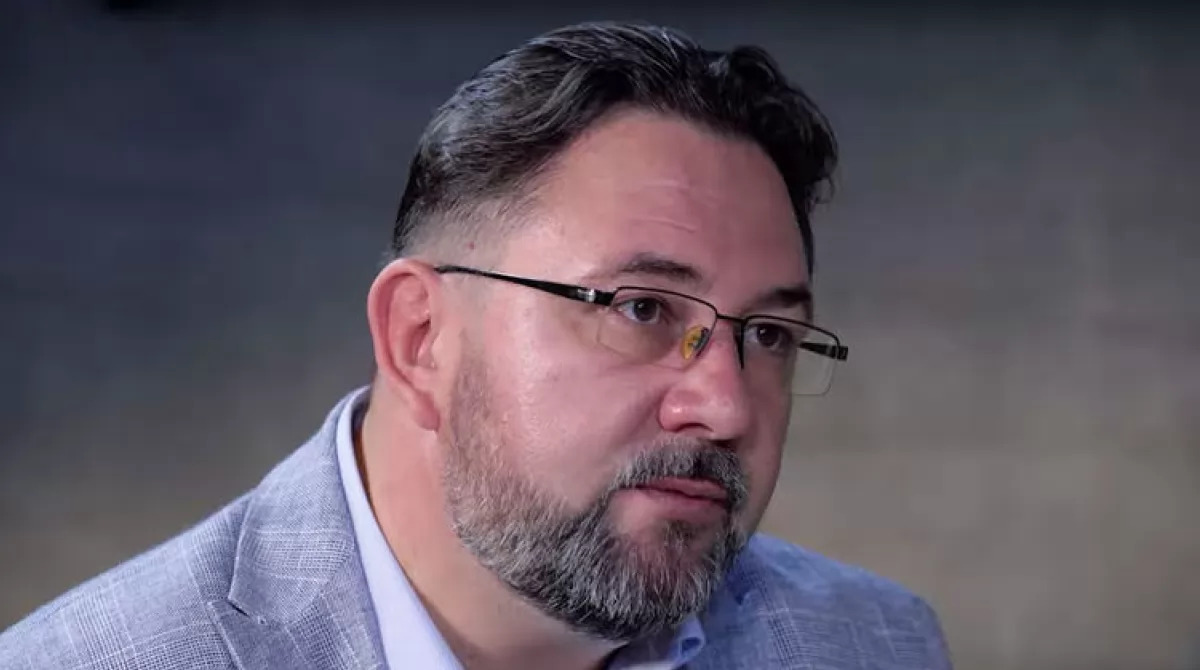
Mykyta Poturaiev
"Consular registration does not work," Dmytro echoes the MP, "because people have no incentive whatsoever to register. It used to be relevant purely for mercantile purposes like vehicle registration. Today it is no longer relevant and does not work in an electoral context. We need to introduce active registration abroad so people can report where they roughly reside. That would allow us to build a network of polling stations. All of this is a massive amount of work, and regardless of when peace comes, this work needs to start now."
For the first time in Ukraine’s history as an independent state, elections abroad will have to be conducted on such an unprecedented scale. That is why, according to Censor.NET, representatives of the Central Election Commission have been traveling quite actively across European countries, meeting and consulting with counterparts from local election administration bodies and diplomatic missions of countries that run some of Europe’s largest overseas elections outside their embassies (Turkey, Poland, Romania, Moldova).
But let us return to overseas voting and the registration problems there. Andrii Mahera has his own view of the issue:
"As for abroad, we don’t even have a single stable figure for refugees. Even the UN cites different numbers. In the spring, the Office of the High Commissioner for Refugees put the figure at 6.8 million; in the autumn, another UN body cited 5.9 million. Meanwhile, fewer than 600,000 adult citizens are registered with consulates. That means the overwhelming majority do not register, and do not want to. The question is: how are they supposed to vote? No one is going to chase them down either…"
"There has to be some form of shared responsibility. On the one hand, the state must make life easier for voters, so they don’t have to travel to polling stations multiple times. In Ukraine, running one or two kilometers is one thing. But in Canada or Germany? Traveling hundreds of kilometers just to make a one-way trip and file a request to change one’s voting address? That’s somewhat absurd. Which is why I fully support the CEC initiative to allow electronic changes of voting address (consular registration). In general, I believe electronic tools should be used as much as possible, just not for voting."
7. OVERSEAS VOTERS: HOW NOT TO LOSE TOUCH WITH OUR REFUGEES ALREADY IN THESE ELECTIONS?
You have already read about the difficulties of compiling an external voter register. Now it is time to address the war’s deep social and psychological wounds. Here, the author will simply give the floor to experts, whether to agree with them or not is up to the reader.
Vasyl: "As far as I understand, none of the major political forces are particularly interested in overseas voters. Why? Because, since they can’t be reliably measured, it’s easier to write them off than to deal with their problems — in other words, to deny them the ability to vote. Didn’t register with a consulate? Then you don’t vote. A perfect, legally sound justification!
What’s more, attitudes toward them inside the country are steadily worsening. The line goes: we’re sitting here without electricity for 17 hours a day, like last week and they’re over there…
On the other hand, those abroad are mostly women with children. And many of them have husbands here, weapons in hand, often at the front line or nearby, defending Ukraine. On the one hand, he’s relieved that his wife and child are in, say, Poland, Germany, or Ireland. But if we say, ‘We don’t give a damn about her, let her not vote,’ he’ll ask: ‘Why did you strip her of her voting rights? Are you out of your minds?!’
I think this is a bad path. Because it will rebound on the domestic political situation. But not everyone understands that."
Dmytro: "As for presidential elections, the issue is less relevant; I don’t think any refugees abroad would run as candidates. If we’re talking about parliamentary elections, that’s more likely. But there is a delicate issue to consider: by the end of the fourth year of the war, many people inside Ukraine have developed a negative attitude toward those who left. In the first month or two, attitudes were more or less neutral. But now, when you watch football matches abroad and see lots of able-bodied men in the stands cheering for Ukraine’s national team, it sparks anger and resentment.
And I guarantee you that no politician will raise or push this issue (involving Ukrainians abroad in elections — Ye.К). Because it would hurt them politically. Yes, there are also patriotic people abroad, mostly Ukrainian women who left with children. They volunteer and do a great deal of work within Ukrainian communities. Some of them would like to be involved in the political process in some way — but it’s doubtful anyone will make special exceptions for them."
Andrii Mahera: "As for refugees who left the country, let me say right away that I do not judge anyone for leaving; an adult made a decision to leave Ukraine and go to Poland, Germany, and so on. That is every person’s right. But at the same time, that person had a choice: to stay in another part of Ukraine’s free territory or to go abroad. By staying elsewhere in free Ukraine, that person would not have lost the opportunity to participate in national elections as a candidate. That is why I oppose undermining the rule itself in our Constitution through exceptions. The rule is clear: one must reside in Ukraine for the past five years to run in parliamentary elections, and ten years to run in presidential elections."
8. SERVICE MEMBERS, PRISONERS OF WAR, PEOPLE IN OCCUPIED TERRITORIES. HOW DO WE DISTINGUISH AN ORDINARY UKRAINIAN UNDER OCCUPATION FROM A COLLABORATOR?
Given First Deputy Speaker Oleksandr Korniienko’s stated course toward drafting a "one-off special law addressing the specifics of holding post-war elections," it makes sense to consider how such legislation might define the electoral rights of service members, prisoners of war, and Ukrainians currently living in occupied territories.
Let’s start with the military. Assume we are living in a conditional, because Russia is next door, peacetime, demobilization is underway, yet a significant number of Ukrainians remain in the ranks of the Armed Forces. What comes next?
"Voting by service members is a critically important issue," says Dmytro. "Even if there is a ceasefire, not everyone will be demobilized. And ensuring the right to vote for the military will be the most difficult task of all. First of all, how do you guarantee their safety? Even without martial law, there is no guarantee that bombing will stop. How do you organize polling stations for the military, and how do you compile voter lists for them? There are many security-related factors that have not even been worked through yet."
To this, one more point should be added. Against the backdrop of large-scale peacetime demobilization, some people may still be drafted, for example, younger Ukrainians. Once the full-scale war is over, resistance to drafting a 21–22-year-old is likely to be much lower.
Which is to say, there will still be plenty of service members in the Armed Forces even after the war. Next, Andrii Mahera:
"Under such conditions, unfortunately, we will not be able to include all service members in regular polling stations near their location. Some units may be stationed along a frozen, notional line of contact, with no nearby settlements at all. There may be other circumstances as well. In such cases, special polling stations would have to be established at the request of the Ministry of Defense, and the Central Election Commission would be forced to do so… I am not a proponent of setting up special polling stations for the military wherever possible. Why? Because at such special stations the element of public oversight is weakened. There is less public access, and a host of additional nuances."
- "Do you mean," Censor asked, "that there is greater room for the use of administrative leverage at such stations?"
- "Yes, that factor exists… And there is another issue that needs to be resolved: how do we classify service members who, as part of the Armed Forces, spent more than six months outside Ukraine? For example, in Kursk region?"
- "Could that create legal conflicts?"
- "Yes. From the perspective of the Electoral Code, they are formally considered residents abroad. Clearly, the law will need to specify that they were not residing abroad, but were simply there while carrying out orders of the military command."
Another delicate issue concerns prisoners of war, including former POWs and civilian detainees. One can recall the case of journalist Dmytro Khyliuk, who spent three years unjustly imprisoned in Russia… These situations must be clearly defined in law: such people should be considered residents of Ukraine who were simply forced to be elsewhere for a period of time. The key criterion here should be whether the person had the ability, on their own initiative, to decide where to be at a given moment. A prisoner, for example, had no such ability; they did not control their own circumstances.

Dmytro Khyliuk
Roughly the same applies to our service members: they cannot refuse to carry out orders from military command; if an order is given, it must be obeyed. That is why these exceptions must be explicitly spelled out in electoral legislation.
- "And we also have a complicated situation with voters in occupied territories…"
- "…who never left and are, purely in formal legal terms, considered residents of Ukraine. Because, conditionally speaking, Kakhovka, Svatove, Vasylivka, Mariupol, all of that is Ukraine. And from the standpoint of our Constitution, it is considered that people resided there. But it is one thing when we are talking about ordinary citizens, some of whom took Russian passports due to circumstances (did not intend to, but were forced), or even did not take them at all if they managed to avoid it. It is quite another matter when it comes to collaborators who voluntarily accepted Russian citizenship. And if it remains unclear how this war will end, who knows whether they might later come and say: we were always pro-Ukraine, and our Ukrainian passport warmed our hearts and then cynically show up to vote in Ukrainian elections."
Therefore, a separate framework is needed for collaborators. Ukrainian military authorities, including the security services, must provide a clear list of individuals suspected of collaboration, backed by concrete evidence and documented facts of acquiring Russian citizenship. This would allow the president to act without delay and issue decrees stripping such individuals of Ukrainian citizenship due to their acquisition of Russian citizenship. That would exclude this category of people from participation in Ukrainian elections, not only as candidates, but also as voters.
9. SHOULD THERE BE PARLIAMENTARY ELECTIONS?
President Zelenskyy, responding to questions from journalists the other day, noted that "the United States asked about elections, and I said that I would be ready for such elections. We did not consider elections to the Rada and local elections."
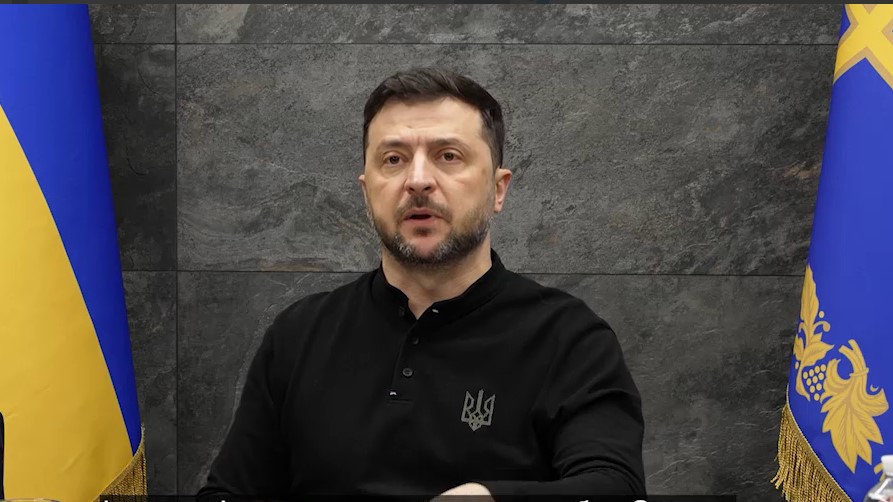
"Did not consider" does not mean that there is no strong demand in society for the renewal of parliament. It is obvious to everyone that this Rada has long since exhausted its resources and has been deteriorating for a long time (and before our very eyes). The President has had no contact with the factions (and this is during a war! It is strange to even think about such a thing), and a huge number of MPs are wanted or under investigation by law enforcement agencies. Moreover, the head of the presidential faction, Davyd Arakhamiia, says outright that there are many MPs who cannot and do not want to continue working in the Rada.
"Not considered" does not at all mean there is no strong public demand for renewing parliament. One thing is obvious to everyone: this Verkhovna Rada has long exhausted its turbo mode and has been deteriorating for quite some time now, right before our eyes. There has been no real contact between the president and parliamentary factions, and there still isn’t (during wartime, no less, hard to even wrap one’s head around that). A huge number of MPs are either wanted or under investigation by law enforcement agencies. What’s more, even Davyd Arakhamia, the head of the president’s faction, openly says there are many MPs who cannot, and do not want to, continue working in parliament.
Low levels of competence and a pervasive sense of depression among the ranks of MPs all point to the same conclusion: Ukraine’s top legislative body needs a reboot just as badly as the presidency does. Or, as the saying goes, when the horse is dead, get off it.
10. SO WHAT NEEDS TO BE DONE FOR OUR FIRST POST-WAR ELECTIONS TO BE RECOGNIZED AROUND THE WORLD (EXCEPT RUSSIA)?
The question posed at the very beginning of this piece finds its answer at the end. And it was articulated by Andrii Mahera:
"There are two things that must be done. The first depends on those in power: they must resist the temptation to flex their muscles and use administrative leverage, including under the pretext of fighting Russian and Chinese dirty money, crypto wallets, and the like. I am not saying this shouldn’t be done, we absolutely must counter any Russian or Chinese influence. But this must not be used as a pretext to go after the opposition, independent media, or civic activists. For the outside world, this could become a litmus test for recognizing the elections.
The second condition concerns the unity of civil society. After the full-scale war, we must not start settling scores among ourselves who stayed in Ukraine and who didn’t; who was a civilian and who was in uniform; who fought on the front line and who served closer to the rear.
We should not go down that road, because we could take it too far and end up doing what Putin failed to achieve through war."
To Mr. Mahera’s two points, I would add a third: under any circumstances, Ukraine must stick with Europe.
Yes, a Europe that is overly pragmatic and often hesitant. A bureaucratized Europe. A Europe unsure of itself. But time has shown that we have the most in common precisely with them, imperfect as they are. And if the slogan is "away from Moscow," then where to?
The answer is Europe.
Yevhen Kuzmenko, Censor.NET


