ENG




13125 visitors online
The situation for retirees in Ukraine is increasingly complex, with various challenges such as inadequate pension resources and the ongoing conflict. Data reveals that 145,000 retired military-age men are not yet mobilized. Additionally, a critical dialogue in Odesa highlights tensions as elderly citizens defend their rights and languages. The Pension Fund struggles to provide increased payments due to a dwindling workforce contributing to it. Heroic acts have emerged, such as a 98-year-old woman traversing the frontline and stories of pensioners resisting occupation forces with remarkable bravery. Meanwhile, efforts to address retiree education have led to the growth of "third age universities." These narratives showcase both struggles and resilience within the elderly community in Ukraine, with implications for social and economic policies impacting retirees.
What challenges do retirees face in Ukraine?
Retirees in Ukraine confront several challenges including insufficient pension funds, economic hardships, and effects of military conflicts. The Pension Fund lacks resources, as the number of taxpayers decreases, hindering pension increases. Additionally, the ongoing conflict exacerbates risks, evidenced by incidents like bombings in civilian areas targeting gatherings for pension distributions. Furthermore, discrimination and political tensions affect older citizens, as seen in disputes over language use.
How are retirees in conflict zones impacted in Ukraine?
Retirees in conflict zones face significant threats to their safety and livelihood. Bombings in areas where elderly people gather for pension payments illustrate the risks they encounter. In some cases, retirees have exhibited remarkable resilience, such as traversing dangerous frontlines under fire. Additionally, occupiers have been known to pressure retirees to accept foreign citizenships, further complicating their status and access to benefits.
Why are pensions in Ukraine difficult to increase?
Increasing pensions in Ukraine is challenging due to a growing gap between contributors and benefit recipients. Many working-age Ukrainians have emigrated, leading to a decline in the number of people paying into the social security system. As a result, the government struggles to find resources sufficient for pension increases. Political and economic instability further exacerbate these fiscal constraints, affecting the overall pension system's sustainability.
Have retirees in Ukraine taken part in the resistance?
Yes, retirees in Ukraine have played remarkable roles in the resistance against occupation forces. Anecdotes of elderly individuals taking action include stories of resistance fighters who, despite their age, have actively participated in thwarting enemy advances. These acts of bravery highlight the resilience and spirit of Ukraine's elderly population, contributing to the broader resistance efforts during the conflict.
What educational opportunities are available for Ukrainian retirees?
In Ukraine, there are over 200 "third age universities" designed to provide educational opportunities for retirees. These institutions cater specifically to older adults, allowing them to engage in lifelong learning and personal development. This initiative reflects a commitment to enhancing the quality of life for retirees, enabling them to continue acquiring knowledge and staying socially active even in later years.
News retirees
 Kyiv prepares for possible winter outages: Residents with limited mobility asked to update their details Kyiv is collecting up-to-date information on residents with limited mobility who may need assistance with temporary relocation during the winter in the event of an emergency or disruptions to heating, electricity or water supplies. 1 423 24 Previously in trend: heating season
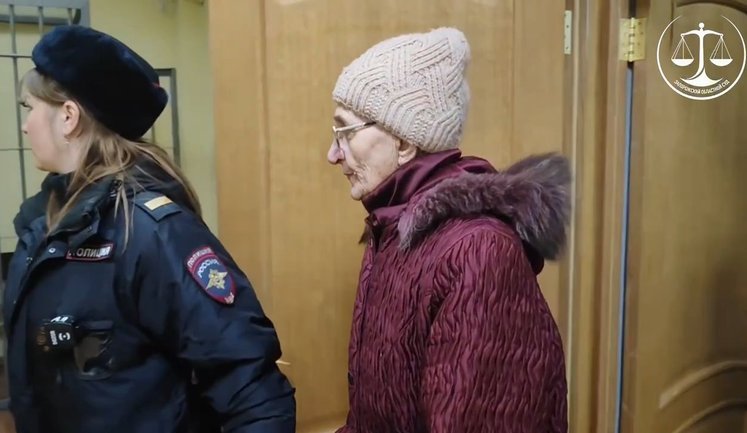
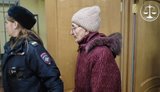 Occupiers in Zaporizhzhia Oblast have sentenced 68-year-old pensioner to 11 years in prison for "high treason" and supporting AFU. VIDEO In the temporarily occupied territory of Zaporizhzhia Oblast, Russian invaders have sentenced 68-year-old Halyna Bekhter to 11 years in prison. According to Censor.NET, the woman, a resident of the village of Plodoridne in Melitopol district, was charged with "high treason". 5 501 25 Previously in trend: Occupied territories - Crimea and Donbas
 13 million Ukrainians will receive payment of 1,500 hryvnias in April, – Uliutin In April, around 13 million Ukrainians will receive a one-off cash payment of 1,500 hryvnias. 11 196 49 Previously in trend: IDP payments
 Pensions will be indexed by more than 12% in March, - Zelenskyy In March, Ukraine will see another annual indexation of pensions for more than ten million pensioners. The increase will amount to more than 12%. 4 525 57
 On 11 February, Ministry of Social Policy will hold briefing entitled "Identification of pensioners: who has had their payments suspended and how to quickly restore them" On February 11 at 10:00 a.m., a briefing organized by the Ministry of Social Policy, Family, and Unity of Ukraine will be held at the Ukrinform press center on the topic: "Identification of pensioners: who has had their payments suspended and how to quickly restore them." 2 631 16 Previously in trend: Pension Reform IDP payments
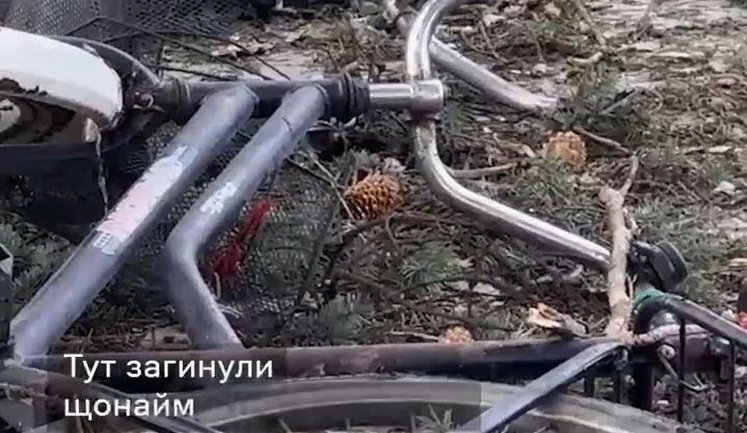
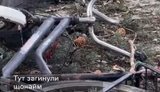 New footage from Yarova: destroyed infrastructure and scattered personal belongings. VIDEO New footage has emerged from the village of Yarova in Donetsk region, where Russian troops dropped two KAB-250 guided aerial bombs on 9 September on a place where elderly people had gathered to receive pension payments, Censor.NET reports. 6 047 7 Previously in trend: Russian strike on Yarova in Donetsk region
 145 thousand retired security officers of military age have not been mobilized In Ukraine, there are 145.2 thousand male pensioners of military age (under 60) who do not work, have no disabilities and do not serve in the military. 15 380 185 Previously in trend: Mobilisation in Ukraine
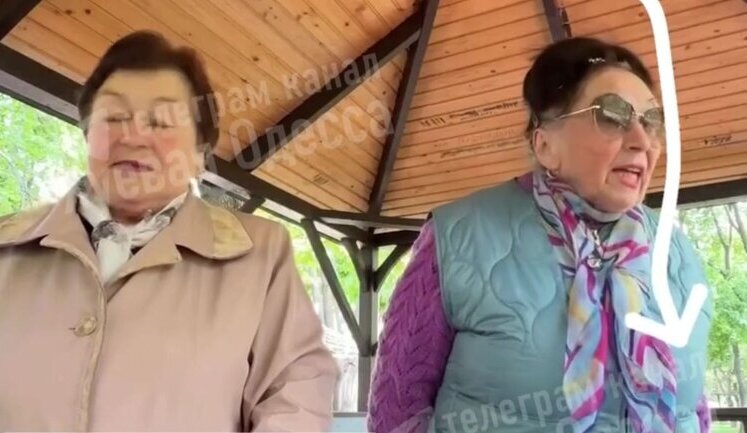
 Language dispute in Odesa: "You’re not from Odessa. There’s Russian-speaking population here. You’re stupid! F#ck off to Kyiv and Ivano-Frankivsk. F#ck of to Lviv!". VIDEO Elderly women in Odesa started a fight with a woman who spoke Ukrainian in a public place. 27 697 170 Previously in trend: Language Issue
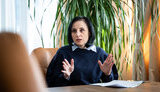 Situation with pension benefits is critical, there are not enough resources to increase pensions - Zholnovych Due to the fact that a large number of Ukrainians have moved abroad, the number of unified social taxpayers in Ukraine is already lower than the number of pensioners. Therefore, the state lacks the resources to increase payments. 75 0
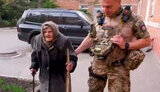 98-year-old woman left occupied Ocheretyne in Donetsk Oblast on foot: She walked entire frontline under fire. VIDEO The woman walked from the occupied part of Ocheretyne all day, covering about 10 km under fire. 10 985 35 Previously in trend: War
 There are more than 200 "third age universities" in Ukraine, - Ministry of Social Policy Through the Third Age Universities programme, pensioners and people of pre-retirement age can learn new skills. For example, digital skills or foreign languages. 4 741 9
 Occupier told about heroic act of elderly Ukrainian: "Peaceful grandfather walked past us, climbed up on roof and started shooting at us with machine gun.". VIDEO The "Hero of the Special Military Operation" told about the heroic deed of an elderly Ukrainian who launched a machine gun attack on an enemy unit during the occupation. 24 311 66 Previously in trend: War
 Russian invaders force pensioners in occupied territory to receive Russian passports - General Staff The Russian occupiers are forcing pensioners to receive Russian passports in the occupied part of Kherson region. 1 596 17 Previously in trend: Russian aggression against Ukraine War
 Pensioner Didkovsky from trophy RPG-18 hit enemy tanker and stopped column of invaders during occupation of Bucha. VIDEO Valentin Didkovskiy, a 64-year-old pensioner from Bucha stopped a column of Russian invaders during the occupation of Bucha in February. 28 081 66 Previously in trend: War
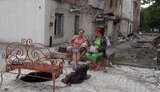 Occupiers counted number of retirees in Mariupol: They are three times less than before Russian invasion The Pension Fund of the terroristic "DNR" estimated the available number of retirees in Mariupol - 46 thousand people. This is 3 times less than before the Russian invasion (136 thousand people). 2 922 11 Previously in trend: War
 Zelenskyi launches debut digital survey as part of digital democracy. VIDEO President of Ukraine Volodymyr Zelenskyi has launched a debut digital survey as part of digital democracy. 23 589 365
 In spring, all vaccinated Ukrainians over 60 years old to get free smartphone, preferential access to Internet – Zelenskyi President Volodymyr Zelenskyi has announced a new government program under which all vaccinated Ukrainians over 60 can receive a free smartphone and a reduced rate. 72 099 266
 Story of Ukraine MP advicing to sell dog to pay bills gains popularity on BBC The shaggy dog story on air of 112 Ukraine TV Channel not only causes outcry in Ukraine but also hits the trends on the English-language segment of the Internet. 7 695 53
Zelenskyi instructed Cabinet to deal with MP's advice to sell dog to pay bills causes outcry issue President Vladimir Zelenskyi instructed the Government of Ukraine to deal with the situation around the old lady whom the deputy from the Servant of the People Eyhenii Brahar advised to sell the dog in order to pay bills. 27 992 290
 Ukraine’s government seeks raising pensions of persons with long employment service, Deputy PM Rozenko says Ukrainian government develops a mechanism to increase pensions to those who have a long labor experience. 19 302 156
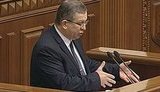 Pensions increase affected 10.2 million people, average payment up by 560 hryvnia, - Social Policy Minister Reva Social Policy Minister Andrii Reva told the parliament members about the pension reform implementation. 37 496 305
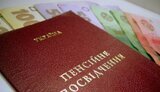 Pension reform bill entered into force The pension reform that provides for increase of the required insurance period for retiring up to 25 years in 2018 and 35 years by 2028, has come into effect. 17 839 84
 Bill on pension reform published, comes into effect tomorrow: pension increase will be effective from Oct. 1 The bill on amending certain legislative acts of Ukraine regarding increase of pension payments was published in Holos Ukrainy governmental newspaper on Tuesday. 81 965 230
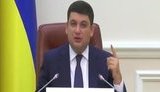 Pension Fund of Ukraine will go broke without reform, - PM Hroisman The Fund might go bankrupt in three to five years. 13 005 76
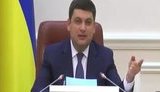 PM Hroisman says majority of Ukrainian pensioners live below poverty line Ukraine’s PM has presented the Cabinet a new law on pension reform providing for the minimum pension increase up to 3,764 hryvnia ($144) from Oct. 1. 20 475 147
PM Hroisman set to present pension reform Prime Minister of Ukraine Volodymyr Hroisman is ready to present a pension reform in the near future and hopes that with the support of Ukrainian lawmakers this reform can be adopted by the end of the current parliamentary session. 17 939 85
Hundreds of Donbas residents locked in "no man’s land," deprived of basic necessities, - UN report The escalation of hostilities in eastern Ukraine has led to the death of civilians and destruction of vital infrastructure. Tens of thousands of Donbas residents have lost access to water and electricity in biting winter frosts while the humanitarian situation remains extremely difficult. 7 682 61 Previously in trend: Occupied territories - Crimea and Donbas
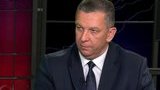 To receive retirement payments, Ukrainians have to earn it: reaching 60 is no longer enough, - Social Policy Minister Reva The head of the Social Policy Ministry says the retirement age in Ukraine will not increase. However, a citizen must earn a certain term of service enough for retirement. The draft bill on the pension reform is ready. 142 676 890
 No retirement age increase expected in Ukraine, Deputy Prime Minister Rozenko says The pension reform the government scheduled to implement this year does not stipulate for raising the retirement age, while the IMF does not insist on it either. 25 061 145
 "Pension system to be changed in 2017," - PM Hroisman The Ukrainian system of pension payments is to be changed in 2017. 58 771 161
Social Policy Ministry expects 141.5 billion hryvnia Pension Fund gap in 2017 The final version of pension reform has not yet been developed. The Ministry of Social Policy of Ukraine is considering various options and principles of reform. It will be possible to talk about the final version only after it is publicly discussed, considered by the Cabinet of Ministers, and submitted to the Verkhovna Rada of Ukraine. 21 701 204
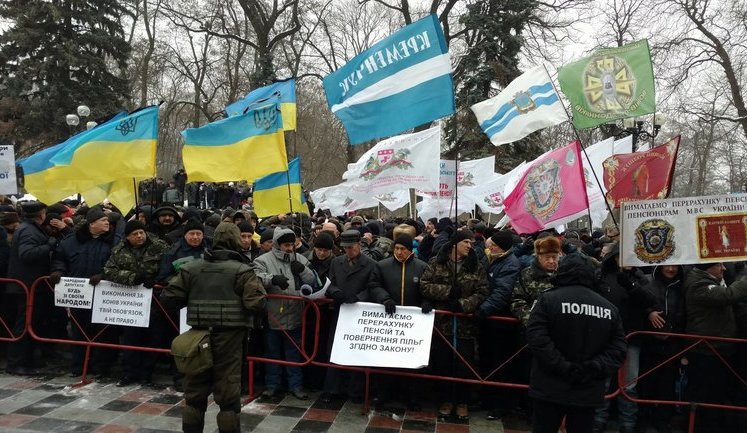
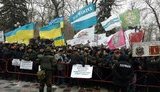 "Cops are people too!" - Interior Ministry retirees demanded recalculation of pensions outside Rada. PHOTOS Pensioners and veterans of Ukraine's Interior Ministry rallied outside the Verkhovna Rada building with a demand to recalculate pensions. 64 527 369
 Retirement age in Ukraine should be increased starting with subsidized households, - IMF official We’ll need to start with an increase in the retirement age of a number of groups that are exempt at the moment from the general retirement, that have special privileges on the retirement age. 111 731 337
 Ukraine’s Finance Minister does not rule out possible retirement age increase during forthcoming pension reform The Minister of Finance of Ukraine Oleksandr Danyliuk does not rule out a possible increase of the retirement age as part of the upcoming pension reform in Ukraine. 38 442 133
Deputy PM Rozenko: “Defined contribution pension system to kick off by 2017 at latest. This is our fundamental point” The pension reform, in particular, the defined contribution pension system introduction remains one of the government’s top priorities. 7 912 82
 Cabinet amends calculations of utility-related subsidies Ukraine’s government has amended the order of calculating subsidies that cover utility payments for citizens. 156 721 200 Previously in trend: Rates for housing services and utilities
 Cabinet changes rules for calculation of subsidies for unemployed pensioners Calculation of subsidies for unemployed pensioners should be based on their income for the month preceding the application rather than for the previous year, the Cabinet has ruled. 114 866 122
Pensions to increase by 10 percent in December, - Ukraine's Social Policy Ministry In December 2016, pensions will rise by 10 percent, with no retirement age increase scheduled. 22 014 164
Minimum pension to rise by 10 percent in December, - Deputy Prime Minister Rozenko The second 10 percent inсrease in the minimum pension is expected in December. 12 101 86
Minimum pension to increase on Dec. 1, - Deputy Prime Minister Rozenko The government guarantees timely and full payment of pensions as well as two increases in the minimum pension before the end of the year. 19 044 83
 Government will not propose retirement age increase in Ukraine, vice prime minister says The task of the Ukrainian government in the negotiations with the International Monetary Fund is to show that there are alternative solutions. 17 889 132
Rada to consider bill on pension payments taxation cancellation on June 2 The Verkhovna Rada of Ukraine intends to consider more than 100 bills and drafts between May 31-June 3. This includes the bill No. 4542 on cancellation of taxation of pension payments. 6 962 21
Many Ukrainians get pensions below minimum subsistence level, - Pension Fund chairman Zarudnyi Basic pensions of many Ukrainians are below the minimum subsistence level, so they receive extra payments from the Pension Fund. 16 498 84
 Pensions of up to 350,000 Ukrainians to be exempted from taxes, vice prime minister says Tax exemption of pensions stipulated by the government’s decision from May 1 will be applied to about 350,000 Ukrainian citizens. 48 809 70
Only 9% of Donbas population registered as displaced persons have right to payments, - Ministry of Finance Only 9% of the residents of the occupied Donbas applying for social benefits as internally displaced persons (IDPs) can receive such benefits. 13 182 35 Previously in trend: Occupied territories - Crimea and Donbas
IMF proposes to raise retirement age in Ukraine, - Social Policy Minister Rozenko Ukrainian authorities insist on introduction of pension savings funds. 98 907 628
 Ukraine pays pensions to one million of pensioners from occupied territories About a million pensioners from the territories of the so-called "DPR" and "LPR" receive pensions from the Ukrainian government. 48 657 407
Older residents fight to live in terrorists-controlled territory of Ukraine - The New York Times While some families fled eastern Ukraine because of the military conflict, many of the elderly stayed behind and now face a desperate shortage of health care. 15 752 207 Previously in trend: Occupied territories - Crimea and Donbas
Page 1 of 2
more news