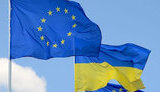
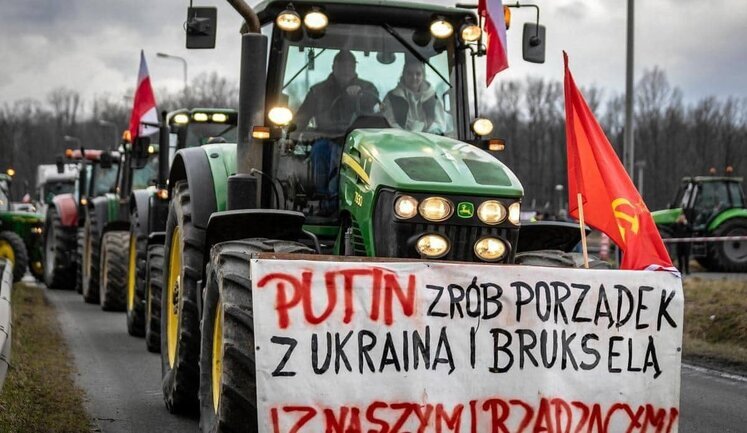
The year 2025 marks significant changes in global trading dynamics, particularly involving Ukraine and the European Union. The updated Deep and Comprehensive Free Trade Area (DCFTA) between Ukraine and the EU has now entered into force, signaling a new era of economic collaboration. Despite the ongoing conflict in Ukraine, Russia continues to trade with EU countries, underscoring the complex nature of international trade politics. Meanwhile, new US trade demands are causing strain between the US and EU, with potential tariffs threatening to disrupt transatlantic trade. These intricate trade relationships highlight the fragile balance in geopolitical strategies and the enduring influence of economic policies. Understanding these developments is crucial for anyone looking to grasp the global economy's current state and its future trajectory.
How is the EU involved in Ukraine's trade agreements?
The European Union plays a pivotal role in Ukraine's trade landscape. With the new version of the Deep and Comprehensive Free Trade Area (DCFTA) in place, the EU and Ukraine are set to enhance their economic collaboration. This agreement facilitates greater market access and trade liberalization between the two, representing a strategic move towards strengthening bilateral economic ties. The continuous talks and updates on trade agreements reflect the EU's commitment to supporting Ukraine's economic resilience amid ongoing geopolitical challenges.
What is the significance of the DCFTA agreement with Ukraine?
The Deep and Comprehensive Free Trade Area (DCFTA) agreement between Ukraine and the EU is crucial for several reasons. It not only aims to deepen economic integration but also aligns Ukraine's regulatory systems with EU standards, promoting trade and investment. This agreement is a cornerstone for encouraging economic growth and stability in the region, as it offers Ukraine broader access to the EU market, enhancing trade opportunities and fostering closer economic ties.
Why does the EU continue trading with Russia despite sanctions?
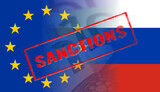
Despite sanctions due to the conflict in Ukraine, the EU continues trading with Russia, primarily because of its reliance on Russian energy exports, notably oil and gas. This dependency creates a complex situation where economic needs often override political imperatives. The EU's ongoing trade with Russia underscores the challenges of detaching from significant energy imports, highlighting the intricate balance between economic interests and the geopolitical stance against Russian activities in Ukraine.
How are US-EU trade relations affected by recent developments?
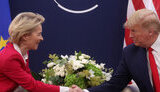
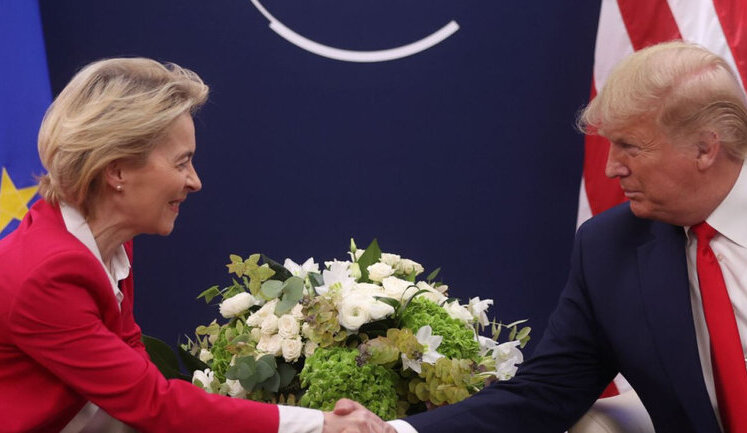
Recent trade developments have strained US-EU relations, particularly concerning new tariffs and trade demands proposed by the United States. The European Union perceives these demands as excessive, potentially destabilizing recent efforts to prevent a trade war. This tension emphasizes the fragile nature of international trade agreements, where differing economic priorities can lead to disputes, affecting global economic stability and prompting strategic recalibrations in international relations.
What impact does the end of the "visa-free trade" regime have?
The expiration of the "visa-free trade" regime between the EU and Ukraine poses significant economic implications, particularly for Ukrainian exports. However, the introduction of an updated DCFTA agreement aims to mitigate these effects by offering revised market access terms and promoting economic continuity. This transition is critical in maintaining the momentum of trade liberalization and ensuring that existing partnerships are not disrupted, preserving the economic linkage that supports regional stability.