7591 visitors online
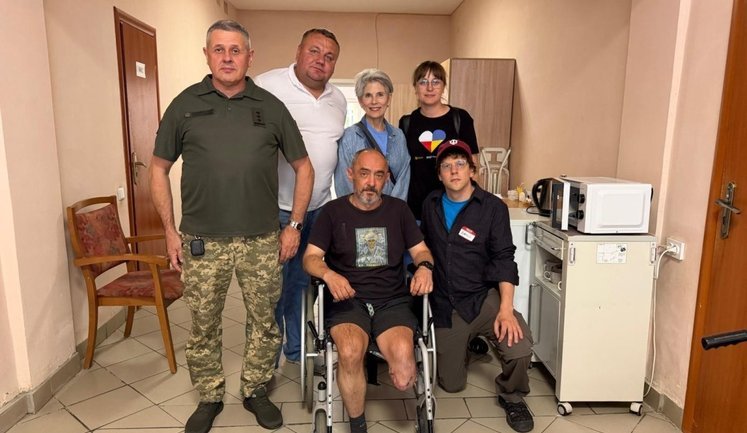
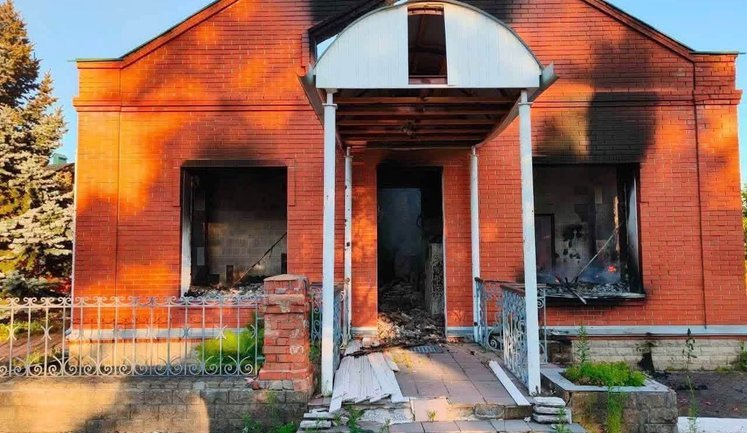
Rehabilitation plays a crucial role in Ukraine as it seeks to address the needs of soldiers, civilians, and children affected by the conflict and its aftermath. Recent news highlights significant developments: American actor Jesse Eisenberg visited a Ukrainian sanatorium to support service members' rehabilitation. Meanwhile, a children's rehabilitation center in Sumy was destroyed in recent attacks, emphasizing ongoing vulnerabilities. NATO countries have pledged to rebuild military rehabilitation centers in Ukraine, signifying international support. Additionally, legislative measures have been enacted to provide financial assistance to soldiers rehabilitating from Russian captivity. These efforts are complemented by international cooperation, with countries like Latvia and Lithuania contributing to the rehabilitation programs. Such initiatives are vital in aiding recovery, restoring lives, and enhancing Ukraine's resilience.

What is the current state of rehabilitation centers in Ukraine?

The rehabilitation centers in Ukraine are undergoing significant changes, with new structures being rebuilt with international assistance, particularly by NATO countries. Some centers have been destroyed, notably one in Sumy, but rebuilding plans are in motion. The government and international partners are focused on enhancing these facilities to support both military personnel and civilians affected by the ongoing conflict.

How are international organizations assisting Ukraine with rehabilitation?

International organizations, including NATO and allied countries, are actively involved in rebuilding and supporting rehabilitation efforts in Ukraine. They provide financial resources, expertise, and infrastructure assistance to ensure the rehabilitation facilities are equipped to serve affected individuals, particularly those from military backgrounds and vulnerable populations.

What financial aids are available for rehabilitating soldiers in Ukraine?

The Ukrainian government has implemented financial measures to support soldiers' rehabilitation. Notably, a monthly payment of 50,000 hryvnias is allocated for military personnel released from Russian captivity. These funds are part of broader rehabilitation assistance efforts aiming to facilitate their recovery and reintegration into society or military service.

What role do NATO countries play in Ukraine's rehabilitation process?

NATO countries are heavily involved in Ukraine's rehabilitation efforts through the Comprehensive Assistance Package. They focus on rebuilding military rehabilitation centers and providing resources and support to enhance Ukraine's capacity to address the needs of wounded and rehabilitating soldiers. This international collaboration is crucial for strengthening Ukraine's rehabilitation framework.

How are Ukrainian veterans supported post-rehabilitation?

Post-rehabilitation, Ukrainian veterans receive support through integrated programs that offer psychological assistance, financial aid, and opportunities for reintegration into civilian life or military service. Programs like PTSD and depression management are part of the psychological support, while financial stipends help soldiers stabilize their post-recovery lives.

show details

Articles reabilitation

Day at children’s hospice during war: place full of hope and life Day at children’s hospice during war: place full of hope and life Russia’s full-scale aggression has forced millions of Ukrainians to flee their homes, including hundreds of thousands of children. It is one thing when children are evacuated from combat zones accompanied by their parents or relatives, and quite another when they are orphans or children who have lost loved ones in shelling and have been left alone. But what if these children also require palliative care? 7 392 7 Previously in trend: Palliative care for children

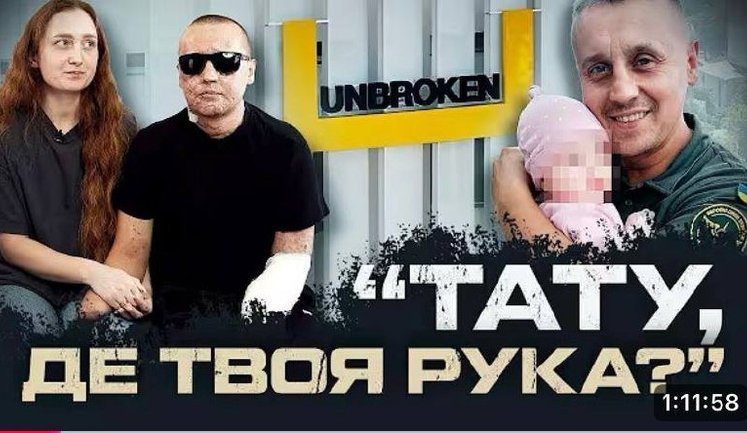
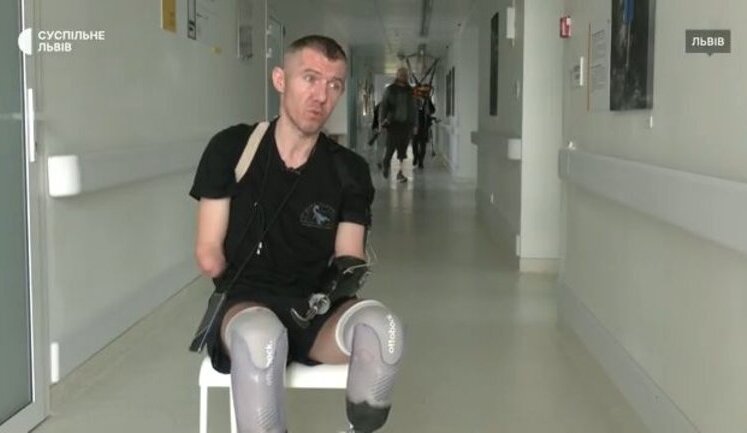
My bionic prostheses are lying around at home. I should have spent that money on repairs instead, - veteran Yevhenii Kholodnytskyi My bionic prostheses are lying around at home. I should have spent that money on repairs instead, - veteran Yevhenii Kholodnytskyi Now a veteran, Yevhenii Kholodnytskyi (call sign Prynts (Prince)) volunteered for the defense forces back in 2022. For over three years, he has been living with the aftermath of his injuries—bilateral hand amputations. However, his combat service is only a small part of this interview; the focus is primarily on his rehabilitation. 26 667 25

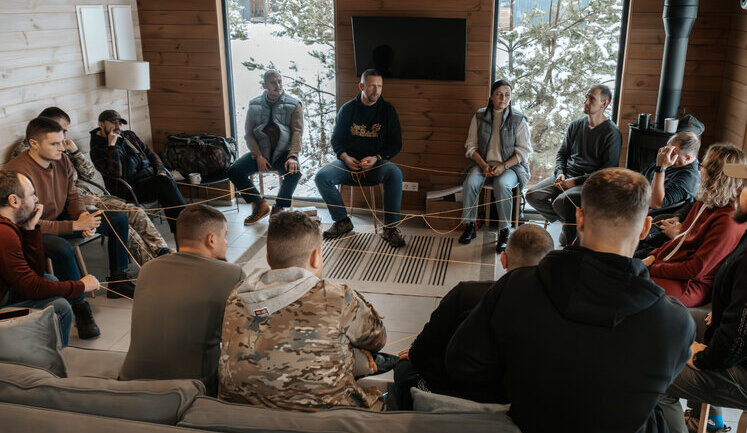
Open-air therapy: how new rehabilitation format works for service members and war veterans Open-air therapy: how new rehabilitation format works for service members and war veterans New approaches to rehabilitation for service members and war veterans are emerging in Ukraine. These are programs that combine physical recovery, psychotherapy and work with the environment. One such area is therapeutic horticulture, which has been used effectively around the world for many years. 6 255 10

"Guys in captivity are forced to walk with their heads constantly bowed down in places of detention." How those who survived captivity are rehabilitated and retrained to move "Guys in captivity are forced to walk with their heads constantly bowed down in places of detention." How those who survived captivity are rehabilitated and retrained to move "We cannot comprehend what the Russians are doing. Neither as normal people nor as doctors. Perhaps this is some new form of torture. They were not just told to lower their heads; their entire torso had to be bent forward with their hands behind their backs," says Yuliia, head of the department at the National Guard of Ukraine’s medical center and a specialist in physical rehabilitation medicine. 179 468 13 Previously in trend: Torture of POWs in Russian prisons Rehabilitation of military

Businessman and volunteer Viacheslav Zaporozhets: "When we brought 33 seriously wounded people from Chernihiv to Kyiv and their lives were saved here, I got great pleasure" Businessman and volunteer Viacheslav Zaporozhets: "When we brought 33 seriously wounded people from Chernihiv to Kyiv and their lives were saved here, I got great pleasure" There is an opinion that war brings out the good and the bad in people. On the one hand, it seems too pretentious and black and white for our complex 21st century. On the other hand, look at the story of Viacheslav Zaporozhets. 6 227 2 Previously in trend: War

Oral and maxillofacial surgeon Yurii Chepurnyi: Our war is very specific in terms of medicine. Afghanistan, Syria, Israel - emphasis was on bullet wounds. In Ukraine, mine-blast trauma prevails. Oral and maxillofacial surgeon Yurii Chepurnyi: Our war is very specific in terms of medicine. Afghanistan, Syria, Israel - emphasis was on bullet wounds. In Ukraine, mine-blast trauma prevails. The peculiarity of a full-scale war is that mine-blast injuries prevail, so along with prosthetic limbs, the military often have to restore their faces. According to the maxillofacial surgeons, their patients are soldiers who have been wounded and have part of their jaw torn out or broken off, who are missing not only their eyes but also their bones or have them shattered around the eye. That’s why these soldiers need complex surgeries. 9 152 6

Hero of Ukraine Valerii Kucherenko: There were 30 meters left to end of planting. Enemy noticed me and threw me with grenades Hero of Ukraine Valerii Kucherenko: There were 30 meters left to end of planting. Enemy noticed me and threw me with grenades Valerii Kucherenko, a hero of Ukraine, lost both his arms in a battle in the Luhansk region, suffered numerous wounds to his leg and partially lost his eyesight. The Russians tried to "go in for kill", but that’s not how it turned out 9 921 2 Previously in trend: War

Masi Naiiem: "Information about how military personnel are treated has great impact on attitudes towards mobilization and, consequently, on defense capabilities" Masi Naiiem: "Information about how military personnel are treated has great impact on attitudes towards mobilization and, consequently, on defense capabilities" Recently, five non-governmental organizations, including the human rights organization "Pryntsyp (Principle-ed.)," presented a new concept of veterans’ policy. So we talked with Masi Naiiem, a soldier and co-founder of this organization, about how it can be implemented so that the military, upon returning from the front, can receive quality rehabilitation and psychological assistance, and a multidisciplinary team can immediately work with the wounded in the hospital, whose specialists would think ahead not only about surgical intervention but also about further prosthetics, if necessary. 15 976 0