



Water is leaving: new satellite images of Kakhovka HPP, blown up by enemy, have been published. PHOTO
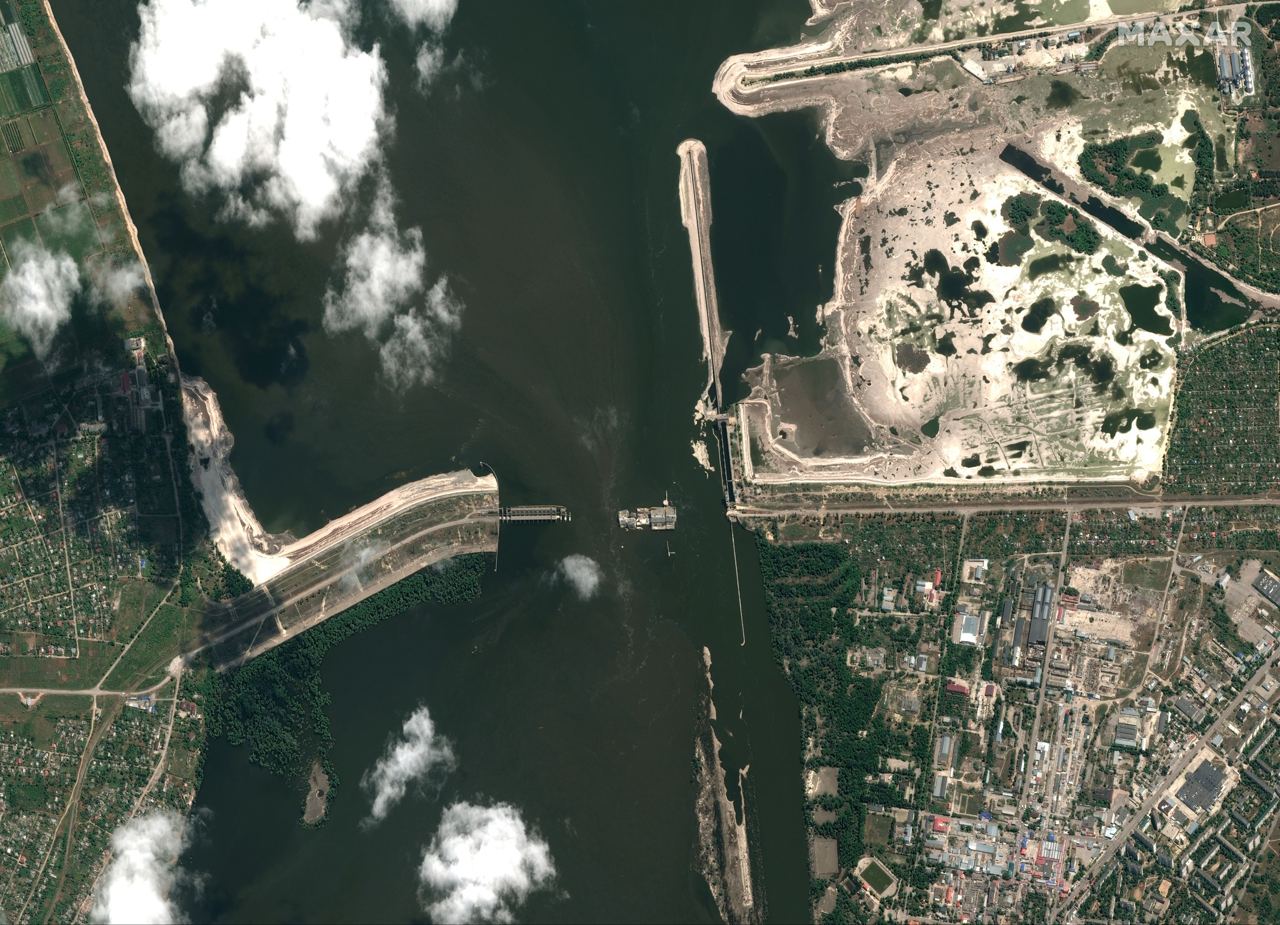
New satellite images show the aftermath of flooding in the Kherson region after the Russian occupiers blew up the Kakhovka hydroelectric power station. The footage shows that the water is already receding.
This was reported by Censor.NET with reference to Schemes.
The images were taken by the private US company Maxar Technologies. The photos from 16 June show in detail the current appearance of the destroyed dam.
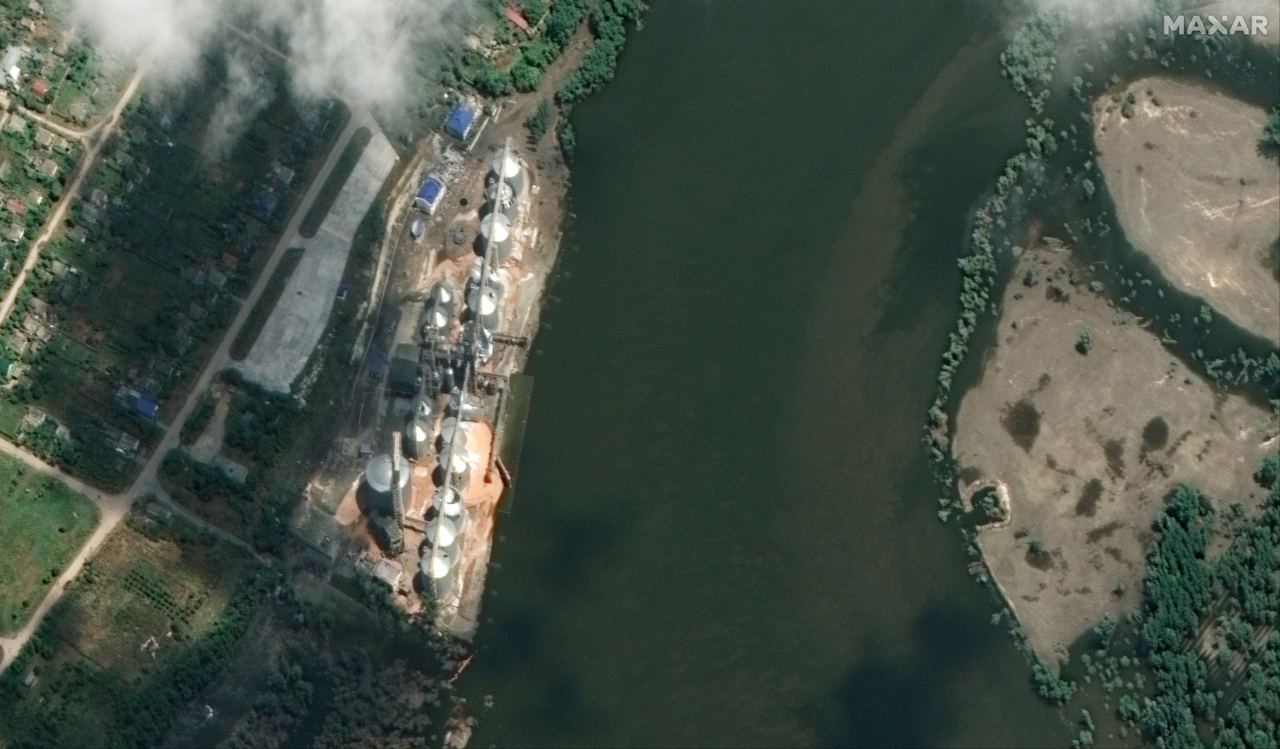
The images also show the "Nibulon" river terminal, located in the urban-type settlement of Kozatske on the right bank of the Dnipro River, below the Kakhovka hydroelectric power station. While the terminal area was previously completely flooded, the new images show that the water has receded.

As Censor.NET reported, on the morning of 6 June, it became known that the Russian occupiers had blown up the Kakhovka hydroelectric power station. The explosion completely destroyed the engine room, and the station cannot be restored.
The explosion of the Kakhovka HPP threatens the temporarily occupied Zaporizhzhia nuclear power plant, but the situation is now under control. The explosion could also cause an imbalance in Ukraine's energy system. Fields in southern Ukraine could turn into deserts.
According to Ukrainian intelligence, no one other than Russia had the technical capability to blow up the plant. The NYT interviewed experts and also concluded that the plant was blown up from the inside.
In the Kherson region, as a result of the undermining of the Kakhovka hydroelectric power station dam by Russian troops, the territory of the Nizhnedniprovsky National Nature Park was flooded.
In the occupied territories, the evacuation of the population completely failed in the first days, and the Ruscists did not allow volunteers to save people.
The Ministry of Health warns against eating fish that died due to a drop in water levels as a result of the Russians' blowing up the Kakhovka hydroelectric dam. There is no safe way to cook it.
As of the morning of 8 June, 600 square kilometers of the Kherson region have been flooded. The situation is most difficult on the left bank of the Dnipro.
Ukraine's Foreign Minister Dmytro Kuleba and UN Resident Coordinator Denise Brown agreed that the organization would immediately form teams to provide humanitarian assistance and evacuate people in the occupied territories on the left bank of the Dnipro River, provided that Russia provides access and security guarantees.
Ukrhydroenergo predicts that the flooding in the Kherson region will last for about two more weeks. Only in mid-July will the Dnipro recede from the flooded settlements in the south of the country.
The World Health Organisation (WHO) warns of an increased threat of an outbreak in Ukraine due to the explosion of the Kakhovka hydroelectric power station of several infectious diseases, including cholera and other waterborne diseases.


