



Csárdás before election: why Orban made Ukraine and Zelenskyy prime targets of his campaign, and what happens next
One month remains until the first round of Hungary’s parliamentary elections, and with each passing day, the sense grows stronger that this is not about electing the legislature of a country in the heart of Europe, but rather about yet another episode of Star Wars.
In this production, however, the Jedi are fake, Luke Skywalker is unrecognizable, and the spacecraft are made of cardboard and foam. One thing is beyond doubt: the scriptwriters have cast Ukraine’s President Volodymyr Zelenskyy as the ultimate universal evil, the Darth Vader of contemporary Hungary.
THE EU AND UKRAINE ARE TO BLAME FOR EVERYTHING: ORBAN’S SCRIPT
Not a single day passes in Hungary’s information space without references to Kyiv’s supposedly sinister plans. Foreign Minister Peter Szijjarto has claimed that the infrastructure of the TurkStream gas pipeline came under attack on 11 March. He added that the blocking of the Druzhba oil pipeline and the incident involving the gas pipeline should be regarded as "serious attacks on the country’s sovereignty."
Hungary’s parliament has also adopted a resolution rejecting Ukraine’s EU membership. A total of 142 lawmakers voted in favor, 28 voted against, and four abstained.
Meanwhile, Construction and Transport Minister Janos Lazar has openly explained that the Hungarian side seized an Oschadbank cash-in-transit vehicle as a form of blackmail. Moreover, he has threatened further operations:
We know that Ukrainians are very nervous… What we did was not accidental, and we will not return the money to them. The money will remain here for now; we are waiting for the pipeline to reopen and for new Ukrainian cash shipments through Hungary.
This hysteria did not start yesterday. As MP Vadym Halaichuk (Servant of the People faction) explains:
"A couple of months ago, I had the opportunity to visit Budapest. I spoke with Hungarian acquaintances and saw the enormous posters covering the entire city, every 50–100 meters, and when you drive from the airport, even every 25–30 meters. It looks very similar to the advertising campaigns produced on the advice of Kremlin political strategists. You need to drown the voter in your imagery. By the way, they do not even hide the fact that Russian political consultants are working on the elections; my acquaintances living in Hungary say so (including members of the Hungarian parliament). That is their intention: to show that yes, they are in Hungary and they are working. This is part of the Kremlin’s design…"
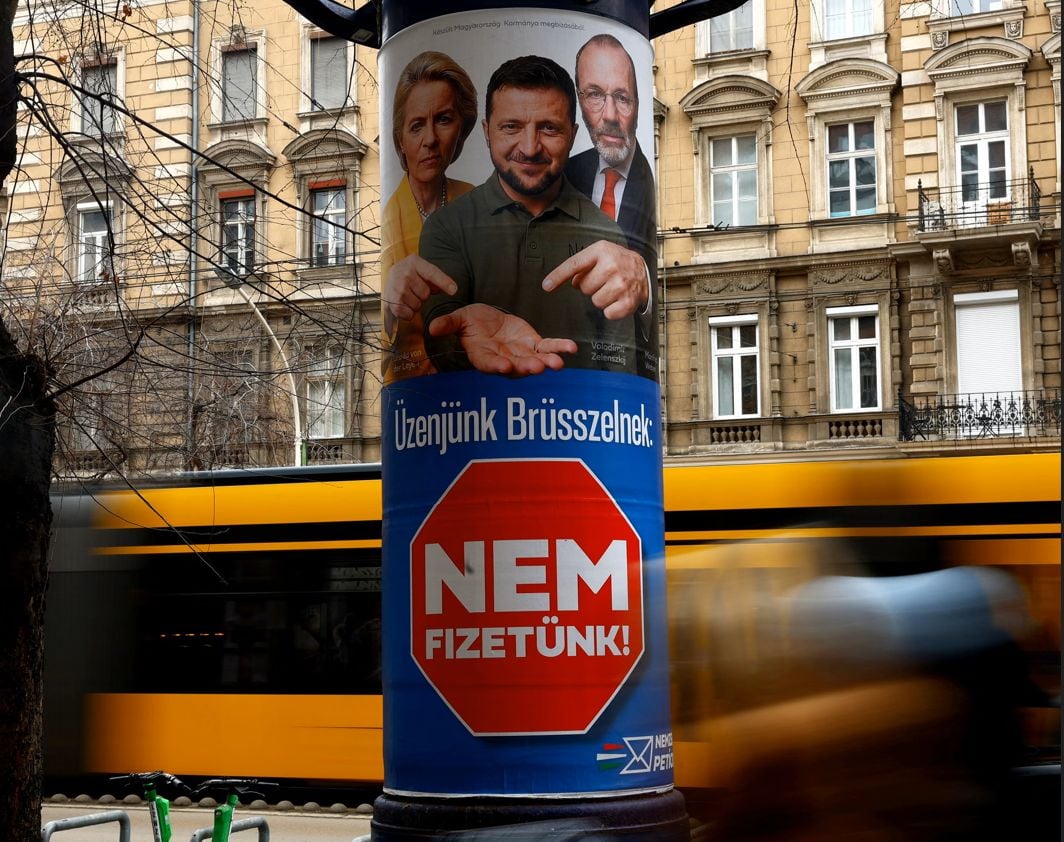
A separate story is the Hungarian press, or (at least its state-run "sector"). While working on this piece, the Censor.NET correspondent read plenty of material about an anti-Hungarian conspiracy allegedly orchestrated by Zelenskyy and Ursula von der Leyen, expert commentary on the treacherous plans of the opposition Tisza party, and anti-migrant (as well as anti-Ukrainian) interviews with various allies of the ruling Fidesz party, from Czech parliamentary speaker Tomio Okamura (headline: "We do not want to be dragged into the war in Ukraine!") to Matt Goodwin of the right-wing populist Reform UK (headline: "Britain can learn from countries such as Hungary").
It is a strange feeling: reading all this is like being transported in a time machine to early-2000s Ukraine, Medvedchuk’s country of temnyky (secret editorial instructions - ed.), tightly censored media, and the program Prote featuring Dzhangirov and Korchynskyi.
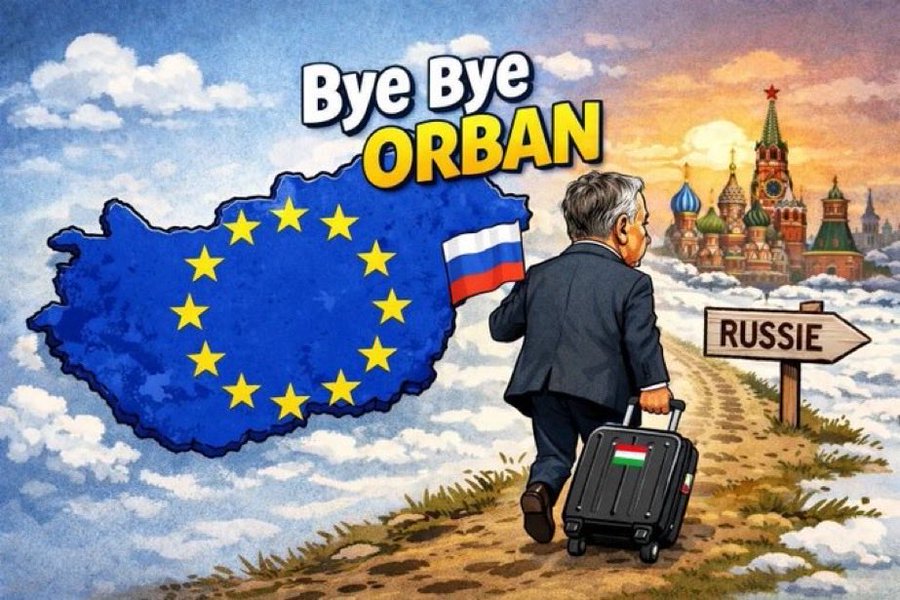
...But the main star of this daily show is, of course, Viktor Orban himself, the savior-peacemaker. Only thanks to him, Hungary has so far avoided being swallowed by the Ukrainian war, European Union corruption, and total impoverishment. The campaign videos contain everything a voter is supposed to know: here is the nation’s hero, shown in color together with his supporters, and there, in black-and-white footage, are the disagreeable Zelenskyy, von der Leyen, and Orban’s rival Peter Magyar.
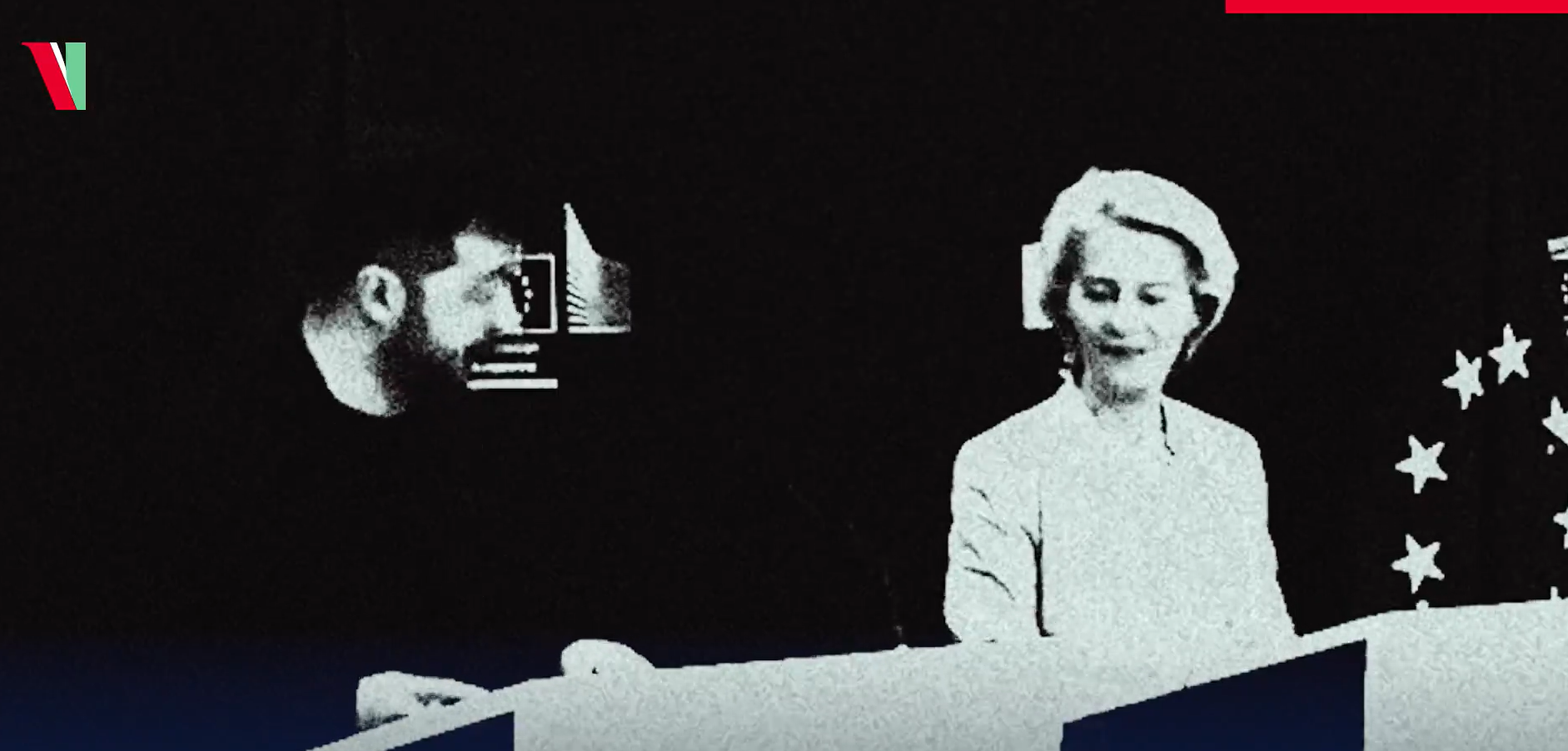
Credit must be given to Hungarian state propaganda: it uses everything at its disposal. The Ukrainian president makes an imprudent statement about the AFU communicating with the person blocking European money from reaching Ukraine, and the entire propaganda machine is already busy saving Orban from Zelenskyy’s hitman. Orban then calls his family to warn them that they, too, are in danger. Orban’s electorate watches and weeps in sympathy...
But enough of looking at Hungary from the outside; after all, we may well be missing something. We need expert help.
"PEOPLE WHO SUPPORT THE OPPOSITION SEE THAT ORBAN IS MOBILIZING HIS BASE AROUND UKRAINE IN ORDER TO DIVERT ATTENTION FROM DOMESTIC CHALLENGES"
Helping us make sense of the situation is Peter Balogh, a research fellow at the Institute of Regional Studies at Eötvös Loránd University and a lecturer in the university’s Department of Social and Economic Geography.

- Peter, many Ukrainians have come away with the impression that Viktor Orban’s and the Fidesz party’s election campaign is built almost entirely around anti-Ukrainian rhetoric and accusations. Is that really the case, or does it only seem that way to us?
- Yes, that is true. Ukraine does feature prominently in the campaign. Government policy contains many anti-Ukrainian elements. But it is also interesting to look at the position the opposition is taking in this situation. There is no guarantee that they will win, but it does look as though change is coming. Their political line on this issue is somewhat ambivalent, but it is definitely more friendly toward Ukraine than that of the current government.
It should be noted that this government is generally placing a major emphasis on foreign policy as a whole, and on the issue of Ukraine in particular. The reason is serious domestic challenges. This government is unable to deliver benefits to the population; the Hungarian economy has been stagnating for four years. And, judging by all appearances, the strategy is this: to divert attention from domestic challenges, the focus is shifted onto Ukraine.
- Right, the classic way of mobilizing voters is the enemy factor. It always works.
- Exactly: "always create an enemy." Ten years ago, it was George Soros, then refugees, then LGBT people. There is always an enemy image around which the government mobilizes. So far, this has been successful, but this time it may not work. Four years ago, during the previous campaign, which took place just weeks after the start of Russia’s full-scale invasion of Ukraine, they managed to stay in power because the opposition at that time was friendly toward Ukraine, and Orban was able to mobilize the country around the fear that Hungary would be drawn into the war. There was no realism in those claims, just as there is none today. But they created a narrative of fear that people fell for, above all, older voters and people in rural areas: namely, that "Orban must stay in power, otherwise Hungary could be dragged into the conflict.
- Over the past few years, Orban has built this myth according to which Zelenskyy is bringing war to Hungary, Ursula von der Leyen and Peter Magyar are helping him, and Viktor Orban and his team are standing guard over peace. But judging by the latest polling and Fidesz trailing the opposition Tisza party by 14 percentage points, many Hungarians do not believe this myth. Or is that too simplistic a conclusion?
- Unfortunately, in many countries, the main issue is the economy. First of all, people here feel that Hungary’s economic situation is deteriorating. On top of that, corruption has increased. According to Transparency International’s corruption ranking, Hungary has one of the worst records in the European Union. And one more thing: the main electoral support for the opposition Tisza party comes from small and medium-sized businesses, often in rural areas, which can see that they no longer receive any contracts unless they are part of the system, you understand? In other words, if they do not support the government, directly or indirectly, they simply cannot sustain their economic activity. The system is so corrupt, and the practice of nepotism so entrenched, that even small business owners can stay afloat only if they support the government, or at the very least do not criticize it in any way. People are fed up with this state of affairs. Hungarians have finally begun to understand that concentrating a large amount of power in a single pair of hands is a bad thing. Well, better late than never!
Of course, the issue of Ukraine is also on the agenda, but for the average voter it is not priority number one. If anything, people who support the opposition see that Orban is mobilizing his base around Ukraine in order to divert attention from domestic challenges.
In addition, people do not like Orban’s characteristic anti-EU rhetoric. It is not only Ukraine that is being cast as the enemy, but also Brussels, which has been treated as Hungary’s enemy for the past 10 years. Madness! And if there is one thing Orban has failed to change, it is Hungarians’ support for their country’s membership in the European Union. They did not become anti-EU simply because Orban has been pushing that line so hard.
- How widespread is the belief in Hungarian society that "the Druzhba oil pipeline is not being reopened because there is a direct order to that effect from President Zelenskyy"? (I am actually quoting Transport Minister Gulyash here.)
- You see, the electorate is highly polarized. People who support the current government tend to fall for Orban’s narratives. These people will believe anything Orban says. That said, this group of his core electorate is gradually shrinking... A few days ago, incidentally, Orban claimed that we supposedly have satellite images showing that the Druzhba oil pipeline is fully capable of operating. In response, opposition energy experts said such things cannot be determined from satellite images. More broadly, as far as the opposition is concerned, it is hard to say how inclined they are to raise the issue of the Druzhba oil pipeline. I do know that about a year ago, people associated with Tisza conducted polling to understand how their supporters felt about supporting Ukraine and granting it membership in the European Union.
- Interesting. And what were the results?
- There was a clear majority in favor of such support: 57%, if I remember correctly. Even so, we can see that there are divisions even within the electorate of the largest opposition party when it comes to Ukraine’s membership in the EU. Supporters of the ruling party, by contrast, will definitely be against such membership.
- Following the seizure in Hungary of a cash-in-transit vehicle on Hungarian territory, there are concerns in Ukraine that during the month remaining before the elections, Ukrainians living in Hungary or traveling there could become targets of provocations. Should they be worried about their safety?
- To be honest, I have not heard of any major incidents of that kind. Officially, about 43,000 Ukrainians with refugee status live here. That is, of course, far fewer than in some neighboring countries. At the same time, the actual number of Ukrainians in Hungary is much higher, since not everyone has registered for refugee status (which does not offer many benefits in Hungary). I have not heard of any major incidents involving them. Only minor cases, at most.
- As is well known, Hungary is deliberately blocking the transfer of 90 billion from the EU to Ukraine. If Viktor Orban remains in office after the elections, is there any likelihood that he will lift this block? Or is keeping it in place one of the key conditions of his shadow dealings with Moscow?
And the second question: if Mr. Magyar replaces Orban, what decision will he make regarding this money for Ukraine? Can we be confident that he will lift the veto?
- Yes, this is indeed a controversial and cynical story. And I think it is being used to put pressure on Ukraine. Just take the case of the seizure of a Ukrainian cash-in-transit vehicle carrying gold and cash. It is a crazy case! They are using it as blackmail, and that is not my speculation, two days ago, the government spokesman said that "we are holding this vehicle and the money until Ukraine restores the transit of Russian energy to Hungary."
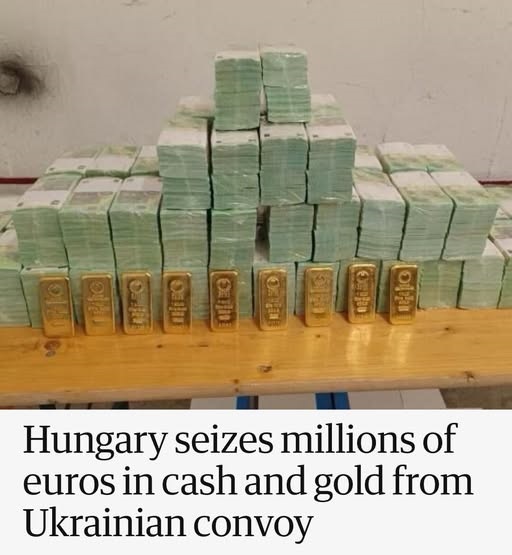
It’s a very regrettable situation; I’m sorry about what’s happening. And I think the same applies to the blocking of the €90 billion transfer. And it’s hardly Hungarian money, well, perhaps a tiny fraction! Again, it’s a lever to put pressure on Ukraine to resume the transit of Russian energy. It’s very regrettable.
As for Peter Magyar’s position, if he replaces Orban, there is still a big question mark here. However, he will definitely be more inclined to reach agreements within the framework of EU policy. Besides, his party is a member of the European People’s Party in Brussels, unlike Orban’s party, which was thrown out of it a few years ago.
So we cannot know the details, but I am absolutely convinced that he would pursue a more friendly policy toward Ukraine. (Although, to be honest, Tisza has not really spelled out what policy it would pursue toward Ukraine. One reason for this is the party’s strategic choice. The logic is this: since Orban is trying to use foreign policy to distract attention from failed domestic policy and a stagnating economy, the opposition should focus on exactly that. They believe, and so far this has worked, that such a strategy brings them more supporters.)
By the way, their candidate for foreign minister, Anita Orban (an unfortunate case of sharing a surname with the current prime minister), seems to be a positive figure. If Tisza wins, her priority will be improving relations with the EU and restoring relations with Poland.
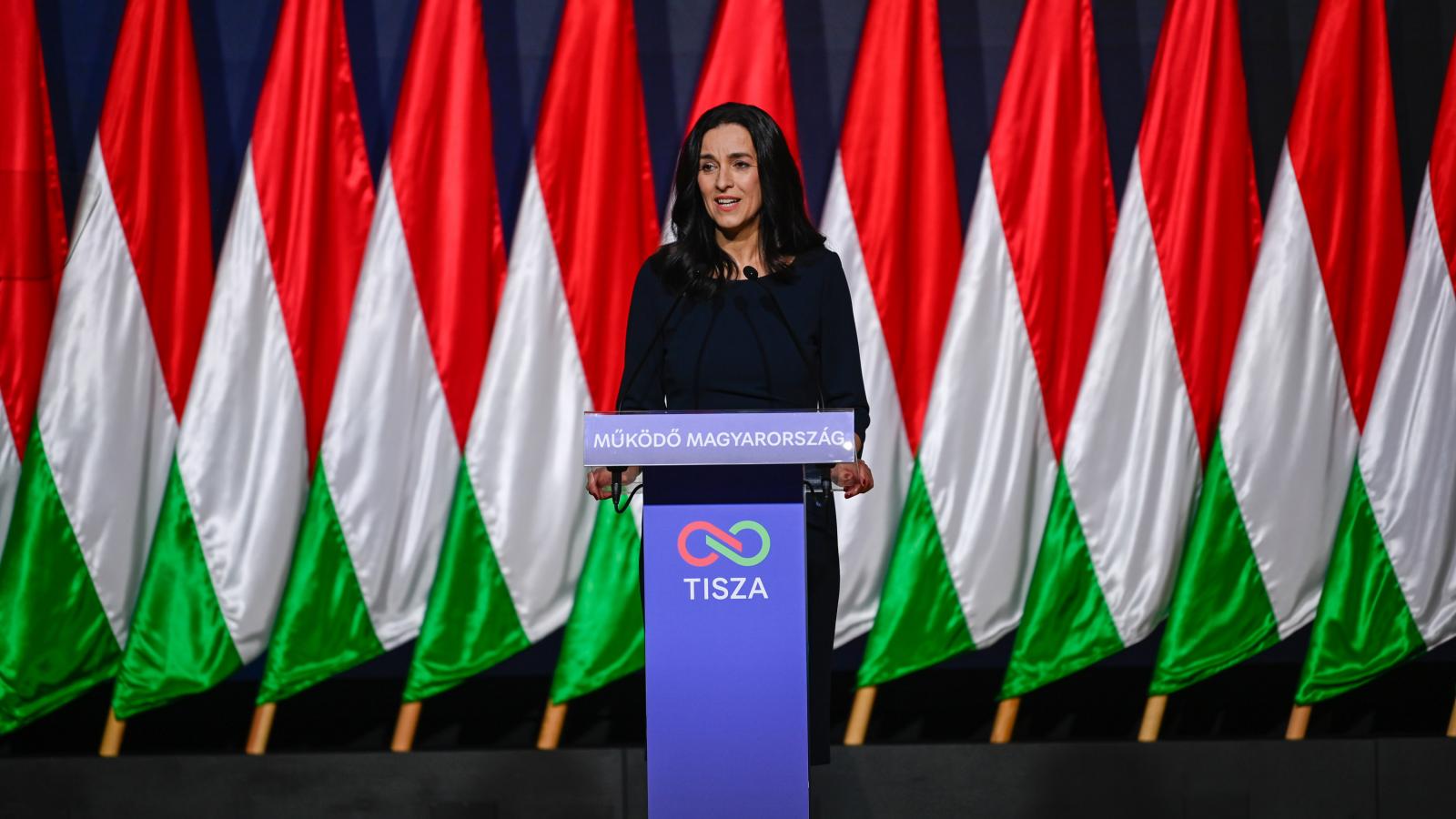
In addition, Anita Orban places priority on relations within the Visegrad Group, where Poland is the most important ally. Relations with Poland are currently at a low point, but if Tisza comes to power, this could be changed quickly. She has already said that her first visit would be to Warsaw.
Meeting between Hungarian opposition leaders and Donald Tusk. Peter Magyar introduces Anita: "Her surname, sorry, is Orban." "And my name is Donald!"
- Let us wish Tisza and the right Ms. Orban success. And now, to our favorites — Russian political strategists. I have heard from Ukrainian politicians that they have not only shown up in Hungary, but are not even hiding the fact that they are helping Viktor Orban and his party. Have you heard anything about this?
- Yes, I have seen this information, and I am trying to follow the issue. For example, a few days ago, Telex, one of the main opposition media outlets, published an article listing nearly 1,200 websites that are highly suspicious. And indeed, these Russian pseudo-diplomats have appeared in Hungary. Of course, they can influence the elections even from Moscow, so why come here at all? But, apparently, it is more effective for them if they are on the ground. So they have the necessary websites here, and especially bots. They post negative and simply emotional comments.
Another method of influence is AI-generated videos. As soon as Tisza releases a video, another one appears trying to mock the original. You know, by and large, we all live inside our own bubbles. If you are not deliberately following these groups, you are less likely to see such videos. But in certain bubbles, this deepfake material surfaces. And if you once liked something in that bubble, it may start showing up in your own feed as well. When that happens to me, I block it, and in general, I try to avoid it.
- One final question. As is well known, President Zelenskyy has lately developed a habit of making pointed remarks about Viktor Orban. I would like to hear your view: is he (albeit unintentionally) playing into Orban’s hands in his hysterical anti-Ukrainian election game? As an expert, tell us, is this the right response to Orban’s behavior?
- That is a good and important question, thank you for it. To be honest, such remarks seem somewhat counterproductive. First, there was that comment about Orban and his large belly. On the one hand, it is quite obvious that Orban has grown a large belly, and I understand Zelenskyy, but...

Photo: PMO
- ...but let Hungarians say that, not the president of Ukraine.
- Yes. And such remarks are easy to weaponize: look, Zelenskyy said something insulting about our prime minister! I sometimes watch the state media, mainly to understand how the propaganda machine works. And yes, they report it like this: Zelenskyy made such a comment about the prime minister’s physical shape and so on.
But the main issue was not that remark, but the threat Zelenskyy made the other day, when he said that Ukraine knows where Orban goes and moves around, where he eats and lives, and that his address could be passed on to the AFU...
I am very sympathetic to Ukrainians, and I understand their feelings, as well as Zelenskyy’s own feelings, given that he has to deal with Orban’s cynicism. But in the context of the ongoing election campaign, I will repeat: this may be somewhat counterproductive.
90 BILLION IN EU FUNDS, A DAMAGED PIPELINE, AN ARMORED CASH VEHICLE, AND A LOT OF BITTERNESS — THE MAIN PROBLEMS IN UKRAINIAN-HUNGARIAN RELATIONS RIGHT NOW
Let us return to Ukraine, because we are interested not only in who will become Hungary’s next prime minister, but also in a number of critically important issues that require resolution and that Viktor Orban’s regime is keeping in limbo.
First, there are the 90 billion euros in EU funds whose transfer to Ukraine, Hungary has been successfully blocking. There do appear to be some positive developments here: the EU has found a way to provide Ukraine with money while bypassing Orban and his Slovak ally Fico. This involves bilateral loans worth around 30 billion euros that do not require EU approval.
"That is indeed the case," Ivanna Klympush-Tsintsadze, chair of the Verkhovna Rada Committee on Ukraine’s Integration into the European Union, explains to Censor, commenting on this partial breakthrough. "It appears that a way has been found (through bilateral agreements) to partially unblock the process and give Ukraine access to the first tranches of funding without holding talks with Prime Minister Orban. And without giving him additional platforms for blackmailing Ukraine and the free world in general."
"We will not lose this money in any case, because the EU is allocating it," a Ukrainian diplomat told our outlet. "We simply need to find a way to get it. Give that task to three lawyers, and they will come up with 10 ways to solve the problem."
Retaining cautious optimism, we move on to the story of the armored cash vehicle. Here, things are more or less clear: this kind of pressure, with elements of an information-space hold-up, is typical of Orban’s regime. The question is different: will they return the seized money and the vehicle to Ukraine? And if they do, when?
An ex-diplomat familiar with Ukrainian-Hungarian relations commented on the situation for our outlet: "We need to wait two months. After that, they will return this money to us quietly and without fuss. Do you remember the ‘spy story’ a year ago? We picked up two of theirs near Uzhhorod. The next day, they grabbed one of our former employees, just a restaurateur, right in the middle of the street, in casual clothes. Plus another person who had absolutely nothing to do with the situation. That was only to show that ‘we can do it too.’ And while there was an investigation into one of them, the second was put on display within 24 hours. But spies are not put on display after 24 hours! They are held, with attempts to extract information from them, and are handed down a life sentence for causing harm. But what happened here? By now, everyone has long since forgotten about them."
"The essence of this scandal," the Censor.NET source continued, "is this: the hype has to happen today. Tomorrow, what we did no longer matters. It is like that old joke: ‘Oh, you do not have a daughter? Now go and prove it.’ Simple, but it works 100 percent. It is aimed at all segments of the population. They have no independent press there, just one continuous "United News"-style marathon. Whatever the TV tells them, that is what they believe. They do not watch CNN."
If one listens to the Hungarian authorities (and assumes they are not bluffing), the return of the money and the armored cash vehicle is being directly tied in Budapest to the restoration of the Druzhba oil pipeline’s operation. Orban & Co. insist that Zelenskyy is playing them for fools, that Druzhba is not damaged, and that even images from space prove it. Orban has even complained to the European Commission — despite the fact that, under the Orban playbook itself, the European Union is Hungary’s enemy number two! Fico has also joined the pressure campaign, saying that Ukraine did not allow the EU ambassador to inspect the damaged Druzhba pipeline, and that is why he does not believe it.
Judging by all this, Zelenskyy does not care what Orban thinks of him or whether Fico believes him. That said, the Ukrainian president’s responses in return have come across as far too edgy (and here one wonders whether this is simply a refusal to hold back or someone’s advice). And while the remark that Orban and Fico expressed no gratitude whatsoever to Ukraine for restoring Druzhba, only claims that we somehow owe them, can still be read as an allusion to the now-legendary Oval Office row at the White House a year ago, the line about Orban’s address for the AFU was a blunder and a serious one.
"The only people who are likely to appreciate this are the domestic audience here in Ukraine, as a display of wit," Ivanna Klympush-Tsintsadze believes. "But if we keep doing this, we will simply be feeding that narrative and giving them additional material to use in Hungary’s domestic political space. Yes, all Ukrainians are hurt and outraged by what is currently being poured on Ukraine as part of the Hungarian government’s election campaign. But we definitely should not be adding fuel to the fire. I am convinced that many of our European colleagues feel just as strong an urge to speak out and may even have more sharpness and clarity in their wording than the president of our country does. But they do not do so, precisely so as not to provide fodder for this campaign."

The lawmaker speaks cautiously about the situation surrounding Druzhba:
"I hope the Ukrainian government has irrefutable evidence that our capacity to transport oil through this pipeline was damaged. And perhaps Ukraine should now be working with its European partners, providing as much information as possible about what it is doing to carry out these repairs... Although I have long argued (and our party has registered a corresponding initiative) that this oil pipeline should be shut down. The authorities did not support that. So, there is every reason to believe that this is indeed the case. That the pipeline was damaged."
A separate concern is whether, as the elections draw closer, Orban’s team might decide to move from accusations to concrete provocations. Censor.NET sources in Hungary assured us that these fears are unfounded: such actions, they say, are simply not characteristic of Hungarian society. Even the story with the armored cash vehicle, they argue, is a state-to-state conflict, and Orban will not target ordinary Ukrainians...
Ukrainian sources interviewed by the outlet are less optimistic. More than once, we heard the phrase: "Anything can happen."
"I very much hope it does not come to a situation in which Ukrainians find themselves in danger," says Vadym Halaichuk, first deputy chair of the Verkhovna Rada Committee on Ukraine’s Integration with the European Union. "But given the decisions that are being made, anything is possible. Time and again, we have seen in the history of different countries how such sentiments were stirred up, amplified, and entrenched in the public consciousness. And then they had very sad consequences. Some national or racial group would be singled out..."
"The right policy on our part," Halaichuk continues, "is to warn citizens to be cautious. Absolutely nothing can be ruled out. We know how the Kremlin operates, and especially Kiriyenko’s team, whose work in electoral processes we know from Moldova and other countries."
We should not do anything that could be perceived as an attempt by Ukraine to interfere in the Hungarian elections. And that, of course, limits what we can say and when."
In the same vein, though more aphoristically, a well-informed former diplomat commented on how the Ukrainian authorities should conduct themselves during the month remaining before the elections in Hungary:
How should they behave? Do not behave in any particular way, sit quietly, and do not act on an "eye for an eye" basis.
It is hard to believe that staying quiet will prove possible. Suffice it to say that in the Foreign Ministry’s latest comment on Hungary’s actions, the usual vocabulary included "shameful," "worthless," and "Trojan horse."
The problem is that, under the current circumstances, a month is a long time, Orban’s party is trailing its rivals badly, and it appears ready to resort to emergency measures. A hot Hungarian spring lies ahead.
"Most likely, all this will not end on 12 April, and there will be a second round," Ivanna Klympush-Tsintsadze sums up melancholically. "We also need to understand that this csárdás will keep playing at least until the end of April. After that, we will be able to decide how to rebuild these relations."
Yevhen Kuzmenko, "Censor.NET"


