ENG




11751 visitors online
In recent developments concerning Georgia, President Volodymyr Zelenskyy has expressed Ukraine's readiness to foster stronger ties with Georgia, particularly highlighted during a friendly yet unspecified conversation with Georgian Prime Minister Irakli Kobakhidze. This diplomatic outreach aligns with broader geopolitical shifts as French President Emmanuel Macron urged the South Caucasus to embrace European integration, distancing from Russian influence. Notably, Georgia's humanitarian gesture of extending the stay of Ukrainian citizens highlights its commitment to supporting Ukraine amid ongoing conflicts with Russia. Furthermore, European Court rulings and partnerships further emphasize Georgia's strategic role in geopolitical negotiations. Keywords: Georgia, Ukraine, European integration, Macron, Zelenskyy, diplomacy, geopolitical shifts.
What is the current political situation in Georgia regarding elections?
Georgia's political landscape is tense with opposition and some international observers not recognizing recent parliamentary election results as free and fair. Protests have erupted in Tbilisi and other cities against alleged election falsifications, with the government facing criticism for its handling of demonstrations.
How is Georgia responding to Russian influence in the region?
Georgia has been taking steps to reduce Russian influence, including European integration efforts and aligning with international partners like Ukraine. Leaders like Macron have called for South Caucasus countries to join Europe in building a future free from Russian control, reflecting Georgia's geopolitical stance.
What are the implications of Zelenskyy's engagement with Georgia?
President Zelenskyy's engagement with Georgia signifies Ukraine's interest in strengthening its political and economic ties with the region. This includes collaborative efforts on foreign policy and support in international platforms, contributing to a unified stance against common challenges such as Russian aggression.
What is the humanitarian stance of Georgia towards Ukrainians?
Georgia has shown considerable humanitarian support towards Ukrainian citizens by extending their right to stay in Georgia without a visa for an additional year. This gesture reflects Georgia's solidarity with Ukraine and its people amidst ongoing conflicts with Russia, emphasizing their shared geopolitical concerns.
What role does the European Court of Human Rights play in Georgia's situation?
The European Court of Human Rights has ordered Russia to compensate Georgia for human rights violations following the 2008 war. This decision highlights the legal and moral support Georgia receives from European institutions in its efforts to address past grievances and seek justice for affected citizens.
How is the relationship between Ukraine and Georgia evolving?
The Ukraine-Georgia relationship is evolving with improved diplomatic exchanges and discussions on mutual cooperation to counter Russian influence. This includes publicized meetings, appointment of new ambassadors, and combined efforts in addressing regional stability and supporting democratic developments.
News Georgia
 Drunk Russian shouted "Glory to Russia" and relieved himself on café patrons in Georgia: he will be deported. VIDEO A court in Tbilisi sentenced a Russian citizen to 15 days in detention for relieving himself on café patrons from the balcony of a residential complex. After serving his sentence, the man will be deported from Georgia and banned from entering the country for three years. 9 861 30 Previously in trend: russians abroad
 Turkey, Georgia and Azerbaijan prepare joint military exercises on infrastructure protection Azerbaijan, Turkey, and Georgia are preparing to conduct the joint military exercise "Eternity-2026" to protect energy and transportation infrastructure. 1 761 6
 Russians are fleeing to Georgia in droves, unwilling to fight in war against Ukraine: record-long lines at border due to rumors of mobilization Tens of thousands of Russians are heading to Georgia amid rumours of a possible new wave of conscription following the September elections to the Russian State Duma. The number of people seeking to leave the country has risen sharply – Russians fear being conscripted and sent to fight in the war... 4 614 24 Previously in trend: Mobilization in Russian Federation
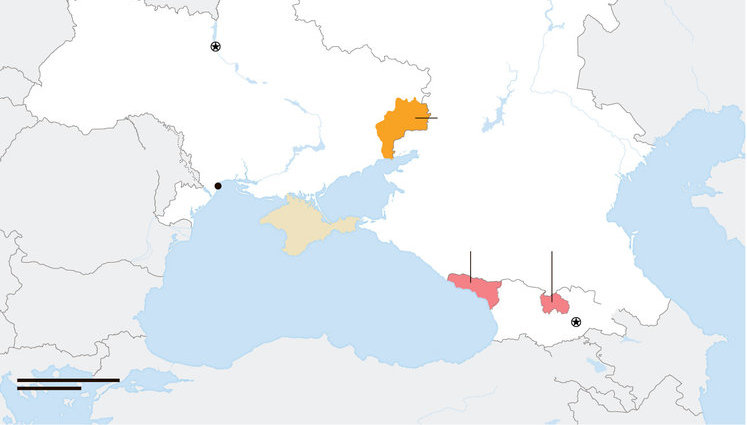
 Georgia names condition for restoring diplomatic relations with Russia Georgia will not restore diplomatic relations with Russia until Moscow reviews its decision to recognise Abkhazia and South Ossetia. 6 398 16
 Georgian volunteers Igor Bekurashvili and Giorgi Damenia have been killed in war in Ukraine, - media Two volunteers from Georgia were killed during Russia’s war against Ukraine. 5 541 15 Previously in trend: losses of Ukraine
 Ukraine is ready to move towards mutually beneficial relations with Georgia, - Zelenskyy President Volodymyr Zelenskyy congratulated Georgia on Independence Day and announced the readiness to build mutually beneficial relations between the countries. 1 046 15 Previously in trend: Ukraine and Georgia relationships
 Macron has called on South Caucasus to break free from Russia’s influence and choose European path French President Emmanuel Macron called on the South Caucasus to move beyond the logic of imperial spheres of influence and build a future in close partnership with Europe. 2 475 13 Previously in trend: Macron’s statement after the Trump-Zelenskyy argument Armenia and Russia relations
 Georgia’s Prime Minister on his conversation with Zelenskyy: friendly, but no details disclosed Georgian Prime Minister Irakli Kobakhidze commented on his first meeting with Ukrainian President Volodymyr Zelenskyy, describing it as friendly and substantive. 1 521 8 Previously in trend: Ukraine and Georgia relationships
 Zelenskyy meets Georgian Prime Minister Kobakhidze: "There are indeed open issues between our countries" President Volodymyr Zelenskyy held a meeting with Georgian Prime Minister Irakli Kobakhidze. 1 627 6 Previously in trend: Ukraine and Georgia relationships
 Speaker of Georgian Parliament called Zelenskyy ungrateful person The Speaker of the Parliament of Georgia, Shalva Papuashvili, made harsh remarks about the President of Ukraine, Volodymyr Zelenskyy, calling him an ungrateful person. 7 315 37 Previously in trend: Ukraine and Georgia relationships
 Georgia has extended Ukrainians’ right to stay in country for one year The government of Georgia has extended the right of Ukrainian citizens to stay in the country without a visa for one year. 821 2 Previously in trend: Ukraine and Georgia relationships
 Zelenskyy appoints Mykhailo Brodovych as Ukraine’s ambassador to Georgia President Volodymyr Zelenskyy has appointed a new Ambassador of Ukraine to Georgia. Mykhailo Brodovych has been appointed to the post. 1 285 8 Previously in trend: Appointment of Ukrainian ambassadors
 Georgia signed agreement on mechanism for reparations from Russian assets for Ukraine Georgia unexpectedly signed an international agreement establishing a mechanism to distribute reparations received from Russian assets among Ukrainian citizens and companies. 2 494 5 Previously in trend: Use of frozen assets of Russian Federation Reparations from Russia
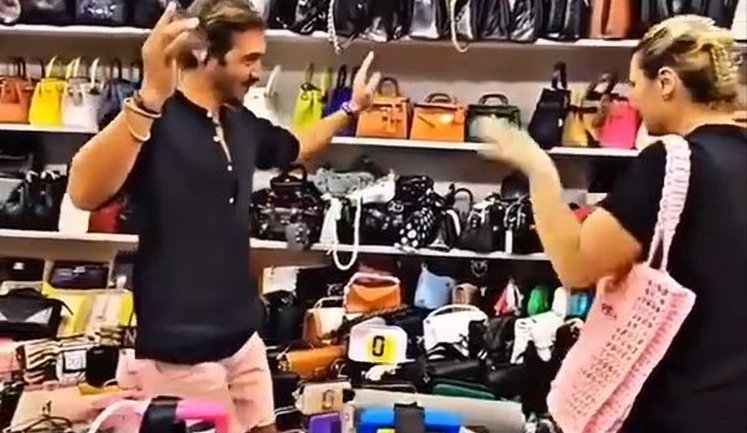
 Salesman in Georgian shop serves customer from Russian Federation: "Glory to Ukraine!... We don’t speak Russian. Russian warship, go f#ck yourself!". VIDEO A salesperson in a Georgian shop greeted a customer from Russia with the slogan "Glory to Ukraine," stated that Russian was not spoken in the establishment, and switched to English. 23 221 59
 Georgian soldiers in Armed Forces of Ukraine captured two Russian infantrymen in Vovchansk direction. VIDEO A unit of Georgian fighters serving in Ukraine’s Defense Forces captured two Russian infantrymen during a clearance operation on the Vovchansk front in Kharkiv region. 7 336 10 Previously in trend: captured occupiers
 ECHR orders Russia to pay Georgia more than 253 million euros for human rights violations after the 2008 war The European Court of Human Rights has ruled that Russia must pay Georgia more than €253 million in compensation for systematic human rights violations after the 2008 war. More than 29,000 victims will receive compensation. 1 096 3 Previously in trend: ECHR ruling on Russia
 65 Ukrainians stuck on Russian-Georgian border returned to Ukraine - MFA 65 citizens were returned to Ukraine from the buffer zone on the Russian-Georgian border. 1 893 7 Previously in trend: Ukrainians on the border between Russia and Georgia
 23-year-old Georgian citizen Valerii Badzahua killed defending Ukraine. PHOTO Valerii Badzahua, a 23-year-old Georgian citizen who joined the Ukrainian Armed Forces before the full-scale invasion, has died fighting against Russia. 4 479 8 Previously in trend: losses of Ukraine foreign volunteers in the armed forces
 Russia is using deportation of Ukrainians through Georgia as tool of pressure. We propose to transport them directly to border of Ukraine, - Sybiha Foreign Minister Andrii Sybiha commented on the deportation of Ukrainian citizens by Russia to the border with Georgia. 5 755 5 Previously in trend: Ukrainian citizens in Russia Deportation of Ukrainians
 Ukrainians deported from Russia held in poor conditions at Georgia border – MFA. PHOTO Several Ukrainian citizens are currently held at the Russia-Georgia border after being deported from Russia following their imprisonment. They have been kept in inadequate conditions for several days. 4 363 6 Previously in trend: Ukrainian citizens in Russia Deportation of Ukrainians
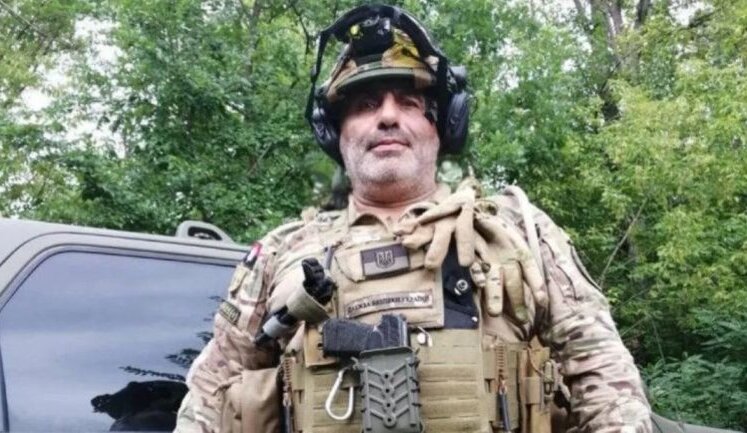
 Kyiv bids farewell to Georgian volunteer fighter Vano Nadiradze, who fought on side of Ukraine in SOF. PHOTOS On 25 June in Kyiv, a farewell ceremony was held for Georgian volunteer Lieutenant Colonel Vano Nadiradze, who led the Georgian group within Ukraine’s Special Operations Forces. He had been fighting alongside the Armed Forces of Ukraine since the beginning of Russia’s full-scale invasion. 5 277 12 Previously in trend: losses of Ukraine foreign volunteers in the armed forces
 Zelenskyy congratulates people of Georgia on Independence Day: Ukraine will always stand by you in your pursuit of free life President of Ukraine Volodymyr Zelenskyy congratulated the people of Georgia on Independence Day. 1 022 17
 Georgian volunteer Tarbey Arkania killed in war in Ukraine. PHOTO Tarbey (Tabo) Arkania, a Georgian volunteer, was killed in the battles for Ukraine, he fought in the Pokrovsk direction. 5 066 17 Previously in trend: losses of Ukraine
 US has not changed its policy towards Georgia - State Department The US State Department has officially commented on the Trump administration's position on Georgia. 4 153 3
 EU suspends visa-free travel for Georgian diplomats and officials The EU Foreign Affairs Council has decided to suspend the visa-free regime for Georgian officials and diplomats. 1 566 13
 OSCE PA Chairperson-in-Office Kauma postpones visit to Georgia. Zurabishvili called decision wise President of the OSCE Parliamentary Assembly Pia Kauma has decided to postpone her visit to Georgia. Zurabishvili believes this decision is correct. 848 0
 North Baltic Eight countries call on Georgia to hold new presidential elections The countries of the North Baltic Eight have called for new elections in Georgia. 3 009 26
 Zurabishvili has left presidential palace: I take legitimacy with me. VIDEO The Georgian parliament is currently in the process of inaugurating the new president, Mikheil Kavelashvili. In turn, the current head of state, Salome Zurabishvili, said she was leaving the presidential palace. This was reported by Censor.NET with reference to Echo of the Caucasus. 11 975 117
 Zelenskyy thanks US for sanctions against Georgian oligarch Ivanishvili President of Ukraine Volodymyr Zelenskyy thanked the United States for sanctions against Georgian oligarch Bidzina Ivanishvili. 2 104 20
 Hungary and Slovakia blocked EU sanctions against Georgia - Josvjak Debate on the situation in Georgia ends in the European Union. Slovakia and Hungary are blocking the introduction of sanctions. 3 945 28 Previously in trend: EU sanctions
 Zurabishvili made her first statement after Kavelashvili was announced as Georgia’s new president Georgia's current president, Salome Zurabishvili, has spoken out on the approval of ex-footballer Mikheil Kavelashvili as the next head of state, who was the only candidate. 21 748 90
Ruling party’s candidate Mikheil Kavelashvili is declared winner of presidential election in Georgia Mikheil Kavelashvili won the presidential election, the legitimacy of which is not recognized by the current head of state and the opposition. 8 674 77
 Protests in Georgia: coffin with image of oligarch Ivanishvili burned near parliament building. VIDEO Protesters in front of the Georgian parliament burned a symbolic coffin depicting the founder of the ruling "Georgian Dream" party, Bidzina Ivanishvili. 4 083 14
Ambassador: EU prepares sanctions against Georgian authorities The European Union is conducting preparatory work on sanctions against the Georgian authorities. 1 150 11
 Zelenskyy has imposed sanctions against part of Georgian government that "surrenders country to Putin". VIDEO President Volodymyr Zelenskyy signed a decree imposing sanctions on part of the Georgian government. 2 724 20
 Zelenskyy instructed to prepare sanctions decisions against Georgian authorities. VIDEO In a video address, President Volodymyr Zelenskyy announced the introduction of sanctions against the Georgian authorities. 2 594 19
In Georgia, security forces raided offices of opposition parties, detained several politicians In Georgia, law enforcement officers searched the offices of opposition parties, including the offices of the Unity - National Movement and Coalition for Change parties. Several politicians were detained, including Nika Gvaramia. 1 536 15
 Protests in Georgia continue for 5 days: police use water cannons and tear gas. VIDEO Protests against the suspension of European integration are continuing in Georgia for the fifth day. The security forces use tear gas, and protesters use fireworks. 5 517 34
Georgian government implements "Belarusian scenario" but frightens citizens with mythical "Ukrainian scenario" - Ukraine’s Foreign Ministry The Ministry of Foreign Affairs of Ukraine condemns the ongoing human rights violations and the use of force against peaceful demonstrators in Georgia. 2 986 19
Protests in Georgia continue: clashes between protesters and police continued at night For the fourth night in a row, clashes between protesters and police took place in the Georgian capital Tbilisi. Large-scale protests continued in other cities across the country. 4 579 12
Protests continue in Georgia for fourth day, protesters move to Tbilisi State University. PHOTOS Protests against the disruption of European integration continue in Georgia, despite violent attempts to disperse them. The protests continue for the fourth day. 6 442 21
 There will be no Ukrainian Maidan scenario in Georgia - Prime Minister Kobakhidze Georgian Prime Minister Irakli Kobakhidze said against the backdrop of brutal suppression of protests that the country's authorities will not allow a repeat of the Ukrainian Euromaidan scenario. 16 504 156
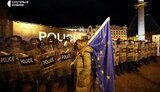 Georgian police violently disperse protesters in Tbilisi and detain over 100 people. VIDEO On the night of 29-30 November 2024, Georgian security forces dispersed protesters gathered on Rustaveli Avenue in Tbilisi using force and special equipment. Police detained 107 protesters 6 350 71
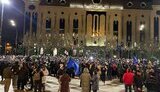 Rallies begin in Tbilisi after authorities refuse to negotiate Georgia’s accession to EU. PHOTOS In Tbilisi and other cities of Georgia, people gathered for a rally after the country's Prime Minister Irakli Kobakhidze announced that he would not be negotiating to join the EU until 2028. 7 830 32
 Protests in Georgia: Security forces beat journalists. VIDEO During the protests in Georgia , security forces used force against journalists, resulting in the injury of a dozen and a half media professionals. 12 402 84
In Georgia, police brutally disperse protesters and carry out mass arrests. Security forces use rubber bullets and "catch" civilians even in pharmacies. VIDEO Clashes broke out between law enforcement officers and protesters in the centre of the Georgian capital Tbilisi. The security forces did not allow the protesters to enter the parliament building and violently dispersed them. 17 409 131
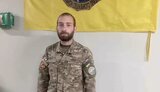 Defending Ukraine, volunteer from Georgia, Levan Lokhishvili, was killed. PHOTO On 19 November, 24-year-old Georgian volunteer Levan Lokhishvili was killed in a homemade drone explosion in Kherson region. 5 654 15
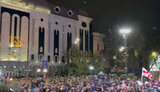 Georgian opposition starts rally near parliament building. VIDEO In Tbilisi, a protest action organised by opposition parties began in front of the parliament building. 6 243 27
Page 1 of 5
more news