



Georgia’s Prime Minister on his conversation with Zelenskyy: friendly, but no details disclosed
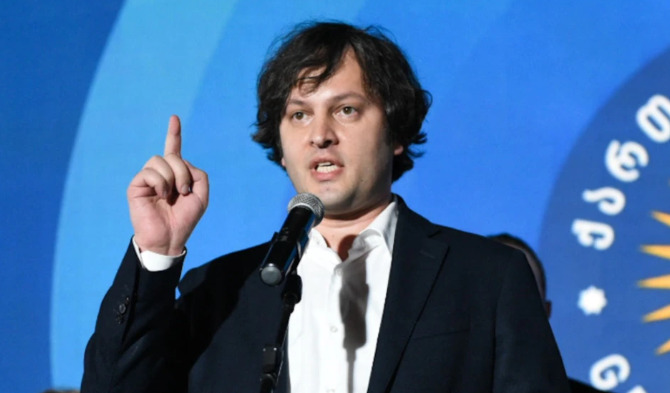
Georgian Prime Minister Irakli Kobakhidze commented on his first meeting with Ukrainian President Volodymyr Zelenskyy, describing it as friendly and substantive.
According to Censor.NET, this is reported in an article by Interpressnews.
According to the Georgian prime minister, the details of the conversation are not being disclosed due to the closed nature of the talks. At the same time, he emphasized the generally positive nature of the dialogue between the parties.
The first conversation—no details, but a positive sign
Kobakhidze noted that he could not disclose the details of the meeting, but described it as constructive.
"I can't say anything about the content, since it was a closed-door meeting, but overall I can say that our conversation was friendly and interesting," he emphasized.
The prime minister also clarified that the Ukrainian president had initiated the talks, and the Georgian side had promptly agreed to the meeting.
The context of the complex relationship between Kyiv and Tbilisi
During the conversation, the parties discussed bilateral relations. Kobakhidze emphasized the historic friendship between the two nations and the need to preserve it.
The meeting took place on the sidelines of the European Political Community summit in Yerevan. It was the first face-to-face meeting between Zelenskyy and Georgia’s new prime minister.
At the same time, relations between Ukraine and Georgia have remained tense in recent years. Among the reasons are the Georgian government’s stance on Russia’s war against Ukraine, as well as political statements regarding the risk of a second front opening up.
It is also worth noting that in 2024, the Ukrainian side imposed sanctions against Kobakhidze and a number of representatives of Georgia’s ruling party.
- As a reminder, during his visit to Yerevan, Zelenskyy met with European Commission President Ursula von der Leyen, Slovak Prime Minister Robert Fico, Polish Prime Minister Donald Tusk, Canadian Prime Minister Mark Carney, Armenian Prime Minister Nikol Pashinyan, and European Council President António Costa.


