



EU working hard with Orban on 90 billion loan for Ukraine, - Kallas
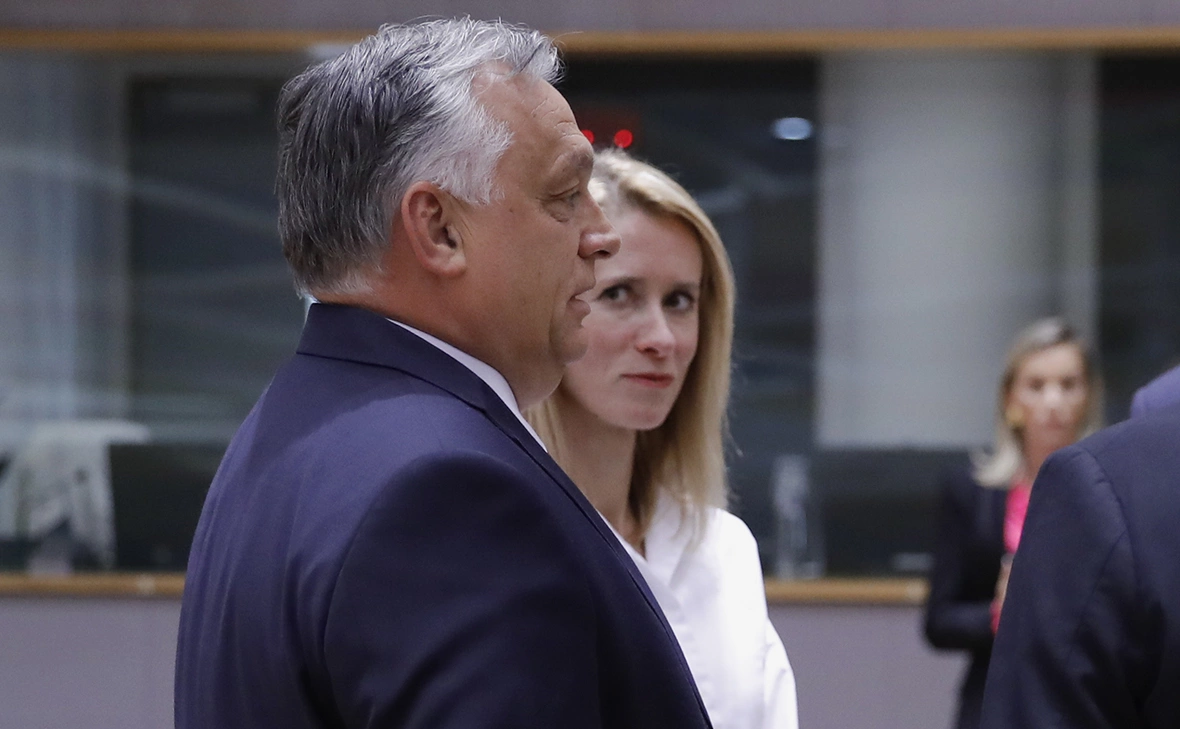
European Council President António Costa is working tirelessly to resolve the issue of Hungary blocking a 90 billion hryvnia loan to Ukraine.
This was stated by the EU High Representative, Kaja Kallas, according to Censor.NET, citing Interfax-Ukraine.
Details
Before the start of the European Council meeting, she noted that President Costa is working with Hungarian Prime Minister Orbán to find a solution.
"There are alternatives, but we'll have to see how things go, and in fact, this also requires political courage from all of us," the diplomat said.
Kallas noted that in December, all EU leaders had approved a loan for Ukraine.
"That's the problem. They're withdrawing from the agreement, and we also have a clause in our contracts stating that we cooperate in good faith—and they're certainly not acting in good faith. But the question for us is how we can actually enforce the agreement we signed in December," she explained.
According to Kallas, during Monday’s meeting of the EU Foreign Affairs Council, ministers "strongly urged Hungary to agree and proposed a solution, noting that if Hungary has problems with oil, its neighbor Croatia could also supply that oil."
"So it was a constructive approach, but I don't think people are that rational during elections. As I said before, President Koshta is working on solutions. I also spoke with him yesterday, and we'll see how we can find a way out," she said.
The EU High Representative is also convinced that "it is time to demonstrate our support for Ukraine, because the war in the Middle East is linked to the war in Ukraine, and, unfortunately, Russia stands to gain from the war in the Middle East."
What happened before?
- It was previously reported that the European Commission is seeking to provide Ukraine with a loan of 90 billion euros, despite opposition from Hungarian Prime Minister Viktor Orbán.
- Consequently, efforts are underway to find a way to override his veto, as Ukraine is set to run out of money in March. At the same time, Europeans are reluctant to put pressure on Prime Minister Viktor Orbán during the election campaign.
-
Earlier, European Commission President von der Leyen and European Council President Costa sent a letter to Zelenskyy offering Ukraine technical and financial assistance to resume oil supplies to Hungary and Slovakia via the Druzhba pipeline.
- Zelenskyy told EU leaders that it will take about a month and a half to restore transit through the Druzhba pipeline following the Russian strikes.
Russia's attack on the Druzhba oil pipeline
- On January 7, a piece of infrastructure was damaged in Brody, Lviv region, as a result of a Russian attack. Naftogaz reported that the Russian military had attacked a critical infrastructure facility in western Ukraine. A fire broke out, and operations at the facility were halted.
- According to the publication Enkorr, the facility in question is located in the city of Brody in the Lviv region and is connected to the Druzhba oil pipeline.
- On February 12, Ukrainian Foreign Minister Andrii Sybiha stated that Russian oil supplies via the Druzhba pipeline had been suspended since January 27 due to a Russian attack. He also said that Budapest was preparing to lodge a complaint regarding transit issues.
- The governments of Hungary and Slovakia have announced a suspension of diesel fuel exports to Ukraine until Russian oil supplies resume via the Druzhba pipeline.
-
On March 11, the Ukrainian Ministry of Foreign Affairs stated that a group of Hungarian citizens had entered Ukrainian territory without official status or scheduled official meetings.
-
President Zelenskyy stated that he is unaware of what the Hungarian delegation is doing in Ukraine.
-
Subsequently, Hungarian Foreign Minister Péter Szijjártó accused Zelenskyy of lying and published a Hungarian diplomatic note indicating that Budapest had requested a meeting between Cepec and Ukrainian Minister Denys Shmyhal.
-
At the same time, the Foreign Ministry's note indicates that the Hungarian side did not coordinate its delegation's visit to the Druzhba oil pipeline with Ukraine and received proposals from Kyiv regarding alternative dates for the visit.


