



How CIA and MI6 warned of Russian invasion and why no one believed them, - Guardian
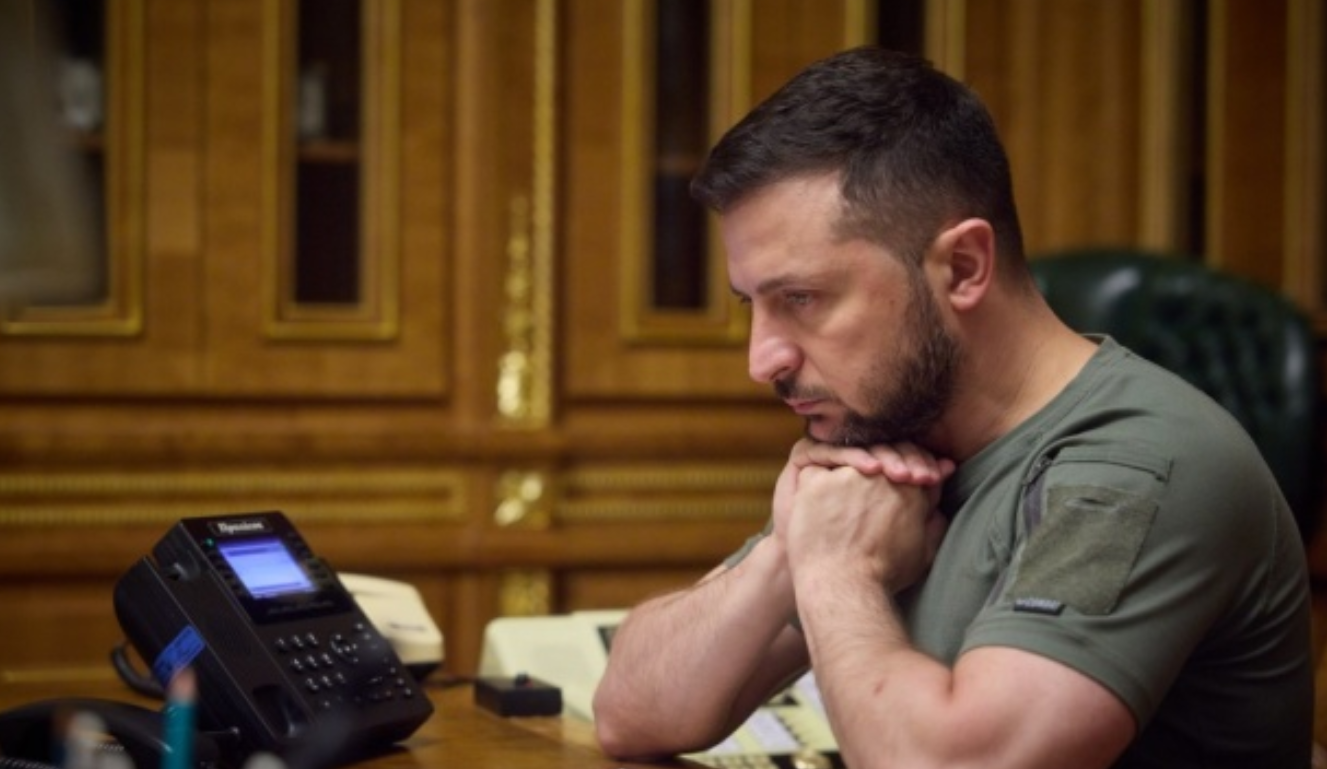
American and British intelligence agencies warned Europeans and Ukraine about a full-scale invasion.
This was reported by The Guardian, according to Censor.NET.
What is known?
Journalists spoke with more than 100 senior intelligence officials and other sources from many countries.
"This exclusive account details how the US and Britain uncovered Vladimir Putin’s plans to invade, and why most of Europe – including the Ukrainian president, Volodymyr Zelenskyy – dismissed them," the article notes.
According to the authors, in November 2021, American intelligence spent weeks picking up signals that Putin might be planning an invasion of Ukraine. Then-US President Joe Biden sent Director Burns to warn Putin that the economic and political consequences of such an invasion would be catastrophic.
During one of their phone conversations, Burns told Putin that the US believed Russia was preparing to invade Ukraine, but Putin ignored him and continued to express his own views. Russian intelligence, Putin said, had informed him that an American warship equipped with missiles capable of reaching his location in just a few minutes was hiding beyond the Black Sea horizon. He suggested that this demonstrated Russia's strategic vulnerability in a unipolar world dominated by the US.
The CIA and British intelligence MI6 were right about the invasion scenario, but did not foresee that Russia would be unable to quickly capture Ukraine.
"Most crucially, the Ukrainian government was thoroughly unprepared for the oncoming assault, with President Volodymyr Zelenskyy spending months dismissing increasingly urgent American warnings as scaremongering, and quashing last-minute concerns among his own military and intelligence elite, who eventually made limited attempts to prepare behind his back," the journalists write.
Planning
In the spring of 2021, Russian troops began building up their forces along Ukraine's borders and in occupied Crimea, ostensibly for training exercises.
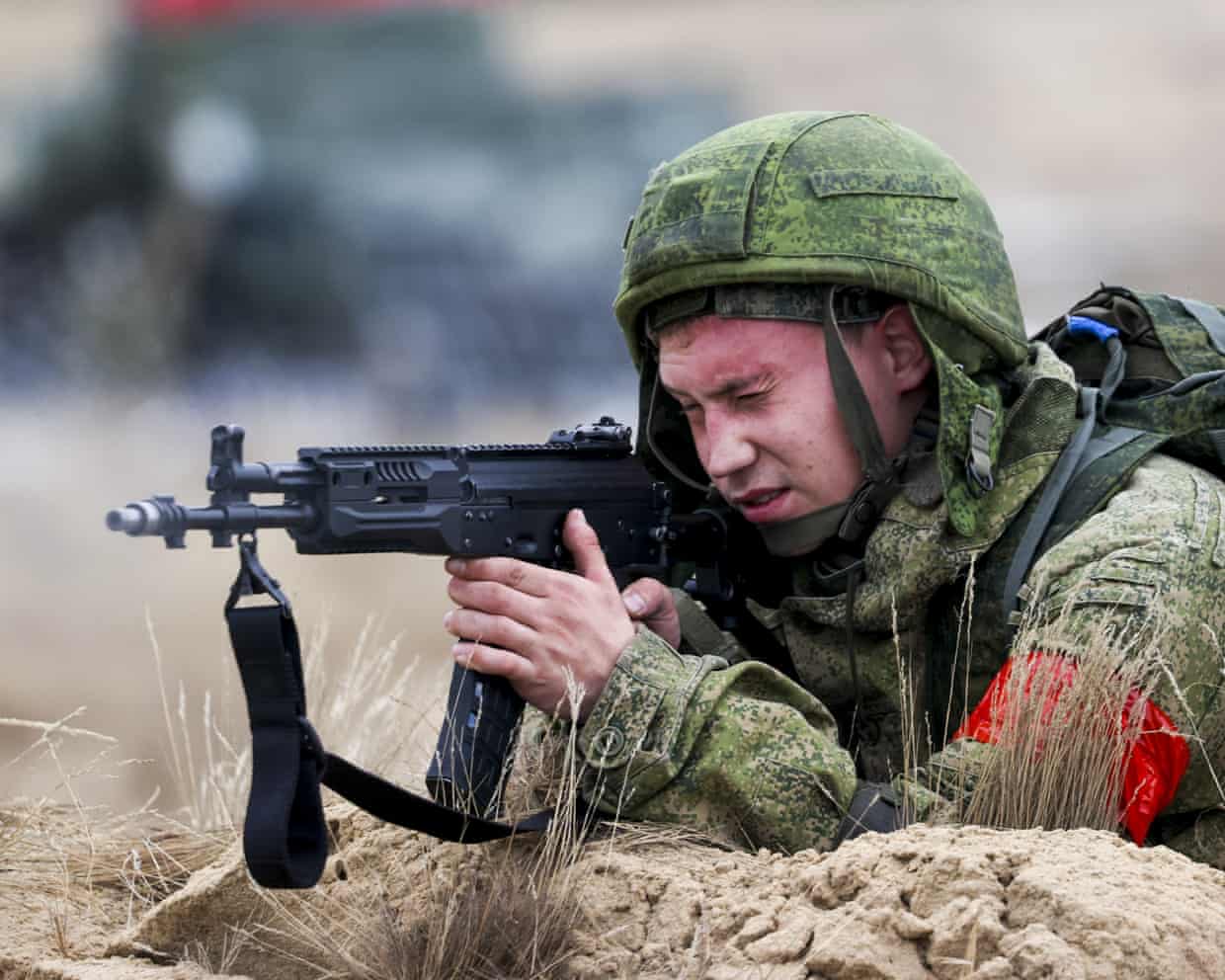
When Biden was informed of the intelligence, he was alarmed and called Putin, calling for de-escalation.
"He raised concerns about the buildup and called for a de-escalation, as well as proposing a summit in the coming months, which we knew would be of interest to Putin," said Avril Haines, Biden’s director of national intelligence.
The summit proposal seemed to have successfully defused the threat, and when the two leaders met in Geneva in June 2021, Putin barely mentioned Ukraine.
Four weeks after the Geneva summit, Putin published a long, rambling essay on the history of Ukraine, in which he went back as far as the ninth century to argue that "true sovereignty for Ukraine is only possible in partnership with Russia."
In September, Russian troops began another build-up along Ukraine's borders; within a month, it had reached a level that was difficult to ignore, the article says.
At the time, it was assumed that Russia might attempt to formally annex Donbas or try to break through a land corridor across southern Ukraine that would connect Donbas with occupied Crimea.
"Now, it looked as if Putin could be planning something bigger. He wanted Kyiv," the authors note.
In November 2021, Biden sent US National Intelligence Director Haines to Brussels. There, at the annual meeting of the heads of intelligence services of NATO member countries, she expressed the US's belief that there was now a real possibility of a massive Russian invasion of Ukraine. Richard Moore, head of the British MI6, supported her.
However, the main reaction in the room was scepticism. Some rejected the idea of an invasion.
Later, Biden ordered his team to share as much intelligence as possible with allies to help them understand why Washington was so concerned. He also proposed declassifying some of the information so that it would become publicly available. This had to be done carefully to avoid revealing how Washington had obtained the evidence.
Ukraine was warned
At the end of October 2021, the CIA and MI6 sent memos to Kyiv outlining their alarming new intelligence assessments. The following week, after Burns' visit to Moscow, two American officials who were on the trip broke away from the delegation and flew to Kyiv, where they briefed two senior Ukrainian officials on US concerns and the CIA director's conversations in Moscow.
"We basically said: ‘We will follow up. You’ll see the intel. This is not a normal warning, this is really serious. Trust us,’" said Eric Green, one of the US officials. The Ukrainians looked sceptical.
In mid-November, British Defence Secretary Ben Wallace visited Kyiv and told Zelensky that London believes a Russian invasion is now a question of "when" rather than "if." He urged Zelenskyy to begin preparing the country for war.
Zelenskyy seemed to listen passively, according to the article.
The publication writes that Zelenskyy no longer believed he could reach an agreement with Putin, but feared that public talk of an even bigger war would cause panic in Ukraine.
"This, he suspected, was Putin's plan all along. He grew increasingly irritated at the Americans and British, who alongside the private warnings were starting to talk about the invasion threat in public. In November, he dispatched one of his most senior security officials on a top-secret mission to a European capital to deliver a message to political leaders via intelligence channels: the war scare is fake, and is all about the US trying to leverage pressure on Russia," the authors write.
The Guardian quotes former SSU head Bakanov, who said that for a year before the full-scale invasion, Russia recruited Ukrainian civil servants and politicians, hoping that they would act as a fifth column during the invasion.
"Still, the prevailing mood in Kyiv was that the US warnings were overegged. Ukraine had been fighting Russian proxy forces in the Donbas for eight years, but the idea of a full-fledged war – with missile attacks, tank columns and a march on Kyiv – seemed unimaginable," the authors note.
A European intelligence representative said that Ukraine considered this to be "sabre-rattling" and that "the absolute maximum possible was a skirmish in the Donbas."
Ten weeks before the invasion
By December 2021, the US and the UK had gained sufficient clarity on what Putin's military plan might look like.
According to Russian assessments obtained and compiled by Western intelligence services, Moscow believed that only 10% of Ukrainians would fight the invasion, while the rest would either actively support or reluctantly accept the Russian takeover.
At the same time, the publication notes, even 10% of Ukraine's population amounted to 4 million people. The forces that Russia had amassed were insufficient to combat such resistance.
Washington assumed that Putin would be successful, at least in the initial stages of the war.
Six weeks before the invasion
In the first half of January 2022, the US received more detailed information about the plans: Russian troops were to invade Ukraine from several directions, including from Belarus, airborne forces were to land at Hostomel airport near Kyiv to organise the capture of the capital, and there was also a plan to assassinate Zelenskyy. Preparations were also underway for ground operations after the invasion, with lists being compiled of "problematic" pro-Ukrainian figures to be interned or executed, and pro-Russian figures to be brought into the Ukrainian government.
CIA Director Burns flew to Kyiv to personally inform the Ukrainian president of what the CIA feared would happen, but the reaction was not what he had hoped for.
A week later, Zelenskyy published a video address to Ukrainians in which he urged them not to listen to those who predicted conflict. He said that Ukrainians would be barbecuing meat as usual in the summer, insisting that he "sincerely believed" that there would be no major war in 2022, the publication writes.
Zelenskyy did not believe the US because the West was not speaking with one voice. French and German leaders Emmanuel Macron and Olaf Scholz still believed that war could be avoided through negotiations with Putin.
"The Brits and Americans were saying it was going to happen. But the French and Germans were telling him: ‘Don’t listen to this, it’s all nonsense.’" says one senior Ukrainian official.
Two weeks before the invasion
A number of embassies, including the British and American ones, evacuated from Kyiv.
Many European countries reduced their presence in Kyiv to a minimum and developed evacuation plans, just in case.

"But Macron and Scholz still believed Putin could be talked out of an attack and both travelled to Moscow in February to make the case for diplomacy. After six hours of talks in the Kremlin, Macron proudly announced that he had "secured an assurance" from Putin that Russia would not escalate tensions," the article says.
On 12 February, after talking to Putin, Biden hung up the phone and told his aides that it was time to prepare for the worst. War was inevitable, and an invasion could happen any day.
"In calls between Biden and Zelenskyy, the tone sometimes became strained as the US president stated bluntly that the Russians were coming for Kyiv. Frustrated with the failure to get Zelenskyy and his team to listen, Sullivan (Biden's adviser) had decided the focus should be on Ukrainian intelligence agencies and the military, hoping they would raise the alarm from below," the authors note.
A Ukrainian intelligence officer recalled meetings with the CIA, who asked him if Ukraine had a plan B and where they were going to take the president if there was an invasion. But, according to him, there was no plan B.
A small group of officers from Ukraine's Main Intelligence Directorate began secretly planning for emergencies in January, influenced by warnings from the United States and their own intelligence.
Chief Valerii Zaluzhnyi was disappointed that Zelenskyy did not want to impose martial law, which would have allowed him to redeploy troops and prepare battle plans.
Without official approval, Zaluzhnyi did what little planning he could afford. In mid-January, he and his wife moved from their first-floor apartment to his official residence in the General Staff complex for security reasons and so that he could work longer hours.
In the second week of February, the State Border Service intercepted a message from Ramzan Kadyrov, commander of a Chechen unit stationed in Belarus, reporting that his men were in place and would soon be in Kyiv.
"Zelenskyy was shown the recording but remained unconvinced, according to a well-informed source. At security council meetings, the prevailing narrative was still that a full-scale invasion was unlikely, and that the buildup was about putting economic and political pressure on Ukraine," the journalists noted.
Ukrainian interlocutors said that Zelenskyy did not believe in the invasion because he was convinced of this by the head of the OP, Andrii Yermak.
He often communicated with Putin's deputy chief of staff, Dmitry Kozak, as part of lengthy negotiations on Donbas.
"If Kozak helped to reassure Yermak that the US invasion scare was ludicrous, it was most likely because he believed so himself. The CIA estimated that just a handful of non-military officials knew about the detail of Putin’s plans until very late in the game. Kozak was kept in the dark, along with the foreign minister, Sergei Lavrov, and Putin’s longstanding spokesperson, Dmitry Peskov," said two well-connected Russian sources.
Even a week before the invasion, most of the Russian elite had no idea what was going to happen next.
Three days before the invasion
On 21 February 2022, Putin convened the Security Council to discuss the "recognition" of the "LPR" and "DPR".

Many members of the elite looked stunned when Putin called on them to give their consent.
Kozak, journalists write, was horrified by the idea of an invasion, which he only fully realised on the day of the meeting in the Kremlin, according to a source close to him.
Kozak, who had known Putin for decades, was the only person in the room who dared to speak up. Arguing from a strategic rather than a moral standpoint, he told the president that invading Ukraine would be a disaster, although, like most of the elite, he still did not know whether Putin's plan was for limited military action in Donbas or a full-scale war. After the meeting, he continued the discussion with Putin face to face in the large hall.
Two days before the invasion
On 22 February 2022, the National Security and Defence Council met in Kyiv. Zaluzhnyi tried to get support for the introduction of martial law, which would finally allow him to start moving troops.
He was supported by Reznikov, the Minister of Defence. But Zelenskyy was still worried that it might cause panic, and the rada rejected martial law, voting for a less drastic measure – the introduction of a state of emergency.
A few hours later, Security Council Chairman Oleksii Danylov handed Zelenskyy a red folder containing a top-secret intelligence report on a "direct physical threat" to the president. In other words, groups of assassins were already on their way.
Zelenskyy seemed to pay no attention to this, but the information clearly made an impression.
The next day, during a meeting with the presidents of Poland and Lithuania at the Mariinsky Palace in Kyiv, Zelenskyy told them that this might be the last time they would see him alive.
Polish Ambassador Bartosz Cichocki received a telegram confirming that the invasion would take place.
8 hours before the invasion
While Warsaw was now on the side of London and Washington, Paris and Berlin remained in doubt even in the final minutes. Intelligence assessments from both countries now recognised the possibility of some military action, but still rejected the idea of a full-scale invasion.
The French ambassador only found out about this when he was awakened in his apartment in a high-rise building by the sound of Russian missiles.
On the last evening before the attack, Zaluzhnyi and his generals at Ukrainian army headquarters attempted to take some last-minute measures. Mines were laid on the bottom of the Black Sea to prevent a potential naval landing in Odesa, and some units were ordered to move to more strategically important locations.
The DIU also continued its quiet preparations. On 18 February, Budanov heard from a Western official who detailed Russian plans to capture the airfield in Hostomel. This information helped to develop some last-minute defence plans.
On the eve of the invasion, Budanov met with Denis Kireev, a Ukrainian banker with deep connections in the Russian elite, who several months earlier had agreed to pass on information obtained from his contacts in Russia to the DIU. Now Kireev informed Budanov that the decision to invade had been made and provided him with information about the timing and direction of the Russian attack.
At the last moment, Zelenskyy realised the seriousness of what was to come, the publication writes.
Later, after meetings with the leaders of Poland and Lithuania, he tried to call Putin, but was refused.
Invasion
At 4:50 a.m. on 24 February, Putin announced the start of a "special military operation".
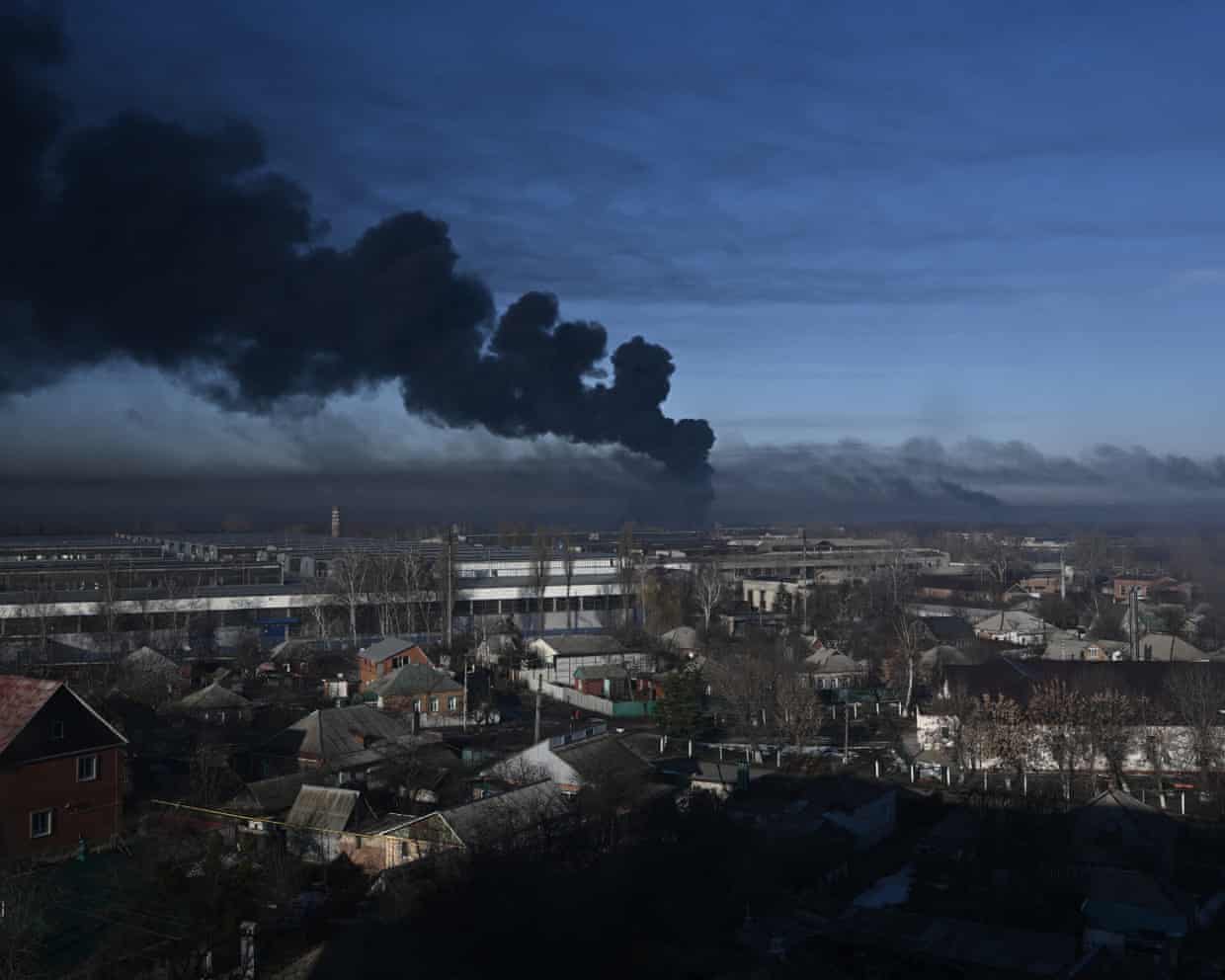
Before dawn, Zelenskyy arrived at the presidential complex on Bankova Street, where he made his first international phone call to Boris Johnson. Later, there were several more calls to Paris and Washington, as well as a meeting with security service representatives. Finally, at a hastily convened parliamentary session, martial law was declared.
"During a meeting with political leaders, his security detail swept into the room and hustled him out: there was information about airstrikes on the presidential office, they said, and possibly assassination squads in close proximity," the article says.
At the same time, Putin welcomed Pakistani Prime Minister Imran Khan to the Kremlin. The visit had been planned for several months, and Khan landed in Moscow just as Russian tanks were crossing the border into Ukraine.
Putin appeared "chilled" during the talks, according to a source close to Khan.
Afterwards, he invited his guest to stay for an unplanned, lavish Kremlin lunch. At one point, Khan asked about the elephant in the room: the war Putin had launched a few hours earlier.
"Don't worry about it," Putin told him. "It will be over in a few weeks."
Consequences
Four years later, the war continues. An estimated 400,000 Russian soldiers have been killed.
"London and Washington underestimated Ukrainian resistance and overestimated Russian power, just as Putin had. They had concluded that the task after the invasion would be to help a partisan movement against successful Russian occupiers, with the Ukrainian government operating from exile, or ruling over a rump state in the west of the country," the journalists noted.
The Americans had a similar point of view. ""We thought the Russians would be more effective initially – take Kyiv in a couple of weeks, and then the Ukrainians would regroup," said US National Intelligence Director Haines.
Lessons
For European services that failed to predict the invasion, a period of self-analysis has begun.
One German official said: "The main thing we took away from all of this was that we need to work with worst-case scenarios much more than we did before."
"For many, the key intelligence lesson from Ukraine was stark: do not rule things out, just because they might once have seemed impossible," the journalists concluded.


