ENG




13344 visitors online
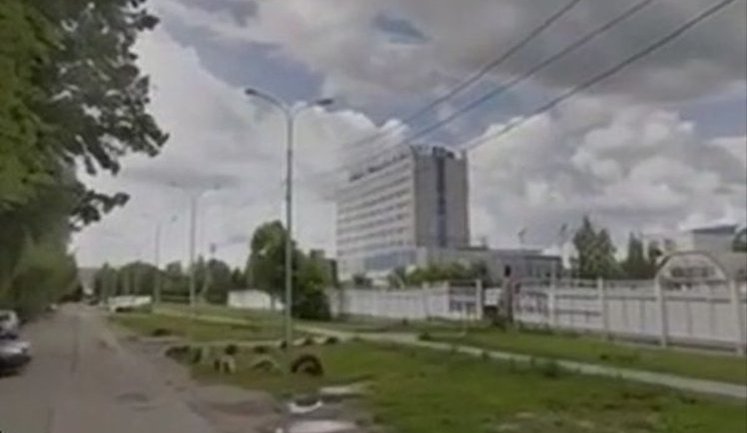
In recent news, a video emerged featuring a Russian employee calling on Ukrainian forces to strike the Typhoon defense plant in Kaluga due to unpaid salaries. This highlights the growing discontent among Russian workers facing delayed salary payments. Meanwhile, in Ukraine, the average salary of full-time employees fell by 2.2% in August, increasing wage-related tensions as the debt rose to ₴3.5 billion. The Ministry of Education of Ukraine is yet to finalize plans for increasing teachers’ salaries in 2026, further complicating the salary scenario. Additionally, disparities in salaries among Ukrainian officials persist, with top management receiving significantly higher wages as revealed by the Finance Ministry.
What are the recent changes in Ukrainian salaries?
As of August 2025, Ukrainian salaries saw a 2.2% decrease, lowering the average to ₴25,911 from ₴26,499 in July. This drop comes amidst rising debt levels in the country.
Why did the Russian worker call for a strike on the Typhoon plant?
A Russian worker at the Typhoon defense plant in Kaluga requested Ukrainian forces to strike because employees had not received their salaries for two months, indicating severe payment delays and worker dissatisfaction in Russia.
How does the salary disparity appear among Ukrainian officials?
Recent analysis shows significant salary disparities among Ukrainian officials, with top managers earning UAH 423,000 monthly, while others in the NAPC and Tax Service earn over UAH 200,000, reflecting considerable income inequality.
Are there any upcoming plans to raise teachers' salaries in Ukraine?
The Ministry of Education and Science in Ukraine aims to develop a mechanism to raise teachers' salaries in 2026. However, no detailed plan has been finalized or detailed to the public as of now.
What challenges are teachers in the Zaporizhzhia region facing?
Teachers in the temporarily occupied territories of Zaporizhzhia are experiencing salary payment delays. Occupiers attribute these delays to the implementation of a new payment system, prolonging financial strain on educators.
News salary_
 Government allocates UAH 6.6 billion to regions to raise salaries for educators and social workers, Svyrydenko says The government has distributed UAH 6.6 billion among the regions to pay increased salaries to educators and social workers. 733 9 Previously in trend: Teacher salary increases
 Verkhovna Rada has increased social benefits for rescue workers and police officers: minimum salary is set at 10 times subsistence minimum, and bonus system has been updated, - Klymenko Today, the Verkhovna Rada approved a bill strengthening social guarantees for rescue workers and police officers by a vote of 269 in favor. 5 725 75 Previously in trend: Minimum wage increase
 Fedorov did not clearly answer where he plans to get money to increase military salaries – MP Rakhmanin Defense Minister Mykhailo Fedorov did not give MPs from the defense committee a clear answer about the sources of funding for higher salaries for military personnel. 2 333 20 Previously in trend: payments to military Reforms in the army
 There is 180 billion hryvnia ’hole’ in 2026 state budget for military salaries; there are not even enough funds to match last year’s level of payments, – Zhelezniak The Cabinet of Ministers is refusing to allocate the necessary funds in the amendments to the 2026 State Budget, creating a massive funding shortfall for the army. The government has not set aside any funds at all for increasing payments to military personnel. 15 247 101 Previously in trend: payments to military State budget
 Military pay will not increase in 2026, but contracts with better terms are planned – Shmyhal The 2026 state budget does not provide for pay rises for service members. Instead, contracts with improved terms will be introduced. 13 281 75 Previously in trend: Budget-2026
 Russian appealed to Armed Forces of Ukraine: "Khokhols, please hit Typhoon defence plant in Kaluga. Salaries haven’t been paid for two months". VIDEO A video posted online shows a Russian employee of the Typhoon defence plant in Kaluga calling on Ukrainian fighters to strike his factory. 11 136 29 Previously in trend: Striking Russia
 Ukrainians’ wages fell in August, debt rose to ₴3.5 billion In August, the average salary of full-time employees in Ukraine decreased by 2.2% compared to July. According to data from the State Statistics Service, the figure stood at ₴25,911 compared to ₴26,499 a month earlier, Censor.NET reports. 1 734 18 Previously in trend: living conditions in Ukraine
 Ministry of Education and Science explains how teachers’ salaries will be raised in 2026 The Ministry of Education and Science has not yet developed a mechanism for raising teachers’ salaries in 2026. 3 120 27 Previously in trend: Budget-2026
 Average monthly salary of top management at State Financial Monitoring Service is UAH 423,000, while executives at NAPC, Tax Service, and State Tourism Agency earn over UAH 200,000 – Finance Ministry. INFOGRAPHICS "The Sudovo-Yurydychna Hazeta (Court and Legal Newspaper) analyzed the average salaries of officials according to the data of the Ministry of Finance of Ukraine. 7 097 57 Previously in trend: Officials’ salaries in Ukraine
 Occupiers do not pay salaries to teachers in TOT of Zaporizhzhia region - NRC Teachers in the temporarily occupied territories of the Zaporizhzhia region are facing delays in salary payments, which the occupiers explain by "introducing a new payment program." 1 160 17
 Ministry of Defense named types and amounts of money allowance for servicemen of AFU. INFOGRAPHICS The Ministry of Defence has explained what payments are included in the salaries of the Armed Forces of Ukraine. 15 621 10 Previously in trend: War
 Teachers will be paid thousand hryvnias extra per month starting from 2025, - Shmyhal From 1 January 2025, a monthly "teacher's supplement" to teachers' salaries in the amount of UAH 1,000 "in hand" will be introduced. 4 289 61
 Teachers should not expect salary increase in near future - Lisovyi Currently, more than 70% of the state budget is spent on defence, so there is no question of raising teachers' salaries. 10 468 78
 Starting April 1, minimum wage in Ukraine will be UAH 8 thousand Starting from April 1, 2024, the minimum wage will be increased. It will amount to UAH 8,000. 3 355 25
 Zelenskyy proposed to increase salaries of military on front line to UAH 200 thousand, - "servant of people" Mysyagin At a meeting with the "Servant of the People" faction, President Volodymyr Zelenskyy proposed raising the salaries of military personnel on the frontline to UAH 200,000. 18 743 193 Previously in trend: War
From January 1, minimum wage and subsistence minimum increased in Ukraine On January 1, 2024, the minimum wage in Ukraine increased to UAH 7100, and the subsistence minimum was also raised. 18 711 90
 Cabinet of Ministers has ordered to review system of teachers’ salaries The Cabinet of Ministers has instructed the Ministry of Education and Science to conduct a "comprehensive review of the system of remuneration of pedagogical and scientific-pedagogical workers" in 2024. 8 535 33
 Judges of liquidated Kyiv County Administrative Court continue to receive salaries: since court liquidation, they have accrued 50.3 million UAH - AntAC Ten months have passed since the liquidation of the called Kyiv District Administrative Court. But the judges of the KCAC continue to receive salary. 7 775 37
 Difference between men’s and women’s salaries has decreased in Ukraine, - Ministry of Economy Over the past 7 years, the difference between the salaries of men and women has decreased in Ukraine. In 2015, it was 26%, now it is 18.6%. 1 227 6
 Soldiers in Kherson have not received combat pay for second month - servicewoman Herasymenko The front line of the Kherson region, except for part of the Kherson islands and bays, is not officially a combat zone. Therefore, the fighters who defend Ukraine here do not receive combat pay. 14 163 53 Previously in trend: War
 Ministry of Defense showed new level of financial support for military compared to 2022. INFOGRAPHICS The Ministry of Defense has published consolidated tables of the average level of financial support of military personnel since March 2023. 24 434 55 Previously in trend: War
 This year, real wages of Ukrainians will decrease by quarter, - NBU According to the results of 2022, the real wages of Ukrainians will be reduced by a quarter. The NBU declares that the labor market has currently stabilized at a low level. 5 129 61
 Parts of servicemen of one of combat brigades don't pay money: demand personal presence in "Ukrsibbank" in Dnipro for registration of card, - Butusov The Ministry of Defense and Ukrsibbank must immediately resolve this issue and provide the fighters with cards directly at the front and make appropriate payments. 60 376 55 Previously in trend: War
 Reznikov Sets Task Of Increasing Salary Of Military By 30%. VIDEO Defense Minister Oleksii Reznikov has set himself the task of increasing the salaries of the military by 30%. 18 876 120 Previously in trend: 2022 budget War
 Zelenskyi signs decree to increase minimum wage for doctors President of Ukraine Volodymyr Zelenskyi has signed a decree raising the minimum wage for medical personnel. 10 174 70
 Ukrainian teachers' salaries will grow in two stages in 2021 – education ministry The salaries of Ukrainian teachers in general secondary education institutions will grow in January and July 2021, according to the website of the Ministry of Education and Science of Ukraine. 6 713 57
 Zelenskyi gives government two months to repay wage arrears to coalminers All wage arrears to Ukrainian coalminers should be paid during March and April this year, Ukrainian President Volodymyr Zelenskyi has said. 9 057 90
 Ministerial salaries will range from three to five average wages The Ukrainian government has decided to regulate the payment of salaries to ministers, Ukrainian Prime Minister Oleksii Honcharuk has reported. 6 958 87
 Ukrainian president backs government's decision to limit salaries to officials Ukrainian President Volodymyr Zelenskyi has supported the government's decision to limit the salaries and bonuses of the heads of executive bodies. 13 988 97
 Salaries of prosecutors to be raised by 50-75% - Riaboshapka. VIDEO The salaries of prosecutors of a new Prosecutor General's Office will be significantly increased after passing of the competence assessment and the adoption of relevant government’s resolutions. 5 010 98
 Ukraine's economy minister names regions with lowest salaries The average monthly wage in several regions of Ukraine is slightly over UAH 8,000 (about $330), but in one region, it does not even reach this figure, Ukraine's Minister for Economic Development, Trade and Agriculture Tymofiy Mylovanov has said. 10 622 19
 Average salary up 0.4% to UAH 10,700 in October In October, the average monthly salary rose by 0.4% or UAH 40 month over month to UAH 10,727. 3 458 100
 Zelenskyi orders government to pay salary arrears to teachers and doctors in two days. VIDEO President of Ukraine Volodymyr Zelenskyi has departed to Estonia and Lithuania for a working visit. 3 789 102
 Zelenskyi: wage arrears paid to miners President Volodymyr Zelenskyi states that the wage arrears to miners have been paid. 1 681 71
 Average salary in Ukraine should amount to UAH 10.1 thousand in 2019, - Poroshenko Ukraine President Petro Poroshenko says that in 2019 the average salary in Ukraine should make 10 100 UAH (approx. $360). 11 813 341
 Ukraine’s draft state budget-2019 provides for 100.6B hryvnia in military spending, - Defense Ministry The draft state budget of Ukraine for 2019 includes allocation of 100.6 billion hryvnia for the needs of the Armed Forces. The military compensation is planned to be increased by 40 percent. 2 479 32 Previously in trend: Russian aggression against Ukraine
 Social Policy Minister says real earnings of population grew by 19.1 percent over year Wages and pensions of Ukrainians continue increasing with price growth easing. 66 324 337
 Minimum wage may be raised up to 4,100 hryvnia by end of Q1, Deputy PM Rozenko says The Ukrainian government may increase the minimum wage up to 4,100 hryvnia (about $150) by the end of Q1 2018. 62 997 325
 Deputy PM Rozenko expects wage floor to be raised as early as in 2018 Ukraine’s Vice Prime Minister Pavlo Rozenko says that the next increase in the minimum wage is scheduled for 2018. 37 924 194
 PM Hroisman vows to increase teachers’ salaries as early as in January The salaries of Ukrainian teachers will grow by 1,500 hryvnia late January. 20 189 493
 PM Hroisman slams Ukroboronprom head Romanov over staff salary arrears, advises him to resign Ukraine’s Prime Minister Volodymyr Hroisman advised Director General of Ukroboronprom State Concern Roman Romanov to file resignation over unsettled salary arrears of the Mykolaiv-based shipyard staff. 35 301 163
 Average wage in Ukraine goes up by almost 40 percent in October The average nominal wage of a full-time employee in Ukraine in October 2017 increased by 0.4 percent from September 2017 and by 37.9 percent from October 2016, to 7,377 hryvnia (about $274.5) 24 936 236
 ATO soldiers' salary set at 17,000 hryvnia since Sept. 1, additional bonus paid for participation in combat activities, - Defense Ministry A salary paid to privates of "soldier" rank who conduct tasks in the anti-terrorist operation area (ATO) has been set at 17,000 hryvnia ($644 monthly). 42 006 109
 Teachers' salaries to see at least 25 percent increment next year, - Hroisman Ukraine's prime minister has promised to increase the salary of teachers. 13 992 139
 Additional payments for military on 1st and 2nd defense lines in ATO to increase in September, - Poroshenko From September 2017, Ukrainian military serving on the 1st and 2nd defense lines in the anti-terrorist operation (AT) area in the Donbas will start receiving increased additional payments. 15 694 61
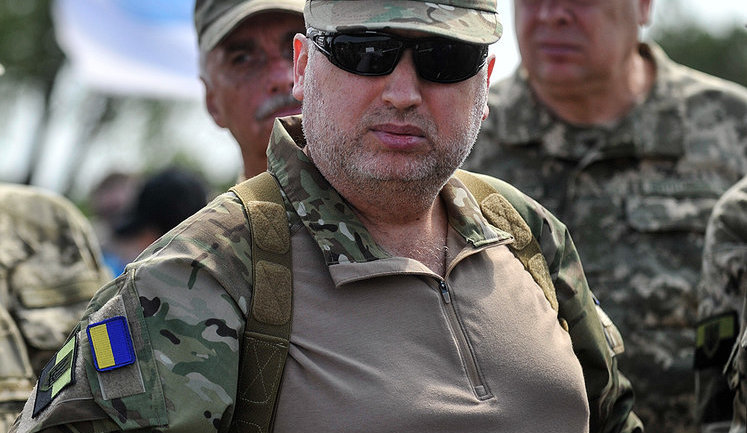
 Ukraine military should earn as much as state officials, salaries to meet NATO standards, - Turchynov Secretary of the National Security and Defense Council of Ukraine (NSDC) Oleksandr Turchynov calls for increase of salaries for Ukrainian servicemen and believes their wages must meet NATO standards. 931 802 143
 Hroisman's Cabinet reported on own gas production, increase in salaries, and road repair Prime Minister Volodymyr Hroisman has spoken of his Cabinet's achievements. 35 626 130
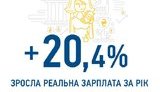 Real wages of Ukrainians increased by 20.4 percent over year, - PM Hroisman From May 2016 to May 2017, real wages of the population have increased by 20.4 percent. 28 315 349
Page 1 of 3
more news