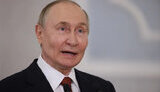
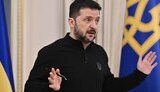
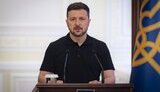
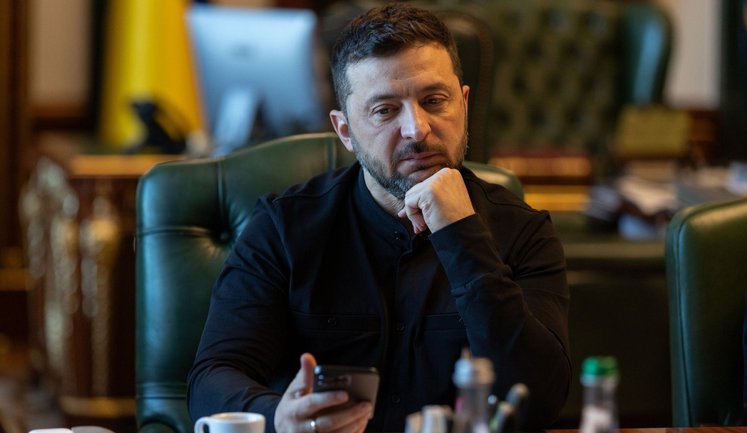
Ukrainian President Volodymyr Zelenskyy remains firm in his critique of Russian dictator Vladimir Putin. He expresses confidence that a tragic end awaits the Russian nation under Putin's leadership. Zelenskyy dismisses Kremlin's justifications for the war against Ukraine, calling them "historical sh*t." He also highlights the ineffectiveness of democratic tools against Putin, asserting that the only deterrent remains US President Donald Trump. Despite heavy losses, Zelenskyy believes that Putin does not seek to end the ongoing war in Ukraine. Putin's unwavering grasp on power and reluctance for peace talks demonstrate a disregard for international diplomacy and a persistent war effort. Zelenskyy foresees a just peace but only after Putin's exit.
What are Zelenskyy's views on Putin's rule in Russia?
Zelenskyy envisions a tragic end for Russia under Vladimir Putin's rule. He criticizes Putin for his pursuit of eternal power and unwillingness to engage in meaningful peace talks with Ukraine. Zelenskyy considers Putin's explanations for the war as deceptive and misleading, calling them "historical sh*t." The Ukrainian president sees no signals from Putin indicating a desire for peace, portraying him as a dictator who does his job without emotion and aims to hold onto power indefinitely.
Why does Zelenskyy believe a tragic end awaits Russia?
Zelenskyy believes a tragic end awaits Russia due to Putin's continued aggression and refusal to engage in legitimate peace negotiations to resolve the conflict with Ukraine. According to Zelenskyy, Putin is more focused on maintaining power than on achieving peace or stability. Despite Russia's significant losses, Putin shows no signs of ending the war, which Zelenskyy views as leading Russia toward a bleak and destructive future.
How does Zelenskyy perceive Trump's influence on Putin?
Zelenskyy perceives US President Donald Trump as the sole figure capable of instilling real fear in Putin. He notes that typical democratic instruments have little effect on the Russian leader, suggesting that Trump's unpredictable approach and significant influence on global politics act as a significant deterrent to Putin's actions. Zelenskyy's comments imply that Trump poses a unique challenge to Putin, one that may influence Putin's calculations regarding the ongoing conflict with Ukraine.
How does Zelenskyy view the possibility of a just peace for Ukraine?
Zelenskyy anticipates a just peace for Ukraine but suggests that it will only be achievable after Vladimir Putin's departure from power. He emphasizes that Putin's continuation of the war signals an unwillingness to seek a peaceful resolution, thereby prolonging the conflict. Zelenskyy maintains that meaningful peace talks and any chance of a lasting peace agreement will only be possible with a change in Russia's leadership and approach.
What are Zelenskyy's thoughts on potential peace negotiations with Putin?
Zelenskyy remains skeptical about the efficacy of peace negotiations with Putin. He equates the process to an endless game of ping-pong, expressing little faith in direct talks with the Russian leader himself. Instead, Zelenskyy suggests readiness to negotiate with someone who could faithfully represent Russia's interests in future discussions, indicating openness to engaging with business representatives if they can facilitate a constructive dialogue to end the war.
Why does Zelenskyy criticize Putin's speeches about the war?
Zelenskyy criticizes Putin's speeches about the war as "historical sh*t," dismissing them as irrelevant attempts to justify unjust actions. Zelenskyy sees these efforts as diversionary tactics that fail to address the core issues of the conflict and impede genuine diplomatic progress. He calls for a practical path to peace rather than indulging in historical justifications, which he views as deceptive narratives constructed by Putin to legitimize the ongoing aggression against Ukraine.
What is Zelenskyy's stance on Putin's potential visit to Istanbul?
Zelenskyy remains doubtful about the likelihood of Putin visiting Istanbul for direct talks. While Zelenskyy acknowledges the slim chances, he believes that Putin's primary fear of losing power and potential political isolation make such a visit unlikely. Zelenskyy's comments reflect his skepticism about the commitment of the Russian dictator to engage in authentic peace negotiations and his view that meaningful diplomacy may only follow significant changes in Putin's current stance.