



Order of discord: what is known about diplomatic row between Ukraine and Poland?
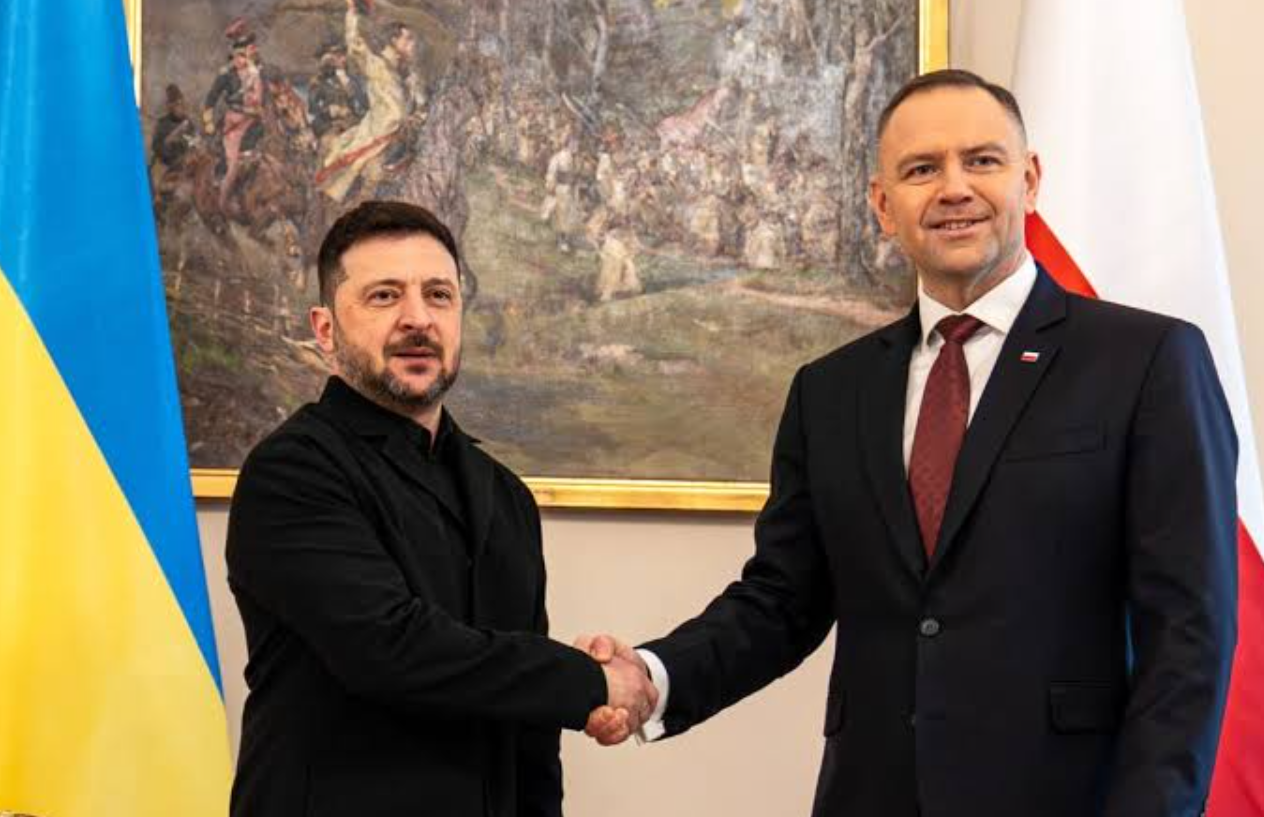
On 26 May 2026, a new diplomatic row broke out between Ukraine and Poland. This time, however, the cause was not grain, the border, Ukraine’s EU accession or exhumation work. It came down to state honours.
There has probably not been such a high level of tension since the start of Russia’s full-scale war against Ukraine.
Historical issues continue to affect Ukrainian-Polish relations. It would seem that the start of exhumation work in February 2026 had somewhat eased the tension, but this did not last long.
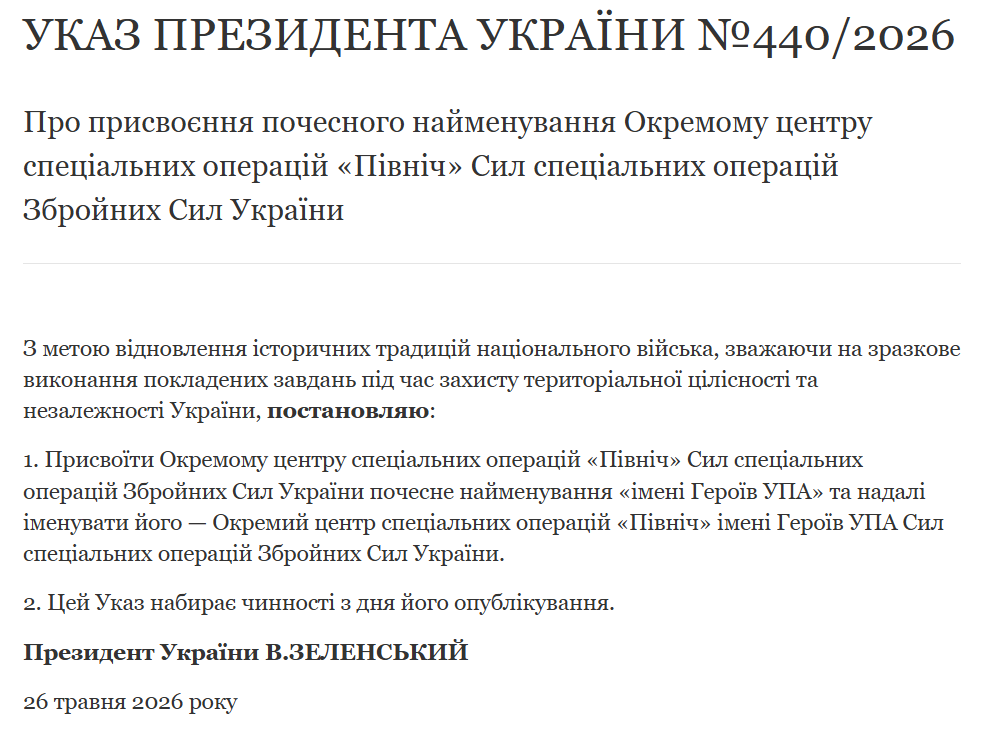
On 26 May itself, President Volodymyr Zelenskyy signed a decree conferring the honorary title ‘in the name of the Heroes of the UPA’ on the ‘North’ Separate Special Operations Centre of the Special Operations Forces of the Armed Forces of Ukraine.
Stripping the Order
In response, Polish leader Karol Nawrocki stated that he would demand that Zelenskyy be stripped of the Order of the White Eagle – Poland’s highest honour.
"The President of Ukraine has provided the best ammunition and plenty of fuel for Russian propaganda. I am very critical of this decision," he noted.
Commenting on this decision, the Ukrainian Ministry of Foreign Affairs noted that only Moscow stands to gain from disputes between Ukrainians and Poles.
A spokesperson for the Ministry of Foreign Affairs pointed out that it was Ukrainian special forces personnel who had initiated the awarding of this honorary title and "certainly did not intend to offend the friendly Polish people".
Not just an order
In 2023, against the backdrop of a full-scale war, the then President Andrzej Duda awarded Volodymyr Zelenskyy the Order of the White Eagle.

Poland took in millions of Ukrainian refugees, supported sanctions against Russia and provided aid to Ukraine.
At that time, the Order of the White Eagle served not merely as a state honour, but also as a symbol of the partnership between Kyiv and Warsaw during the war.
Reaction in Poland
Nawrocki’s office believes that the Ukrainian president should ring the Polish leader and apologise.
Marcin Przydacz, head of the Polish President’s Office for International Policy, even suggested that Zelenskyy’s decision to bestow the title might be linked to the "upcoming elections in Ukraine".
It later emerged that the Ukrainian flag had been removed from the façade of the town hall in the Polish city of Lublin. Officials there explained that this was a reaction to Zelenskyy’s decision.
Former Polish Ambassador Bartosz Cichocki returned the Ukrainian Order of Merit, which he had received in 2022.
Ukraine’s European integration, on the eve of the opening of the first cluster in the negotiations, also became a pretext for pressure. Thus, the Deputy Speaker of the Polish Sejm, Bosak, called for blocking Ukraine’s accession to the EU over the name of a Special Operations Forces unit.
Former Polish President and Nobel Peace Prize laureate Lech Wałęsa, in a gesture of protest, demonstratively removed the badge featuring the Ukrainian flag that he always wore, and accused Zelenskyy of "honouring UPA bandits", which, in his words, "offended him personally and all the Poles who were killed".
Polish Defence Minister Kosiniak-Kamysz noted that Zelenskyy’s decision was unacceptable to Poles, whilst also pointing out that Ukraine is currently fighting to defend its own state, as well as for the security of Poland and the whole of Europe.
The Speaker of the Polish Sejm, Włodzimierz Czarzasty, reacted more cautiously, calling for the conflict between Poland and Ukraine to be defused. He emphasised that stripping the President of Ukraine of Poland’s highest honour whilst the country is at war with Russia could trigger an irreversible chain reaction.
In his view, someone in this matter "must show greater wisdom":
"Because these decisions could lead to further decisions on her part; for example, everyone might hand back their medals, then the same thing would happen on the Polish side, whilst the war continues."
As it turned out, Czarzasty was right.
A ray of hope came in the form of a statement by Polish Prime Minister Donald Tusk, who criticised the anti-Ukrainian remarks made by Polish politicians.
No one can remain indifferent to what we are hearing – not from the mouths of political hooligans, but from opposition political leaders. Such words will incite the spread of xenophobia and hatred
He also appealed to the presidents of Ukraine and Poland to hold a frank discussion "before emotions destroy our solidarity, which was forged in the face of the Russian threat".
The order was revoked
On 19 June, Polish President Nawrocki stripped Ukrainian President Volodymyr Zelenskyy of the country’s highest honour, the Order of the White Eagle.

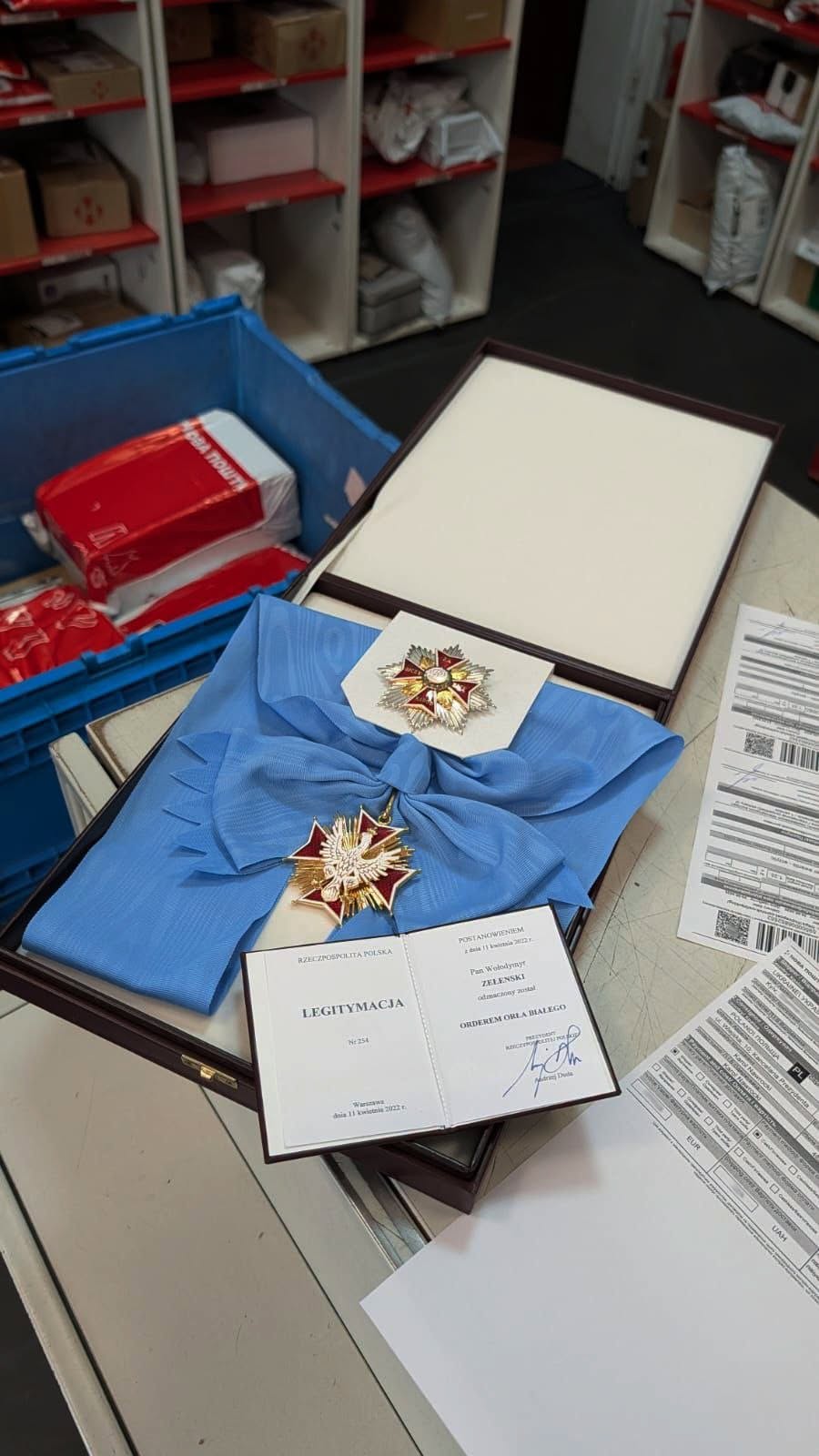
The following day, the President of Ukraine sent the Order of the White Eagle back via "Nova Poshta".
He added that Ukraine is grateful to the Polish people for their support and cooperation, which plays a significant role in the struggle "for our and your independence from Russia".
Solidarity among presidents
On 20 June, the second, third and fifth presidents of Ukraine also decided to renounce their Orders of the White Eagle.
"It is one thing when an enemy attacks. It is quite another when enmity drives friends apart. And it is even more terrible if these friends are also threatened by a common danger. We must remember history. However, the past cannot be more important than the future," commented Leonid Kuchma on the decision.
The third president, Viktor Yushchenko, also declined the Order of the White Eagle. His press secretary emphasised that the award "has become a symbol of respect for the Ukrainian people, who are paying an extremely high price for their freedom, independence and the right to live in their own country".
Zelenskyy’s predecessor, Petro Poroshenko, also decided to decline the Order of the White Eagle:
In both Zelenskyy’s case and my own, it was not heads of state who were honoured, but Ukrainians – our soldiers who are defending Ukraine, Poland and the whole of Europe
At the same time, the fifth president proposed "starting as early as Monday to seek solutions that will prevent the current crisis from deepening, and instead turn it into an impetus for a new phase of Ukrainian-Polish partnership — one that is honest, friendly and strategic".
The Head of the President’s Office, Kyrylo Budanov, also declined the Order "For Merit to Poland".
Ukraine’s Foreign Minister Andrii Sybiha declined the Commander’s Cross with Star of the Order "For Merit to Poland".
Vasyl Bodnar, Ukraine’s Ambassador to Poland, also announced that he was returning his Polish honour following President Volodymyr Zelenskyy’s revocation of the Order of the White Eagle.
Meanwhile, Vasyl Zvarych, Ukraine’s Ambassador to the Czech Republic and former Ambassador to Poland (2022–24), has declined the Polish Order of the Commander’s Cross with Star "For Merit".
Are Mussolini and Catherine II any better?
When returning the Order of the White Eagle to Poland, President Volodymyr Zelenskyy stated: "
If it is considered that this particular symbol may remain with Catherine the Great, Benito Mussolini and Gerhard Schröder, then we in Ukraine will not argue with that
Nawrocki’s office explained this by saying that the Order of the White Eagle is not revoked posthumously, so the award remains with Benito Mussolini and Catherine II.
"And the former German chancellor never insulted the Polish nation as openly as the President of Ukraine has done, although his work on behalf of putin’s Russia truly deserves condemnation as something that harms Poland and Europe," they added.
As is well known, a conference on the reconstruction of Ukraine is due to take place this week, on 25–26 June, in Gdańsk, Poland.
Should we expect President Zelenskyy to attend? The question remains open.
Conclusion
The situation surrounding the awarding of the honorary title ‘in the name of the Heroes of the UPA’ to a Special Operations Forces unit has demonstrated just how relevant historical issues remain in the context of Ukrainian-Polish relations.
History has once again reminded us that it continues to influence the contemporary politics of both states. Despite all this, Ukraine and Poland remain strategic partners, united by security interests and a common threat from Russia.
Therefore, the main challenge for both Kyiv and Warsaw remains striking a balance between the right to their own historical memory and the need to preserve their partnership.
After all, when conflicts arise between Ukraine and Poland, it is traditionally the Kremlin that benefits most.


