ENG




5833 visitors online
As reports of military sieges in Ukraine persist, recent claims by Russia about capturing Chasiv Yar have been firmly denied by Ukrainian forces. These statements, characterized as disinformation, reflect ongoing tensions in the region. Meanwhile, incidents such as the seizure of farmland by a firm linked to Putin and the occupation of key buildings in Kherson and Enerhodar underscore the complexities of territorial control amidst the siege. The Ukrainian government, facing these challenges, strives to counter misinformation while maintaining its territorial integrity. These events highlight the broader geopolitical strategies at play amidst an ongoing military conflict.
What are the implications of the Chasiv Yar siege claim by Russia?
The claim of Chasiv Yar's capture by Russia, refuted by Ukrainian forces, underscores the continuous use of disinformation in the conflict. Such claims can lead to confusion and tension on the ground. By denying these assertions, Ukraine aims to maintain morale and clarity among its citizens and the international community about the real situation on the ground.
How does Russia's seizure of Ukrainian farmland impact the region?
The seizure of 400 thousand acres of farmland by a Russian-associated firm disrupts local economies and agricultural activities, further complicating Ukraine's economic recovery efforts. It serves as a tool for exerting control over essential resources, impacting food security and local livelihoods.
What is the significance of the Enerhodar laboratory center occupation?
The occupation of the laboratory center in Enerhodar highlights the growing difficulty of maintaining civilian infrastructure under siege. By refusing to cooperate with occupying forces, the workers demonstrated Ukrainian resistance, but the incident adds pressure to limited local healthcare and scientific resources.
Why is misinformation prevalent in the Ukraine-Russia conflict?
Disinformation is a strategic tool used to destabilize opponents, obscure the truth, and influence international perception. In the context of Ukraine and Russia, it serves to weaken resolve, create divisions, and disrupt the international response, while clouding the reality of military and territorial developments.
What is the response of international bodies to these sieges?
International bodies often voice concerns over these sieges through diplomatic channels and may impose sanctions or call for peace talks. However, geopolitical interests sometimes lead to varied responses. Continued dialogue and support for Ukraine are pivotal to maintaining pressure against unlawful occupations and promoting regional stability.
How are local populations affected by the siege of territories?
Local populations endure significant hardships due to sieges, including economic turmoil, restricted access to essential services, displacement, and trauma. Their resilience and adaptability are continuously tested as they deal with disruptions to daily life and the threat of violence, all while contributing to resistance efforts.
What measures are Ukrainian forces taking to address these territorial sieges?
Ukrainian forces are employing a combination of strategic defense, international diplomatic efforts, and information campaigns to counter the sieges. They aim to safeguard civilian infrastructure, ensure accurate information dissemination, and garner international support to resist occupation and reclaim control over territories.
News siege
 Putin has postponed timeline for seizure of Donbas for 16th time: "At current pace, it will take Russia another six years" Russian dictator Vladimir Putin has postponed the deadline for the complete capture of the Donetsk region for the 16th time since the start of the full-scale war. The Kremlin now expects to achieve this goal within the next six months, although at the current rate of advance, Russian forces will... 3 446 14
 Russia loses momentum due to drone warfare – it would take over 30 years to seize Donetsk and Luhansk regions It would take Russia more than 30 years to fully seize the territories of the Donetsk and Luhansk regions, even if the current pace of its offensive remains unchanged. 1 634 16 Previously in trend: Drone industry
 Putin won’t stop at Donbas: he’ll try to capture Dnipro and Kharkiv, - Zelenskyy Russian dictator Vladimir Putin will not stop at Donbas. The Russian army may attempt to capture major Ukrainian cities, including Dnipro and Kharkiv. 3 475 33 Previously in trend: Russia’s demands to end war
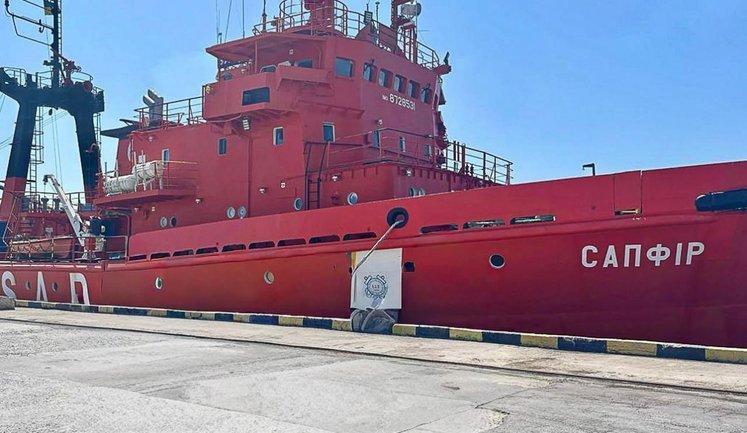
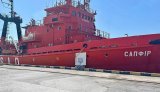 Seizure of Ukrainian vessel "Sapphire" and capture of civilians: three Russian servicemen to face trial, – National Police. PHOTOS Ukrainian law enforcement agencies have concluded the pre-trial investigation into the unlawful detention of the crew of the civilian vessel "Sapphire" at the start of Russia's full-scale invasion. 2 219 5 Previously in trend: Russia’s attack on civilian vessels
 Armed Forces of Ukraine deny Russian claims of "street fighting" and "clearing operations" in Kutkivka, Kharkiv region. VIDEO Statements by Valery Gerasimov, Chief of the General Staff of Russia’s Armed Forces, about alleged "street fighting" and "clearing operations" in Kutkivka, Kharkiv region, are not true. 2 149 5 Previously in trend: Fighting in Kharkiv direction Capture of Ukrainian cities
 Britain joins US operation against Russian-flagged tanker Bella I The United Kingdom supported the United States in conducting an operation to intercept the sanctioned oil tanker Bella I (also known as Marinera), which was heading towards Russia. 3 208 11 Previously in trend: Russia’s shadow fleet
 Russia stated that U.S. had no right to detain Russian-flagged tanker Bella-1 The Russian Ministry of Transport stated that the US had no right to detain the Marinera tanker, also known as Bella-1, which was sailing in the Atlantic Ocean under the Russian flag. 7 854 61 Previously in trend: Russia’s shadow fleet Relations between Russia and the US
 OSGT "Khortytsia" on "capture" of Chasiv Yar: Russians are lying again. Situation has not changed The Russian Ministry of Defense claimed that it had allegedly "captured" Chasiv Yar in the Donetsk region. This information was refuted by the Ukrainian Operational-Strategic Group of Forces "Khortytsia," which called it yet another piece of disinformation. 2 314 10 Previously in trend: Battles for Chasiv Yar
 Putin associate Tkachov’s firm seized 400 thousand acres of farmland in occupied Ukrainian territories - WSJ Family company of former Russian Minister of Agriculture and long-time Putin’s associate Alexander Tkachov "Agrocomplex" seized agricultural lands of three Ukrainian agroholdings in occupied by Russia territories after beginning of full-scale war. 4 146 14 Previously in trend: War
 Occupiers seized laboratory center in Enerhodar: workers refused to cooperate with rioters The military armies of the Russian Federation captured the Enerhodar branch of the Zaporizhzhia Regional Center for Disease Control and Prevention of the Ministry of Health of Ukraine. 4 313 4
 Part of Severodonetsk is already controlled by troops of Russian Federation, but enemy can't move freely, - Haidai In the Luhansk region, part of Severodonetsk is controlled by Russian invaders, but they cannot move freely there. 12 932 59 Previously in trend: War
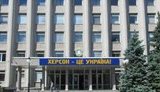 Occupiers seized Kherson City Council building On April 25, in Kherson, the Russian military seized the city council building. 12 412 22 Previously in trend: War
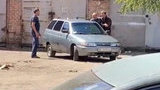 Police allows Poltava terrorist to leave city, he heads towards Kyiv The patrol police allowed the terrorist to leave Poltava in a VAZ-2111 service car. 17 656 150
 In Poltava, terrorist with grenade exchanges police officer taken hostage for head of regional police department, is trying to leave city In Poltava, a terrorist with a grenade released a police officer taken hostage in exchange for the head of the Criminal Investigation Department of the Main Directorate of the National Police of Ukraine in Poltava region, after that he demanded a car and is currently driving it towards the exit from the city. 25 648 165
 Zelenskyi claims to have situation in Lutsk under personal control President of Ukraine Volodymyr Zelenskyi stated that he had taken the situation with bus hijack in Lutsk under personal control. 12 744 175
 Butusov: I am ready to come if women and children from the bus in exchange released The journalist Yurii Butusov received a call from the man who had seized the bus with people in Lutsk. He says he has weapons and explosives. The people on the bus, from whose phones he makes calls, take his threat quite seriously. 44 430 203
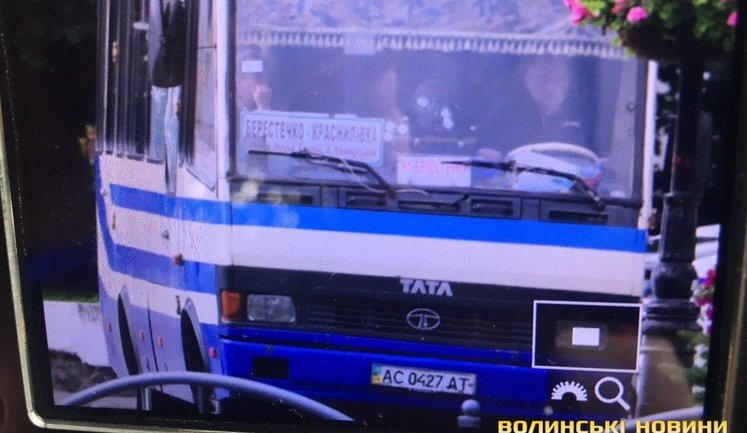
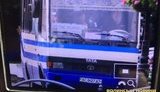 Man with bomb hijacks passenger bus in Lutsk, hostage alert announced in region. VIDEO&PHOTOS. VIDEO&PHOTOS On Tuesday morning, a man possessing a bomb and weapon hijacked a bus with passengers in Lutsk, a hostage alert has been announced in the region, the police of Volyn region reported. 73 616 162
 General Staff intercepts communication of Russian coast guards during attack on Ukrainian vessels. AUDIO Russia breached international law and Ukrainian legislation when it committed an act of aggression against the sovereign state of Ukraine. 101 417 243 Previously in trend: Azov Sea blockade
 Nine suspects apprehended as police open case into attempt to take over Maksakova’s Kyiv-based apartment, - prosecutor's office Kyiv prosecutors said a group of unidentified individuals tried to take over the apartment of Maria Maksakova, an opera singer and widow of former Russian State Duma deputy Denis Voronenkov, in Kyiv on Oct. 18. 24 854 83 Previously in trend: Voronenkov assassinated
 Large-scale law enforcement operation in Zakarpattia: charges brought against local state land agency official, about hundred searches conducted The law enforcers searched about 100 homes and offices associated with persons suspected of illegal drug trafficking and unlawful appropriation of land plots located along the state border in the Zakarpattia region. Former head of the local State Land Management Agency was already brought charges against. He now waits for decision on pretrial restriction against him. 60 712 41
 Prosecutors detain Odesa military unit commander over failure to counter airfield seizure, - Matios The members of prosecutor's office detained the acting military unit commander charged with not responding to the seizure of the military unit in Odesa. The volunteer recruit in charge of the squad guarding aviation materiel storage was also detained as he violated military regulations by taking no measures to counter the attackers. 54 034 162
 Ukrainian lawmaker Levus: National Security Committee to address attack on Odesa military base Recent attack on the military unit in Odesa will be discussed at the Verkhovna Rada’s National Security and Defense Committee meeting. 21 321 71
 More than 30 detained in raid attempt in Kirovohrad region, - National Police. PHOTOS The detainees tried to forcibly seize an agriculture business. 91 426 143
 Russia seized 4,575 real estate facilities in Crimea since occupation, - UN Since Russia occupied Crimean peninsula in 2014, it has confiscated 4,575 real estate facilities there. 22 935 63 Previously in trend: Occupied territories - Crimea and Donbas
Russian border guards attempted to seize Ukrainian cutter near Crimea Ukrainian sailors recorded a capture attempt. 28 026 62
 Putin on seized Ukrainian enterprises in Donbas: "No one ever took anything from anyone; external management was temporarily introduced there" President Vladimir Putin of Russia says no one had ever captured Ukrainian enterprises located in the occupied areas of the Donbas. 172 405 244 Previously in trend: Occupied territories - Crimea and Donbas
 Four individuals involved in attack on Kharkiv Regional State Administration building in April 2014 get suspended sentences Judge Viktoria Cherednyk considered the facts that the accused had minor children, and were positively assessed by their neighbors and relatives as sufficient to mitigate their punishment. 46 219 208
 Poroshenko voices conditions for lifting Donbas trade blockade The Ukrainian authorities are ready to unblock trade with Russia-held areas in the Donbas if terrorists return seized enterprises to their Ukrainian owners. 102 208 446 Previously in trend: Blockade of "DPR/LPR"
"Separatists defy transparency rules agreed by 57 nations," - Canadian ambassador on seized OSCE drone Canada's Ambassador to Ukraine Roman Waschuk condemned the seizure of an OSCE drone in the Donbas. 29 385 82 Previously in trend: Russian aggression against Ukraine
 Zakharchenko blames Russia's plight on Anglo-Saxons, says Britain must be conquered. VIDEO (in Russian) Leader of Donetsk terrorists Alexander Zakharchenko says Britain must be conquered so as to destroy the Anglo-Saxons who are "the evil to Russia's fate." 247 245 776
 Military prosecutor's office indentifies units and hardware of Russian army that participated in Crimea occupation, - prosecutor Kravchenko The investigators have gathered enough evidence of Russian invasion in Crimea in 2014 and know which forces were employed by Russia for its Crimea occupation. 58 549 90 Previously in trend: Occupation of Crimea Evidence of Russian aggression in Ukraine
 Kharkiv separatist Lohvynov caught while trying to escape to Russia. PHOTOS The State Border Guard Service of Ukraine captured a citizen suspected of organizing and participating in the riots during the seizure of the Kharkiv Regional State Administration building in April 2014. 167 582 267
Four Kharkiv separatists sentenced to five years' imprisonment, - prosecutor's office The Kyiv district court of Kharkiv has delivered its verdict against four participants in the seizure of the Kharkiv regional state administration in early April 2014. 6 148 23
 Unknowns tried to raid enterprise near Kyiv: one killed, one injured A company located in the village of Kriukivshchyna outside Kyiv has been assaulted by unknown persons. 100 314 114 Previously in trend: Police workdays
Ukrainian military seized machine gun used by Russian actor Porechenkov in Donbas, - ATO speaker Ukrainian troops seized an Utios machine gun between Marinka and Krasnohorivka (the Donetsk region) that was used by Russian actor Mikhail Porechenkov when he fired at the defenders of the Donesk airport back in 2014. 89 868 158 Previously in trend: Russian aggression against Ukraine
Armed people attacked district police station in Yerevan, took hostages. PHOTOS A group of armed men stormed the Erebuni police station in the Armenian capital, Yerevan. 84 554 193
Hijacker of EgyptAir plane arrested, - Cyprus Foreign Ministry The man who for no known motives hijacked an EgyptAir plane Tuesday morning has been arrested. 10 202 8
 Man hijacked EgyptAir plane because of woman, - media. PHOTOS According to Cyprus authorities, a woman could be the reason behind the EgyptAir plane hijack - the hijacker's former wife. 17 498 41
 Passengers of hijacked Egyptian plane released, except for four foreign citizens and crew, - Egypt Air. PHOTOS Most of the passengers of hijacked EgyptAir plane have been released. 30 987 21
EgyptAir plane with people on board hijacked by unknown, lands in Larnaka, - Reuters An Egyptair domestic flight from Alexandria to Cairo was hijacked on Tuesday and landed in Cyprus, Egyptian officials and Cyprus state radio said. 19 751 28
 They seized Crimea: 10 portraits of Russian invaders who played roles of ‘little green men’. PHOTOS In early 2014, people in military uniform without insignia appeared on the peninsula and were dubbed ‘little green men.’ The Kremlin has been long reluctant to acknowledge them as Russian military, but the ‘little men’ were pleased to post images with geotags to social media, which allowed recognizing them as Russian soldiers. Later, they were boasting medals “For the return of Crimea.” 49 066 54 Previously in trend: Occupation of Crimea Evidence of Russian aggression in Ukraine
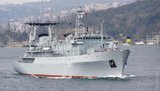 Russia set to make Ukraine's warship part of Black Sea Fleet. PHOTO Ukrainian Navy Slavutych flagship seized by Russia in spring 2014 is about to become part of the Black Sea Fleet. 83 658 190
 UKROP party headquarters blocked by armed men in balaklavas. PHOTOS There are over 20 armed men inside the head office of the "Ukrainian Union of Patriots" party (UKROP) in Kyiv. Some of them wear ski masks. 61 233 303
 "I saw two tanks, men wearing Russian Uniform without insignia; road blocked by APC," - Ukrainian soldiers near Kominternove. VIDEO Militants continue to reinforce their positions in Kominternove, building concrete bunkers and strongholds and digging trenches. 58 778 118 Previously in trend: Russian aggression against Ukraine
 Interior Minister Avakov requires urgent NSDC meeting: pro-Russian terrorists seized three villages Interior Minister Arsen Avakov insists on an urgent meeting of the National Security and Defense Council after pro-Russian militants seized three villages. 109 370 563 Previously in trend: Russian aggression against Ukraine
 Ukraine opposes Russia's charging paratroopers with illegal border crossing, - SBU Adviser Tandit Ukraine does not agree with detention of three Ukrainian servicemen of the 79th Separate Airmobile Brigade by the Federal Security Service of the Russian Federation on charges of alleged illegal border crossing. 76 569 603
 Russian diplomat Sapogov, who coordinated military intelligence, expelled from Ukraine The advisor to the Embassy of Russia in Ukraine Oleg Sapogov, who appeared to be the deputy head of the Main Intelligence Directorate (GRU) residency, was expelled from Ukraine on March 20. 122 253 347
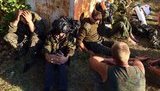 Heroes of Donetsk Airport Who Captured Six Separatists Did Not Receive Any Medal. "Someone in Kyiv Would Rather Die Than Medal Them“. PHOTOS One can often find all sorts of stories of various eyewitnesses on the internet about one of the most striking episodes of the airport defense - the capture of six valuable separatist-gunners. 102 584 198 Previously in trend: Battle for Donetsk
Page 1 of 2
more news