ENG




10361 visitors online
Russia’s demands to end the war in Ukraine center around the withdrawal of Ukrainian forces from Donbas and the cessation of NATO’s eastward expansion. The Kremlin insists on Ukraine's neutrality and wants Western nations to lift sanctions against Russia. Russian officials, including Lavrov and Putin, continue to emphasize these conditions as prerequisites for peace. Despite discussions involving the US and EU, no consensus has been reached. High tensions in Donbas and ongoing diplomatic efforts underscore the complex geopolitical situation. Keywords in this context include Ukraine, Russia’s demands, Donbas, NATO, and sanctions.
What are Russia's main demands to end the war in Ukraine?
Russia demands Ukraine's withdrawal from Donbas, recognition of Crimea as Russian territory, cessation of NATO expansion into Eastern Europe, and lifting of Western sanctions. These conditions are seen as critical by the Kremlin for any lasting peace agreement to be achieved.
Why does Russia want Ukraine to withdraw from Donbas?
Russia claims that the withdrawal of Ukrainian troops from Donbas would "open prospects" for ending hostilities, aiming to solidify control over this region. Russia sees Donbas as vital to its strategic objectives, integrating it further into its sphere of influence, which Ukraine and Western nations largely oppose.
How has the US responded to Russia's demands regarding NATO?
While the US has tentatively expressed willingness to discuss certain aspects of Russia's demands related to NATO's non-expansion, there is significant reluctance to agree to measures that would undermine NATO's strategic position or the sovereignty of Eastern European countries, including Ukraine.
What role do sanctions play in Russia’s demands to end the war?
Sanctions relief is a major component of Russia's demands. Russia views the lifting of Western-imposed sanctions as essential to stabilize its economy and strengthen its geopolitical standing. However, Western nations have been reluctant to consider this without substantial concessions from Moscow, especially regarding territorial disputes.
Are there any ongoing negotiations between Russia and Ukraine?
Negotiations have taken place intermittently, involving various international actors, but these have been hindered by Russia's stringent demands and Ukraine's insistence on territorial integrity. The complexity of geopolitical interests and military developments continues to stall significant progress towards a comprehensive peace agreement.
How has the international community reacted to Russia’s conditions?
The international community, particularly Western allies of Ukraine, has largely rejected Russia's conditions as unrealistic. There's a widespread belief that acquiescing to these demands would compromise Ukraine's sovereignty and embolden Russian aggression, undermining broader regional security in Eastern Europe.
What is Russia's stance on Ukraine's NATO ambitions?
Russia vehemently opposes Ukraine's aspirations to join NATO, presenting this as a security threat. The Kremlin insists on Ukraine's neutral status, arguing that NATO's expansion would destabilize the region and directly threaten Russian borders, a claim that is disputed by NATO and its member states.
Could the conflict escalate if demands are not met?
If negotiations continue to stall and demands go unmet, there remains a risk of escalation in hostilities. Russia has suggested that military options remain on the table, potentially leading to heightened conflict and further instability in the region, significantly affecting global geopolitics and security.
What are the prospects for a diplomatic solution to the conflict?
While diplomatic channels remain open, prospects for a quick resolution are bleak due to entrenched positions and Russia's maximalist demands. Continuous international diplomatic efforts are necessary to facilitate dialogue, but substantive breakthroughs are required to move from stalemate to potential peaceful resolution.
w117_header_alt Russia’s demands to end war
 Putin says at "Valdai" that Russia was "forced" to wage war against Ukraine and calls on West to "live in harmony" Russian dictator Vladimir Putin claimed that Russia had not started the war against Ukraine but had been "forced to defend itself" because of "Russophobia" and "the killing of Russian people". 5 975 52 Previously in trend: Peace negotiations Putin’s statements about Ukraine Russia’s demands to end war
 Russia is ready for peace talks with Ukraine but will not "pause" war – Lavrov Russian Foreign Minister Sergei Lavrov said immediately after meeting his US counterpart Marco Rubio that Russia would not halt military operations during possible talks with Ukraine aimed at achieving a "just peace." 7 368 43 Previously in trend: Peace negotiations Russia’s demands to end war Lavrov’s statements on Ukraine
 Lavrov claims Ukraine has lost legitimacy: "Russia needs ’buffer zone’" Russian Foreign Minister Sergey Lavrov claimed that Ukraine had lost the attributes that allowed Russia to recognise it as a "legitimate actor in international relations" and proposed turning it into a "buffer zone". 8 582 57 Previously in trend: Russia’s demands to end war Lavrov’s statements on Ukraine buffer zone
 Kremlin has threatened Ukraine over its refusal to accept terms of ’peace’: Russia is ’very close to victory’ The Kremlin has stated that it is absolutely confident of Russia’s victory in Ukraine and has threatened Kyiv with "unpleasant consequences" for rejecting its "peace proposals". 8 575 37 Previously in trend: Russia’s demands to end war Putin’s threats Ukraine and Russia talks
 Russia rules out possibility of ’freeze’ in war against Ukraine along line of contact, - Kremlin The Kremlin maintains that Russia rules out the possibility of a ‘freeze’ in the war against Ukraine along the line of contact. 5 162 33 Previously in trend: Putin’s demands regarding war in Ukraine Russia’s demands to end war
 Russia will not halt fighting along contact line in Ukraine because it would "devalue feat of grandfathers" – Lavrov Russia has categorically rejected the idea of halting hostilities along the current line of contact in its war against Ukraine, claiming that this would "devalue the feat of the grandfathers who defeated Nazism." 6 219 70 Previously in trend: Russia’s demands to end war Lavrov’s statements on Ukraine Putin’s threats
 Without eliminating ’causes’ of war, no ’freeze’ is possible, - Russian Foreign Ministry Russia has stated that it will not agree to a "freeze" on the war without addressing its alleged "causes." 7 400 93 Previously in trend: Russia’s demands to end war
 Kremlin says Russia is ready to return to negotiations once it has fully occupied Donbas, - Bloomberg Russian dictator Putin is not prepared to make territorial concessions and wants to return to negotiations only after the complete capture of the Donetsk region. 5 775 41 Previously in trend: Ending the war Russia’s demands to end war
 Russia will not agree to ceasefire on front line, - Lavrov Russian Foreign Minister Sergey Lavrov stated that the Kremlin will continue the war until the goals set by Vladimir Putin are achieved and is not changing its position on ending hostilities. 8 129 48 Previously in trend: Ending the war Russia’s demands to end war
 Nebenzya outlined Kremlin’s conditions for peace agreement with Ukraine Russia’s Permanent Representative to the UN, Vasily Nebenzya, stated that Moscow does not consider it possible to conclude a peace agreement without the fulfillment of its demands regarding NATO and Ukraine’s future status. Among the Kremlin’s key conditions are Kyiv’s renunciation of NATO... 15 192 95 Previously in trend: Russia’s demands to end war
 Russian military leadership promises Putin it will be able to occupy entire Donbas region by fall, - FT The Russian military command has promised Kremlin dictator Putin that it will occupy the entire Donbas region by the fall of 2026. 5 282 26 Previously in trend: Russia’s demands to end war
 Ukraine will not accept Russia’s ultimatum regarding Donbas, - Sybiha Foreign Minister Andrii Sybiha stated that Ukraine cannot agree to Russia’s demands to withdraw its troops from Donbas. 2 299 18 Previously in trend: Russia’s demands to end war
 Peace in Ukraine could come today if Zelenskyy "makes appropriate decision," - Peskov Dmitry Peskov, a spokesperson for dictator Putin, stated that Russia allegedly wants not "a ceasefire, but a strong and lasting peace." 6 749 43 Previously in trend: statement of peace Russia’s demands to end war
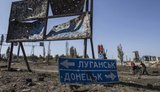 Putin won’t stop at Donbas: he’ll try to capture Dnipro and Kharkiv, - Zelenskyy Russian dictator Vladimir Putin will not stop at Donbas. The Russian army may attempt to capture major Ukrainian cities, including Dnipro and Kharkiv. 3 483 33 Previously in trend: Russia’s demands to end war
There is no deadline for withdrawal of troops from Donbas, - Peskov Dmitry Peskov, the spokesperson for the Russian dictator, stated that in order to "halt the active phase of the war," Ukraine must withdraw its troops from Donbas; however, Russia has not set any deadlines for this. 3 953 19 Previously in trend: Russia’s demands to end war
 Kremlin’s demands for Ukraine to "withdraw" from Donbas are signal to Trump, who is bogged down in Iran, - "servant of people" Chernev The statement by Russian Presidential Spokesperson Dmitry Peskov that Ukraine must immediately withdraw its troops from Donbas is a signal to U.S. President Donald Trump. 6 017 25 Previously in trend: Russia’s demands to end war
 Withdrawal of AFU from Donbas would "open prospects" for ending hostilities – Kremlin Russia claims that the withdrawal of Ukrainian troops from the whole of Donbas would "open prospects" for ending hostilities. 6 505 126 Previously in trend: Russia’s demands to end war Putin’s threats
 Zelenskyy had to make decision "today" to withdraw troops from Donbas, - Peskov The Kremlin believes that Ukraine must withdraw its troops "today" from the parts of the Donetsk and Luhansk regions under its control. 9 968 71 Previously in trend: Fighting in the east Russia’s demands to end war
 US and Russia have same demand for Ukraine to end war – to leave Donbas, - Zelenskyy The United States and Russia are pressuring Ukraine to withdraw its forces from Donbas as part of any agreement to end the war. 12 809 100 Previously in trend: Territorial concessions Russia’s demands to end war Peace agreement between Russia and Ukraine
 Lavrov: Russia will achieve return of "historically Russian lands" in Ukraine’s occupied territories "to their native harbour" Russian Foreign Minister Sergey Lavrov said that Moscow would allegedly "see through" the process of returning "historically Russian lands" to their "native harbor." This refers to the temporarily occupied Crimea, Donetsk region, and parts of Kherson and Zaporizhzhia regions. 12 852 101 Previously in trend: Russia’s demands to end war Putin’s aims in Ukraine Lavrov’s statements on Ukraine
 Russia will continue war until Ukraine agrees to "realistic peace terms," - Nebenzya at UN The Permanent Representative of the Russian Federation to the UN, Vasiliy Nebenzya, asserts that Russia intends to continue "resolving the issue by military means." 9 946 89 Previously in trend: Russia’s demands to end war
 Russia is not for temporary truce, but for "lasting peace" with Ukraine, Foreign Ministry says Russian Deputy Foreign Minister Sergei Ryabkov claims that Moscow does not want a temporary ceasefire but rather what he called "a lasting peace" in the war against Ukraine. 4 093 43 Previously in trend: Peace negotiations Russia’s demands to end war
 Russia is ready to end war on terms announced in summer of 2024, - Putin Kremlin dictator Vladimir Putin has stated that Russia is ready to end the war in Ukraine on the terms he announced in the summer of 2024. 13 509 95 Previously in trend: Putin’s demands regarding war in Ukraine Russia’s demands to end war
 Lavrov: "Demilitarization" and "denazification" of Ukraine are mandatory conditions for ending war. VIDEO Russian Foreign Minister Sergei Lavrov said Russia would be ready to end the war only if a number of conditions are met. 6 819 46 Previously in trend: Russia’s demands to end war
 Pokrovsk and Kupiansk have already been promised to Putin. Russia will continue war against Ukraine - Russian media The Kremlin has decided to continue its full-scale war against Ukraine and does not expect progress in the negotiation process. Russian generals have already promised dictator Vladimir Putin that they will capture Kupiansk and Pokrovsk. 14 629 39 Previously in trend: Peace negotiations Russia’s demands to end war
 NATO and EU are waging war against Russia "through Ukraine" - Lavrov Russian Foreign Minister Sergei Lavrov stated at the G20 that NATO and the European Union are directly participating in the war against Russia "due to Ukraine's actions." 4 773 27 Previously in trend: Russia’s demands to end war
 Kremlin: Russia remains interested in resolving war in Ukraine through "political and diplomatic efforts" Russian dictator Dmitry Peskov's spokesman said that amid recent statements by US President Donald Trump, Moscow wants to resolve the war against Ukraine through "political and diplomatic efforts." 2 581 23 Previously in trend: U.S. sanctions against Russia Russia’s demands to end war
 Western security proposals turn Ukraine into "strategic provocateur" for Russia – Foreign Ministry Russia said Western proposals for postwar security guarantees for Ukraine would increase the risk of a NATO conflict with Moscow by turning Kyiv into a "strategic provocateur" on Russia’s borders. 7 410 37 Previously in trend: Russia’s demands to end war Security guarantees for Ukraine
 Putin wants Ukraine to give up all of Donbas region, drop its NATO bid and remain neutral – Reuters Russian dictator Vladimir Putin is demanding that Ukraine give up all of the eastern Donbas region, renounce ambitions to join NATO, remain neutral and keep Western troops out of its territory. 13 402 133 Previously in trend: Putin’s demands regarding war in Ukraine Russia’s demands to end war
 Lavrov: "50 days. We’ve had 24 hours before, we’ve had 100 days, we’ve gone through this" Russian Foreign Minister Sergey Lavrov stated that Russia needs to understand the reasoning behind U.S. President Donald Trump’s remarks about the necessity to reach an agreement with Ukraine within 50 days to end the war. 10 351 58 Previously in trend: U.S. sanctions against Russia Russia’s demands to end war
 Ministry of Foreign Affairs on Russian demands: Ukraine will never accept any restrictions on its defense capabilities The Ministry of Foreign Affairs of Ukraine has responded to Russia's demands, noting that Ukraine will never agree to any restrictions. 3 114 15 Previously in trend: Putin’s demands regarding war in Ukraine Russia’s demands to end war
 Russia not demanding Ukraine’s capitulation, only "recognition of realities" of situation on frontline" – Putin Russian dictator Vladimir Putin has claimed that Russia is allegedly not "seeking Ukraine’s capitulation" but wants "recognition of the realities on the ground." 4 937 34 Previously in trend: Putin’s statements about Ukraine Putin’s demands regarding war in Ukraine Russia’s demands to end war
 Russia will demand that Ukraine destroy Western weapons to end war - Russian Foreign Ministry Russia will demand that Ukraine get rid of Western weapons to end the war. 20 930 96 Previously in trend: Russia’s demands to end war Weapons supplies for Ukraine
 If Ukraine does not compromise with Russia, it will lose even more territories - Medinskiy The head of the Russian delegation to the talks in Istanbul, Vladimir Medinskiy, said that if Kyiv does not compromise with Moscow, it will only lead to even greater territorial losses for Ukraine. 8 002 75 Previously in trend: Territorial concessions Russia’s demands to end war
Russia wants NATO troops withdrawn from Baltics to end war in Ukraine – media Russia demands NATO withdraw troops from Baltic states to end war in Ukraine. 17 991 119 Previously in trend: Russia’s demands to end war
Russia will continue "SMO" against Ukraine, but is ready for "diplomatic measures" - Lavrov Russian Foreign Minister Sergey Lavrov says that Russia is supposedly ready for "diplomatic measures" with Ukraine, but will continue hostilities. 7 125 63 Previously in trend: negotiations with Russia Russia’s demands to end war
 Ukrainian neutrality, recognition of Crimea, lifting all sanctions – Russia publishes "peace memorandum". DOCUMENT The Russian side has published a so-called "peace memorandum" that was presented to Ukraine during negotiations held in Istanbul on June 2. The document includes provisions such as Ukrainian neutrality and international recognition of the temporarily occupied Ukrainian territories. 23 332 119 Previously in trend: Russia’s demands to end war Ceasefire memorandum
 NATO not discussing Russia’s demand for eastern non-expansion - media NATO is not currently discussing Russia's demand for written guarantees of non-expansion to the east. 1 504 3 Previously in trend: Ukraine’s NATO membership Russia’s demands to end war
 Sybiha on Nebenzya’s statement: "This is slap in face from Russia to everyone advocating peace" Ukrainian Deputy Foreign Minister Andriy Sybiha criticized a statement by Russia’s Permanent Representative to the UN, Vasily Nebenzya, who declared that Moscow is prepared to "continue and escalate military operations in Ukraine for as long as necessary." 7 085 18 Previously in trend: statement of peace Russia’s demands to end war
 During ceasefire with Russia, Ukraine must halt mobilization and West must stop supplying weapons – Nebenzya Russia’s Permanent Representative to the United Nations, Vasily Nebenzya, stated that a simple ceasefire is "not enough" for Russia to end the war against Ukraine. 10 231 143 Previously in trend: ceasefire between Ukraine and Russia Russia’s demands to end war
 US recognises validity of Russia’s demands for NATO non-expansion and is ready to discuss it, - Kellogg US President Donald Trump is ready to promise the Russian dictator Vladimir Putin not to expand NATO to the east if such a demand becomes a condition for ending the war. 18 781 239 Previously in trend: Russia’s demands to end war
 Ukraine’s neutrality and lifting of sanctions: Putin sets conditions for ending war - Reuters Russian dictator Vladimir Putin has set out conditions for ending the war in Ukraine. They include, among other things, a requirement that Western leaders commit in writing to halt NATO's eastward expansion and lift some of the sanctions against Russia. 28 761 151 Previously in trend: Putin’s demands regarding war in Ukraine Russia’s demands to end war
 Ukraine’s neutral status is one of Russia’s key demands - Lavrov Russian Foreign Minister Sergey Lavrov has once again put forward Russia's demands for Ukraine's neutral status. 4 249 41 Previously in trend: Russia’s demands to end war Negotiations on ceasefire
Russia aims to "liberate Ukraine" and "protect" Russian-speaking citizens – Lavrov Russian Foreign Minister Sergei Lavrov has claimed that Russia cannot allow the "rights of Russian-speaking citizens" in Ukraine to be restricted, particularly after any potential cessation of hostilities. 24 417 340 Previously in trend: Language Issue Russia’s demands to end war
 Russia put forward demands unacceptable to Ukraine during Istanbul talks – Foreign Ministry During the negotiations in Istanbul, the Russian side voiced a number of demands that Ukraine considers unacceptable. 5 920 23 Previously in trend: Russia’s demands to end war Negotiations in Turkey
 Russia has no right to impose its conditions on future of Ukraine - Lithuanian Foreign Minister Budrys Russia's constant attacks on Ukraine indicate the aggressor's unwillingness to make peace. 528 2 Previously in trend: Russia’s demands to end war
 Witkoff failed to persuade Putin to agree to ceasefire along current front line – Bloomberg Russian dictator Vladimir Putin rejected the proposal by Trump’s special envoy, Steve Witkoff, to cease hostilities along the current front line. 9 783 54 Previously in trend: Peace negotiations Witkoff’s meeting with Putin Russia’s demands to end war
 Peskov: Ukraine must withdraw its troops from 4 regions for "immediate" end of war Russia claims that the war against Ukraine will end "instantly" if Ukrainian troops withdraw from 4 regions that the Kremlin has included in its constitution. 142 011 124 Previously in trend: Occupied territories - Crimea and Donbas Russia’s demands to end war
Page 1 of 2
more news